DePIN AI: How Physical Networks Power Artificial Intelligence
DePIN AI: how physical networks power artificial intelligence
What is DePIN AI?
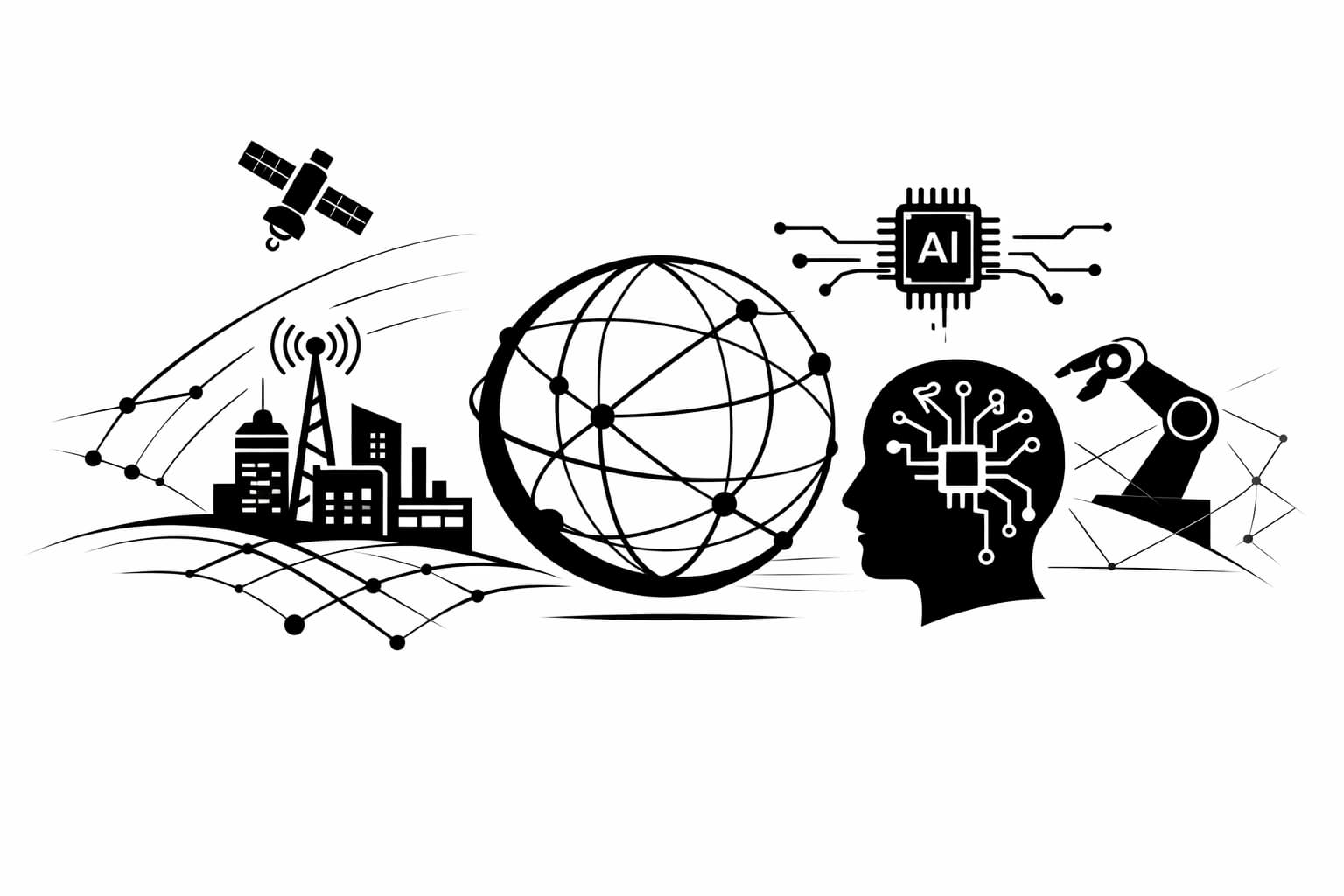
DePIN AI is a way to connect real-world hardware, such as GPUs, storage drives, sensors, bandwidth and energy assets, to artificial intelligence workloads through crypto networks. In plain English, DePIN for AI lets independent hardware owners sell useful capacity to AI builders instead of leaving all supply inside major cloud platforms.
Why it matters
AI builders need compute, data, storage and power. Smaller teams often cannot get affordable graphics processing unit capacity exactly when they need it, while hardware owners may have machines sitting underused. DePIN AI matters because it can turn idle physical resources into a market for short-term AI jobs, data collection and verifiable inference, while giving buyers more choice than a single cloud contract.
DePIN, AI and blockchain in simple terms
DePIN means decentralized physical infrastructure network. It is a system where independent participants connect physical equipment to a shared protocol and earn rewards when that equipment performs useful work. Artificial intelligence means software that learns from data to generate text, classify images, make predictions or automate decisions. Blockchain means a shared ledger that records transactions without one company controlling the database. Tokens are digital units used for payments and incentives. Smart contracts are programs that execute payment rules automatically when preset conditions are met.
A useful analogy: a DePIN network resembles a short-term rental marketplace for machines. A spare GPU, storage server or sensor can be listed for paid work, while software rules handle matching, payment and reputation. The analogy is imperfect because hardware quality varies, but it helps explain the basic market design.
As of October 18, 2026, the broader DePIN category listed more than 1,300 tracked crypto assets and networks on CoinGecko. That number does not prove every project has real demand, but it shows that developers are trying to apply token incentives to physical infrastructure beyond pure finance.
The common sales pitch says DePIN AI will replace large cloud providers because it is cheaper and decentralized. Our view is narrower. DePIN for AI is more likely to win first in burst GPU demand, edge data collection, creative rendering and verifiable inference. Large model training still depends on reliable bandwidth, compliance controls, coordinated hardware clusters and service-level agreements that most decentralized networks do not yet provide.
- DePIN connects physical hardware to a blockchain-based market.
- AI workloads need GPUs, storage, data, bandwidth and power.
- Smart contracts can automate payments between buyers and providers.
- DePIN for AI is useful today for selected workloads, not as a full cloud replacement.
Background: where DePIN comes from
Before AI demand accelerated, crypto developers were already testing a simple idea: pay people in tokens when they share physical resources that a network can measure and reward.
History: from decentralized storage to AI infrastructure
Early DePIN-style projects focused on storage and connectivity. Filecoin launched its mainnet on October 15, 2020, creating a market where participants could provide storage capacity and earn tokens. Other networks experimented with permanent archives, wireless hotspots, mapping data and GPU rendering. These were not originally built as AI systems, but they created the pattern that DePIN AI now builds on: measure a physical contribution, reward it, and make it available to users through open software.
The term DePIN, short for decentralized physical infrastructure network, became widely used after Messari grouped token-incentivized physical infrastructure under that label in 2022. The label matters because it separates these networks from purely digital crypto applications. A DePIN project must coordinate something physical, such as storage drives, GPUs, antennas, sensors, batteries or power assets.
AI changed the urgency. After late 2022, demand for graphics processing units, training data, model storage and inference capacity rose quickly. That created a natural opening for networks that could bring underused hardware online, especially when centralized cloud capacity was expensive or unavailable for smaller buyers.
Why DePIN matters for AI in 2026
AI systems consume four scarce inputs: compute, data, storage and electricity. DePIN AI is relevant because it tries to source those inputs from many independent providers instead of only from hyperscale data centers.
The AI bottleneck: GPUs, data and power
A GPU, or graphics processing unit, is a chip that can run many calculations in parallel. That design makes GPUs well suited to training and running AI models. Training means teaching a model from data. Inference means using a trained model to answer a prompt, classify an image or produce another output.
For a small team, the problem is not only total cost. It is timing. A startup may need GPU capacity for a two-week experiment, a game studio may need rendering power before a release, or a research group may need inference capacity for a short benchmark. A one-year cloud commitment can be too much for that pattern. DePIN compute markets aim to make spare capacity available in smaller, more flexible units.
Energy is another constraint. Data centers and data transmission networks accounted for about 1% to 1.3% of global electricity use in 2022, according to the International Energy Agency report published in January 2024. AI growth adds pressure to that base. DePIN does not solve energy scarcity by itself, but it can expose where power and compute are available outside the best-known data center regions.
Why centralized cloud is not always enough
Centralized cloud providers offer reliability, mature security tools, support contracts and familiar developer workflows. For regulated enterprise training, that is often the right choice. The issue is not that cloud is bad. The issue is that cloud is concentrated, and concentration creates cost, access and policy risk for some builders.
Balaji Srinivasan, author and investor, has often argued that open networks reduce dependence on a small number of gatekeepers. That point applies directly to AI infrastructure. If model builders can access compute, data and verification through permissionless networks, they have a fallback when centralized supply is expensive, restricted or geographically distant.
Our 2026 reading is practical: DePIN AI should be evaluated by workload fit, not by ideology. Burst inference, public rendering and non-sensitive data collection fit better today than confidential training on regulated medical, financial or defense data.
- GPUs are scarce for short-term or smaller buyers during demand spikes.
- Data and storage needs are rising as models, logs and weights grow.
- Power availability matters because compute cannot scale without electricity.
- DePIN AI helps most where flexibility and open access matter more than perfect service guarantees.
How DePIN for AI works step by step
At its core, a DePIN AI network is a marketplace where hardware providers sell capacity to AI applications, while software tracks work, reputation and payment.
First, a few terms. A wallet is a digital account that holds tokens. A gas fee is a transaction fee paid to process an action on a blockchain. A consensus mechanism is the rule set a blockchain uses to agree on valid records. An oracle is a service that brings outside information, such as job completion data, into a blockchain system. Proof of work done means evidence that a provider completed a requested task.
- Contribute resources. A provider connects a GPU, drive, sensor, bandwidth node or energy asset.
- Prove capacity. The network measures availability, hardware specs, location and past reliability.
- Receive tasks. Matching software routes an AI job to a suitable provider.
- Complete AI work. The provider runs inference, storage, rendering or data work off-chain.
- Get paid and verified. Results are checked, then tokens or stablecoins settle automatically.
Step 1: providers contribute physical resources
A provider installs network software, connects hardware, registers a wallet and makes capacity available. The hardware might be a data-center GPU, a consumer GPU, a storage server, a sensor or a local energy asset. The network records what the provider offers, such as memory, uptime, bandwidth and location.
Step 2: the network matches demand with supply
An AI application submits a job request with requirements such as GPU memory, response time, file size, price limit and location. The matching layer checks available providers and routes the job. Most routing happens off-chain, meaning outside the blockchain, because AI jobs need speed and low cost.
Step 3: blockchain coordinates payments and proofs
A blockchain works like a shared spreadsheet that many participants can verify but no single participant can secretly rewrite. In DePIN AI, the heavy computation happens on physical hardware, while the blockchain records payment rules, job receipts, reputation and settlement. The hard part is verification: proving that the provider ran the correct model, returned the right output and did not leak sensitive data.
Balaji Srinivasan, author and investor, frames programmable open networks as a way to replace trust in intermediaries with code-based coordination. DePIN AI follows that logic, but it has not fully solved every proof problem. Complex AI workloads are harder to verify than simple transfers, so many systems still depend on reputation, redundancy, audits or trusted hardware.
Original 2026 AIR Score for workload fit
To avoid treating every use case the same, we use an editorial framework called the AIR Score: Access benefit, Integrity requirement and Reliability requirement. Each category is scored from 0 to 4, for a maximum of 12. Higher scores mean a workload is a better early fit for DePIN AI as of October 18, 2026.
AI workload | Access benefit | Integrity burden | Reliability fit | AIR Score | 2026 reading |
|---|---|---|---|---|---|
Creative rendering and image generation | 4 | 3 | 3 | 10/12 | Strong early fit because errors can usually be rerun. |
Burst inference for public apps | 4 | 2 | 3 | 9/12 | Good fit when latency requirements are moderate. |
Decentralized sensor data collection | 3 | 2 | 3 | 8/12 | Useful, but provenance and privacy checks are needed. |
Archival model and dataset storage | 3 | 3 | 2 | 8/12 | Works best when retrieval speed is not the main need. |
Confidential enterprise training | 1 | 1 | 1 | 3/12 | Weak fit today because compliance and uptime demands are high. |
The main DePIN AI infrastructure layers
The DePIN AI stack is not one product. It is a group of infrastructure layers that can support different parts of the AI workflow. Some layers provide raw capacity, while others help prove that work happened correctly.
Layer | What it provides | AI use case | Key risk |
|---|---|---|---|
GPU compute | Parallel processing power | Training, fine-tuning, inference and rendering | Uneven hardware quality and uptime |
Storage | Distributed file hosting | Datasets, model weights, logs and archives | Retrieval speed can lag centralized storage |
Data | Sensor, mapping or labeled datasets | Training data and fine-tuning inputs | Consent, quality and provenance questions |
Bandwidth | Data movement and delivery | Model output delivery and large-file distribution | Latency spikes and routing complexity |
Energy | Power access for compute nodes | GPU clusters, edge devices and local compute | Uneven grid access and local regulation |
Verification | Proofs, attestations and job receipts | Auditable inference and model-output checks | Proof costs remain high for complex models |
Decentralized GPU compute
GPU compute is the most visible DePIN AI layer. It gives AI builders access to parallel processing power from many providers. This can help with image generation, fine-tuning, inference and rendering, especially when the workload can tolerate some variation in latency. It is less suited to large training runs that need thousands of tightly linked GPUs with predictable networking.
Public DePIN data still varies by project. The safer due-diligence question is not whether a network claims a large node count. It is whether the network publishes live hardware, usage, pricing and uptime data that a buyer can inspect before sending work.
Storage, data and bandwidth networks
AI systems need data before training, files during deployment and logs after release. Decentralized storage can spread files across many nodes, reducing dependence on a single server. Data networks can gather information from cameras, phones, vehicles or sensors. Bandwidth networks help move large files closer to users. These layers are useful when resilience and openness matter, but they still compete with centralized storage on speed and developer convenience.
Energy and edge infrastructure
Edge computing means processing data near where it is created, such as on a factory server, vehicle, camera or phone, instead of sending everything to a distant data center. DePIN can support edge AI by rewarding local operators that provide compute, connectivity or power. This is useful for video analysis, robotics, local search and real-time monitoring where sending raw data across borders is slow or risky.
Verification, zkML and AI oracles
Verification may be the most important long-term layer. If a decentralized node returns an AI output, the buyer needs to know what model ran, whether the output was altered and whether the job used the agreed resources. Verifiable compute for AI results addresses that problem by attaching proof to computation. Zero-knowledge machine learning, often shortened to zkML, aims to prove that a model ran correctly without revealing all underlying details. AI oracles carry verified results into smart contracts so blockchain applications can act on them.
The technology is promising, but proof generation can still be expensive. In 2026, many systems combine cryptographic proofs with simpler checks, including repeated execution, reputation scores, trusted hardware and third-party audits.
Examples and use cases of DePIN AI
DePIN for AI becomes clearer when matched to concrete jobs. The following use cases show where decentralized physical infrastructure can help today and where it still falls short.
AI inference marketplaces
An application that needs to answer user prompts may route some requests through a decentralized GPU market. The app sends a request, the network selects a provider, the model runs off-chain and the result returns to the user. This can work for public chatbots, image tools, agent tests and non-sensitive workloads.
For builders using blockchain applications, AI inference on blockchain becomes more useful when the output can be checked and delivered to a smart contract. The limit is latency. A customer-service bot can tolerate a short delay; high-frequency trading or safety-critical robotics cannot.
The Akash Network official site presents itself as an open marketplace for cloud compute, including GPUs. That is the right category to watch, but buyers should still check live provider availability, model support, uptime and pricing before relying on it for production work.
Decentralized data collection
AI models need fresh data from the physical world. DePIN data networks can gather road images, air-quality readings, wireless coverage, traffic patterns or energy data from independent contributors. The benefit is freshness and coverage. The risk is uneven quality, unclear consent and possible location privacy exposure.
For example, Hivemapper reported more than 11 million mapped kilometers by January 2026 through contributor-owned dashcams. That kind of dataset can help mapping and perception models, but it needs strong validation. A model trained on poorly labeled or biased sensor data can produce confident but wrong outputs.
Creator, gaming and rendering workloads
Creative workloads are one of the clearest DePIN AI fits. Rendering a 3D scene, generating concept art or producing a short AI video does not always require strict uptime. If one job fails, it can often be rerun. That makes spare GPU markets more practical for artists, game studios and small media teams than for regulated enterprise training.
Networks such as the Render Network official site focus on distributed GPU rendering and related creative workloads. This category works because the buyer can judge output quality directly, and the cost of a failed job is usually lower than in medical, financial or security use cases.
Advantages, disadvantages and risks
DePIN AI has real advantages, but it also introduces tradeoffs that buyers and investors should not ignore. The key is matching the workload to the network rather than assuming decentralization solves every problem.
Benefit | Tradeoff |
|---|---|
Lower access barriers for smaller builders | Fewer service-level guarantees than major cloud providers |
Distributed supply across many providers | Hardware quality, location and uptime can vary |
Token rewards can bring idle hardware online | Token volatility can cause providers to leave |
Open participation and global access | Compliance checks become harder across borders |
Better fit for burst demand and public workloads | Confidential data may need encryption or trusted hardware |
Advantages of DePIN AI
The first advantage is access. A developer may be able to rent GPU time without a long enterprise contract. A hardware owner may earn income from a machine that would otherwise sit idle. A network may also reduce single-provider risk by spreading work across locations and operators.
Lyn Alden, Founder at Lyn Alden Investment Strategy, often evaluates crypto networks by whether incentives connect to real economic use rather than speculation alone. That lens is useful here. A DePIN AI project is stronger when buyers pay for compute, data or storage because they need the service, not only because rewards are temporarily high.
Disadvantages and open problems
The largest weakness is reliability. Centralized cloud providers can offer mature service agreements, standardized hardware, private networking and support teams. DePIN networks often combine many providers with different hardware, internet connections and local conditions. That can be fine for flexible jobs and poor for synchronized training.
Privacy is another issue. Sending model weights, prompts or training data to an unknown machine can expose sensitive information. Private computation methods, including the techniques discussed in encrypted smart contracts and private computation, may help. In practice, many buyers still need audits, access controls and legal agreements before using decentralized nodes for sensitive work.
Regulatory and compliance questions
AI workloads can involve personal data, export-controlled chips, copyrighted inputs and cross-border data transfers. That makes compliance harder when the compute provider could be in another country. Advanced chip rules also matter. The United States tightened export controls for advanced chips on October 17, 2023, according to the U.S. Bureau of Industry and Security.
Permissionless networks also need screening. If compute jobs or token rewards flow through sanctioned actors, operators can face legal risk. That is why crypto wallet screening and identity controls are becoming relevant for infrastructure networks. Teams should also follow the broader crypto regulation timeline because DePIN sits at the intersection of crypto, data, hardware and energy policy.
This article is educational, not legal, tax or investment advice. Use qualified counsel before putting regulated data or production AI workloads on a decentralized network.
How to evaluate DePIN AI projects
Once the basics are clear, the practical question is how to separate real infrastructure from a token story. The best approach is to look for evidence that buyers use the network even when rewards are not the main attraction.
A simple due diligence checklist
- Active supply. Does the project publish live nodes, available hardware, locations and uptime?
- Real demand. Are developers or companies paying for compute, storage, data or bandwidth?
- Transparent pricing. Can a buyer see a price per GPU-hour, storage unit or job?
- Hardware benchmarks. Are GPU models, memory, bandwidth and performance measured publicly?
- Revenue quality. Does revenue come from customers, or mostly from token emissions?
- Security audits. Have payment contracts, data flows and provider software been reviewed?
- Verification model. How does the network prove the job was completed correctly?
- Compliance plan. Can the project handle privacy, sanctions, tax and export-control questions?
Watch for common crypto scam red flags when evaluating DePIN for AI. Guaranteed returns from node ownership, anonymous teams with no shipped software, fake dashboards and token-only usage are warning signs.
Cathie Wood, CEO and CIO at ARK Invest, has argued through ARK research that AI demand can expand computing markets over long periods. That broader demand case is not enough by itself. A DePIN AI project still needs a specific reason to exist, such as cheaper burst compute, better local data, stronger verification or access in underserved regions.
The most useful investor or builder question is simple: would a real customer pay for this service if the token reward disappeared? If yes, the network may be solving an infrastructure problem. If no, it may be a subsidy loop.
Frequently Asked Questions
- What are decentralized AI models?
- Decentralized AI models are AI systems where compute, data, storage, governance or inference is distributed across independent participants rather than controlled by one central company. Decentralization can apply to just one layer or several. Not every project with an AI token genuinely operates on a distributed model, so it pays to look closely at actual architecture.
- What does DePIN stand for?
- DePIN stands for Decentralized Physical Infrastructure Network. It uses blockchain-based token incentives to coordinate real-world hardware — GPUs, storage drives, wireless hotspots, sensors and energy equipment — contributed by independent participants worldwide, rather than owned and operated by a single centralized provider.
- Does DePIN have a future?
- DePIN has a credible future, particularly where distributed resources are cheaper, more local or underutilized — such as AI inference, storage and data collection. However, long-term success depends on consistent hardware reliability, genuine customer demand, regulatory compliance and token economics that remain sustainable beyond early incentive periods.
- Which crypto coin is based on AI?
- Many crypto projects touch AI across areas like compute, data marketplaces, autonomous agents, oracles and verification. Rather than focusing on a single coin, evaluate each project on real usage, actual revenue, token design, security audits and whether it provides infrastructure that AI developers genuinely need and actively use.
- Which AI coin will boom in 2026?
- No one can reliably predict which AI coin will outperform. Instead of chasing forecasts, assess fundamentals: network demand, active users, token emission schedules, liquidity depth, team execution history, security track record and broader market conditions. Projects with real paying customers and sustainable economics stand on stronger ground than those driven purely by narrative.
- What is the best DePIN crypto?
- There is no single best DePIN crypto — it depends entirely on the use case. Compute, storage, wireless, mapping, energy and data networks each serve different needs. Compare real network activity, verified customer payments, hardware quality, degree of decentralization, token incentive structures and any regulatory compliance risks before drawing conclusions from hype alone.
- What is DeFi decentralized finance?
- DeFi refers to blockchain-based financial applications — lending, trading, staking and more — that run through smart contracts without traditional intermediaries. It is worth distinguishing from DePIN: DeFi coordinates financial services and capital flows, while DePIN coordinates physical infrastructure resources like hardware, bandwidth and energy contributed by real-world participants.
- What is the 30% rule for AI?
- There is no universal "30% rule" that applies across AI or DePIN AI projects as a technical or regulatory standard. If you have encountered this phrase in a specific business, productivity or investment context, go back to the original source and verify its meaning there rather than treating it as a broadly accepted principle.
Sources
Author

Crypto analyst and blockchain educator with over 8 years of experience in the digital asset space. Former fintech consultant at a major Wall Street firm turned full-time crypto journalist. Specializes in DeFi, tokenomics, and blockchain technology. His writing breaks down complex cryptocurrency concepts into actionable insights for both beginners and seasoned investors.