Why Bitcoiners Hate CBDCs: The Case Against a Digital Dollar

Introduction: The Fork in the Road for Digital Money
We have arrived at a defining moment for the future of money. The choice before us is not merely about upgrading our financial infrastructure; it is a profound philosophical decision between two opposing visions for our economic lives. On one side, we have decentralized, permissionless networks like Bitcoin, which give power to the individual. On the other, we see the rapid emergence of Central Bank Digital Currencies (CBDCs)—the so-called digital dollar, euro, or yuan—which concentrate power in the hands of the state.

From the perspective of the crypto community, these two paths are irreconcilable. To understand the deep-seated reasons why so many hate CBDCs, one must recognize that they represent the antithesis of everything Bitcoin stands for. A government-issued digital currency is not a competitor; it is a counter-revolution. It promises convenience while threatening to become the most invasive tool of financial surveillance and control ever conceived. For those who value self-sovereignty and privacy, the rise of the CBDC is not progress. It is a Trojan horse that threatens to dismantle the very concept of financial freedom, which is why bitcoiners are so firmly against CBDCs and their implementation.
First, What Exactly is a CBDC?
Before exploring the deep-seated reasons why so many bitcoiners are against CBDCs, it’s important to establish a clear definition. A Central Bank Digital Currency, or CBDC, is a digital form of a country's fiat currency. Think of it as a Digital Dollar or a Digital Euro. On the surface, this might sound like the money you already use through your banking app or credit card, but there is a fundamental difference. The digital money in your commercial bank account today is a liability of that private bank. A CBDC, in contrast, would be a direct liability of the central bank itself—the Federal Reserve in the United States.
Proponents, including most central banks and global financial institutions, argue that a CBDC would bring several benefits. They often point to increased payment efficiency, the potential for greater financial inclusion for the unbanked, and a more direct implementation of monetary policy. These are the official talking points you'll hear in papers from the Bank for International Settlements or in speeches from government officials.
Retail vs. Wholesale CBDCs
The distinction between the two main types of CBDCs is critical to this entire debate. A wholesale CBDC is designed for use between financial institutions for large-scale settlements. It’s essentially a backend upgrade to the existing banking system and is not intended for public use. A retail CBDC, however, is designed for everyone—individuals and businesses—to use for daily transactions. When you hear the crypto community voice its concerns, and when we analyze why people hate CBDCs, the focus is almost exclusively on the retail version. This is the version that would interact directly with citizens, and it's where the most profound implications for freedom and privacy lie.
The Core Argument: Why Bitcoiners Fundamentally Reject CBDCs
For those of us dedicated to the principles of sound money and individual liberty, the case against Central Bank Digital Currencies is clear and direct. Our deep-seated opposition isn't rooted in a resistance to technology, but in a profound disagreement with the philosophy embedded within CBDC architecture. The crypto anti-CBDC stance boils down to the fact that these systems represent the polar opposite of everything Bitcoin was built to achieve. In my analysis, the conflict centers on three fundamental threats to freedom.
The End of Financial Privacy and Sovereignty
At the top of the list of concerns is the complete obliteration of financial privacy. Unlike physical cash, which allows for anonymous transactions, a CBDC operates on a centralized ledger controlled by the state. Every payment you make, every dollar you receive, and every asset you hold would be recorded on this government database in real-time. This creates a permanent, searchable record of your entire financial life, accessible to government agencies without the hurdles of warrants or subpoenas that exist today. It's a level of surveillance that makes the current banking system look anonymous by comparison. While Bitcoin operates on a public ledger, its pseudonymous nature provides a layer of privacy that a state-run digital dollar simply cannot offer. A CBDC removes the last vestiges of financial autonomy, turning your personal finances into an open book for the state to read at will.The Threat of Programmable Money and Social Control
Perhaps the most alarming feature of a potential CBDC is its programmability. This isn't just digital money; it's money with rules and conditions attached directly by the issuer. Imagine a government trying to stimulate the economy by adding an expiration date to your funds, forcing you to spend them before they disappear. Think about the potential for social engineering, where purchases for items deemed "undesirable," like too much gasoline or red meat, could be blocked at the point of sale. This technology provides the state with direct, granular control over citizen behavior. The toolset for authoritarianism expands dramatically with programmable money, including the direct implementation of negative interest rates on your holdings, a policy that is difficult to enforce when physical cash is an option. This transforms money from a neutral tool for exchange into an instrument of policy and control.The Ultimate Centralization of Power vs. Bitcoin's Decentralization
Ultimately, the entire debate comes down to centralization versus decentralization. A CBDC represents the final stage of financial centralization, consolidating immense power over the monetary system into the hands of a single entity. It removes the intermediary role of commercial banks and places every citizen in a direct financial relationship with the central bank. Bitcoin was created as an antidote to this very concentration of power. Its decentralized network of nodes ensures that no single person, corporation, or government can control the protocol, freeze transactions, or debase the currency. This is the core of the libertarian case against digital money issued by the state. Bitcoin offers a permissionless, censorship-resistant, and global alternative, while a CBDC reinforces and perfects the top-down, permissioned system of financial control. For bitcoiners, the choice between these two futures is not a choice at all.
The Political Battleground: The Global Push and Pushback
The philosophical arguments against CBDCs are no longer confined to crypto forums and academic papers. As we stand in April 2026, the debate has erupted into a full-blown political firestorm across the globe. The theoretical risks of centralized digital money are now playing out in real-time, providing a stark preview of a future many of us have been warning about for years.

We need only look to China for a cautionary tale. The Digital Yuan, or e-CNY, is far from a pilot program today; it is a deeply embedded tool of state control. The government has successfully linked the e-CNY to its social credit system, creating a reality where financial transactions are constantly monitored and can be restricted based on an individual's behavior. Buying the "wrong" book or associating with the "wrong" people can have immediate financial consequences. This is not a slippery slope fallacy; it is the documented reality for over a billion people and the clearest answer to the question of why hate CBDC is a growing sentiment worldwide.
This chilling example has fueled fierce resistance in the West, particularly in the United States. The pushback is no longer a niche issue. Political figures from across the spectrum are now openly campaigning against the creation of a "Digital Dollar." Former President Donald Trump made it a central plank of his platform, and that opposition has only solidified within a significant portion of the political field. The core argument being made is a constitutional one: that a retail CBDC would grant the government an unconstitutional level of surveillance over citizens' lives, effectively gutting the Fourth Amendment's protection against unreasonable searches. This growing political movement shows that the core principles held by bitcoiners against CBDC are now resonating far beyond our initial community.
Addressing the Counterarguments: Are CBDC Fears Overblown?
To be fair, proponents of a digital dollar aren't advocating for a dystopian surveillance state. They present what seem like reasonable arguments for efficiency and modernization. However, when we analyze these claims from first principles, the reasons why so many are against CBDCs become crystal clear. The concerns are not about a digital ledger, but about the irreversible shift in power it represents.
Claim: "It's Just a More Efficient Digital Dollar"
The most common refrain is that a CBDC is simply the next logical step for money, a government-backed version of the digital payments we already use. This comparison is dangerously misleading. The money in your bank account today is a liability of a commercial bank. You use a permissioned system, but it's one with many intermediaries. A CBDC, in contrast, would be a direct liability of the central bank. This is not a simple upgrade; it's a fundamental re-architecting of the financial system. It removes intermediaries and places every single transaction directly on the government's ledger. This new architecture grants the state unprecedented tools for financial control—tools that don't exist in the current system. The argument from the crypto community is not that it's inefficient, but that this "efficiency" comes at the unacceptable cost of total centralization.
Claim: "We Can Legislate Privacy Protections"
Another frequent assurance is that any CBDC would be designed with strong privacy laws to prevent misuse. While well-intentioned, this argument places far too much faith in political promises. Laws can be amended, reinterpreted, or suspended, especially during times of declared crisis. We saw this with surveillance programs in the past, and we'd be naive to think financial privacy would be immune. The core problem is that a CBDC creates an architecture of surveillance by default. We would be relying on the temporary goodwill of politicians to not flip the switch. This is why Bitcoiners hate CBDCs; Bitcoin’s privacy and censorship-resistance are built into its architecture. They are properties of the system itself, not dependent on the benevolence of a ruling body. Relying on legislation to protect us from a tool designed for control is a fragile defense for a fundamental human right.
Bitcoin as the Antidote: The Case for a Parallel System
After outlining the serious threats that Central Bank Digital Currencies pose to individual liberty, the conversation naturally turns to a solution. The argument many bitcoiners make against CBDCs isn't just one of opposition; it's an argument for a working alternative. Bitcoin represents more than a speculative asset; it is a fully operational, parallel financial system built on a foundation of principles directly contrary to the CBDC model.
Where CBDCs offer centralized control, Bitcoin provides decentralized consensus. Where CBDCs promise programmable rules and potential censorship, Bitcoin delivers permissionless access. Anyone with an internet connection can participate in the network without asking for approval from a bank or government official. This creates a powerful escape hatch from a system of total financial surveillance. Its properties as seizure-resistant, self-custodial money make it a necessary check on power, especially as we witness growing instability in the traditional banking system.
This is the core of the crypto anti CBDC position. It’s not simply a rejection of new technology. Instead, it’s a profound endorsement of a different kind of technology—one that supports the individual over the institution. In a world rushing toward digital dollars that can be monitored, restricted, and even expired, Bitcoin stands as a non-sovereign, globally accessible store of value that operates outside the control of any single party. It is the antidote by design.
Conclusion: The Choice Between Two Financial Futures
The path forward for digital money has diverged. This isn't a simple debate over payment efficiency or technological preference. At its core, the conflict between Bitcoin and Central Bank Digital Currencies represents a profound clash of ideologies. It forces us to answer a critical question: Who should control money? Should it be a tool of the state, programmable and surveilled, or an instrument of the individual, private and permissionless?
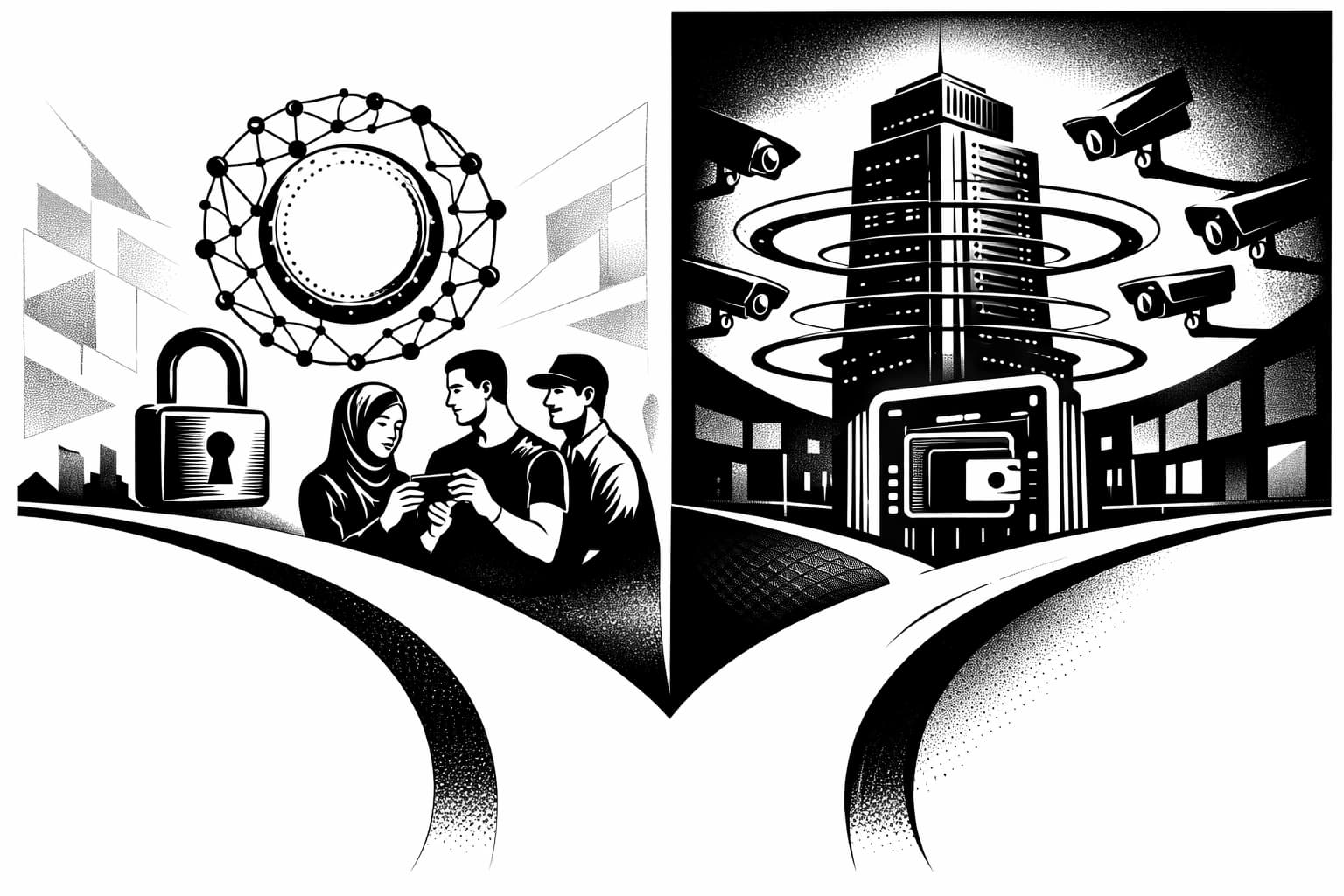
The reasons why Bitcoiners hate CBDCs are not rooted in abstract theory but in a principled defense of financial freedom. We are presented with two distinct visions for the future. One is a top-down system of centralized control, the other a bottom-up network of individual sovereignty. For those of us who believe money should be a check on power, not an amplifier of it, the choice is clear.
We choose the open, neutral protocol over the closed, politically-managed ledger. This decision—between a digital dollar that can be censored and a digital asset that cannot—will shape the space of personal liberty for generations to come. It is, without exaggeration, one of the most important fights of our time.
Frequently Asked Questions
- What is the CBDC controversy?
- The controversy centers on government control versus personal freedom. Proponents cite efficiency, but opponents, especially Bitcoiners, warn that CBDCs could enable mass surveillance and programmable censorship. They argue it would erode the fundamental principles of financial privacy and private property rights, handing immense power to the state.
- What are the downsides of a CBDC?
- The primary downsides are the complete loss of financial privacy and the potential for programmable restrictions on your money. A government could control what you buy, enforce negative interest rates directly on your savings, and create a centralized single point of failure for the entire financial system.
- Is a CBDC a threat to Bitcoin?
- Many in the crypto community believe a CBDC is not a threat but a validation of Bitcoin's purpose. By highlighting the risks of centralized digital money, a CBDC strengthens the case for a decentralized, censorship-resistant alternative. It is a threat to financial freedom, which makes Bitcoin more relevant than ever.
- Will CBDCs replace cryptocurrencies?
- This is highly unlikely because they serve opposing purposes. CBDCs are tools for centralized control, while cryptocurrencies like Bitcoin are instruments of individual sovereignty. Instead of replacement, they will likely coexist as parallel systems, offering a clear choice between state-controlled money and a permissionless, global alternative.
- Why did Trump speak out against a CBDC?
- Former President Trump voiced his opposition to a U.S. CBDC, framing it as a significant threat to personal liberty. He argued it would grant the government dangerous power to monitor and control citizens' financial lives. His stance aligns with the core concerns of many who fear government overreach.
Sources
Author

Crypto analyst and blockchain educator with over 8 years of experience in the digital asset space. Former fintech consultant at a major Wall Street firm turned full-time crypto journalist. Specializes in DeFi, tokenomics, and blockchain technology. His writing breaks down complex cryptocurrency concepts into actionable insights for both beginners and seasoned investors.