Sierra Charts Review (2026): Pro Trading Tools for Crypto

Quick Verdict: Sierra Charts for Crypto Traders (2026)
For professional crypto traders who demand institutional-grade tools for order flow analysis and low-latency execution, Sierra Charts is an exceptionally powerful choice. However, its non-crypto-native interface and notoriously steep learning curve make it completely unsuitable for beginners. This is a platform built for specialists, not casual market participants.
What is Sierra Charts? An Overview for the Uninitiated
If your trading journey began with modern, crypto-native platforms, the name Sierra Charts might be unfamiliar. That’s because it wasn't born in the flashy, fast-moving world of digital assets. Instead, it has a long and storied history as a high-performance workhorse in traditional markets like futures, stocks, and forex. Think of it as professional-grade trading software built with a no-frills, performance-first philosophy that has been trusted by serious traders for decades.
So, why are we discussing it for crypto in 2026? While not a native crypto platform, its strength is its adaptability. Sierra Charts can connect to various cryptocurrency exchanges and data providers, effectively bringing its institutional-level charting and order flow analysis tools to our markets. This isn't about a slick user interface or social features; it's about raw analytical power, stability, and deep customization. For traders who want to move beyond standard indicators and analyze market action on a granular level, this platform presents a compelling, if somewhat complex, alternative to the usual suspects.
Sierra Charts Key Features for Advanced Crypto Trading
While many crypto-native platforms focus on flashy user interfaces, Sierra Charts prioritizes raw performance and analytical depth. Its power isn't immediately obvious, but for traders who need to understand market microstructure and execute with precision, its feature set is nearly unmatched. These tools are what allow professional traders to move beyond simple price action and gain a genuine edge.
High-Performance Charting and Teton Order Routing
At its core, Sierra Charts is a high-performance charting engine built for speed and stability. The charts are endlessly customizable, rendering complex studies and historical data without the lag common on web-based platforms. But the real advantage for execution is the Teton Order Routing service. This system allows for server-side OCO (Order Cancels Order) and bracket orders. This means your stops and take-profits reside on their server, not your local machine. In a volatile crypto market, this is a game-changer, ensuring your orders are managed even if your internet connection drops during a critical price swing.
Advanced Market Depth (DOM) and Order Flow Analysis
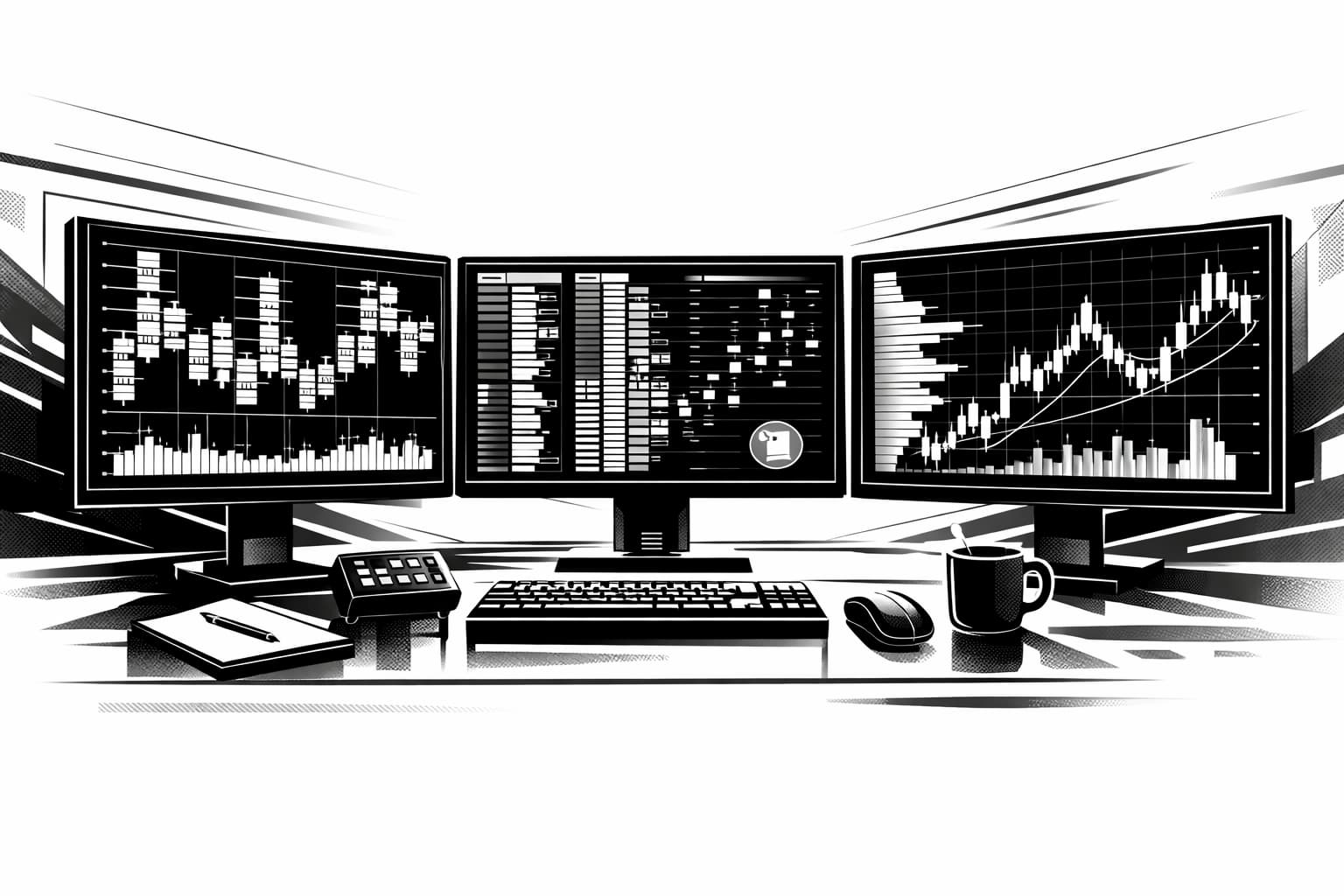
Understanding liquidity is vital in crypto. Sierra Charts offers an exceptional Depth of Market (DOM) interface that provides a clear, real-time view of the order book. Paired with tools like footprint charts (Number Bars) and Volume Profile, you can analyze order flow with incredible granularity. These features let you see where large orders are resting, identify absorption, and spot exhaustion at key levels—insights that simply aren't available on most standard crypto exchange interfaces. This is how you move from guessing to making data-driven decisions based on what other market participants are actually doing.
Connecting to Crypto Exchanges (Data & Execution)
Sierra Charts doesn't connect to crypto exchanges out-of-the-box like a dedicated crypto platform. Instead, it relies on high-quality data feeds and specific API connections. For top-tier, real-time data, you'll use a service like the Denali Data Feed. For trade execution, you connect via supported APIs, often provided by your broker or directly from major exchanges like Binance, Coinbase, or Kraken. This setup requires more initial configuration but results in a more stable and reliable data stream, which is fundamental when you're assessing platform risk and depending on data integrity for your strategy.
Unmatched Customization and Third-Party Studies
For quantitative traders and developers, the platform’s Advanced Custom Study Interface and Language (ACSIL) is its killer feature. Using C++, you have complete control to build anything from custom indicators to fully automated trading systems. This open-ended capability means you are not limited by the platform's built-in tools. An active community of developers also offers a wide range of third-party studies and add-ons, allowing you to extend the platform's functionality even further to suit your specific trading style.
Sierra Chart Service Packages & Pricing (2026)
Understanding the cost structure of Sierra Charts is the first step in deciding if it's right for you, as it differs significantly from the transaction-fee model of most crypto-native platforms. Instead, Sierra Chart operates on a tiered monthly subscription model, where functionality is unlocked based on the Service Package you choose. It's a system that rewards traders who know exactly what tools they need.
For most crypto traders, the decision comes down to a few key packages:
- Service Package 5 (~$30/month): This is the functional minimum for serious charting. It includes advanced chart types, all standard drawing tools, and the ability to connect to crypto exchange data feeds. It's a solid starting point for price action traders who don't need deep market-depth analysis.
- Service Package 11 (~$40/month): This package is the sweet spot for order flow traders. It unlocks the essential TPO (Time Price Opportunity) charts, Market Profile, and Numbers Bars (footprint charts). If you're coming to Sierra Charts for its renowned order flow capabilities, this is your entry ticket.
- Service Package 12 (~$60/month): The top-tier package includes everything from Package 11 plus more advanced, large-scale market analysis tools and a Market Depth Historical Graph. While powerful, many crypto traders will find Package 11 sufficient for their needs.
these prices only cover the software itself. To get real-time exchange data, you must also pay for a separate data feed. For instance, the Sierra Chart Exchange Data Feed, which provides direct connectivity to exchanges like Binance and Coinbase, comes with its own monthly fee. This combined cost—software plus data—is a vital calculation every potential user must make.
Pros and Cons of Using Sierra Charts for Crypto

After considering its powerful features and pricing, it becomes evident that adopting this platform is a significant decision. For crypto traders, the choice to use Sierra Charts comes with a distinct set of trade-offs. Here’s a balanced look at what you gain and what you give up.
Pros
- Unmatched Stability and Performance: The platform is famously lightweight and reliable, handling intense market volatility without the lag or crashes common on other platforms.
- Institutional-Grade Tools: You gain access to sophisticated order flow and volume analysis tools, like footprint charts and detailed market depth, that are simply unavailable on most crypto-native interfaces.
- Extreme Customization: Nearly every window, chart, study, and color can be configured, allowing you to build a trading environment perfectly suited to your strategy.
- Cost-Effective Model: With a one-time purchase option and a low-cost subscription for data, the long-term cost can be substantially lower than competing services.
Cons
- Steep Learning Curve: This is not a beginner-friendly platform. Be prepared to invest significant time in setup, configuration, and learning its complex systems.
- Dated User Interface: The UI feels utilitarian and old-fashioned, lacking the sleek, intuitive design of modern crypto trading applications.
- Not Crypto-Native: You must connect to exchanges through separate data feeds and broker integrations, adding a layer of complexity and potential points of failure.
- Limited Altcoin Support: While major cryptocurrencies are covered, finding reliable data and execution for a wide array of smaller altcoins is often a challenge.
Who is Sierra Charts Best For?
After weighing the platform's distinct advantages and significant drawbacks, it becomes clear that Sierra Charts is not designed for the average crypto investor. This is not a platform for checking your portfolio on your phone or making a few casual trades. Instead, it’s a specialized tool built for traders who treat the market as their profession.
The ideal user is a serious day trader, scalper, or order flow specialist who demands uncompromising performance and data integrity. If your strategy depends on analyzing every tick and executing with minimal latency, this platform is for you. Quantitative traders developing custom indicators and institutional desks needing rock-solid stability will find immense value here, willingly trading a modern interface for pure analytical power.
Sierra Charts vs. TradingView: A Crypto Trader's Comparison
For most crypto traders, the conversation about charting platforms often begins and ends with TradingView. It's the accessible, web-based standard. So, how does a legacy powerhouse like sierra charts stack up? The comparison boils down to a fundamental trade-off: raw performance versus user-friendly accessibility.
TradingView is undeniably easier to start with. Its interface is modern, its social features are engaging, and connecting to a crypto exchange is usually a matter of a few clicks. Its Pine Script language also provides a gateway for traders to build custom indicators and basic strategies. However, when it comes to execution, TradingView acts as a middle-layer, which can introduce latency.
This is where Sierra Charts establishes its dominance for serious traders. It's not a web app; it's a dedicated piece of software built for speed and stability. The order execution is designed to be as close to the exchange as possible, a critical edge for scalpers and order flow traders. While TradingView offers great charts, Sierra Charts provides institutional-grade tools like detailed footprint charts and volume profiling that are deeply integrated into its core. The learning curve is steep, and the interface feels dated, but the performance is unmatched. TradingView is for analyzing and sharing ideas; Sierra Charts is a professional's tool for executing them with precision.
Final Verdict: Is Sierra Charts Worth It for Crypto in 2026?
After a deep dive into its features, performance, and complexities, we arrive at the final question: should a crypto trader really use this platform? The answer depends entirely on who you are as a trader. There is no one-size-fits-all conclusion for a tool this specialized.
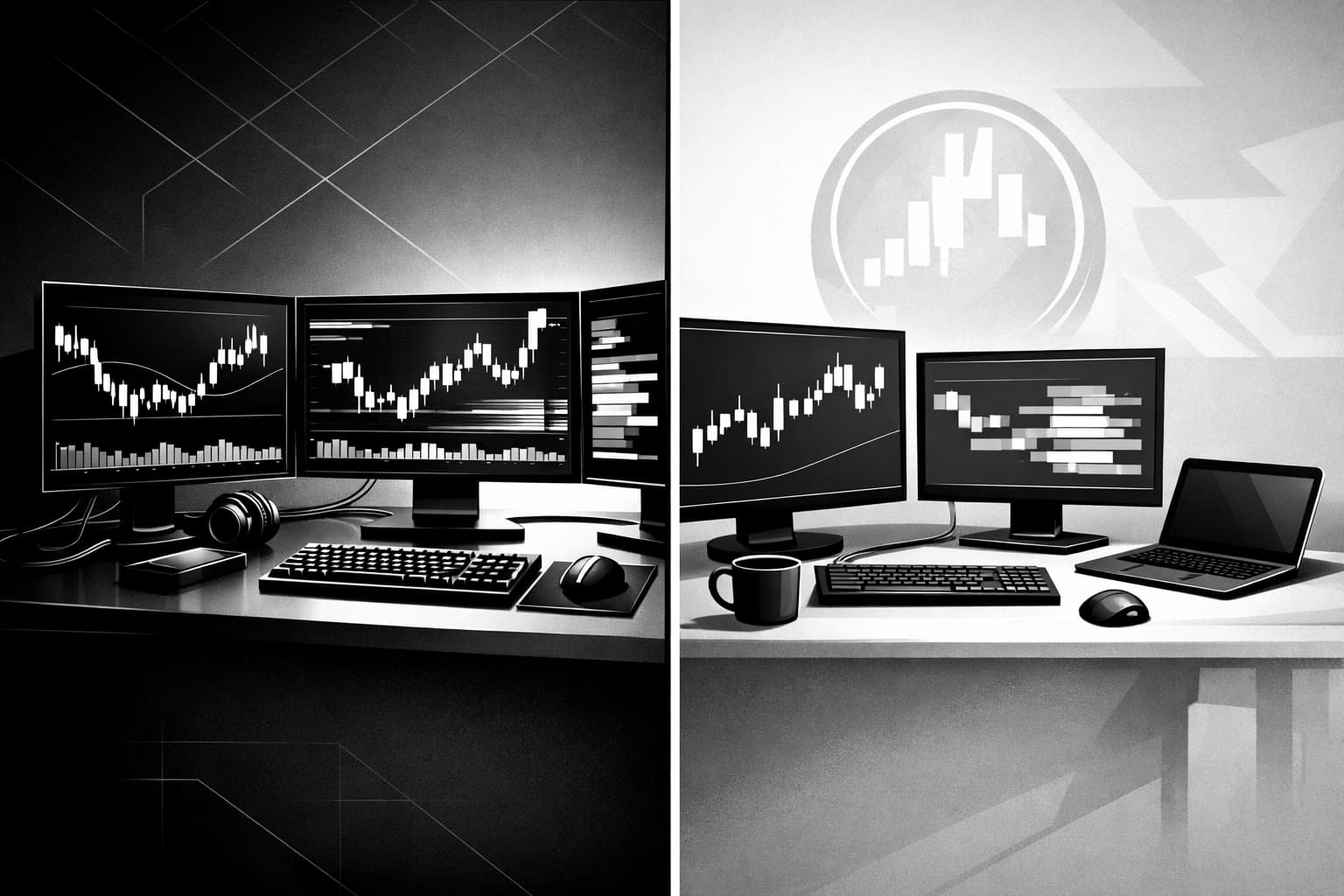
For the serious, data-driven crypto professional obsessed with order flow, market depth, and building custom studies, the answer is a resounding yes. If you require institutional-grade analytics and are willing to master its demanding environment, sierra charts provides a level of execution and analytical depth that most crypto-native platforms still can't touch. It is a high-performance engine for a very specific type of operator.
However, for the vast majority of crypto participants—from beginners to intermediate traders who value ease of use and a modern interface—the platform is simply overkill. The steep learning curve and setup friction are significant hurdles when more accessible and visually intuitive alternatives are readily available. For most, the time investment will not justify the reward.
Frequently Asked Questions
- Is Sierra Chart free?
- Sierra Charts is not free, but it does offer a fully functional free trial to test its features. It's a subscription service with several packages available. Keep in mind that you will also need to subscribe to a separate real-time data feed, which is an additional cost on top of the platform fee.
- Is Sierra Chart better than TradingView?
- The "better" platform depends on your needs. Sierra Chart is unmatched for low-latency execution, in-depth order flow analysis, and rock-solid stability, making it a professional's tool. TradingView is more user-friendly, has strong social features, and offers more direct integrations with a wide range of crypto exchanges.
- How much is Sierra Chart per month?
- Sierra Chart's most popular service packages, like Package 5 and Package 12, typically range from $26 to $46 per month. It's crucial to remember that this price does not include the mandatory real-time data feed from a provider like Denali or dxFeed, which is an additional monthly expense.
- Do professional traders use Sierra Chart?
- Absolutely. Sierra Chart is a top choice for many professional traders, especially in the futures, forex, and equities markets. Its high performance, stability, and advanced order flow tools like the Depth of Market (DOM) make it an industry standard for serious traders who demand precision and reliability.
Author

Crypto analyst and blockchain educator with over 8 years of experience in the digital asset space. Former fintech consultant at a major Wall Street firm turned full-time crypto journalist. Specializes in DeFi, tokenomics, and blockchain technology. His writing breaks down complex cryptocurrency concepts into actionable insights for both beginners and seasoned investors.