Pepe Coin Airdrop Guide: How to Claim Free PEPE Safely in 2026

pepe coin airdrop: What You Will Accomplish
This guide helps you check whether a pepe coin airdrop is real, prepare a safe wallet, confirm eligibility, claim only from a trusted source, and secure your wallet after the claim. You will also learn how to tell the original PEPE token apart from BabyPEPE, REPE, AIRPEPE, and other promotions that borrow similar branding.
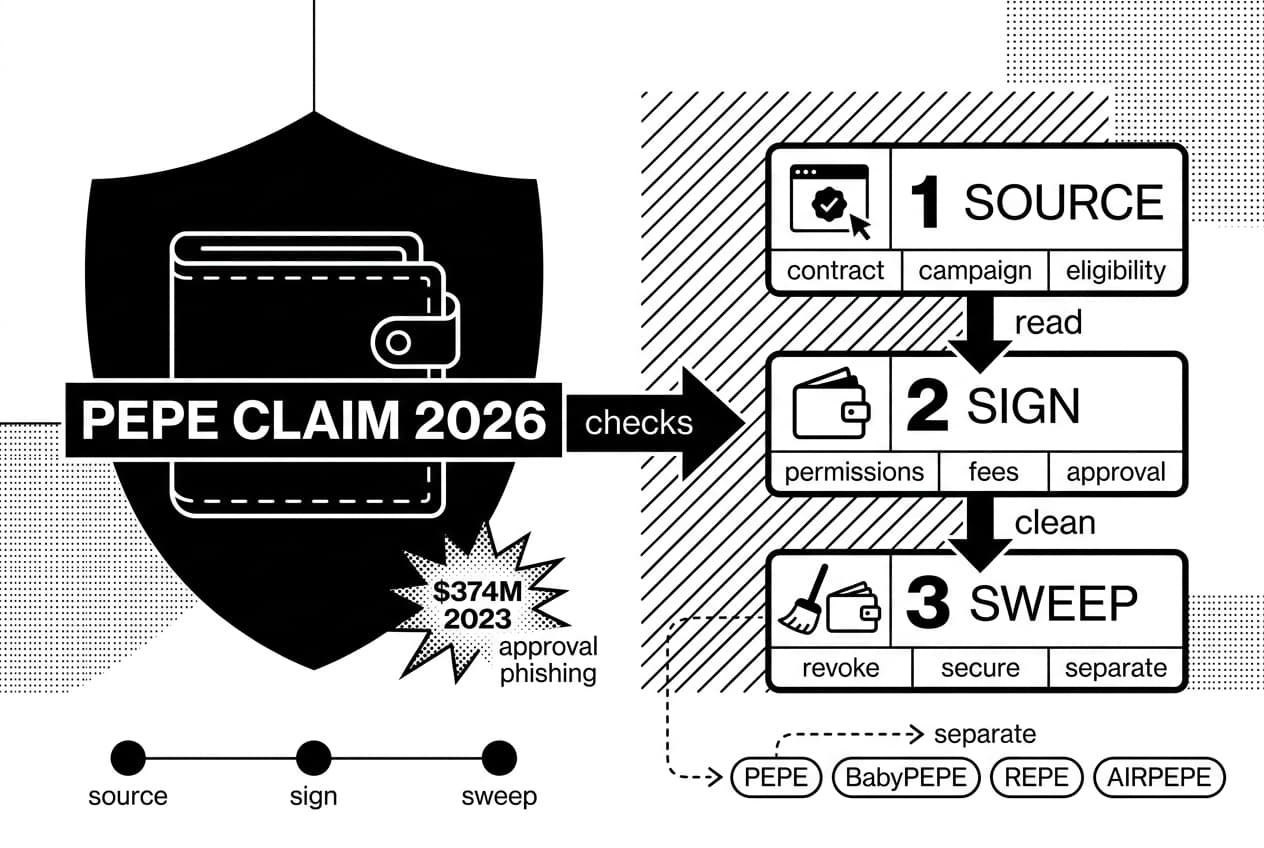
This is not financial advice. Never share your seed phrase with any website, app, account admin, or support chat. Never sign a wallet approval you do not understand. Those two rules stop many airdrop losses before they start.
Important 2026 Safety Note
As of February 2026, you should treat every PEPE claim page as unverified until you confirm the contract, source, eligibility rules, wallet permissions, and fee request. Chainalysis reported $374 million stolen through approval phishing in 2023 (Chainalysis, February 2024). Approval phishing matters here because fake airdrops often ask you to sign a spending permission instead of sending you tokens.
Common framing says a pepe coin airdrop is a quick way to claim free PEPE. The safer view is different: most PEPE airdrop pages should be treated as scam risks first. The original PEPE token does not have an automatic universal claim page, and lookalike tokens often copy the name to attract beginners.
Use this article's SOURCE-SIGN-SWEEP framework before you claim:
- SOURCE: confirm the campaign came from a verified project, exchange, or market listing page.
- SIGN: read the wallet popup before you approve any transaction.
- SWEEP: confirm receipt, then remove risky token approvals after the claim.
Andreas Antonopoulos, author and educator, is widely known for teaching private-key and self-custody safety. His basic security principle fits this guide: if you did not request the interaction, slow down and verify it before you sign.
What Is the pepe coin airdrop Project About?
A pepe coin airdrop is a token distribution event where PEPE or a PEPE-branded project sends free tokens to eligible wallet addresses, holders, exchange users, or campaign participants. Eligibility depends on the campaign rules, but you must verify official sources, the token contract, and wallet permissions before claiming.
PEPE launched in April 2023 as an Ethereum meme token inspired by the well-known frog meme. It reached a market cap above $1.6 billion within weeks, according to CoinGecko data viewed in May 2023. That speed made PEPE visible, liquid, and easy for scammers to imitate.
The original PEPE token uses the Ethereum contract 0x6982508145454Ce325dDbE47a25d4ec3d2311933. Its listed total supply is 420,690,000,000,000 PEPE, shown on Etherscan, February 2026. If a claim page shows a different contract, you are not dealing with the original token.
Original PEPE vs PEPE Spin-Offs
Every token using PEPE in its name is not the same asset. BabyPEPE, REPE, AIRPEPE, MIND PEPE, and chain-specific versions can have their own contracts, rules, and risks. Some are normal third-party projects. Others exist mainly to pull users into unsafe signing prompts.
The contract is the source of truth. Check the PEPE address on CoinGecko, CoinMarketCap, and Etherscan. Then compare it character by character with the address shown on the claim page.
Token | Relation to original PEPE | Beginner risk note |
|---|---|---|
PEPE | Original Ethereum ERC-20 token | Verify the contract before every interaction |
BabyPEPE | Separate token | Several contracts can use similar names |
REPE | Separate token | Do not assume it is connected to PEPE |
AIRPEPE | Separate token | The name is built to sound airdrop-related |
MIND PEPE | Separate token | Check its own rules and contract |
Why Meme Coin Airdrops Spread Quickly
Meme coin campaigns spread quickly because they reward sharing. A page may ask you to repost on X, join a chat group, tag friends, or trade a minimum amount before a deadline. That social loop can make a weak campaign look popular.
Exchange promotions can be safer because tasks happen inside a known account system rather than through an unknown smart contract. Still, you should verify the announcement from the exchange website or app before you act.
Hayden Adams, founder of Uniswap Labs, works in a field where token approvals and swaps are everyday user actions. That context matters for airdrops: a claim should not ask for broad control over unrelated tokens in your wallet.
What You Need Before You Try to Claim PEPE
Before you open any pepe coin airdrop page, collect the items below. Skipping the official link, token contract, or burner wallet is how beginners get drained.
Requirement | Why it matters | Beginner warning |
|---|---|---|
Wallet | Holds tokens and signs transactions | Do not use an exchange deposit address for an on-chain claim |
Gas | Pays the network fee for the claim | A wallet with no ETH cannot claim on Ethereum |
Official link | Reduces phishing risk | Do not use links from DMs, comments, or sponsored search ads |
Token contract | Proves which token you are receiving | Similar names do not mean the same asset |
Block explorer | Lets you inspect transfers, fees, and approvals | If the contract is not verified on Etherscan, stop and investigate |
Burner wallet | Limits loss if a claim page is unsafe | Never test an unknown claim with your main wallet |
Wallet, Network, and Gas Requirements
The original PEPE token is on Ethereum. The contract has been visible on Etherscan since April 2023, according to the PEPE token page on Etherscan, April 2023. Use an EVM-compatible self-custody wallet set to Ethereum mainnet unless the verified campaign rules say otherwise.
Gas costs change by network load. As of February 2026, a simple Ethereum token claim often falls around $2 to $15 in normal conditions, based on live fee ranges shown by the gas tracker on Etherscan, February 2026. If the fee looks far higher, wait and check again later.
Vitalik Buterin, co-founder of the Ethereum Foundation, is tied to the Ethereum ecosystem that popularized smart-contract wallets and token approvals. If you are unsure what approvals mean, review self-custody wallet safety rules before you connect to any claim page.
Use a Burner Wallet for Unknown Campaigns
A burner wallet is a new wallet made for risky interactions. It should hold no valuable tokens, no NFTs, and no old approvals. If a page is malicious, the loss is limited to the small gas amount you added.
For a PEPE airdrop that you have not fully verified, send only the gas you need to the burner wallet. Do not transfer your full PEPE stack there. If the campaign later proves real and you need your main wallet for eligibility, confirm the rules again before connecting it.
Step 1: Verify the pepe coin airdrop Source
Your first action is to prove where the announcement came from. Do this before you connect a wallet, enter an email address, or click any claim button.
Check Official Channels First
Start from the website listed on major market pages or the exchange announcement page, not from a forwarded link. Type the domain directly into your browser. Compare spelling, hyphens, subdomains, and extensions one character at a time.
If the offer came through a YouTube comment, Telegram stranger, Discord ping, or X direct message, assume it is unsafe until proven otherwise. You can also check PEPE community signals and Reddit risks to see whether users are reporting the campaign as safe or suspicious.
Confirm the Token Contract
Copy the original PEPE contract from CoinGecko, CoinMarketCap, or Etherscan. Paste it into a text note. Then compare it with the address shown on the claim page.
One changed character means a different token. Do not rely on logos, frog art, token names, or follower counts. Scammers copy those easily, but they cannot make a different contract become the original PEPE contract.
Warning: Red Flags Before You Connect
The verification process should be slow and boring. Follow these steps in order:
- Check official channels, including the project website, verified social account, exchange announcement, or trusted market listing.
- Compare URLs, including spelling, hyphens, subdomains, and the domain ending.
- Verify the contract against CoinGecko, CoinMarketCap, and Etherscan before you continue.
- Review eligibility for snapshot date, holder rules, account rules, region limits, and deadlines.
- Inspect permissions in the wallet popup before you sign.
- Avoid seed phrase requests, because no legitimate airdrop needs your 12- or 24-word recovery phrase.
- Reject payment demands that ask you to send money to open up a free claim.
Here is a safe-vs-unsafe signing transcript you can use as evidence while checking the popup:
Wallet prompt text | What it likely means | Action |
|---|---|---|
Receive tokens from contract | A normal claim or transfer | Continue only if the source and contract match |
Approve spend limit: unlimited | The contract can move your tokens later | Reject unless you fully understand why it is needed |
setApprovalForAll | The contract may control a full token or NFT category | Reject for a simple airdrop claim |
Andreas Antonopoulos, author and educator, has built much of his public education around the idea that private keys and signatures carry real consequences. Treat every wallet signature like a legal approval, not like a website login.
Step 2: Check Your Eligibility for Free PEPE
After the source checks out, read the eligibility rules. Do not connect your wallet yet. A legitimate campaign should explain who qualifies before it asks for a signature.
Common Eligibility Criteria
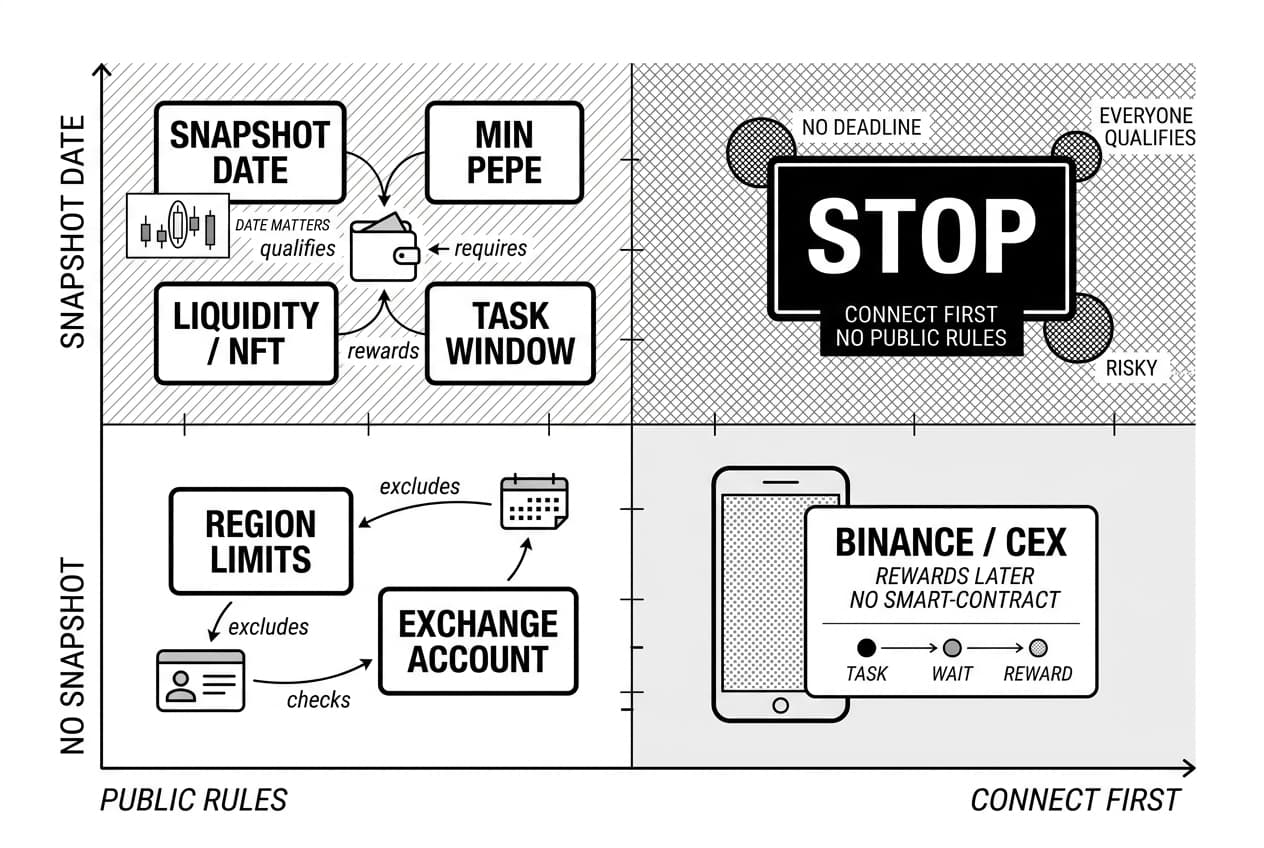
Most PEPE-related campaigns use one or more of these models:
- Wallet snapshot dates: The campaign records balances at a specific block or date. Buying after the snapshot does not help.
- Minimum holdings: The rules may require a minimum PEPE balance at snapshot time.
- Exchange account rules: A centralized campaign may require identity verification, account age, or a trading task.
- Region limits: Some users are excluded because of local rules.
- Task completion: Social follows, quizzes, or trading volume may be required inside a stated window.
- Liquidity or NFT ownership: Some campaigns reward liquidity providers or holders of specific collections.
Snapshot-based airdrops are a standard distribution model described by CoinMarketCap Academy, 2024. The date matters most. If a site says everyone qualifies with no snapshot, no public rules, and no deadline, treat it as risky.
Warning: If the page says you must connect first to see the rules, stop. Real campaigns can publish the rules publicly.
How to Claim PEPE Airdrop on Binance or CEX Campaigns
Centralized exchange campaigns are different from on-chain claims. You normally complete tasks inside your exchange account and receive rewards later without signing a smart-contract transaction.
- Open the official exchange app or type the exchange URL directly in your browser.
- Go to the rewards area or the campaign page from the official announcements section.
- Check the account requirements, such as verification level, trade volume, or subscription task.
- Complete the tasks before the published end time.
- Return to the same campaign page after the end date to confirm whether the reward was credited.
The most common beginner mistake is finishing tasks after the deadline. Write down the end date, time zone, and reward distribution date. Do not trust screenshots from social media that promise a larger bonus than the official campaign page shows.
Step 3: Connect Your Wallet and Claim Safely
Now you have verified the source and checked eligibility. This is the point where you may connect a wallet, but only if every earlier check passed.
- Open the official claim page. Use the URL you verified in Step 1. Type it directly into your browser bar.
- Select the correct network. For original PEPE, start with Ethereum mainnet. If the verified campaign names another network, match that network in your wallet.
- Click the "connect wallet" button. Choose your wallet provider and approve only the basic connection request.
- Check the gas estimate. Compare the fee with the current gas range on Etherscan. If the fee looks strange, close the popup and wait.
- Click the "claim" button. Review the transaction line by line before you confirm.
Review the Transaction Before Signing
A normal airdrop claim should not need broad control over the assets already in your wallet. If the popup asks for more than a claim, reject it and investigate.
Reject the transaction if you see:
- A request to approve unlimited spending from your wallet
- A prompt asking you to transfer ETH, PEPE, or another asset to a third-party address
- A setApprovalForAll function call for tokens or NFTs
Hayden Adams, founder of Uniswap Labs, operates in a DeFi setting where approval design affects user safety. For this guide, the practical rule is simple: a free PEPE claim should not ask for permanent access to unrelated tokens.
Pro Tip: Do Not Rush the Final Click
Watch for countdown pressure. If the page says "your PEPE expires in 4:59" or "only 12 spots left," treat that as a warning. Real campaigns publish fixed windows and rules. They do not need panic timers on the final signing screen.
Pause for 30 seconds before clicking confirm. Read the address, fee, and permission one more time. A safe claim will still be available after you review it.
Step 4: Confirm the PEPE Arrived and Secure Your Wallet
After you click claim, your job is not finished. You need to confirm the transfer and clean up permissions.
Check the Transaction on a Block Explorer
Copy the transaction hash from your wallet activity tab and paste it into Etherscan if the claim used Ethereum. Look for a successful status and a token transfer line showing PEPE moving to your address.
If the transaction is pending, wait at least 10 minutes before taking action. If it failed, the fee may have been too low or the contract call may have reverted. If the tokens are not visible in your wallet, import the token using the official PEPE contract address on Etherscan.
Warning: Wrong network selection is a common reason tokens appear missing. If you claimed on Ethereum but your wallet is viewing another network, switch back to Ethereum first.
Revoke Risky Approvals
After any claim, check whether you granted a token approval. Go to Revoke.cash, connect the same wallet, and remove approvals tied to contracts you no longer need.
This final sweep is part of the SOURCE-SIGN-SWEEP framework. You verified the source, reviewed the signature, and now you remove leftover risk. Do not leave unlimited approvals sitting in a wallet that holds valuable assets.
Once you confirm the PEPE balance and remove stale permissions, consider safer long-term storage. Moving tokens away from a hot wallet into a hardware wallets versus exchange custody setup can reduce your exposure to future phishing attempts.
Key Risks, Alternatives, and Next Steps
Legitimate PEPE airdrops are uncommon, and many online offers are unrelated promotions or scams. If no verified campaign exists, do not chase a fake free claim with your main wallet.
Watch for these red flags before interacting with any PEPE airdrop offer:
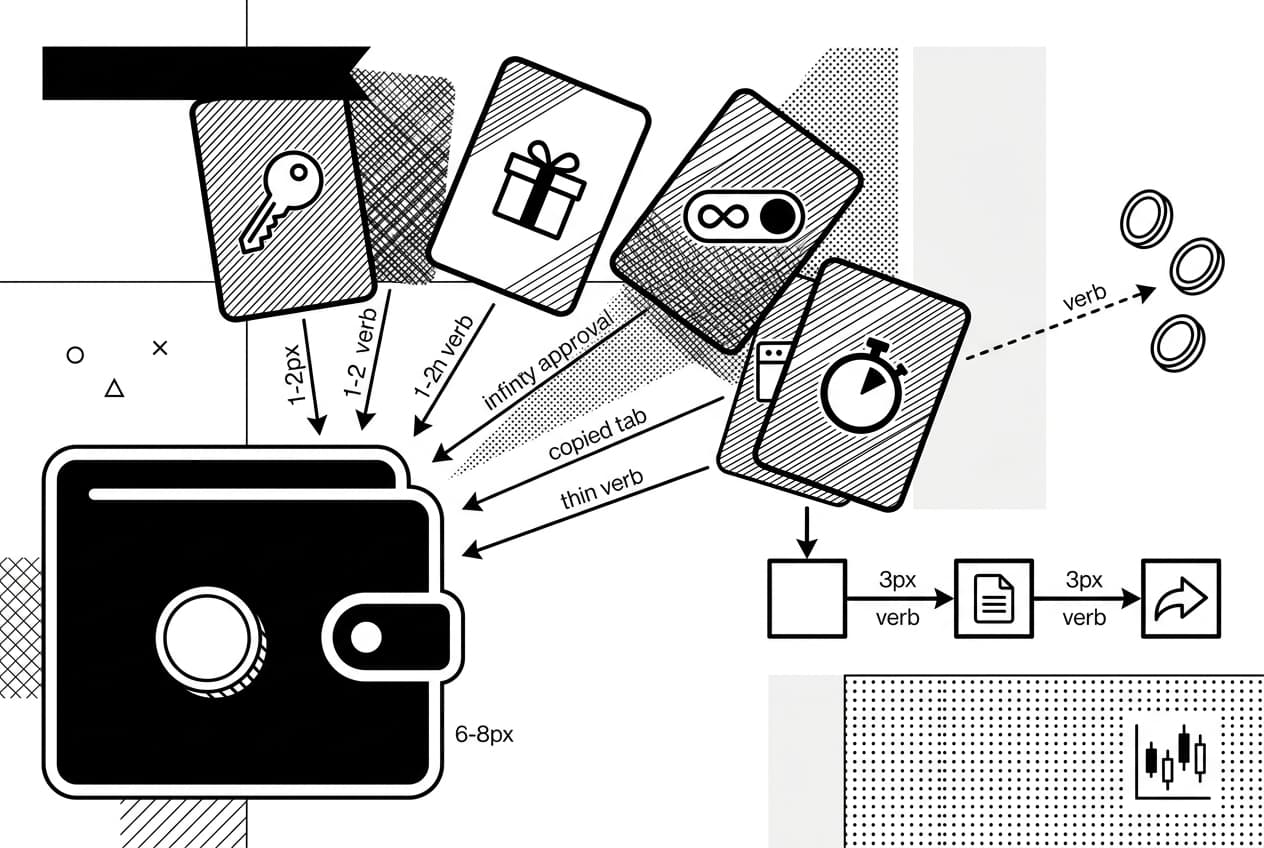
- Seed phrase or private key requests: no legitimate airdrop ever needs them.
- Fake bonuses: claims such as "double your PEPE today" are pressure tactics.
- Unlimited approvals: a free claim should not need endless spend access.
- Copied domains: typo-squatted sites can look almost identical to the real page.
- Urgent countdowns: panic timers are designed to make you skip checks.
- Spin-off branding: BabyPEPE, REPE, AIRPEPE, and similar tokens are not the original ERC-20 PEPE contract on Etherscan.
Andreas Antonopoulos, author and educator, teaches security from the user-control side of crypto. That mindset applies here: assume the claim is unsafe until you prove the source, contract, and signature are safe.
Best Alternatives to a PEPE Airdrop
If no verified PEPE campaign is running, the safer option may be to buy a small amount through a reputable exchange rather than connect to an unknown site. PEPE remains tracked on major market pages, including CoinMarketCap, February 2026, so you can check price, volume, contract, and market data before taking any risk.
You can also watch for verified exchange reward programs, referral bonuses, or trading competitions that list PEPE as a prize. These usually have written terms, account-based distribution, and no smart-contract approval. Our guide to safer crypto airdrop farming strategies explains how to evaluate those opportunities without exposing your main wallet.
For community updates, start from official project and market-listing links. Do not treat third-party airdrop calendars as your first source.
Summary and Next Steps
Here is the short version: verify the source, compare the contract, read eligibility rules, use a burner wallet when risk is unclear, inspect every signature, confirm the token transfer, and revoke approvals after the claim.
If you are still deciding whether PEPE fits your plan, read whether Pepe Coin is dead in 2026 and review the PEPE price scenarios and risks before committing capital. Free tokens are not free if they cost you your wallet.
Frequently Asked Questions
- Is Pepe a dead coin?
- Price weakness alone doesn't mean a project is dead. Before drawing that conclusion, check PEPE's 2026 liquidity levels, active exchange listings, daily trading volume, holder distribution, community engagement, and any official development announcements. A coin with strong on-chain activity and growing holders is rarely truly dead.
- Which crypto airdrop is coming soon?
- Upcoming airdrops shift constantly, so track them through official project channels, exchange reward hubs, CoinMarketCap's airdrop section, and reputable airdrop calendars. Never trust unsolicited DMs, sponsored sites promising free tokens, or any source requesting your seed phrase — those are scams, not legitimate campaigns.
- How much is 1,000,000 Pepe worth in dollars?
- Simply multiply 1,000,000 by PEPE's current market price, which you can find on a trusted tracker like CoinGecko, CoinMarketCap, or your exchange. Meme coin prices move fast, so that dollar value can shift significantly within minutes during active or volatile trading sessions.
- What is the Pepe Coin airdrop project about?
- A PEPE airdrop is a token distribution campaign that may reward eligible wallets, exchange users, holders, traders, or community members with free tokens. Always verify that any campaign is officially endorsed, because many PEPE-branded airdrops circulating online are unrelated third-party promotions or outright fraudulent schemes.
Sources
Author

Crypto analyst and blockchain educator with over 8 years of experience in the digital asset space. Former fintech consultant at a major Wall Street firm turned full-time crypto journalist. Specializes in DeFi, tokenomics, and blockchain technology. His writing breaks down complex cryptocurrency concepts into actionable insights for both beginners and seasoned investors.