Mining Rig Cooling: A 2026 Guide to Fans & Immersion
Why Effective Mining Rig Cooling is Essential for Profitability
So, you’ve assembled your mining rig, and it’s running full tilt. You can hear the fans whirring, and you can definitely feel the heat pouring off it. That intense heat isn't just a byproduct; it's a direct threat to your bottom line. When components like GPUs and ASICs get too hot, they automatically slow down to protect themselves from damage. This process, known as thermal throttling, directly reduces your hashrate, which means you earn less crypto for your efforts.
Beyond the immediate performance hit, excessive heat drastically shortens the lifespan of your expensive hardware. Running components at high temperatures day in and day out leads to premature failure, forcing you into costly replacements. Effective mining rig cooling isn't an optional upgrade; it's a core part of building a profitable and sustainable operation. Learning how to cool your mining rig properly ensures you get the maximum performance and longevity from your investment.
Understanding the Enemy: Heat, Humidity, and Dust
Before you can effectively cool your mining rig, you need to know exactly what you're up against. It's not just about raw temperature. The battle for optimal performance is fought on three fronts: the heat your components generate, the humidity in the air, and the dust that settles everywhere. Winning this battle is the first step toward a stable and profitable setup.
Key Heat Sources: GPUs, ASICs, and PSUs
The heart of your operation is also its biggest furnace. Your GPUs (Graphics Processing Units) or ASICs (Application-Specific Integrated Circuits) are working tirelessly, solving complex problems. This intense work converts a massive amount of electricity into heat. Don't forget the Power Supply Unit (PSU), either. It works hard to feed your components clean power, and that conversion process generates significant heat of its own.
Environmental Factors to Control
Your rig doesn't exist in a vacuum. The room it's in has a huge impact on your mining rig cooling strategy. High ambient temperatures mean your fans are just pushing warm air around, making it harder to cool anything. Humidity is another sneaky enemy; too much moisture in the air can lead to corrosion on connectors and circuit boards over time. Finally, there's dust. It's more than just an annoyance—it clogs fan bearings and builds up on heatsinks, creating an insulating layer that traps heat right where you don't want it.
Method 1: Mastering Basic Air Cooling
Now that you understand the enemies of your mining rig—heat, dust, and humidity—let's tackle your first line of defense. Air cooling is the most common and cost-effective way to keep your components running smoothly. It's the foundation of any good mining rig cooling strategy, and getting it right from the start will save you a lot of headaches. Let's walk through the three essential steps to master it.
Step 1: Choose the Right Frame or Case
Where you house your components makes a huge difference. You have two primary options, each with distinct advantages.
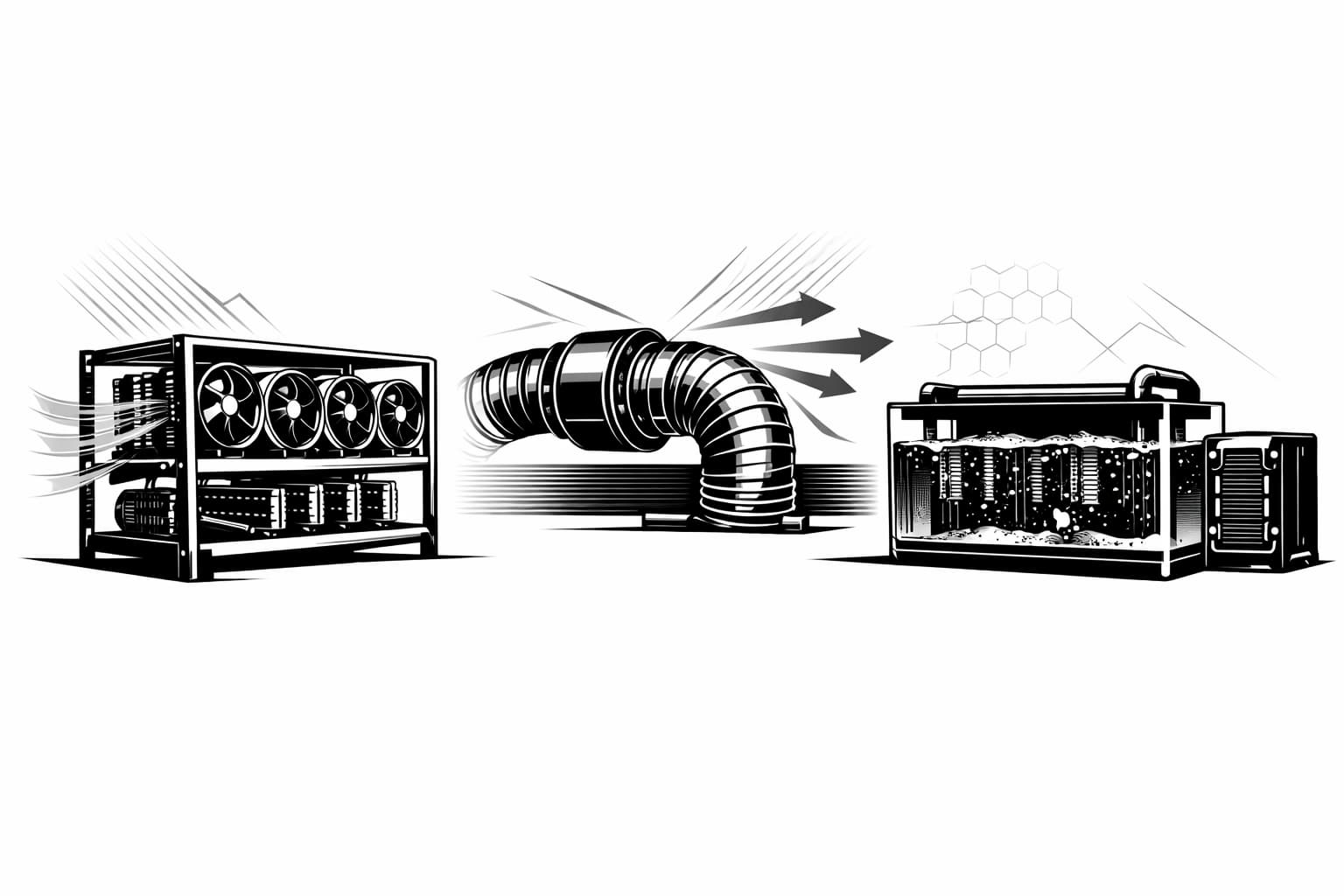
- Open-Air Mining Frames: These are essentially metal racks designed to hold your GPUs and other parts with maximum exposure to the air. They are fantastic for heat dissipation because hot air isn't trapped. If your rig is in a well-ventilated garage or a dedicated room where noise isn't a concern, an open-air frame is usually the best choice for a cool mining rig.
- Enclosed Server Cases: If your rig needs to live in a shared space, an enclosed case can be a better option. It helps contain noise and protect components from dust and accidental bumps. However, you must be much more strategic with your fan setup, as you'll be forcing air through a confined space.
Step 2: Optimize Fan Placement and Airflow
Simply having fans isn't enough; they need to work together as a team. Your goal is to create a consistent and predictable path for air to travel across your hot components. Think of it as a wind tunnel for your rig.
Establish a clear "intake" and "exhaust" side. Intake fans pull cool, ambient air into the frame or case, while exhaust fans push the hot air generated by your GPUs and CPU out. A common setup is to have intake fans on one side of the rig and exhaust fans on the opposite side. This creates a push-pull effect, ensuring hot air is immediately removed and replaced with cool air, preventing it from recirculating and heating up your components.
Step 3: Select High-Performance Fans
Not all fans are created equal. When shopping, you’ll see a rating called CFM, or Cubic Feet per Minute. This tells you how much air a fan can move. For mining, a higher CFM is almost always better. But there's another factor to consider.
You'll encounter two main types of fans: airflow fans and static pressure fans. Airflow fans are designed to move large volumes of air in an unobstructed space, making them perfect for open-air frames. Static pressure fans are built to push air through resistance, like a dense heatsink or a dusty filter in a case. If you're building in an enclosed case, you'll want static pressure fans as your intakes to ensure cool air actually reaches your components.
Method 2: Advanced Ventilation for Larger Setups
Once you move beyond one or two rigs, simply pointing fans at them won't be enough. The ambient temperature of your entire room will rise, creating an environment where your GPUs can never truly cool down. The solution is to stop thinking about cooling individual rigs and start thinking about managing the entire space. This level of mining rig cooling treats the room itself as a critical component of your system.
Using Grow Tents to Isolate Heat
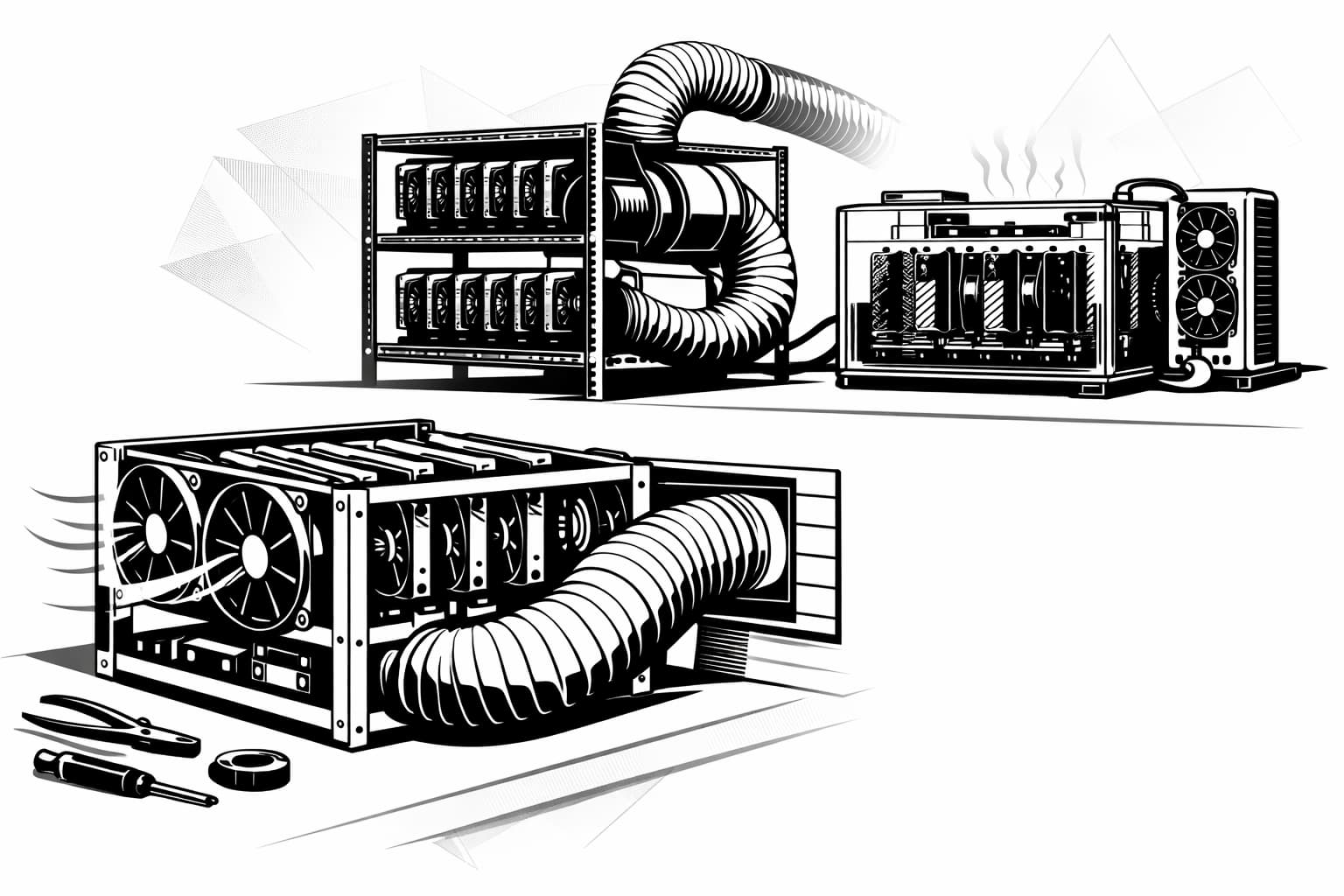
One of the most effective and popular methods for managing a multi-rig setup is to isolate the heat source. A grow tent is perfect for this. You can place your rigs inside the sealed tent, which contains all the heat they produce. Then, using an inline exhaust fan and ducting, you can pull that super-heated air directly from the tent and vent it out a window or dedicated exhaust port. This keeps your main room cool and quiet while efficiently dealing with the thermal output. It's a clean, contained way to cool a mining rig farm without air conditioning the entire building.
Dedicated HVAC and Exhaust Systems
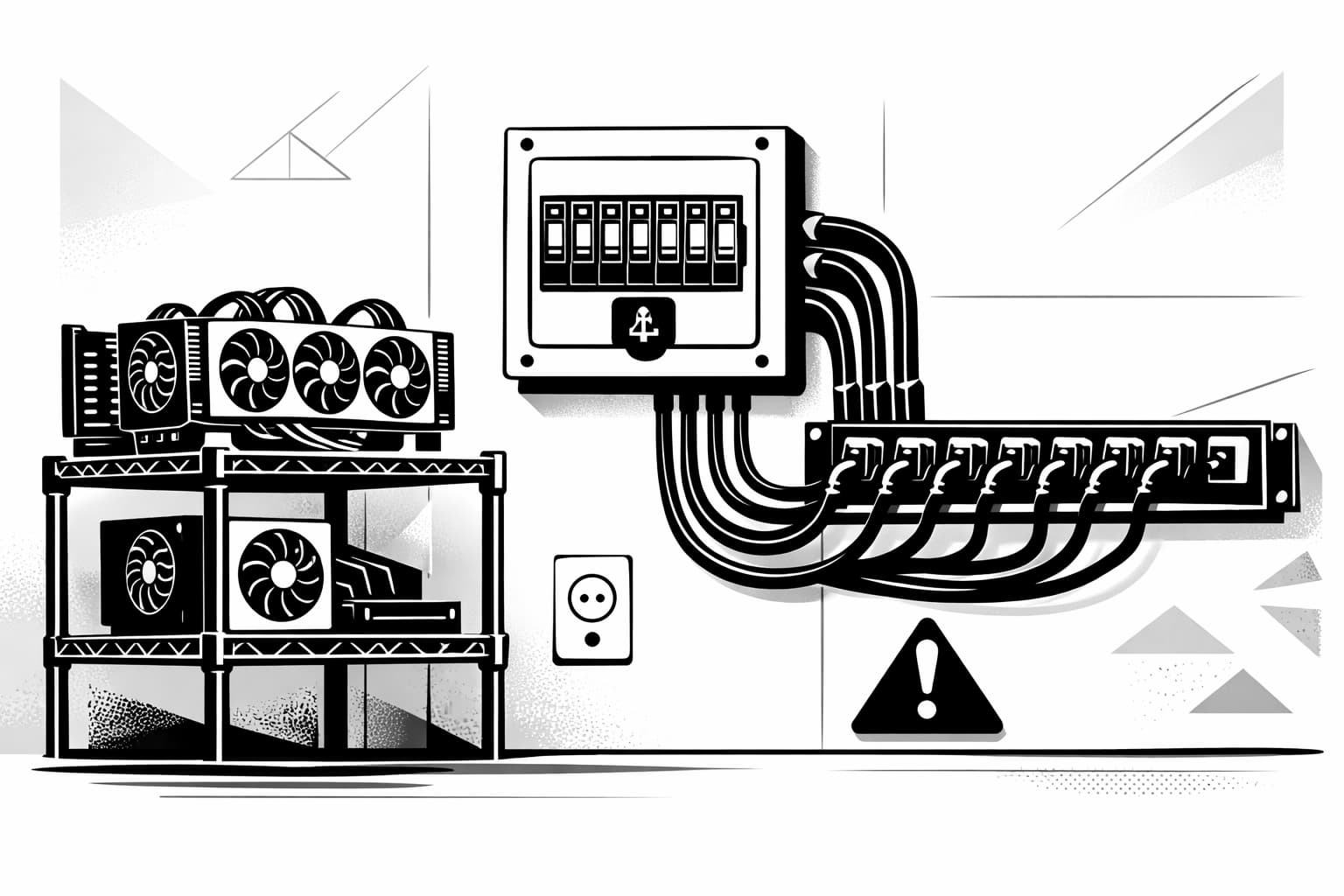
For those with a permanent mining space like a garage, shed, or basement, a more built-in solution might be the answer. This involves installing dedicated ventilation. A powerful exhaust fan, similar to what you’d find in a workshop, can continuously pull hot air out of the room while intake vents draw in cooler replacement air. For ultimate control, many miners invest in a ductless mini-split air conditioner. These units are incredibly efficient and can maintain a perfect temperature year-round. Just remember that these powerful systems have significant power demands, so ensure you have a proper electricity setup before you begin.
Method 3: Leveling Up with Liquid Cooling
If you've optimized your fans and ventilation but your rig still runs too hot, it might be time to consider liquid cooling. While more complex than air cooling, this method offers superior heat dissipation and can operate much more quietly. The basic principle is simple: instead of blowing air over a heatsink, a special liquid absorbs heat from your components, travels through tubes to a radiator, and then fans cool the liquid before it circulates back. This process is far more efficient at transferring thermal energy.
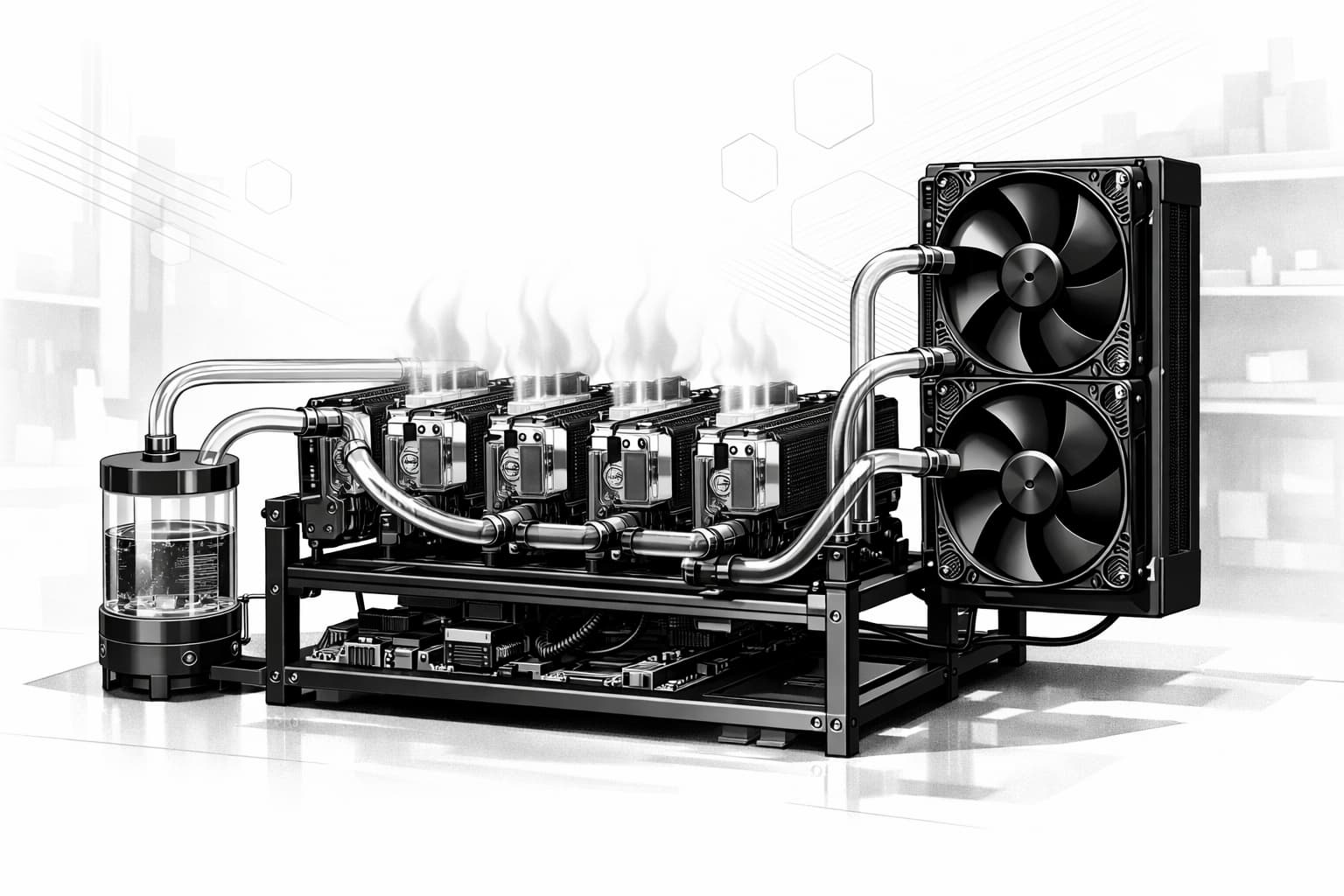
For your mining rig cooling journey, you have two main paths into the world of liquid: the simple all-in-one cooler or the powerful custom loop.
AIO (All-in-One) Coolers for Simplicity
Think of an All-in-One, or AIO, cooler as a user-friendly starter kit for liquid cooling. It comes as a pre-assembled, sealed unit containing the pump, tubing, liquid, and radiator. You just have to mount the block to your component (usually the CPU) and attach the radiator to your case. AIOs are a fantastic way to get significant cooling improvements without the headache of building a system from scratch. They are especially effective for taming a hot CPU, which can contribute a surprising amount of heat to your rig's environment.
Custom Loops for Maximum Performance
For those who want the absolute best performance and a project to tackle, there's the custom loop. This is the enthusiast's choice. You buy each component separately—the water block for the component, a pump, a reservoir to hold the fluid, tubing, and one or more radiators. This approach allows you to cool multiple components, making it ideal for cooling high-performance GPUs in a single, efficient loop. The upside is unmatched cooling potential. The downside? It's expensive, complex to assemble, and requires careful maintenance. There is also a small but real risk of leaks, which can be catastrophic for your hardware if not handled properly.
Method 4: The Ultimate Solution: Immersion Cooling
If you've pushed air and liquid cooling to their limits and still need more, welcome to the final frontier of mining rig cooling. Immersion cooling is exactly what it sounds like: submerging your entire mining rig, ASICs and all, into a tank of specialized, non-conductive fluid. This method offers unparalleled heat transfer, eliminates fan noise completely, and protects your hardware from dust and humidity.
By directly wicking heat away from every component, the dielectric fluid provides the most efficient way to cool a mining rig. It’s a game-changer for performance and hardware longevity, but it represents a significant step up in complexity and cost. Let's look at the main types and determine if this advanced solution is a good fit for your operation.
Single-Phase vs. Two-Phase Immersion
There are two primary approaches to immersion cooling. Single-phase immersion, the more common and accessible option for home miners, works like a high-tech radiator. The dielectric fluid absorbs heat from the miners and is then pumped out of the tank to a heat exchanger, where it's cooled before being circulated back in. The fluid always stays in its liquid state.
Two-phase immersion is even more effective but also far more complex. It uses engineered fluids with a very low boiling point. As the miners generate heat, the fluid boils, turning into a vapor that rises. This vapor hits a condenser coil at the top of the sealed tank, turns back into a liquid, and rains down on the hardware, completing the cycle. This process offers incredible cooling power but requires specialized equipment and is typically reserved for large-scale data centers.
Is Immersion Cooling Right for You?
Before you start shopping for tanks and dielectric fluid, you need a reality check. Immersion cooling is not a casual upgrade. The initial investment is substantial, with costs for the tank, fluid, pump, and heat exchanger easily running into thousands of dollars, even for a small setup. You also need dedicated space that can support the weight and contain any potential spills.
This method is best suited for serious, dedicated miners who are running multiple high-power ASICs and are looking to maximize density, overclocking potential, and efficiency. If you're treating mining as a business and have the technical confidence to manage a complex fluid dynamics system, immersion cooling can offer an incredible return. For most hobbyists, however, the cost and complexity will outweigh the benefits.
Choosing Your Cooling Strategy: A Comparison Table
We've walked through the main options, from simple fans to full submersion. To help you decide on the best mining rig cooling approach for your budget and technical comfort level, here is a quick comparison of the methods we've covered. Use this chart to see how each solution stacks up on the factors that matter most.
Method | Est. Cost | Complexity | Noise Level | Cooling Efficiency |
|---|---|---|---|---|
Basic Air Cooling | $ | Low | High | Fair |
Advanced Ventilation | $$ | Medium | Medium-High | Good |
Liquid Cooling | $$$ | High | Low | Excellent |
Immersion Cooling | $$$$ | Very High | Silent | Superior |
Conclusion: Maintain Your Cool for Long-Term Success
Choosing the right mining rig cooling solution is a personal decision based on your budget, scale, and technical comfort. The best path for most is to master air cooling first. As your operation grows, you can then explore advanced ventilation or even immersion to keep your hardware running efficiently for years to come.
Frequently Asked Questions
- Which mining rig is most profitable?
- Profitability depends on your rig's efficiency, electricity cost, and the crypto's market price. However, any rig becomes unprofitable without effective cooling. Overheating destroys hashrate and can cause permanent hardware damage, quickly erasing any potential gains. Proper cooling is essential for maintaining profitability, regardless of the hardware you choose.
- Can you make $1000 a month with crypto mining?
- Yes, it's possible, but it requires a significant initial investment in powerful hardware and access to low electricity rates. Reaching this goal relies on consistent performance, which is only achievable with a stable cooling solution. Maintaining an optimal temperature ensures your rig delivers the steady hashrate needed for predictable monthly earnings.
- How long will it take to mine 1 BTC?
- The time required to mine 1 BTC depends entirely on your rig's hashrate compared to the Bitcoin network's overall mining difficulty. To earn rewards as quickly as your hardware allows, it must run at its peak potential. A well-cooled rig prevents thermal throttling, ensuring you achieve the maximum possible hashrate.
- Can you mine 1 Bitcoin in a day?
- For an individual, mining a full Bitcoin in a single day is practically impossible. This feat would require a massive, industrial-scale mining farm. These operations depend on advanced cooling solutions, such as powerful ventilation systems or full immersion cooling, to manage heat and keep thousands of machines running efficiently 24/7.
Sources
Author

Crypto analyst and blockchain educator with over 8 years of experience in the digital asset space. Former fintech consultant at a major Wall Street firm turned full-time crypto journalist. Specializes in DeFi, tokenomics, and blockchain technology. His writing breaks down complex cryptocurrency concepts into actionable insights for both beginners and seasoned investors.