Ethereum Options Trading: A Complete Step-by-Step Guide (2026)
What Are Ethereum Options? (And Why Trade Them?)
Ethereum options are financial contracts that give you the right, but not the obligation, to buy or sell a specific amount of Ethereum (ETH) at a predetermined price on or before a specific date. A contract to buy is called a "call" option, while a contract to sell is a "put" option. Think of them as tools that offer flexibility and strategic advantages far beyond simply buying and holding ETH.
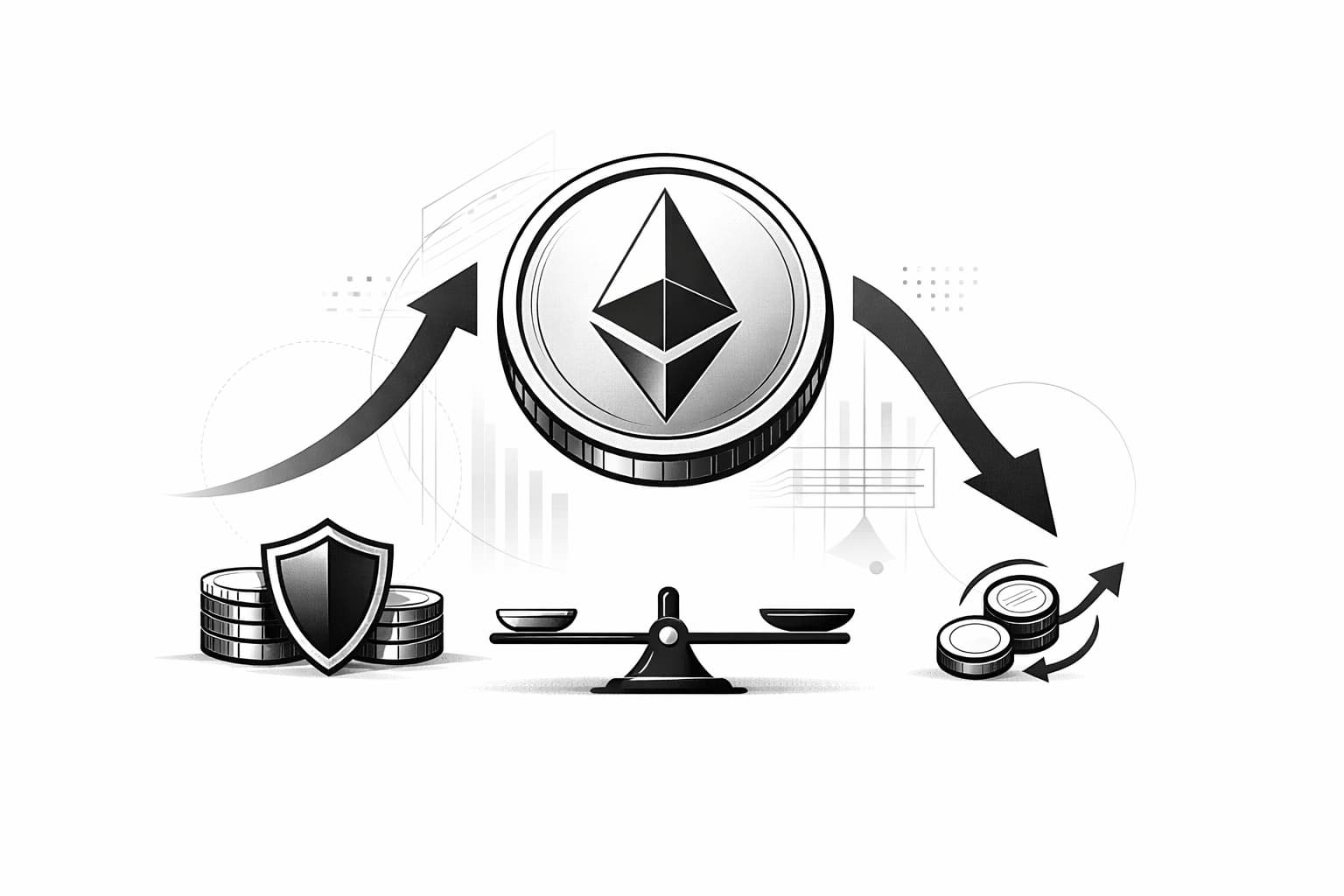
So, why would you trade them? For starters, trading ethereum options allows you to speculate on ETH's price movements with significantly less capital than buying the asset outright. You can also use them to hedge your existing crypto portfolio, protecting your holdings against potential price drops. Finally, some traders sell options contracts to generate a consistent stream of income from the premiums they collect.
Call Options vs. Put Options Explained
Imagine you want to buy a house but need a month to secure your financing. You could pay the owner a non-refundable deposit to lock in the current price. This deposit gives you the right to buy the house at that price within the month. This is exactly how a call option works. You pay a small fee (the premium) for the right to buy ETH at a set price (the strike price) later.
On the other hand, a put option is like an insurance policy. You pay a premium to protect the value of your asset. If the price of your ETH drops, your put option gives you the right to sell it at the higher, pre-agreed price, limiting your potential losses. It's your safety net against a market downturn.
Key Terminology: Strike Price, Expiration, and Premium
Before you make your first trade, you must understand these three core concepts. They are the foundation of every options contract on the Ethereum network and beyond.
- Strike Price: This is the locked-in price at which the option contract allows you to buy (for a call) or sell (for a put) the underlying ETH.
- Expiration Date: Every option has a shelf life. This is the date when the contract becomes void and your right to buy or sell at the strike price disappears.
- Premium: This is the price you pay to purchase the options contract itself. You pay this upfront, and it's the maximum amount of money you can lose when buying an option.
How to Trade Ethereum Options: A 5-Step Guide
Now that you understand the "what" and "why" behind ethereum options, let's get into the "how." This is where theory meets action. We'll walk through the entire process together, from picking a trading venue to managing your first position. Follow these five steps to place your first trade with confidence.
Step 1: Choose a Crypto Options Trading Platform
Your first decision is where you'll be trading. Platforms for ethereum options generally fall into two categories:
- Centralized Finance (CeFi): These are exchanges run by a company, like Deribit or Bybit. They often offer high liquidity (meaning it's easy to buy and sell) and advanced trading tools. The downside is that you have to trust the company with your funds.
- Decentralized Finance (DeFi): These platforms, such as Lyra or Hegic, run on the blockchain itself using smart contracts. This gives you self-custody over your assets, which many traders prefer for security. However, they can sometimes have lower liquidity and higher gas fees.
For beginners, a CeFi platform is often easier to start with due to its user-friendly interface and deeper order books. However, if self-custody is your top priority, exploring a DeFi option is a great choice.
Step 2: Fund Your Account and Understand Margins
Once you've selected a platform and created an account, you'll need to deposit funds. Most platforms accept ETH or a stablecoin like USDC or USDT. The process is usually as simple as finding the "Deposit" button and sending crypto from your personal wallet to the address provided.
It's also important to understand the concept of margin. If you are just buying options, you only need to pay the premium upfront. But if you plan to sell (or "write") options, you'll need to post collateral. This is known as the margin requirement, and it acts as a security deposit to ensure you can cover the position if the market moves against you.
Step 3: Learn to Read an Ethereum Options Chain
The options chain is your main dashboard. It might look intimidating at first, but it's just a table of all available options contracts. Here’s what to look for:
- Expiration Dates: Usually listed across the top. This is the date the option contract becomes void.
- Strike Prices: Listed down the center. This is the price at which you can buy (for a call) or sell (for a put) ETH if you exercise the option.
- Calls and Puts: Call options are typically on the left side of the chain, and put options are on the right.
- Volume and Open Interest: These columns show trading activity. Volume is the number of contracts traded today, while open interest is the total number of contracts currently active. High open interest suggests good liquidity.
Step 4: Place Your First Trade (A Practical Example)
Let's imagine you're bullish on Ethereum. You believe the price, currently at $5,000, will rise in the next month. You can use an options contract to act on this belief.
- You go to the options chain and select an expiration date one month from now.
- You find a call option with a strike price of $5,500. This gives you the right to buy ETH at $5,500.
- The table shows the premium (the price of the option) is $150. You decide to buy one contract.
- You click on the contract, enter "1" as the quantity, and confirm your order. You have just spent $150 to control 1 ETH worth of potential upside. Your maximum loss is limited to the $150 premium you paid.
Step 5: Manage and Close Your Position
After you've bought your option, there are three primary ways your trade can conclude:
- Sell to Close: If the price of ETH rises as you predicted, the value of your call option premium will also increase. You can sell your contract back to the market before it expires to lock in a profit. This is the most common approach for traders.
- Let it Expire: If ETH's price does not rise above your $5,500 strike price by the expiration date, your option will expire worthless. You lose the $150 premium you paid, and that's it.
- Exercise the Option: If ETH is trading well above $5,500 at expiration (for example, at $6,000), you could exercise your right to buy 1 ETH for $5,500 and immediately sell it for the market price of $6,000 for a profit (minus your premium).
Understanding these outcomes is key to managing your risk and reward when trading ethereum options.
4 Popular Ethereum Options Trading Strategies for 2026
Now that you understand the mechanics of buying and selling, let's explore how you can apply them. Think of options as tools in a toolkit; the right tool depends on the job. Here are four common strategies you can use with ethereum options, starting with the most straightforward and moving to slightly more advanced concepts.
Covered Call: Earning Income on Your ETH
If you're holding Ethereum for the long term, a covered call is a fantastic way to generate extra income. The strategy involves selling a call option against the ETH you already own. You collect a premium from the buyer for doing this. If the price of ETH stays below the strike price by the expiration date, you keep the premium and your ETH. The main risk is that if ETH's price soars past your strike price, you'll have to sell your ETH at that lower price, missing out on potential upside.
Protective Put: Hedging Against a Price Drop
Worried about a sudden market downturn? A protective put acts like an insurance policy for your Ethereum holdings. You buy a put option, which gives you the right to sell your ETH at a specific price (the strike price). If the price of Ethereum falls sharply, your put option gains value, offsetting the losses on your spot holdings. This is a common strategy for those who want to hold their assets but need a short-term shield against volatility. It's a powerful tool to help you survive a crypto crash without selling your position.
Long Call/Put: Simple Directional Bets
This is the most direct way to trade ethereum options. If you believe the price of ETH is going to rise significantly, you can buy a call option. Your potential profit is theoretically unlimited, while your risk is capped at the premium you paid for the option. Conversely, if you are bearish and expect the price to fall, you can buy a put option. This gives you the right to sell at a higher price, profiting as the market price drops. Your risk is again limited to the cost of the option.
Long Straddle: Profiting from High Volatility
Sometimes you might expect a huge price swing but are unsure of the direction. Maybe a major network upgrade or regulatory news is on the horizon. A long straddle involves buying both a call option and a put option with the same strike price and expiration date. You profit if the price of Ethereum makes a big move in either direction—up or down. The position only loses money if the price stays relatively flat, as the premiums paid for both options would expire worthless.
Understanding the 'Greeks' in ETH Options
After exploring a few trading strategies, you're ready to look under the hood. To truly manage your risk and understand why your option's price is changing, you need to get familiar with the 'Greeks'. These are simply metrics that measure an option's sensitivity to different factors. Don't worry about the complex math; let's focus on what they mean for your trades.

Delta: The Measure of Price Sensitivity
Think of Delta as a speedometer for your option. It tells you how much your option's price is expected to change for every $1 move in Ethereum's price. Delta is expressed as a number between 0 and 1.0 for calls, and 0 and -1.0 for puts.
For example, if your ETH call option has a Delta of 0.60, its price will likely increase by $0.60 for every $1 that Ethereum's price goes up. This helps you gauge how closely your option's performance will track the underlying asset, which is vital when managing your position in the fast-moving world of ethereum options.
Theta: The Cost of Time
Theta is often called 'time decay', and for good reason. It represents the amount of value an option loses each day as it approaches its expiration date. This decay happens because as time runs out, the chance of the option becoming profitable decreases.
For an option buyer, Theta is the enemy. It's the daily cost you pay for holding the position. For an option seller, however, Theta is your friend, as you collect this decaying premium over time. Understanding Theta helps you decide how long you're willing to hold a position before time erodes its potential value.
Vega: The Measure of Volatility Sensitivity
Vega measures an option's sensitivity to changes in implied volatility (IV). Implied volatility is the market's forecast of how much Ethereum's price is likely to move. If the market suddenly expects bigger price swings, IV goes up, and so do option prices.
Vega tells you exactly how much your option's price will change for every 1% change in IV. If you buy options when volatility is low and it suddenly spikes, Vega can significantly increase the value of your position, even if Ethereum's price hasn't moved much at all.
Key Risks of Trading Ethereum Options
Now that you understand the strategies and mechanics, it's time to discuss a critical aspect of trading: risk. While the potential for profit is exciting, understanding the downsides is what separates successful traders from gamblers. Being aware of these specific risks involved with ethereum options will help you trade smarter and protect your capital on your journey.
Extreme Market Volatility
Ethereum is famous for its significant price swings, and this volatility directly impacts option prices. A sudden market move can cause your option's value to multiply or evaporate in a matter of minutes. While this environment creates opportunity, it also means the market can turn against your position just as quickly. High volatility also inflates option premiums, meaning you often pay more to enter a trade, which increases the amount you stand to lose.
Liquidity and Slippage Concerns
Not all options markets are created equal. Some platforms or specific contracts, especially those with strike prices far from the current market price or distant expiration dates, can suffer from low liquidity. This means there aren't many active buyers and sellers. When you try to place a trade, you may find it difficult to get your order filled at your desired price. This can lead to "slippage," where your trade executes at a less favorable price, cutting into your profits or deepening your losses.
The Risk of Total Premium Loss
This is the most fundamental risk for any options buyer. When you purchase a call or a put option, the absolute most you can lose is the premium you paid to open the position. If the price of Ethereum doesn't move as you predicted and your option expires "out-of-the-money," it becomes worthless. You will lose 100% of the capital committed to that trade. You must always enter a trade fully prepared for this outcome.
Ethereum Options vs. Other ETH Derivatives
Now that you understand the mechanics and risks of trading options, it helps to see where they fit among other popular Ethereum derivatives. While they all allow you to speculate on ETH's price, they work in fundamentally different ways. Choosing the right instrument depends entirely on your strategy and goals.
First, let's look at Ethereum futures contracts. When you buy or sell a futures contract, you have an obligation to buy or sell ETH at a predetermined price on a future date. With ethereum options, you have the right, but not the obligation, to do so. This distinction is vital. Futures are a direct bet on price direction, while options provide more strategic flexibility to hedge, generate income, or make a calculated bet with a defined maximum loss.
Then you have products like leveraged ETFs. These offer a simpler way to get amplified exposure to ETH's price movements without managing a contract directly. However, you give up the specific control that options provide. With an option, you select the exact strike price and expiration date, tailoring the trade to your precise market view. An ETF gives you broad exposure but without that fine-tuned control over the trade's parameters.
Ultimately, options are the tool for traders who want the highest degree of strategic control. Futures are for more straightforward directional bets, and ETFs are for simplified, passive exposure.
Conclusion: Key Takeaways for Your Trading Journey
You've now covered the essential concepts for getting started with ethereum options, from the core mechanics to practical trading strategies. These instruments provide a sophisticated way to manage risk, generate income, or speculate on ETH's future price with precision.

As you step into the market, remember that with great power comes complexity. Always prioritize risk management. We strongly recommend starting with small, manageable positions to gain real-world experience without putting significant capital on the line. The world of crypto derivatives is dynamic, so commit to continuous learning to stay ahead. Your trading journey is a marathon, not a sprint.
Frequently Asked Questions
- Are there options on Ethereum?
- Yes, Ethereum options are widely available for trading. You can find them on major centralized exchanges like Deribit as well as on various decentralized finance (DeFi) platforms. These financial instruments allow traders to speculate on Ether's future price or to hedge their existing crypto portfolios against potential volatility.
- What is the 3X Ethereum ETF?
- A 3X Ethereum ETF is a leveraged exchange-traded fund that seeks to provide three times the daily return of Ether. Unlike options, it's a high-risk product designed for sophisticated traders. Due to the effects of daily rebalancing and volatility decay, it is generally intended for very short-term trading.
Sources
Author

Crypto analyst and blockchain educator with over 8 years of experience in the digital asset space. Former fintech consultant at a major Wall Street firm turned full-time crypto journalist. Specializes in DeFi, tokenomics, and blockchain technology. His writing breaks down complex cryptocurrency concepts into actionable insights for both beginners and seasoned investors.