DAO Metrics: How to Measure DAO Health and Activity

What You'll Accomplish in This Guide
By the end of this walkthrough, you'll know exactly how to read DAO metrics — the on-chain and off-chain signals that reveal whether a decentralized autonomous organization is thriving or quietly falling apart. In 2026, with thousands of DAOs competing for contributors and capital, knowing how to separate the active from the dormant is a genuinely valuable skill.

Here's what you'll be able to do when you're done:
- Spot the difference between a healthy, active DAO and one that's struggling
- Read real on-chain data without needing a developer background
- Use free tools to track governance participation, treasury health, and voter engagement
No prior experience with blockchain analytics is required. If you can read a spreadsheet, you can follow this guide. Think of it as your first tour through a DAO dashboard — with an experienced contributor pointing at the screen and explaining exactly what each number means.
Step 1: Understand What DAO Metrics Actually Measure
DAO metrics are quantifiable signals derived from on-chain data that reveal how actively members participate in governance, how financially stable the organization's treasury is, and how evenly voting power is distributed — giving you an objective, real-time snapshot of a DAO's overall health that no single number can capture alone.
Think of it like a health checkup. A doctor doesn't diagnose you based on one reading — they check your blood pressure, cholesterol, and heart rate together. Evaluating a DAO works the same way. You need signals across three core dimensions: governance activity, treasury health, and token distribution. Each one tells a different part of the story, and ignoring any of them leaves you with an incomplete picture.
Before going further, here's a common trap to avoid: token price is not a DAO metric. Price reflects market sentiment, not organizational health. A DAO can have a surging token price while voter participation collapses and the treasury bleeds out. Keep price in your peripheral vision, but never let it anchor your evaluation.
Governance Metrics vs. Financial Metrics
Governance metrics measure human behavior — things like how many proposals have been submitted in the last 90 days, how many unique wallets cast votes, and what percentage of eligible token holders actually show up to vote. These numbers tell you whether real people are engaged or whether the DAO is running on autopilot with a handful of insiders making all the decisions.
Financial metrics, on the other hand, measure economic standing — treasury value, runway (how many months the DAO can operate at current spending), and total value locked (TVL) in any associated protocols. Understanding the smart contracts that enforce DAO governance rules helps you see how those financial flows are controlled and who has the authority to move funds.
You need both categories to make a confident assessment. Strong governance participation with an empty treasury means the DAO is engaged but can't fund its own roadmap. A well-funded treasury with near-zero voter turnout means decisions are likely concentrated in very few hands — a decentralization red flag.
Why On-Chain Data Is More Reliable Than Announcements
Anyone can write a blog post claiming their DAO is thriving. On-chain data can't be edited after the fact. Every vote, every treasury transfer, every proposal submission is recorded permanently on a public blockchain — which means you can verify claims yourself rather than taking someone's word for it.
This is what makes on-chain dao metrics so powerful. Tools like DeepDAO, Boardroom, and standard blockchain explorers let you pull raw governance data directly from the source. You can see exactly how on-chain transactions are tracked and verified, which means the figures you're analyzing haven't passed through a marketing filter.
Pro Tip: Always cross-reference a DAO's self-reported activity (Discord announcements, blog updates) against on-chain records. If a team claims "record participation" but the governance contract shows only 3% voter turnout, trust the chain — every time.
Step 2: Check Voter Participation Rate
Voter participation rate is the percentage of eligible token holders who cast a vote on a given proposal, calculated as (votes cast ÷ votable supply) × 100. It's one of the most telling DAO metrics you can check. As a general benchmark observed across platforms like DeepDAO and Boardroom, a participation rate between 10% and 30% is common across healthy DAOs — if you're seeing numbers below 5%, treat that as an early warning sign worth investigating.
How to Calculate Voter Participation Rate
The formula is straightforward. Find the total number of votes cast on a specific proposal, then divide that by the votable supply, and multiply by 100. Here's what that looks like in practice:
- Votes cast on Proposal #47: 4,200,000 tokens
- Votable supply: 28,000,000 tokens
- Participation rate: (4,200,000 ÷ 28,000,000) × 100 = 15%
That 15% would sit comfortably in the healthy range. You can pull these numbers directly from governance dashboards like Tally, Snapshot, or a DAO's own analytics page — look for a proposal's "total votes" figure alongside the current votable supply.
Pro Tip: Votable Supply vs. Circulating Supply
Here's where a lot of newcomers trip up. Not every token in circulation is eligible to vote. Tokens that are staked in liquidity pools, locked in vesting contracts, or sitting undelegated in cold wallets often can't participate in governance at all.
If you accidentally use the full circulating supply as your denominator, your participation rate will look artificially low — and you might panic over a number that's actually fine. Always confirm which supply figure a protocol uses as its votable denominator before drawing conclusions. When staking is widespread, the real votable supply can be significantly smaller than the headline circulating supply, which means true participation is often higher than it first appears.
Step 3: Analyze Proposal Activity and Execution Rate
Voter participation tells you who shows up. Proposal activity tells you what they're actually doing with that power. In this step, you'll look at three connected numbers: how many proposals a DAO submits each month, what percentage pass, and — most importantly — how many of those passed proposals ever get implemented on-chain.
Start by pulling up a governance explorer like Tally, Snapshot, or the DAO's own governance portal. Count the proposals submitted over the last three to six months and divide by the number of months. A DAO processing two to five proposals monthly usually signals active, manageable governance. Dozens of proposals crammed into a short window, or months of total silence, are both worth investigating.
Next, calculate the execution rate: the percentage of passed proposals that result in an actual on-chain transaction or verifiable action. You can cross-reference passed votes against on-chain transaction history using a block explorer. If a DAO boasts a 90% pass rate but only 40% of those proposals ever execute, you're looking at governance theater — decisions that look democratic on paper but never actually change anything. This gap is one of the most underreported red flags across the DAO space, including among DeFi protocols governed by DAOs on Arbitrum and Optimism.
Proposal Timing: What the Patterns Reveal
Once you have the raw proposal counts, plot them against a timeline. Healthy DAOs tend to show a fairly steady rhythm of governance activity. What you want to watch for are sudden clusters — a surge of proposals appearing right around token unlock events, major market moves, or team vesting dates.
These clusters can indicate that insiders are timing governance actions to coincide with moments when they hold disproportionate voting power. To spot this, pull the DAO's token unlock schedule (usually found in the original tokenomics documentation or on a vesting tracker) and lay it side by side with your proposal timeline. If the overlap is consistent across multiple cycles, that's a pattern worth flagging, not dismissing as coincidence.
On the flip side, steady proposal activity spread across different community members and topic areas is a genuinely positive signal. It suggests the DAO isn't being steered by a single coordinated group.
Warning: High Pass Rate Doesn't Mean Healthy Governance
A pass rate above 95% sounds impressive. In practice, it's often a warning sign. When nearly every proposal sails through without meaningful opposition, it usually means a small group of large token holders is controlling outcomes — and everyone else either agrees automatically or doesn't bother voting at all.
To get the full picture, pair the pass rate with token concentration data. Check how voting power is distributed: if the top five wallets collectively hold more than 50% of governance tokens, a high pass rate simply reflects their preferences, not genuine community consensus. Tools like Etherscan's token holder list or a dedicated governance analytics platform like Boardroom can surface this quickly.
The healthiest DAOs you'll encounter tend to show moderate pass rates — somewhere in the 60–80% range — with visible debate, amendment activity, and occasional failed proposals. Friction in governance, used constructively, is a feature, not a bug.
Step 4: Evaluate Treasury Health
Now that you've assessed how actively a DAO votes and executes proposals, it's time to look at the money. A DAO's treasury is its fuel tank — without healthy reserves, even the most enthusiastic community grinds to a halt. In this step, you'll learn what treasury metrics to pull, where to find them, and how to spot warning signs before they become disasters.
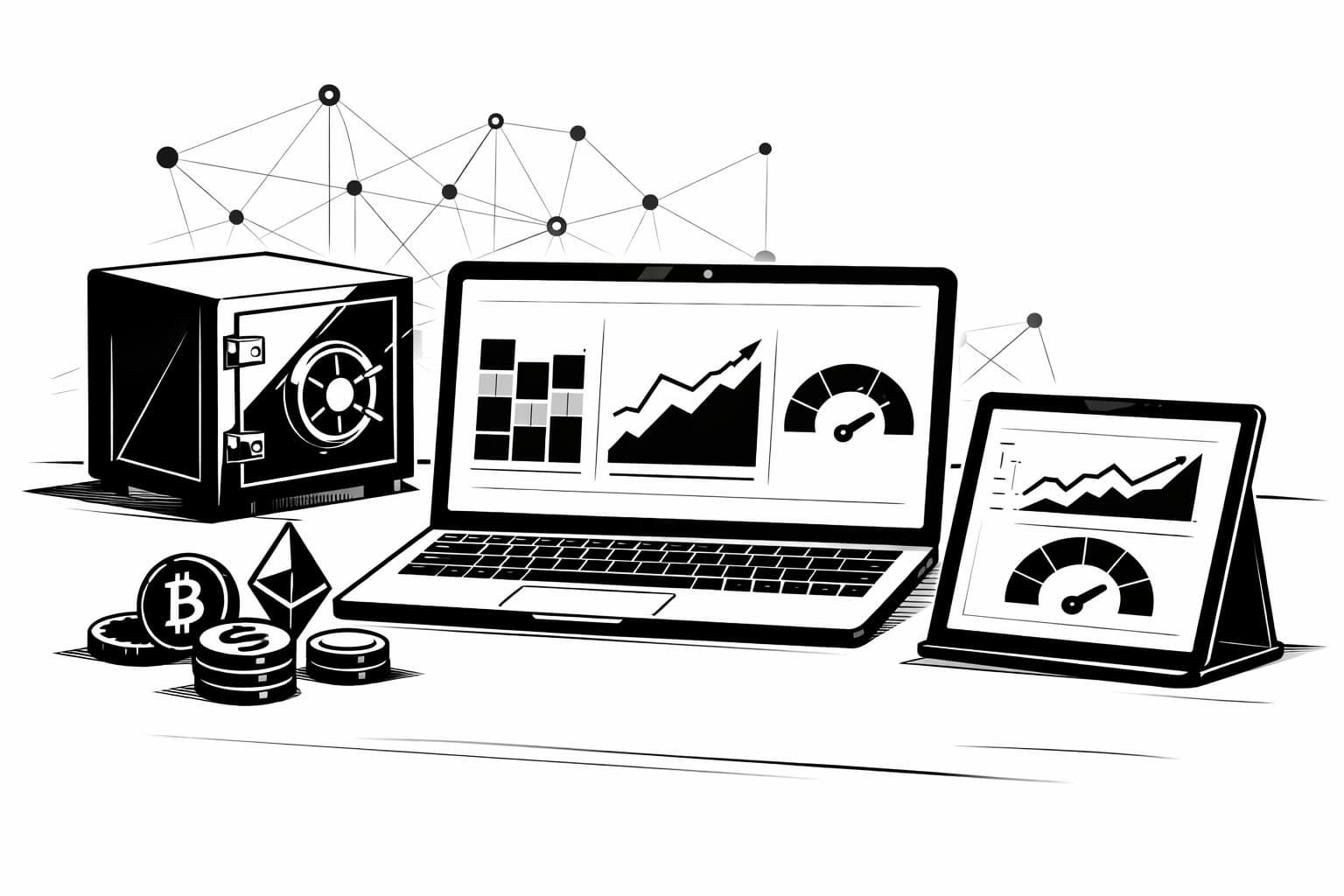
Head to DeepDAO or DAOhaus and search for the DAO you're evaluating. Both platforms display total treasury value in USD, asset breakdown, and historical balance trends. You're looking for three things: total value, asset composition, and runway.
Treasury Diversification: Why Stablecoins Matter
Here's a mistake many newcomers make — they see a treasury worth $10 million and assume the DAO is financially secure. But if 90% of that value sits in the DAO's own native token, one bad week in crypto markets can erase years of runway overnight.
A genuinely healthy treasury holds a meaningful portion — ideally 30–50% — in stablecoins like USDC or DAI, or in blue-chip assets like ETH or BTC. This matters especially for liquidity pools often managed by DAO treasuries, where volatile assets can create compounding exposure. Stablecoins ensure the DAO can pay contributors, fund grants, and cover operations regardless of market conditions.
Warning: If a treasury holds more than 80% in its own governance token, treat that as a red flag — not necessarily a dealbreaker, but a serious vulnerability worth noting.
How to Estimate DAO Runway
Runway tells you how long the DAO can keep operating without raising new funds. The formula is straightforward:
- Find the total value of stable assets only in the treasury (ignore the native token for this calculation).
- Locate the DAO's average monthly spend — check published budgets, governance forums, or on-chain transaction history on platforms like Etherscan or DeepDAO's spending tab.
- Divide stable assets by monthly spend. The result is your estimated runway in months.
For example, if a DAO holds $600,000 in stablecoins and spends roughly $50,000 per month, it has about 12 months of runway. Anything under six months deserves close attention — it means the DAO is likely dependent on token sales or new fundraising to survive.
Pro Tip: Look at the treasury trend over the past six to twelve months. A steadily shrinking treasury with no new income signals structural problems that voting participation alone won't fix.
Step 5: Measure Token Distribution and Decentralization
Treasury health tells you whether a DAO can fund its future. Token distribution tells you who actually controls that future. This is one of the most important — and most skipped — DAO metrics you'll encounter, so spend a few extra minutes here. It's worth it.
Start by pulling up the DAO's token contract address and running it through blockchain scanners to pull on-chain data. Most scanners show you a "Token Holders" tab that ranks wallets by percentage of total supply. What you're looking for is concentration — specifically, what percentage of tokens the top 10 or top 20 wallets control.
A common warning threshold cited by governance researchers: if the top 10 wallets hold 60% or more of the token supply, that's a centralization red flag. In practical terms, those wallets can pass or block almost any proposal regardless of what everyone else votes.
To get a sharper picture, look for the Gini coefficient if the project publishes it. Borrowed from economics, the Gini coefficient measures inequality on a scale from 0 (perfectly equal) to 1 (one wallet holds everything). A score above 0.85 in a DAO context suggests extreme concentration — a threshold referenced by governance analytics platforms including Boardroom. Some platforms like Tally surface this automatically, but if not, the top-holder percentage is a reliable proxy. You can also read more about token distribution and supply mechanics to understand how initial token allocations set the stage for these patterns.
Small Players, Big Decisions: Why Distribution Matters
Think of it like a neighborhood vote on a new park. If one developer owns 70% of the land on the block, your single vote as a homeowner is technically counted — but mathematically meaningless. The same dynamic plays out in DAOs every day.
Before you commit capital or significant time to a DAO, check where your token holdings would rank you among all holders. If you'd sit in the bottom 80% of wallets that collectively control only 5% of voting power, your governance influence is closer to symbolic than structural. That's not necessarily a dealbreaker — some people participate for community reasons — but you deserve to know upfront.
This concentration also creates governance capture risk: a scenario where a small group of whales coordinates (sometimes privately) to pass proposals that benefit themselves. Watch for wallet clusters that consistently vote together — that pattern can reveal informal power blocs that no governance document will ever mention.
Pro Tip: Check whether large holder wallets belong to the founding team, investors, or a treasury multisig. Locked or vesting tokens held by a foundation are less immediately dangerous than liquid tokens held by anonymous wallets — but both deserve scrutiny.
Step 6: Use the Right Tools to Track DAO Metrics
Now that you know what to measure, let's talk about where to actually find the data. The good news: you don't need expensive subscriptions or a developer background to get started. A handful of well-designed platforms put the most important DAO metrics right in front of you.
- DeepDAO — Your go-to starting point for governance analytics. It aggregates participation rates, proposal histories, and treasury snapshots across hundreds of DAOs. If a DAO is on your radar, search it here first.
- DAOhaus — Particularly strong for Moloch-based DAOs. It surfaces treasury flows and member activity in a clean, readable format.
- Blockchain explorers (Etherscan, Arbiscan, etc.) — When you need raw, unfiltered on-chain data, these are your source of truth. Token holder counts, transaction histories, and contract interactions are all here — just expect to do a little manual reading.
- Karma — Built specifically for delegate performance. You can see voting records, participation streaks, and delegate statements side by side. Pair it with DAO delegate platforms like Karma and StableLab for a fuller picture of governance accountability.
Free vs. Paid Analytics: What You Actually Need
If you're a newcomer or an active DAO member evaluating a protocol, free tools will cover the vast majority of what you need. DeepDAO's free tier, public blockchain explorers, and Karma's open profiles give you voter participation, treasury size, proposal activity, and delegate behavior — the core DAO metrics that matter most.
Paid or premium analytics platforms add value mainly for researchers, professional delegates, or teams running governance campaigns at scale. They often offer historical data exports, custom alerts, and cross-DAO comparison features. Useful, but not essential for most readers of this guide.
As the ecosystem evolves, specific tools will come and go. Focus on the type of data each tool surfaces — governance activity, treasury flows, token distribution, delegate performance — and you'll always be able to find a suitable alternative if your current platform changes.
Using Historical Trends to Guide Your Strategy
A single snapshot of DAO metrics can be misleading. What really matters is the direction things are moving. When you track metrics over three to six months, patterns emerge that tell you whether a DAO is building genuine momentum or quietly losing steam.
A DAO in decline usually shows a predictable combination: falling voter turnout, fewer new proposals, and a treasury that's shrinking faster than it's being replenished. Spot two or three of those signals together, and that's your cue to ask hard questions before committing more time or capital.
On the flip side, rising participation rates paired with a growing treasury and a steady flow of executed proposals signal a healthy, accelerating community — often the best time to get more involved and have real influence.
Use this historical lens to time your participation strategically. Joining during a low-activity trough can mean your voice carries more weight. Exiting before a prolonged decline protects both your tokens and your energy. Let the trend data make that call easier.
Summary: Your DAO Metrics Checklist
You've covered a lot of ground. Before you close your dashboard tabs, use this quick checklist to run through the key signals every time you evaluate a DAO — whether you're considering joining, contributing, or simply staying informed.
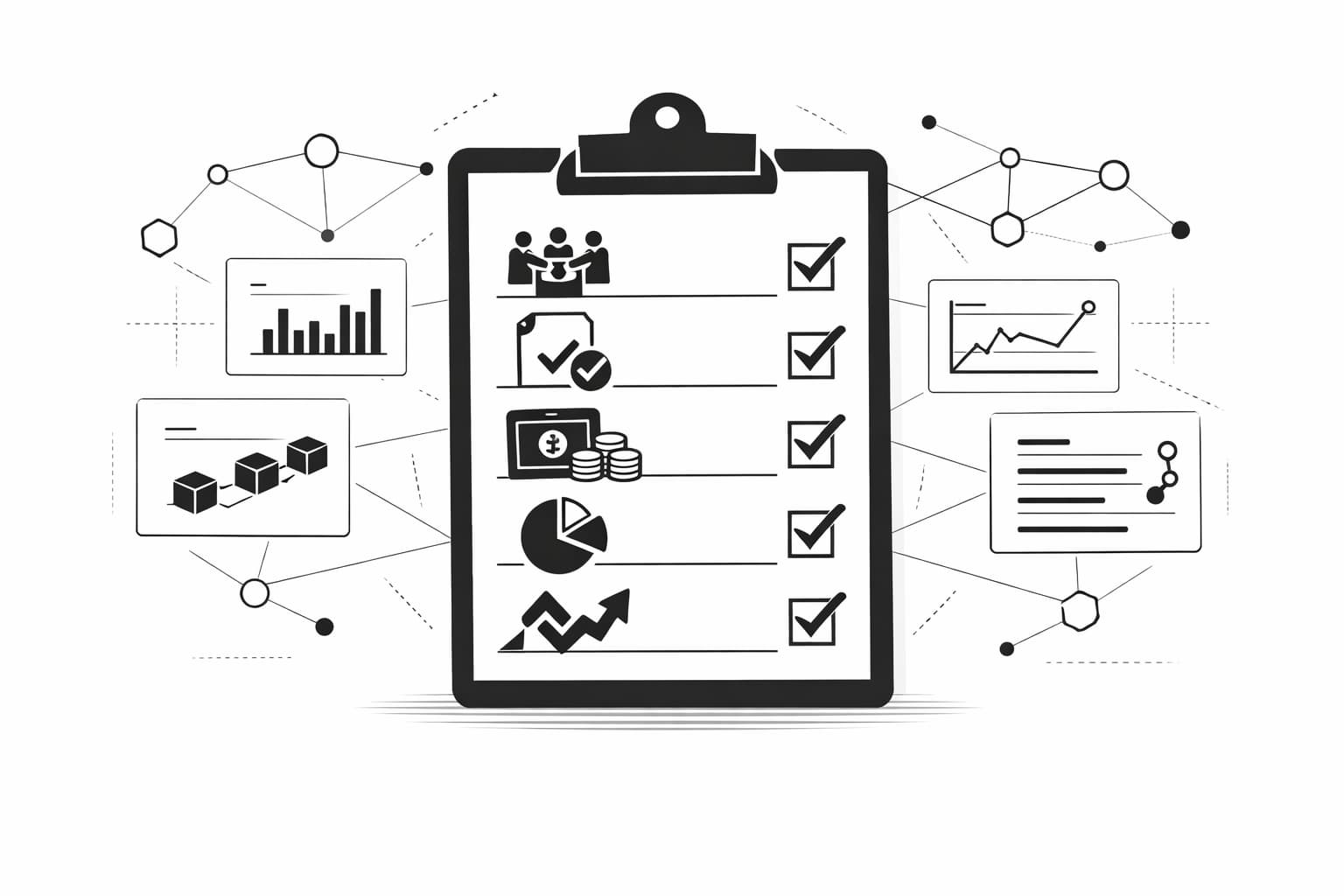
- Voter participation rate above 10% — anything lower warrants a closer look at governance engagement.
- Steady proposal cadence — at least a few active proposals per month shows the community is moving.
- Execution rate above 70% — passed proposals should actually get implemented.
- Treasury holds 20%+ in stablecoins — enough runway to weather market downturns.
- No single wallet controls more than 10% of voting power — a warning sign for centralization.
- Token distribution spread across thousands of holders — not concentrated in a handful of addresses.
- Metrics trending positively over 90 days — direction matters as much as current numbers.
Treat this as a repeatable process. Every DAO you encounter is different, but these signals give you a consistent starting point for honest evaluation.
Ready to go further? The real test of understanding DAO metrics is putting them into practice. Consider submitting your first governance comment, joining a working group, or even drafting a proposal — that's where insight becomes genuine participation.
Frequently Asked Questions
- What does "DAO" stand for?
- DAO stands for Decentralized Autonomous Organization — an internet-native group governed by smart contracts and token-based voting rather than a central authority. Its rules are encoded directly on-chain, and decisions are made collectively by token holders, removing the need for traditional management hierarchies.
- What is a DAO vs DTO?
- A DAO (Decentralized Autonomous Organization) uses blockchain-based governance with on-chain voting and smart contract enforcement. A DTO (Decentralized Tokenized Organization) is a far less common term sometimes applied to organizations that tokenize assets without full governance autonomy. As of 2026, DAO remains the dominant and widely recognized standard across the industry.
- What is an example of a DAO?
- Three well-known examples are MakerDAO, which governs the DAI stablecoin; Uniswap DAO, which controls protocol upgrades for the Uniswap decentralized exchange; and Arbitrum DAO, which oversees the Arbitrum Layer 2 network. Each offers rich on-chain data, making them useful benchmarks when studying real-world DAO metrics and governance activity.
- What does DAO stand for in business?
- In a business context, DAO stands for Decentralized Autonomous Organization — a modern organizational model where governance, treasury management, and decision-making happen transparently on a blockchain. Unlike traditional corporations, where a board or executive team holds centralized authority, DAOs distribute that power directly among their token-holding members.
Sources
- DAO Assessment Metrics. The valuation of new organizational… | by Hamdi KÜÇÜK | Run by the community | Medium
- Top DAO Metrics to Track Before You Stake, Vote, or Propose | by Waves Tech | Medium
- Evaluating DAO Sustainability and Longevity Through On-Chain Governance Metrics
- Measuring DAO Governance Security: Votable Supp... - StableLab
- Cardano Governance & DAO Analytics Engine
Author

Crypto analyst and blockchain educator with over 8 years of experience in the digital asset space. Former fintech consultant at a major Wall Street firm turned full-time crypto journalist. Specializes in DeFi, tokenomics, and blockchain technology. His writing breaks down complex cryptocurrency concepts into actionable insights for both beginners and seasoned investors.