DAO Compensation Models: A Guide to Salaries, Bounties & More
Why Your DAO's Compensation Model is Critical for Success
Building a thriving DAO depends on attracting and retaining talented, motivated contributors. But how do you pay people in a decentralized, often fluid environment? This is one of the toughest challenges you'll face as a DAO operator. Getting your dao compensation models right is more than just a payroll issue; it’s the bedrock of your organization's culture and long-term viability.
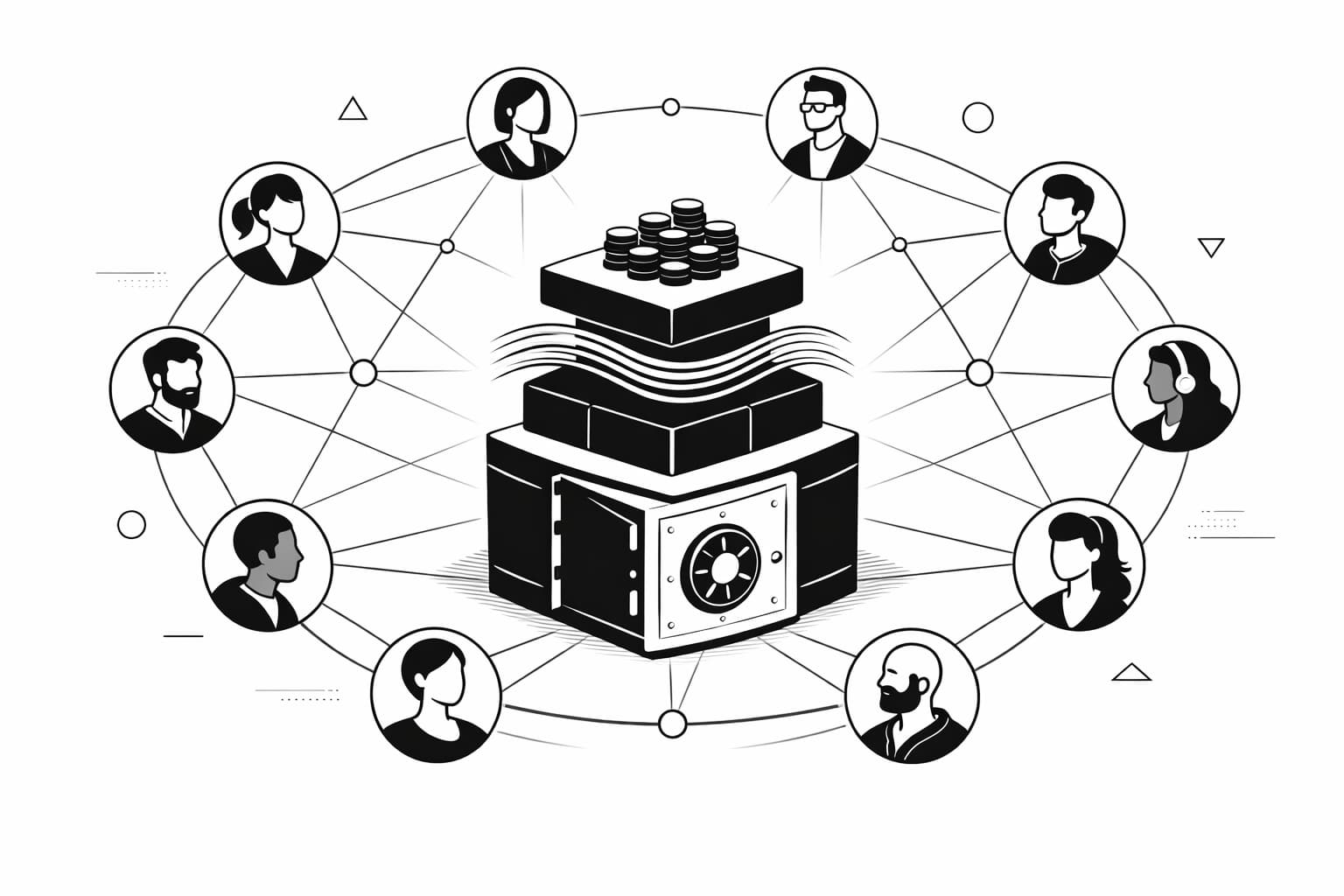
A thoughtful compensation strategy aligns individual incentives with the collective’s goals, turning passive members into dedicated builders. It’s a powerful signal that you value people's work, which directly impacts your ability to grow. A well-paid, motivated community is a key part of measuring DAO health and activity and setting your project up for sustainable success.
Step 1: Understand Contributor Motivation (Intrinsic vs. Extrinsic)
Before you can design a single bounty or salary, you must first understand what drives people to contribute to a DAO. It’s not always about the money. The most effective compensation systems are built on a deep understanding of human motivation, which is typically broken down into two categories: intrinsic and extrinsic.
The Power of Intrinsic Motivation in DAOs
Intrinsic motivation is the internal drive to do something for its own sake. Think of the desire for autonomy, the satisfaction of mastering a new skill, or the sense of purpose that comes from working on a shared mission. Many of your most passionate contributors will show up initially because they believe in your DAO's vision. They want to connect with like-minded peers and build something meaningful. Ignoring these powerful, non-financial rewards is a massive mistake; they are the glue that holds your community together during tough times.
The Necessity of Extrinsic Rewards
While passion fuels the fire, it doesn't pay the bills. Extrinsic motivation comes from external rewards, most commonly financial payment like tokens or stablecoins. You cannot expect your most valuable contributors to work full-time or dedicate significant hours without fair compensation. Reliable extrinsic rewards turn passionate hobbyists into dedicated core team members. The goal of great DAO compensation models is to provide the stability that allows your best people to go all-in on your mission, creating a sustainable and professional organization.
Step 2: Explore Foundational DAO Compensation Models
Now that you have a handle on what motivates people to join your mission, it's time to connect those motivations to tangible rewards. The most effective DAO compensation models don't rely on a single method. Instead, they blend different approaches to create a flexible and appealing system. Let's walk through the three fundamental building blocks you can use.
Think of these as the primary colors of your compensation palette. Most DAOs will use a combination of these to create the right incentive structure for different types of work and contributor profiles.
- Bounties: One-time payments for specific, discrete tasks. Bounties are best for attracting a wide range of occasional contributors for jobs like bug fixes, content creation, or design work.
- Salaries: Regular, fixed payments for ongoing, core responsibilities. This model is ideal for providing stability and financial security to your dedicated, full-time team members.
- Payment Streams: Real-time compensation that flows to a contributor's wallet every second. This new approach is excellent for continuous contributors, improving their cash flow and reflecting ongoing commitment.
Bounties: For One-Off, Task-Based Work
Bounties are the gig economy of DAOs. You define a task, set a price, and anyone in the community can claim it, complete the work, and get paid. This is perfect for clear, self-contained projects like fixing a specific bug, translating a document, or designing a graphic. Platforms like DeWork and Gitcoin have made managing this process much easier.
The main advantage is flexibility. Bounties allow you to tap into a global talent pool for specific needs without long-term commitments. However, they can be very transactional and may not promote deep, lasting engagement with your DAO's mission.
Salaries: For Core Team Stability
For the individuals who form the backbone of your DAO—the core developers, community managers, and operational leads—a regular salary provides key financial security. These are typically fixed amounts paid in stablecoins on a bi-weekly or monthly basis, just like in a traditional company.
Offering salaries allows you to attract and retain top talent for full-time roles, enabling them to focus completely on your project. The trade-off is a higher fixed cost for your treasury and less flexibility than task-based payments.
Payment Streams: For Continuous Contribution
Payment streams are a more web3-native approach to compensation. Using protocols like Superfluid, you can stream payments to contributors in real time. Instead of waiting for a bi-weekly payday, their wallet balance increases every second they work. This provides an incredible improvement to personal cash flow.
Streams are fantastic for roles that involve continuous, ongoing effort but may not be strictly full-time. They offer a psychological reward of seeing compensation accrue constantly, reinforcing the value of a contributor's time and effort. While the initial setup can be slightly more technical, it offers unparalleled flexibility for both the DAO and the recipient.
Step 3: Layer in Advanced & Creative Reward Strategies
Once you've established your foundational pay structure with salaries, streams, and bounties, it's time to get creative. The most resilient and engaging dao compensation models don't just pay for time or tasks; they reward impact, support community, and align everyone for the long haul. Let's explore some powerful strategies you can layer on top of your core system to create a truly compelling offer for top talent.
Peer-Allocated Bonuses: Letting the Community Reward Value
Instead of a top-down bonus structure, why not let your contributors reward each other? Tools like Coordinape allow team members to allocate a pool of tokens to colleagues they feel have added the most value during a specific period. This decentralizes recognition and often highlights quiet but meaningful contributions that leadership might miss.
Pro Tip: To make peer allocation effective, provide a simple framework or guiding principles. Ask contributors to consider things like mentorship, unblocking others, or taking initiative on unassigned tasks. This prevents it from becoming a pure popularity contest.
Reputation-Weighted Rewards: Paying for Proven Contribution
Not all contributions are equal, and experience matters. Reputation-based systems acknowledge this by tying rewards or governance power to a contributor's track record. This can be done using non-transferable tokens or an internal scoring system that tracks positive contributions over time. The result is that long-term, trusted members have a greater say or earn a larger share of certain rewards, creating a powerful incentive for sustained engagement.
Retroactive Rewards: Paying for Impact, Not Promises
What if you could reward value that has already been created? That's the idea behind retroactive funding, pioneered by projects like Optimism. Instead of funding a proposal based on a promise, the DAO allocates funds to projects, tools, or individuals who have already delivered tangible value to the ecosystem. This model is fantastic for rewarding unsung heroes and independent builders who created something useful without asking for a grant upfront.
Token Vesting: Aligning for the Long Term
When you reward core contributors with your DAO's native token, you want to ensure they are committed to its future success. Token vesting is the standard mechanism for this. Instead of granting a lump sum of tokens, you release them over a set period, such as a four-year schedule with a one-year "cliff." This means the contributor must stay active for at least a year to receive their first batch of tokens. This simple financial tool aligns incentives and discourages short-term thinking, making it a critical component of sustainable dao compensation models.
Step 4: Design Your DAO's Compensation 'Stack'
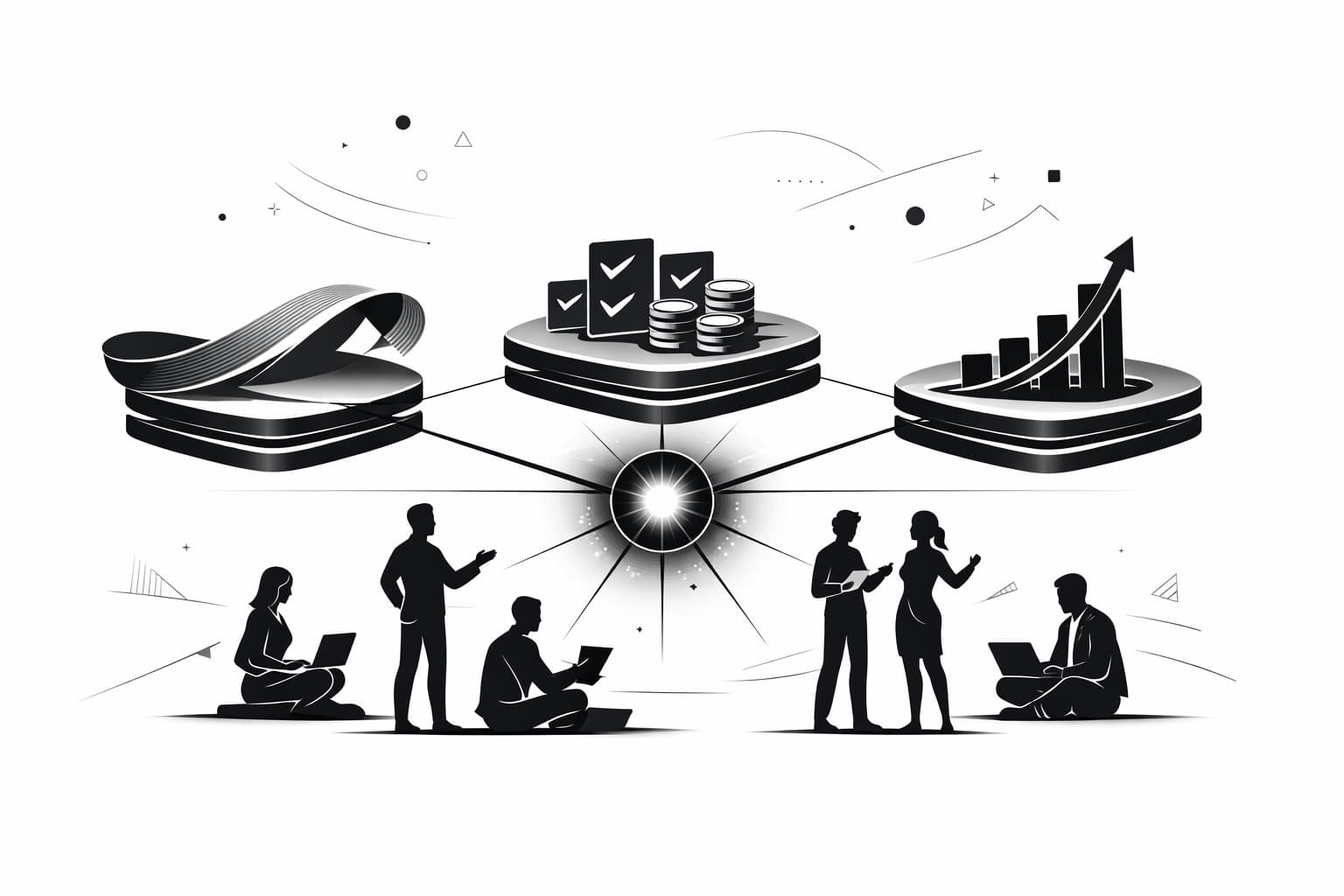
Now that you understand the individual tools in your compensation toolkit, it's time to assemble them. A single model rarely works for every type of contributor. The most successful DAOs build a compensation 'stack'—a layered combination of models designed to attract, motivate, and retain diverse talent at every level of engagement. This approach provides the flexibility to reward different contributions appropriately.
Your goal is to create a system where a casual contributor can complete a bounty, a dedicated team member can earn a stable salary, and a high-impact builder can be recognized with a significant token grant. Let's look at what this looks like in practice.
Example Stack for an Early-Stage DAO
When your DAO is just getting started, simplicity is key. You need to attract initial contributors and align your core team for the long haul. A common and effective starting stack includes just two layers: bounties for specific, one-off tasks to draw in new talent, and significant token grants for the founding team to ensure they are committed to the project's long-term vision.
Example Stack for a Mature DAO
As your DAO grows, its needs become more complex, and so should your compensation stack. A mature DAO might use several layered dao compensation models to keep the organization running smoothly. This could look like stablecoin salaries for full-time core team members, monthly retainers or payment streams for consistent working group leads, a bounty board for discrete community tasks, and a retroactive rewards program to recognize unexpected, high-impact contributions from the wider community.
Tools and Platforms for DAO Compensation
With a clear strategy for your DAO compensation models, the next step is implementation. Manually managing payouts is time-consuming and prone to error, so it's smart to adopt tools designed for the job. The right platforms can automate payments, track contributions, and make managing your compensation stack feel effortless.
Payroll & Streaming
For consistent salaries and token streams, dedicated payroll platforms are key. Tools like Utopia and Coinflow handle crypto payroll, expense management, and batch payments. To enable real-time, per-second token payments, look to a protocol like Superfluid, which is perfect for contributor salaries and dynamic vesting.
Bounty & Task Management
When you need to manage discrete tasks and one-off rewards, bounty platforms are your best friend. Services like DeWork and Layer3 let you create, assign, and pay out bounties within a project management workflow. Gitcoin is another giant in this space, especially for funding public goods and open-source development.
Peer Rewards
To enable your community to recognize each other’s contributions, consider a tool for peer-to-peer rewards. Coordinape allows teams to allocate a set amount of tokens to reward their colleagues, decentralizing recognition and strengthening community bonds.
Conclusion: Building a Fair and Future-Proof DAO
Crafting the perfect compensation plan is an ongoing process, not a one-time setup. As we've explored, the most resilient DAOs combine different reward types—like bounties for specific tasks, streams for consistent contributors, and salaries for core roles—to create a flexible and motivating system. The world of DAO compensation models is always evolving, so what works today might need adjustments tomorrow.
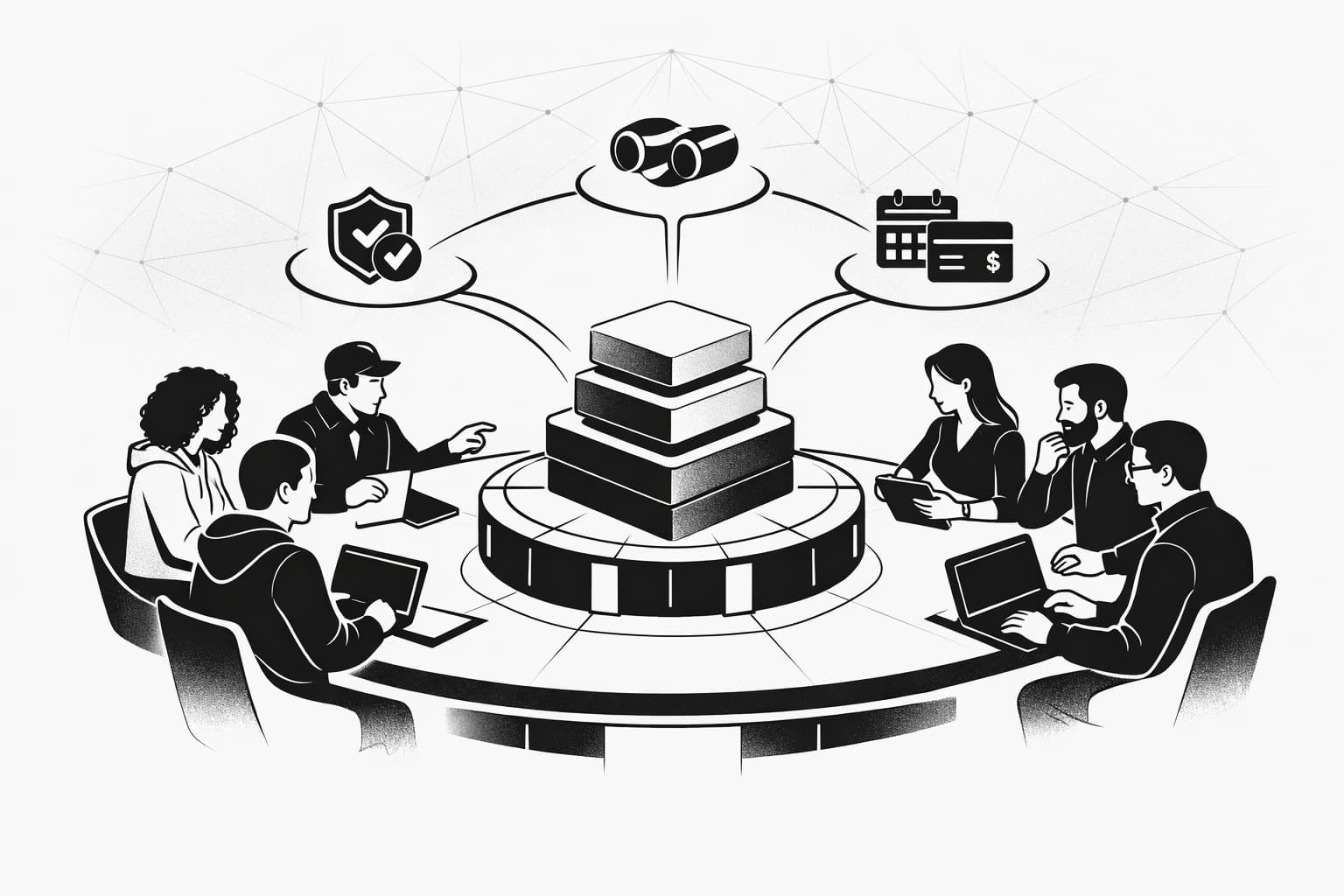
Your best strategy is to start with a simple framework, communicate openly with your community, and genuinely listen to their feedback. Be prepared to experiment and iterate. By remaining adaptable and community-focused, you can build a compensation structure that not only attracts top talent but also sustains your organization for the long haul.
Frequently Asked Questions
- How are DAO members compensated?
- DAO contributors are typically paid through several methods. One-off bounties are used for specific tasks, while core members may receive regular salaries or streaming payments in stablecoins. Additionally, DAOs often issue their native tokens as rewards, which can be vested to align long-term incentives with the organization's success.
- What is a DAO model?
- A DAO, or Decentralized Autonomous Organization, is a community-led entity with no central authority. Its operational rules are encoded as smart contracts on a blockchain. Key decisions, including the management of the collective treasury, are made by members through a transparent voting process, ensuring democratic governance.
- How does a DAO make money?
- DAOs generate revenue based on their function. Common methods include collecting protocol fees from their products (like a decentralized exchange), earning returns from treasury investments, selling their native token to raise capital, or offering specialized services. The specific financial model is unique to each DAO's mission and operations.
- What is a DAO vs DTO?
- DAO is a broad term for any decentralized organization governed by its members. A DTO, or Decentralized Talent Organization, is a specific type of DAO focused on organizing skilled labor. It acts like a web3-native talent agency or consulting firm, connecting specialized contributors with projects that need their expertise.
Sources
Author

Crypto analyst and blockchain educator with over 8 years of experience in the digital asset space. Former fintech consultant at a major Wall Street firm turned full-time crypto journalist. Specializes in DeFi, tokenomics, and blockchain technology. His writing breaks down complex cryptocurrency concepts into actionable insights for both beginners and seasoned investors.