AI Smart Contract Guide: Code Generation & Auditing in 2026
What is an AI Smart Contract? A Plain-English Guide
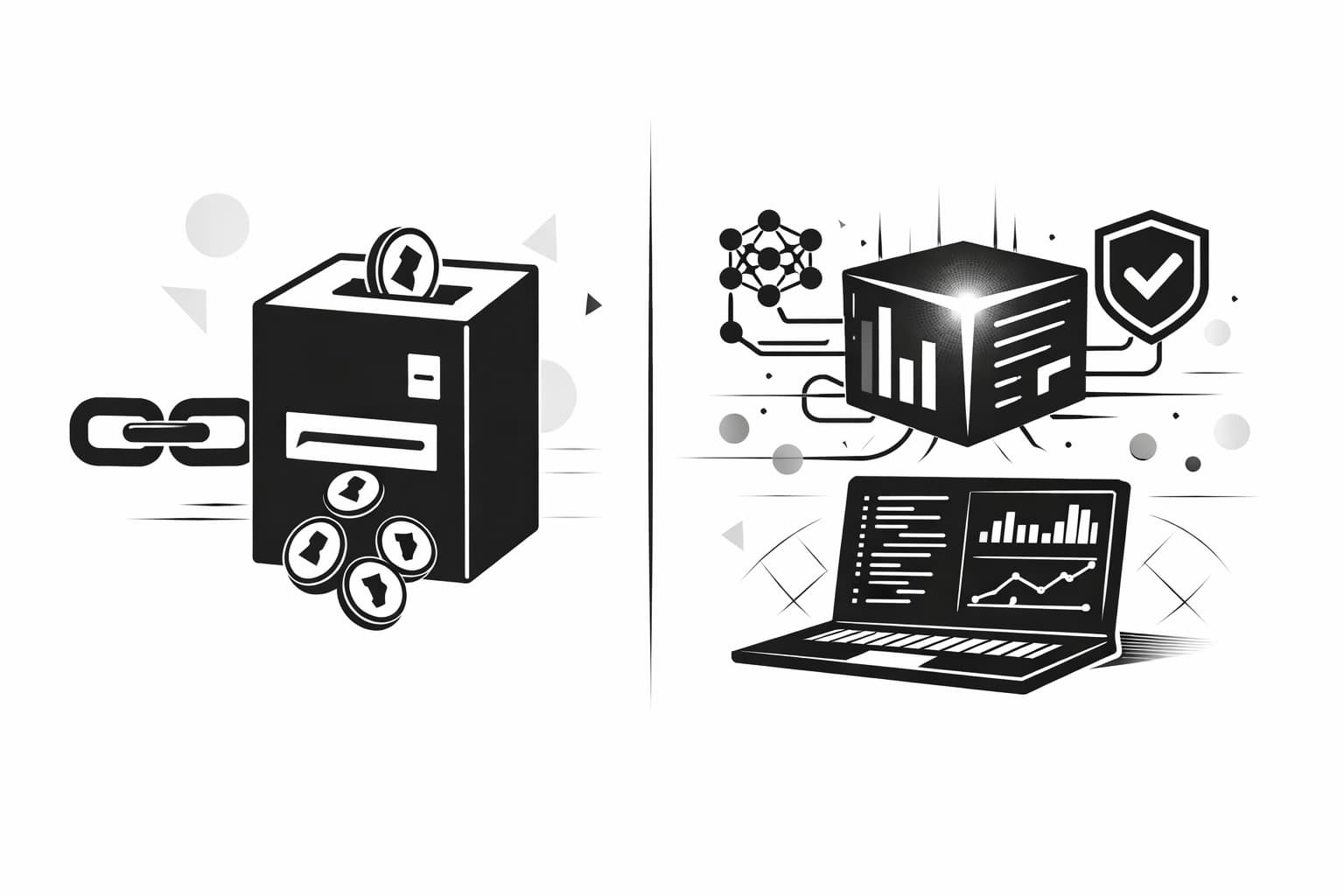
An AI smart contract is a self-executing agreement on a blockchain that uses artificial intelligence to interpret complex data, learn from outcomes, and make decisions. Think of a standard smart contract as a digital vending machine: if you insert the correct payment (the condition), it will dispense a specific item (the outcome). It follows a rigid, pre-programmed "if-this-then-that" logic. The introduction of AI upgrades this vending machine into a personal chef, one that learns your preferences over time and suggests new meals based on what's fresh at the market.
Why does this matter for builders and users? This evolution represents a leap from simple automation to intelligent automation on the blockchain. Instead of just executing fixed commands, an ai smart contract can manage dynamic situations with a degree of flexibility. This opens the door for more sophisticated applications in decentralized finance (DeFi), supply chain management, insurance, and gaming, making ai blockchain development one of the most exciting frontiers in the industry.
Traditional Smart Contracts vs. AI-Powered Smart Contracts
To grasp the difference, let's use a simple analogy. A traditional smart contract is like a light switch. It has one job and follows a simple rule: flip it up, and the light turns on. Flip it down, and the light turns off. The logic is static and unchanging. It doesn't care if it's day or night or if anyone is in the room.
An AI-powered smart contract, on the other hand, is like a modern smart thermostat. It does more than just turn the heat on or off. It learns your daily schedule, checks the local weather forecast, and considers the current price of energy. Based on all this dynamic data, it makes intelligent decisions to keep your home comfortable while saving you money. The core difference is the move from static, predefined logic to dynamic, data-driven decision-making.
How AI Integrates with Smart Contracts: The Tech Explained
Now that we understand what an AI-powered smart contract aims to do, let's look at how it actually works. The integration isn't as simple as just plugging an AI into the blockchain. Because blockchains are intentionally isolated from the outside world for security, we need a special bridge to connect them. This connection happens in two primary ways: off-chain, where the AI thinking happens in the real world, and on-chain, a more experimental approach where the AI lives on the blockchain itself.
For most applications in 2026, the action happens off-chain. Powerful AI models require immense computational resources that are simply too expensive and slow for a blockchain to handle directly. So, developers use a clever system to get the best of both worlds: the analytical power of off-chain AI and the unchangeable security of an on-chain smart contract.
The Role of Oracles in Connecting AI to the Blockchain
The key bridge between the off-chain AI and the on-chain smart contract is a service called a blockchain oracle. Think of a smart contract as a brilliant judge locked inside a soundproof room. This judge can execute rules perfectly but has no knowledge of what's happening outside. An oracle acts as a trusted court reporter who gathers verified information from the outside world and slips it under the door for the judge to act upon.
In the world of an ai smart contract, this "reporter" delivers the output from a complex AI model. The AI might analyze financial markets, weather patterns, or social media trends, and the oracle delivers its final, simplified conclusion to the contract. This allows the smart contract to remain secure and efficient on the blockchain while benefiting from sophisticated, real-world analysis.
Machine Learning Models and Decision Making
The "brains" behind this analysis are often machine learning (ML) models. These models are trained on huge datasets to recognize patterns and make predictions. For example, a decentralized finance (DeFi) lending protocol might use an ML model to create a dynamic interest rate. The model could analyze off-chain data like overall market volatility, competitor rates, and even public sentiment about the economy.
After processing all this data, it might determine that the optimal borrowing rate for the next hour is 5.2%. The oracle then reliably feeds this single data point ("5.2%") to the smart contract. The contract, without needing to perform the heavy computation itself, simply updates its internal state. This is a core concept in modern ai blockchain development—using oracles to feed smart contracts the results of complex, off-chain computations, making them far more intelligent and responsive.
AI for Smart Contract Generation: Using Copilots & LLMs
After understanding the technical connections between AI and blockchains, let's get our hands dirty. How does an AI actually help you write a smart contract? Think of AI code generators not as a self-driving car, but as an incredibly advanced cruise control system with a GPS. You are still the driver, making all the critical decisions, but the AI handles the straightforward stretches of road, letting you focus on the tricky turns. These tools, often called "copilots," are Large Language Models (LLMs) trained on billions of lines of code from public repositories, including countless smart contracts.
This training allows them to recognize patterns, understand syntax, and predict the code you're about to write. For anyone involved in ai blockchain development, this capability changes the game. It transforms the tedious parts of coding into a simple conversation with a machine, dramatically speeding up the journey from an idea to a functioning prototype. The developer's role shifts from a pure typist to a director, guiding the AI and refining its output.
From Prompt to Code: A Sample Workflow
The process feels surprisingly natural. You write a comment or a function name in plain English, and the AI suggests a block of code to accomplish that task. Let's see it in action. Imagine you need a standard function to transfer tokens in a Solidity contract.
You might type a prompt like this as a comment:
// Create a Solidity function for an ERC-20 token transfer that checks for sufficient balance before sending.
Within seconds, your AI copilot could generate the following code snippet:
function transfer(address recipient, uint256 amount) public returns (bool) {
// Check if the sender has enough tokens
require(balanceOf[msg.sender] >= amount, "ERC20: transfer amount exceeds balance");
// Subtract from the sender's balance
balanceOf[msg.sender] -= amount;
// Add to the recipient's balance
balanceOf[recipient] += amount;
// Emit an event to log the transaction on the blockchain
emit Transfer(msg.sender, recipient, amount);
return true;
}
Notice how the generated code isn't just functional; it includes a common security check (`require`) and an event emission (`emit Transfer`), which are best practices. This output is an excellent starting point. A developer would then test, refine, and integrate this function into their larger ai smart contract project.
Benefits of AI-Assisted Code Generation
Using AI as a coding partner brings several immediate advantages to the development process:
- Increased Development Speed: AI tools drastically cut down the time spent on writing common functions and boilerplate code. This frees up developers to concentrate on the unique logic and architecture of their application.
- Reduced Boilerplate Code: Every smart contract needs a certain amount of standard, repetitive code to function (like setting up contract ownership or defining standard interfaces). AI can generate this foundational code in an instant.
- A Powerful Learning Aid: For developers new to languages like Solidity or Rust, AI copilots are invaluable teachers. By seeing how the AI translates a plain-English request into functional code, they can learn syntax, structure, and common patterns much faster.
- Surfacing Best Practices: Because these models are trained on vast amounts of high-quality, open-source code, their suggestions often reflect established community standards and security practices, helping you write better code from the start.
Ultimately, AI code generation is about augmentation. It enables developers to build more, build faster, and learn as they go, making the entire smart contract ecosystem more accessible and efficient.
AI for Smart Contract Auditing: The New Frontier of Security
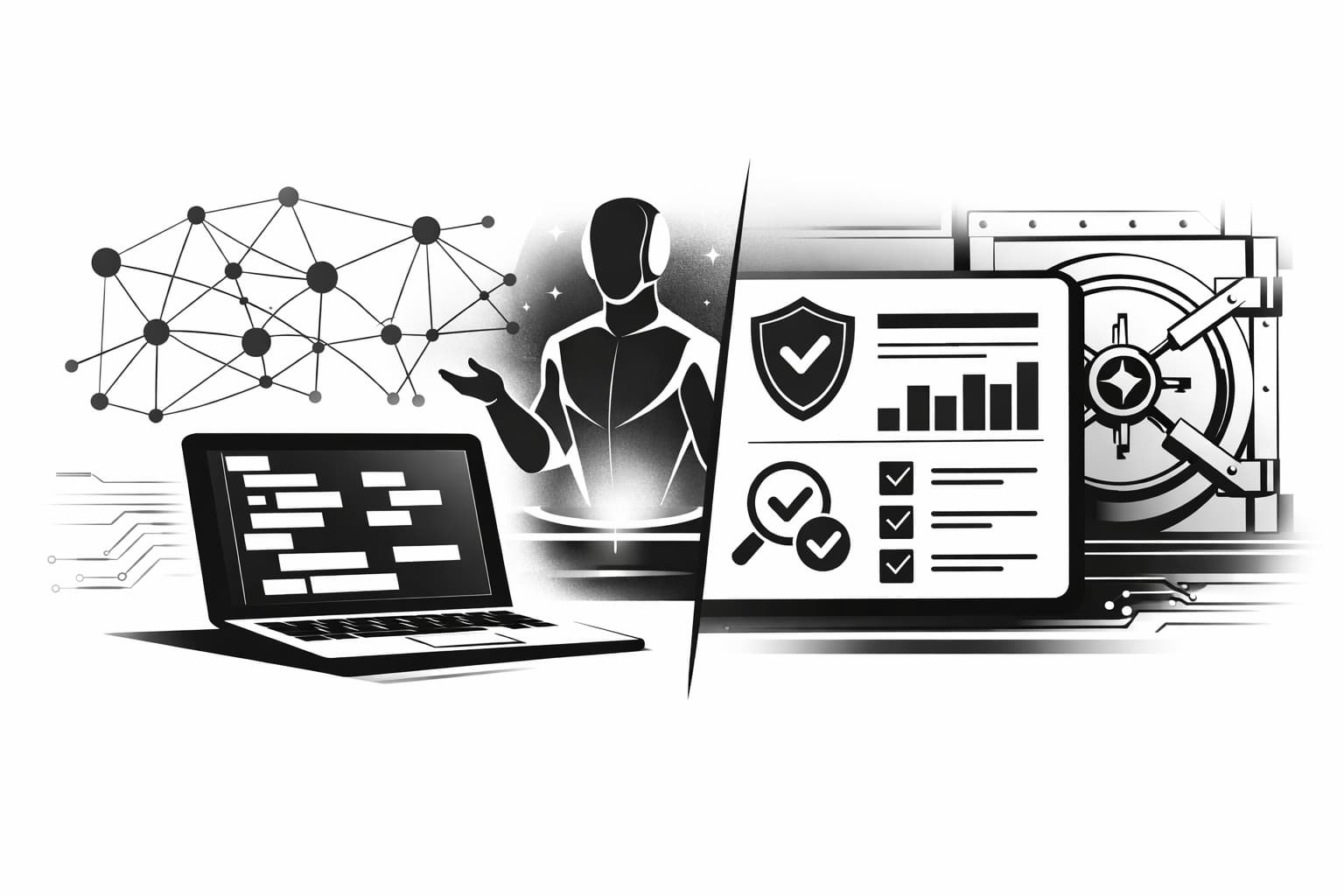
After you've used an AI copilot to generate your code, the next essential step is ensuring it's secure. On a blockchain, transactions are irreversible. Once a smart contract is deployed, its code is final, and any bug or vulnerability can lead to a permanent loss of funds. This high-stakes environment makes a thorough security audit not just a good idea, but an absolute necessity. AI-powered auditing tools are now at the forefront of this process, acting as tireless assistants that can spot potential issues much faster than human eyes alone.
Think of an AI auditor as a seasoned security expert who has studied every major smart contract hack in history. These tools analyze your code line by line, comparing it against a massive database of known vulnerabilities, logical errors, and even inefficient code that could lead to high gas fees. They don't replace the final judgment of a human auditor, but they augment their abilities, clearing away common problems so the human expert can focus on the more complex, nuanced aspects of the contract's logic. This collaboration is a powerful step forward for the entire **ai blockchain development** ecosystem.
Automated Vulnerability Detection
One of the most immediate benefits of using AI in an audit is its ability to automatically detect common attack vectors. These AI models are trained on thousands of real-world smart contracts, including those that have been exploited. By learning from these examples, the AI develops an incredible ability to recognize suspicious patterns that might signal a vulnerability.
For instance, it can quickly flag code susceptible to a reentrancy attack—a classic exploit where an attacker's contract repeatedly calls back into the victim's contract to drain funds before the initial transaction is complete. A human might miss a subtle flaw in the code's logic, but an AI trained on hundreds of reentrancy examples can spot the tell-tale signs instantly. This automated first pass catches the low-hanging fruit of security risks, allowing developers to fix them early in the process.
Formal Verification with AI
Beyond pattern recognition, AI is making one of the most advanced security techniques more accessible: formal verification. In simple terms, formal verification is the process of creating a mathematical proof that your code behaves exactly as intended under all possible conditions. It’s like proving, with mathematical certainty, that a bridge will not collapse, no matter the circumstances.
Historically, this has been an extremely difficult and time-consuming process reserved for only the most critical applications. However, new AI tools are changing the game. They can help automate the generation of these mathematical models and proofs, checking the logic of an **ai smart contract** with a level of rigor that manual testing could never achieve. By making this powerful technique easier to use, AI provides another way to enhance smart contract security and build more resilient decentralized applications.
Top Use Cases for AI Smart Contracts in 2026
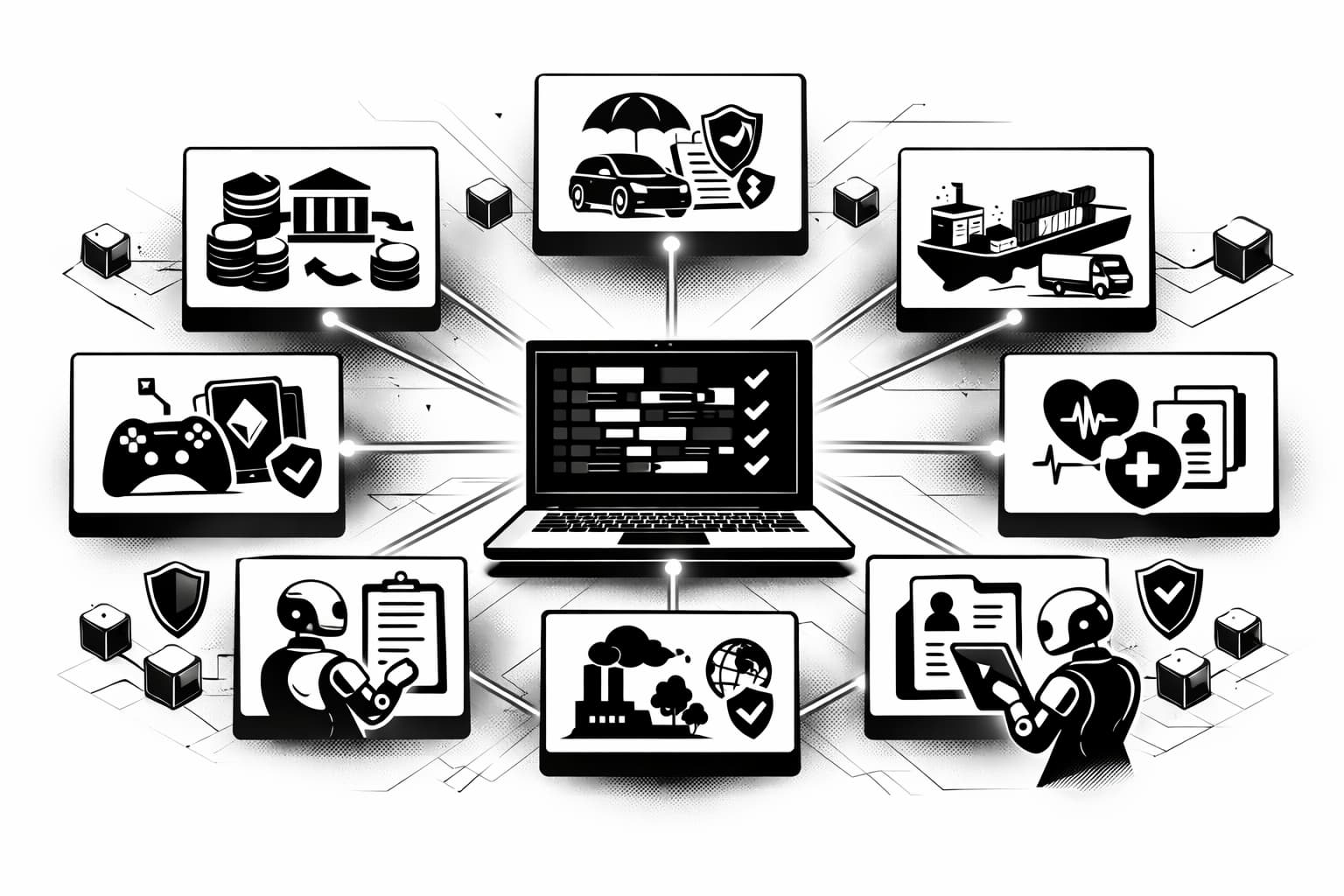
Now that we understand how AI helps us write and check smart contracts, let's look at where this technology is making a tangible difference. The combination of AI and blockchain isn't just theoretical; it's actively solving real problems across major industries. These applications show how an ai smart contract can move beyond simple transactions to become a dynamic, intelligent agent on the blockchain.
Decentralized Finance (DeFi)
DeFi moves at lightning speed, and static rules can quickly become inefficient. AI brings the adaptability needed to thrive. For example, in decentralized lending protocols, AI can analyze real-time market volatility and borrowing demand to dynamically adjust interest rates. This ensures lenders are fairly compensated for risk while borrowers get competitive rates. Similarly, AI-powered decentralized exchanges (DEXs) can automatically manage liquidity pools, shifting assets to provide the best trading prices and minimize slippage for users, acting like a tireless, data-driven portfolio manager.
Supply Chain Management
Imagine a smart contract governing a shipment of goods from Vietnam to California. Traditionally, if a delay occurs, the process of filing a claim and getting a refund is slow and manual. With AI, the smart contract can be connected to real-world data streams like weather forecasts, GPS trackers, and port authority updates. The AI model can predict a likely delay based on a developing storm in the Pacific. Instead of waiting for the delay to happen, the ai smart contract can proactively trigger a pre-defined clause, perhaps releasing a partial insurance payment to the buyer or automatically extending the delivery window while documenting the cause.
Legal Tech and Agreements
One of the biggest challenges in ai blockchain development is bridging the gap between human language and computer code. A legal agreement written by lawyers is full of nuance that can be lost when translated into a smart contract. AI is becoming that essential translator. An AI model, trained on millions of legal documents, can scan a signed agreement and compare its logic against the code of the smart contract intended to execute it. It can flag discrepancies, such as a payment term in the contract that doesn't match the code's trigger condition, preventing costly errors before they are permanently recorded on the blockchain.
Benefits and Limitations of AI in Blockchain Development
We've explored how AI copilots can write code and how auditing tools can spot vulnerabilities. These advancements are genuinely exciting and are already changing how developers build on the blockchain. However, it's important to approach any new technology with a clear-eyed perspective. For every significant advantage AI brings to smart contract creation, there's a corresponding challenge we must work through. Understanding both sides of this coin is key to responsibly building the future of decentralized applications.
Key Benefits
When used thoughtfully, AI tools introduce massive improvements to the development lifecycle. They act as a force multiplier for developers, bringing a new level of speed and precision to the table. Here are some of the most significant advantages:
- Increased Efficiency: AI assistants can generate boilerplate code, write complex functions from simple prompts, and automate test creation. This frees up developers from repetitive tasks to focus on high-level architecture and logic.
- Enhanced Security: AI-powered auditing can scan millions of lines of code to identify known vulnerabilities and subtle logical flaws that a human might miss, acting as a tireless second pair of eyes.
- Greater Accessibility: By translating natural language into code, AI lowers the barrier to entry. This allows domain experts who aren't necessarily coding wizards to participate more directly in the creation of smart contracts.
- Complex Automation: An ai smart contract can be designed to make more sophisticated, data-driven decisions on its own, adjusting its behavior based on real-time inputs without needing manual intervention.
- Reduced Human Error: Simple mistakes like typos, incorrect variable names, or forgotten checks are a common source of bugs. AI code generators and linters can catch these small but costly errors before they are ever deployed.
Current Challenges and Risks
Despite the upsides, the integration of AI in blockchain development is not a silver bullet. The technology is still evolving, and its limitations can introduce new risks if ignored. One of the biggest concerns is the "black box" problem. An AI might suggest a perfectly functional piece of code, but it often can't explain the reasoning behind its choice. For immutable contracts where every line matters, this lack of transparency can be unsettling.
Another challenge is the classic "garbage in, garbage out" principle. AI models are trained on vast datasets of existing code. If that training data includes poorly written or insecure examples, the AI will learn those bad habits and may reproduce them in its suggestions. This could inadvertently introduce vulnerabilities into new projects. We also face the possibility of new attack vectors, where malicious actors might try to "poison" an AI's training data to create specific, hidden backdoors. Finally, the computational power required to train and run these sophisticated models is immense, raising concerns about both cost and environmental impact.
The Future of AI and Smart Contracts
While AI assistants for code generation and auditing are changing developer workflows today, the road ahead points to an even deeper integration. We are moving from a world where AI is a tool for building on the blockchain to one where AI is a native participant within the blockchain. This shift promises to create systems that are not just automated, but truly autonomous.
The next wave of innovation involves the convergence of AI and on-chain governance. Imagine a Decentralized Autonomous Organization (DAO) where an AI doesn't just execute member votes but actively proposes strategies, manages treasury funds, and adapts to market conditions based on real-time data. This creates more efficient and responsive decentralized systems, where the AI acts as an impartial, data-driven manager.
This vision is supported by the growth of decentralized AI networks, which ensure that no single company controls the intelligence layer of Web3. The ultimate goal for many in the space is the creation of a truly self-sufficient ai smart contract—code that can learn from its own execution history, patch its own vulnerabilities, and evolve its logic over time, all without direct human intervention. This represents a profound next step in ai blockchain development.
Key Takeaways
As we've explored the integration of AI into smart contract development, it's clear this technology is a powerful assistant for builders. To wrap up, here are the most important points to remember as you begin using these tools in your own projects.
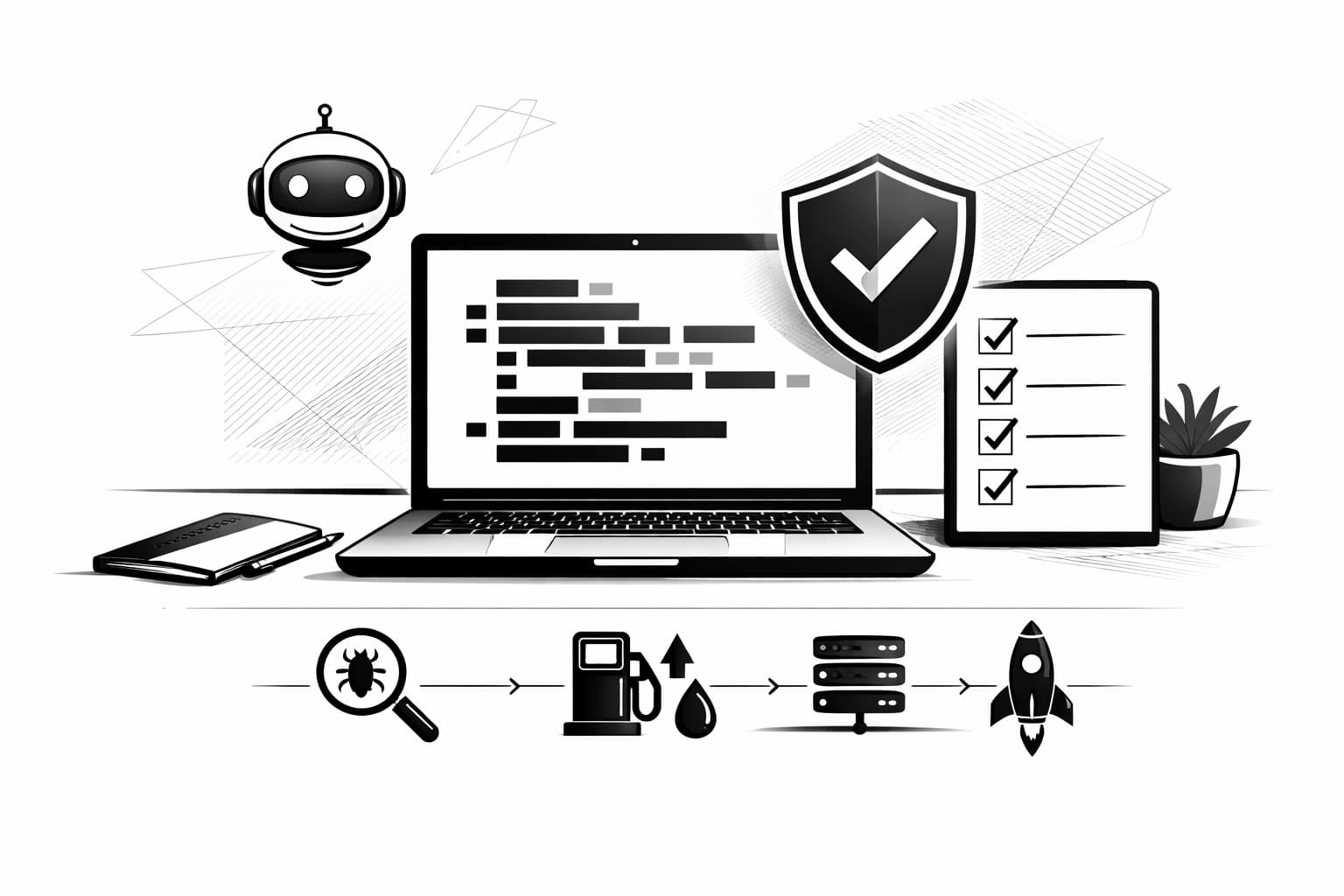
- AI is an Accelerator, Not an Automator: AI copilots can generate code snippets and entire functions remarkably fast. However, they are partners in the process. Human developers must always review, test, and understand the code AI produces.
- Security is a Shared Responsibility: AI auditing tools are excellent for spotting common bugs and known vulnerabilities early. They provide a critical first pass, but they don't replace the nuanced, context-aware analysis of an experienced human auditor.
- The Best Workflow is Collaborative: The most effective approach to ai blockchain development combines the speed and pattern-recognition of AI with the critical thinking and architectural oversight of a human developer.
- Accessibility is Improving: By simplifying complex coding tasks and security checks, AI is lowering the barrier to entry, making it easier for more developers to build secure and efficient decentralized applications.
Frequently Asked Questions
- What is an AI smart contract?
- An AI smart contract is a self-executing agreement on a blockchain that uses artificial intelligence. Unlike traditional contracts with rigid rules, it can analyze real-time data to make adaptive decisions. This allows it to handle more complex, dynamic scenarios, making the contract more intelligent and responsive to changing conditions.
- Is there an AI blockchain?
- While most blockchains are not inherently "AI blockchains," many projects are building layers that integrate AI capabilities. These protocols provide decentralized computation for AI models or use AI-driven oracles to bring intelligent data on-chain. This fusion enhances existing blockchains rather than creating entirely new AI-specific ones from the ground up.
- Will AI replace blockchain developers?
- It's unlikely. AI currently acts as a powerful copilot, handling repetitive coding, auditing for common bugs, and accelerating development. This allows developers to focus on complex architecture, innovative logic, and strategic problem-solving. AI is a tool that enhances a developer's skills, not a replacement for their expertise and creativity.
Sources
Author

Crypto analyst and blockchain educator with over 8 years of experience in the digital asset space. Former fintech consultant at a major Wall Street firm turned full-time crypto journalist. Specializes in DeFi, tokenomics, and blockchain technology. His writing breaks down complex cryptocurrency concepts into actionable insights for both beginners and seasoned investors.