What Is Yield in Farming & Crypto? A Complete 2026 Explanation
What is Yield in Farming? The Original Concept
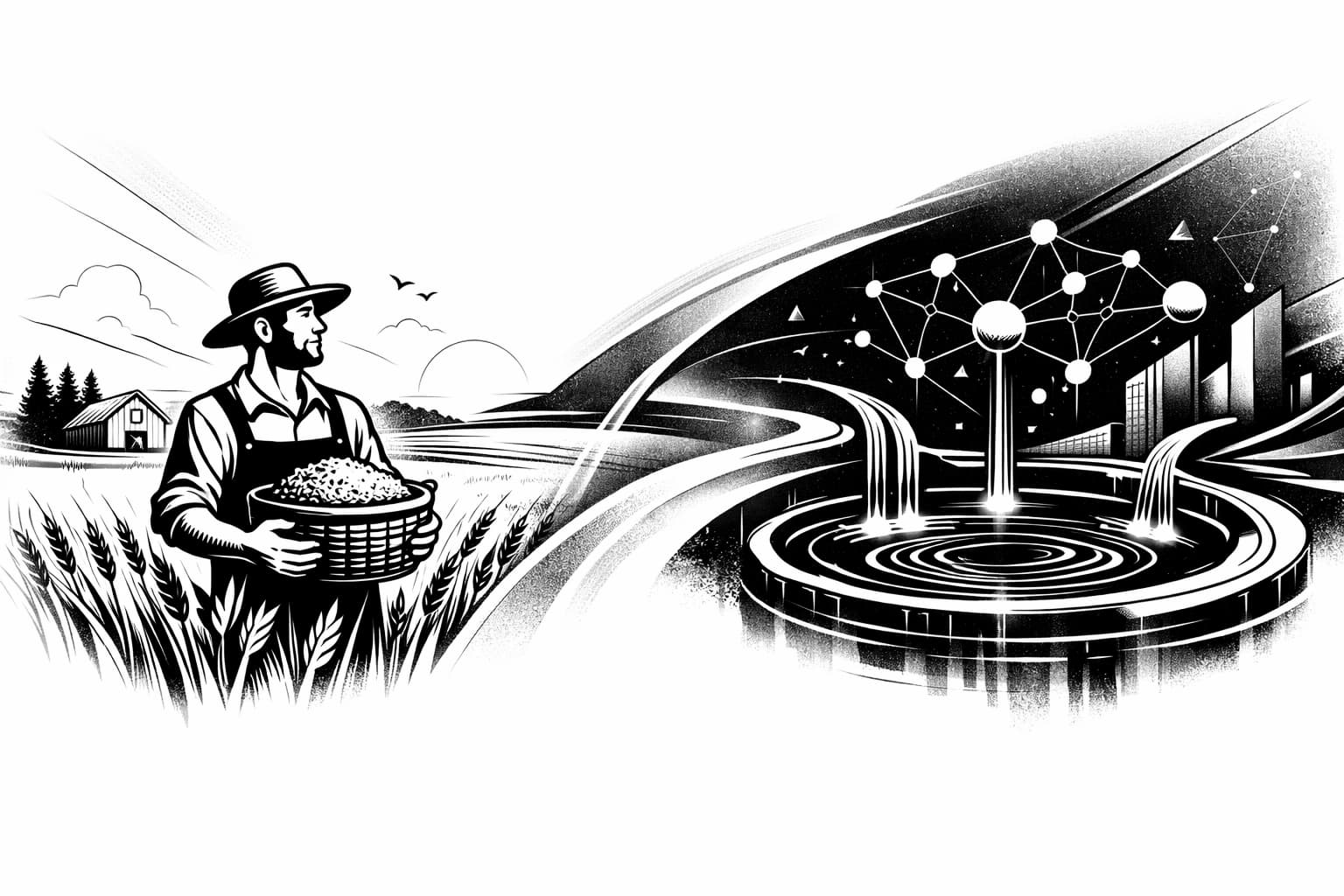
Yield in farming, also known as agricultural or crop yield, is the measure of crops produced per unit of land area over a specific period. In simple terms, it’s how much of a crop, like corn or wheat, a farmer can grow on a set piece of land. This concept is the foundation of agriculture and has been for centuries. For a farmer, a higher yield means a better return on their investment of time, money, and resources. It's the ultimate measure of success for their harvest.
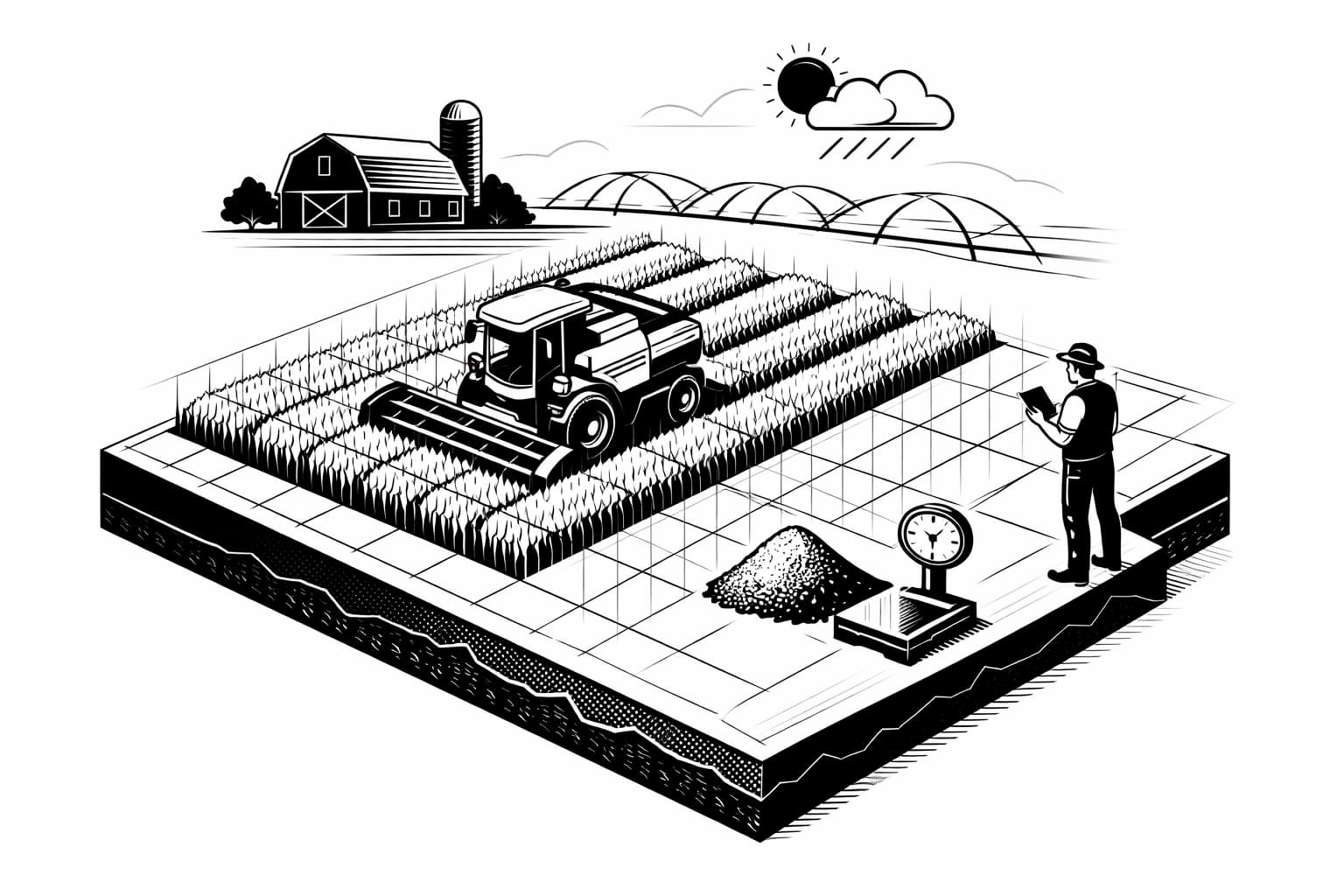
Organizations like the U.S. Department of Agriculture (USDA) carefully track this data to understand food production trends and ensure economic stability. Just as a farmer works to get the most out of their land, you'll soon see how a crypto investor aims to get the most out of their digital assets. But first, let’s look closer at how this original concept of yield works.
How Agricultural Yield is Measured
To accurately track productivity, farmers and agricultural bodies use standardized units. You’ll often hear yield discussed in terms of bushels per acre for grains like corn in the United States, or tonnes per hectare in many other parts of the world. This consistent measurement allows for easy comparison between different farms, regions, or even growing seasons. It answers the fundamental question: how productive was this land?
Factors Influencing Crop Yields
A farmer's yield isn't left to chance. It's the result of managing several key variables. Some of the most significant factors include:
- Soil Quality and Fertilizers: Nutrient-rich soil is the bedrock of a good harvest. Farmers often add fertilizers to replenish essential nutrients that crops consume as they grow.
- Weather and Irrigation: The right amount of sun and rain is critical. In dry regions, farmers rely on irrigation systems to provide a consistent water supply that rainfall alone cannot guarantee.
- Seed Quality and Technology: Modern agriculture benefits from genetically improved seeds that are more resistant to disease and pests. This technology directly contributes to higher and more reliable outputs.
- Farming Techniques: Advanced methods like crop rotation and precision farming help maintain soil health and optimize the use of resources, leading to better long-term yields.
From Farmland to Blockchain: What is Yield in Crypto?
Just as a farmer calculates the output from their land, the concept of yield in cryptocurrency refers to the earnings or returns you can generate from your digital assets. Instead of planting seeds in soil, you’re putting your crypto to work within a digital ecosystem. The "harvest" you collect isn't a physical crop, but rather more cryptocurrency, paid out as rewards, interest, or transaction fees.
This brings us to the active strategy known as yield farming. Imagine a modern farmer who constantly seeks the most fertile fields and best growing techniques to maximize their harvest. A yield farmer does the same in the digital world. They actively move their crypto assets between different platforms and protocols, searching for the highest possible returns. Understanding what is yield in farming provides a perfect foundation for this idea. The core principle is identical: making your assets as productive as possible. The only difference is that the farm is on the blockchain, and the tools are smart contracts instead of tractors.
How Crypto Yield Farming Works: A Step-by-Step Guide
Just as a farmer follows a sequence from planting to harvesting, crypto yield farming involves a clear process. Instead of soil and seeds, you're working with digital assets and smart contracts, but the goal remains the same: to generate a return from your capital. Let's walk through the digital equivalent of this age-old practice.
1. Choose a DeFi Protocol & Liquidity Pool
Your journey begins by selecting a digital marketplace, known as a DeFi protocol. Think of this as choosing the right field or co-op for your crops. These platforms run on smart contracts, which are automated agreements that don't require a traditional bank. Within this protocol, you'll find a liquidity pool. This is a big, community-funded pot of cryptocurrencies that allows users to trade assets directly with one another. Your goal is to contribute to this pot.
2. Provide Liquidity & Receive LP Tokens
This is the planting phase. You provide liquidity by depositing a pair of assets into your chosen pool, typically an equal value of two different tokens (like ETH and USDC). In return for your deposit, the protocol gives you special tokens called Liquidity Provider (LP) tokens. These LP tokens act as a receipt, proving your share of that pool. You can hold onto them and reclaim your original deposit at any time.
3. Stake LP Tokens to 'Farm' Rewards
Now it's time to make your assets grow. You take your "receipt"—the LP tokens—and lock them up in a designated area on the protocol, often called a "farm" or "staking pool." This action is known as staking. By staking your LP tokens, you show your commitment to the protocol, and in return, it rewards you. This is the core of the farming process, where your staked assets actively generate a yield.
4. Harvest Your Yield
After a period of time, you'll see rewards accumulating. This is your crop, ready for harvest. You can "harvest" or claim these rewards, which are usually paid out in the protocol's native token. Once harvested, you have several choices: you can sell the reward tokens for profit, trade them for other cryptocurrencies, or reinvest them back into the farm to compound your earnings. This final step directly answers the question of what is yield in farming; it's the tangible return you get for putting your assets to work.
Measuring Your Harvest: APY vs. APR Explained
Once you've planted your digital seeds in a liquidity pool or staking protocol, you need a way to estimate your potential harvest. You'll constantly see two key metrics: APR and APY. While they look similar, understanding the difference is vital for accurately projecting your returns from crypto yield farming.
APR: The Simple Interest Rate
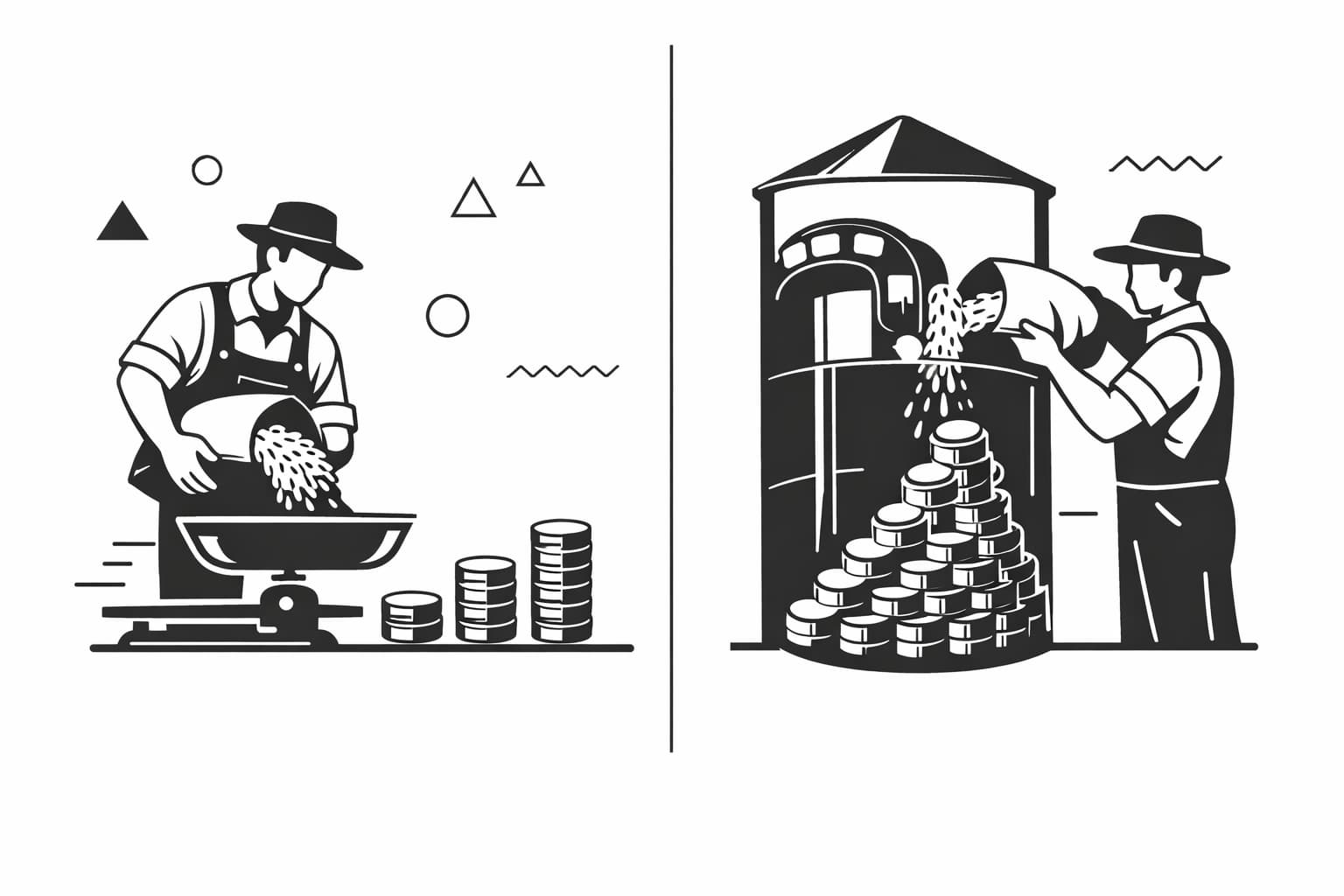
Think of Annual Percentage Rate (APR) as the straightforward, simple interest rate on your deposited funds over one year. It doesn't account for the effect of compounding your earnings. If a farm offers a 100% APR, depositing $1,000 means you can expect to earn $1,000 in rewards over the course of the year. It’s a simple calculation based only on your initial principal. It tells you the base rate of your harvest before any extra work.
APY: The Power of Compounding
Annual Percentage Yield (APY) shows a more powerful picture because it includes compounding. Compounding means reinvesting your earned rewards back into the pool to generate even more rewards. Imagine taking some of your harvested corn and immediately planting those seeds. APY calculates the return you’d get if you did that consistently over the year.
For example, that same farm with a 100% APR might have a 171% APY if the rewards are compounded daily. By frequently harvesting your rewards and adding them back to your principal, your earnings start to earn their own rewards, creating a snowball effect. APY always reflects a higher potential return than APR, assuming you actively reinvest your earnings.
Common Yield Farming Strategies in 2026
Just as a farmer's answer to the question 'what is yield in farming' changes depending on whether they're growing corn or specialty mushrooms, your potential returns in crypto depend on the strategy you choose. Not all methods are created equal; they come with different levels of risk, reward, and complexity. Let's explore a few of the most popular ways crypto farmers were cultivating returns in 2026.
Liquidity Providing
As we've touched on, providing liquidity is the classic yield farming strategy. You deposit a pair of assets into a liquidity pool to facilitate trading, earning fees in return. This can be highly profitable, similar to growing a high-demand cash crop. However, it also carries higher risks like impermanent loss, where the value of your deposited assets can fall compared to simply holding them.
Lending and Borrowing
Another popular method is to act as a lender. On platforms like Aave or Compound, you can deposit your crypto assets into a lending pool. Borrowers then take out loans from this pool, and you earn interest on your deposited funds. Think of it as leasing out your tractor or barn space—you're putting an idle asset to work to generate a steady income stream.
Single-Asset Staking
For those seeking a simpler, often less risky approach, single-asset staking is an excellent choice. Here, you lock up a single cryptocurrency, like Ethereum (ETH) or Solana (SOL), to help secure its network. In exchange for your contribution, the network rewards you with more of that same crypto. This is like planting a hardy, perennial crop that provides a predictable harvest year after year.
The Risks of Yield Farming: Don't Bet the Farm
While the potential rewards of crypto yield farming are enticing, it's not a risk-free endeavor. Just as a traditional farmer faces unpredictable weather and pests, a digital farmer must handle unique and significant dangers. Understanding these risks is the first step toward responsible participation in DeFi and answering the question of what is yield in farming in the digital age.
Impermanent Loss
This is a risk specific to providing liquidity. Imagine you deposit an equal value of two different tokens into a pool. If the price of one token dramatically increases while the other stays flat, the pool automatically rebalances your holdings. This can leave you with less of the high-performing asset than if you had simply held both tokens in your wallet. It's called "impermanent" because the loss only becomes real when you withdraw your funds.
Smart Contract Vulnerabilities
Yield farming protocols run on code called smart contracts. If there's a bug or a security flaw in that code, hackers can exploit it to steal funds from the protocol. This is like building your silo with a hidden crack; no matter how good your harvest, it could all be lost in an instant due to a foundational weakness.
Volatility and Market Risk
The crypto market is known for its price swings. The value of the tokens you deposit and the rewards you earn can fall dramatically. Earning a high yield on an asset that loses 80% of its value is still a net loss. While farming with stablecoins can mitigate some of this, the risk is always present in the broader DeFi ecosystem.
Conclusion: Is Yield Farming Right for You?
We've journeyed from the traditional farm to the cutting edge of decentralized finance, seeing how the simple concept of a harvest applies to both. Crypto yield farming offers a powerful way to put your digital assets to work, planting them in liquidity pools to grow your holdings. The potential for a significant harvest is real, but so are the dangers.
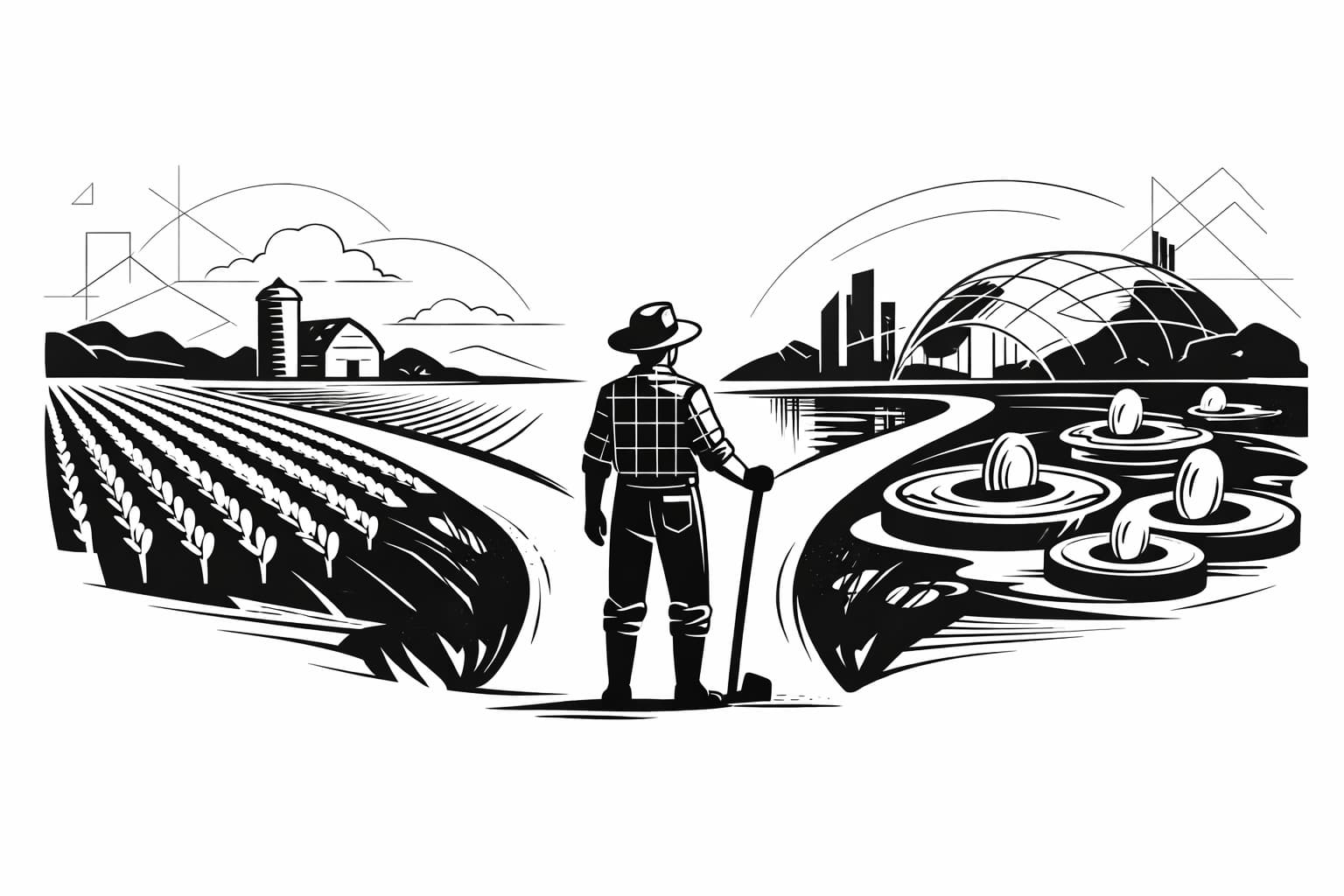
Ultimately, deciding whether this digital frontier is for you requires a sober assessment of your risk tolerance. It’s not a simple set-and-forget investment. It demands diligence, continuous learning, and a clear understanding that high rewards often come hand-in-hand with high risks.
Key Takeaways
- Yield farming is active participation: It involves lending or staking your crypto assets in DeFi protocols to generate rewards, typically in the form of more cryptocurrency.
- The farming analogy holds true: You provide "seeds" (your tokens) to a "field" (a liquidity pool) to help it grow, and in return, you get a share of the "harvest" (transaction fees and token rewards).
- Returns can be complex: Yield is often expressed as APY (Annual Percentage Yield), which accounts for compounding, making it a powerful but sometimes volatile metric.
- High risk is part of the process: The attractive returns come with substantial risks, including impermanent loss, smart contract bugs, and extreme price volatility. Always do your own research.
Frequently Asked Questions
- What are yields in farming?
- In traditional agriculture, yield refers to the amount of a crop produced per unit of land, often measured in bushels per acre. It's a fundamental metric for assessing a farm's productivity and efficiency. A higher yield means more output from the same amount of space, indicating successful cultivation methods.
- What is yield farming?
- Crypto yield farming is the practice of using decentralized finance (DeFi) protocols to generate the highest possible returns on your digital assets. This involves strategies like lending your crypto, staking it, or providing liquidity to trading pools in exchange for rewards, essentially putting your idle assets to work for you.
- How much can a 40 acre farm make?
- The income from a 40-acre farm varies widely based on crop type, location, market prices, and operational costs. This concept doesn't directly apply to crypto yield farming, where returns depend on the amount of capital invested and the specific DeFi strategy used, rather than any measure of physical land.
- What does it mean to yield a harvest?
- In agriculture, yielding a harvest means gathering the mature crops from the fields. In the context of crypto yield farming, "harvesting" has a similar meaning: it's the act of claiming the accumulated rewards or interest that your invested crypto assets have generated within a DeFi protocol, usually paid in tokens.
Sources
Author

Crypto analyst and blockchain educator with over 8 years of experience in the digital asset space. Former fintech consultant at a major Wall Street firm turned full-time crypto journalist. Specializes in DeFi, tokenomics, and blockchain technology. His writing breaks down complex cryptocurrency concepts into actionable insights for both beginners and seasoned investors.