What Is a Satoshi? Bitcoin's Smallest Unit Explained (2026)
What Is a Satoshi? (The Definitive Answer)
A satoshi is the smallest divisible unit of a bitcoin, representing one hundred millionth of a single bitcoin (0.00000001 BTC). Named in honor of Bitcoin's pseudonymous creator, Satoshi Nakamoto, this tiny fraction allows for precision in transactions and accounting within the Bitcoin network. Understanding this fundamental unit is key to grasping how Bitcoin can function as a practical currency for both large and small payments.
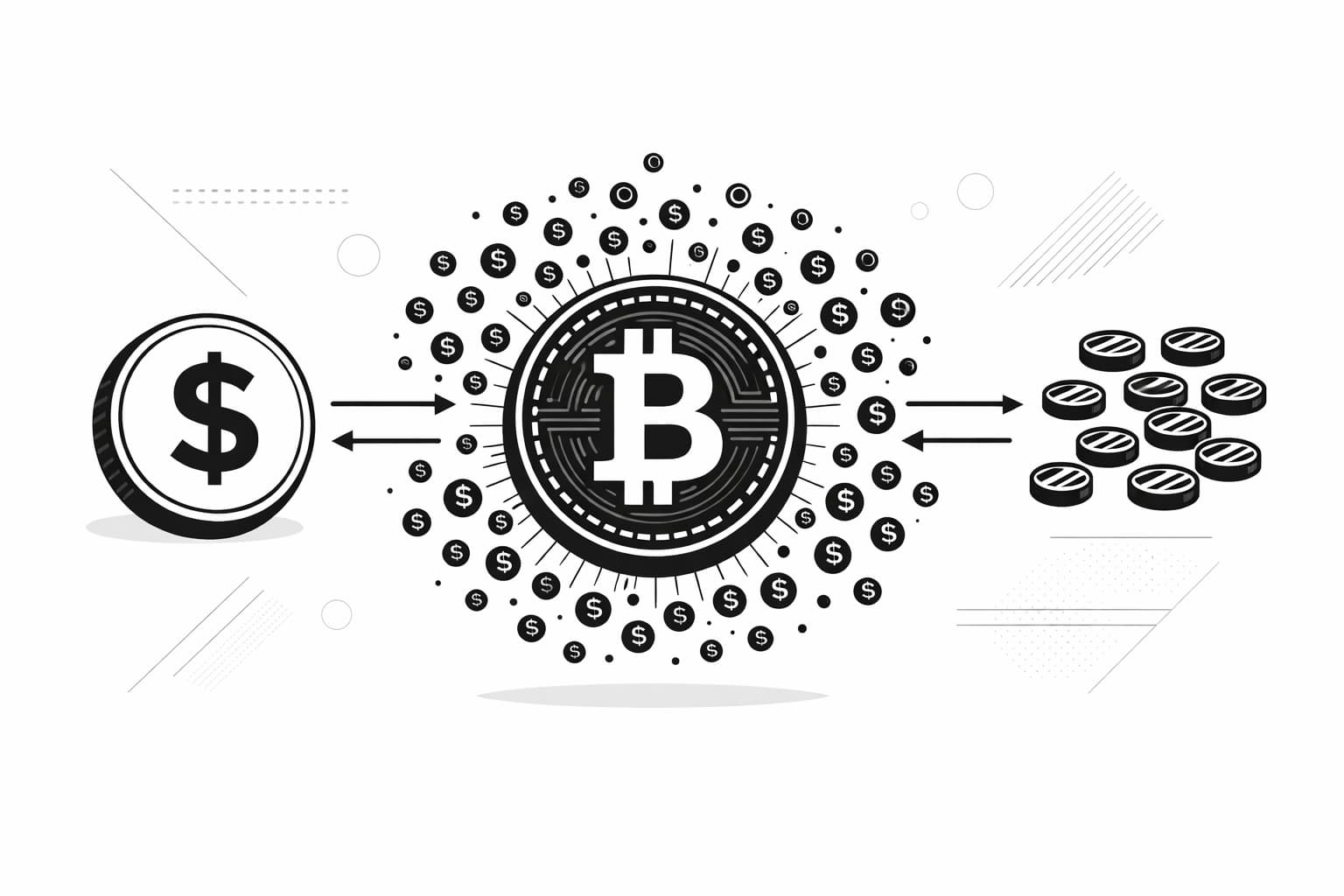
Think of the relationship between a satoshi and a bitcoin in the same way you think about dollars and cents. Just as one hundred cents make up a single dollar, a fixed number of satoshis make up a single bitcoin. However, Bitcoin is divisible to a much greater degree. This high level of granularity is essential, especially as the value of one bitcoin has grown significantly. By transacting in satoshis, or "sats" as they are commonly called, users can make micro-purchases, like buying a coffee, without dealing with long, cumbersome decimal points.
How Many Satoshis Are in One Bitcoin?
There are exactly 100,000,000 (one hundred million) satoshis in one bitcoin. This fixed number is a core part of the Bitcoin protocol and will not change. This divisibility ensures that even if the price of a single bitcoin reaches millions of dollars, the currency will remain usable for everyday transactions. The ability to transact in such small increments is a critical feature for Bitcoin's long-term viability and adoption as a global currency.
The Origin of the Satoshi: A Nod to Satoshi Nakamoto
The name for Bitcoin's smallest denomination, the satoshi, is a direct tribute to the network's pseudonymous creator, Satoshi Nakamoto. This name is not just a piece of trivia; it's a foundational element of Bitcoin's culture and history, honoring the person or group who started it all.
Satoshi Nakamoto is the author of the 2008 Bitcoin whitepaper and the developer who launched the network in early 2009. To this day, their true identity remains one of technology's greatest unsolved mysteries. Despite intense speculation, no one has definitively proven who Nakamoto was.
Naming the base unit after the founder was a community decision that permanently embeds their legacy into the currency itself. This choice ensures that every transaction, from a large transfer down to the smallest microtransaction, carries a symbolic reminder of the project's visionary and anonymous origins.
How to Calculate the Value of a Satoshi
Understanding the value of a single satoshi is straightforward once you know its relationship to Bitcoin. Because there are a fixed 100 million satoshis in one Bitcoin, you can determine a sat's value in any fiat currency, like the U.S. dollar, with a simple division problem. This calculation is essential for anyone looking to engage with Bitcoin for small, everyday transactions.
The formula is direct: take the current market price of one Bitcoin and divide it by 100,000,000. This gives you the price of a single satoshi.
(Current Price of 1 BTC) / 100,000,000 = Price of 1 Satoshi
As Bitcoin's price fluctuates, so does the value of a satoshi. This direct link means that as Bitcoin's value increases, the purchasing power of even a small number of sats also grows, making the answer to "what is a satoshi" a dynamic one.
Example Calculation: From BTC Price to Sat Value
Let's walk through a practical example to make this clear. Imagine the price of one Bitcoin reaches $100,000 in 2026. Using our formula, we can find the value of one satoshi:
$100,000 (BTC Price) / 100,000,000 = $0.001 (one-tenth of a cent)
At this price, a single sat is worth a fraction of a penny. This is why people often transact in thousands or millions of sats. To calculate the value of a larger amount, you simply multiply. For instance:
- 10,000 sats: 10,000 x $0.001 = $10.00
- 100,000 sats: 100,000 x $0.001 = $100.00
This simple math demonstrates how thinking in "sats" makes microtransactions easy to conceptualize and execute, a key feature for Bitcoin's adoption in daily commerce.
Why Do Satoshis Matter? Practical Use Cases
The extreme divisibility of Bitcoin is not just a technical feature; it is essential for its potential as a global currency. As the value of a single bitcoin has grown significantly, transacting with it for everyday items has become impractical. You wouldn't measure the cost of a coffee in fractions of a gold bar, and similarly, pricing it at 0.00005 BTC is cumbersome. Satoshis solve this problem by providing a more human-scale unit for smaller, daily purchases.
This granularity also offers a significant psychological advantage. For most people, transacting with whole numbers is far more intuitive than dealing with long decimal points. Paying 5,000 sats for an item feels more straightforward and tangible than paying 0.00005 BTC, which can feel abstract and confusing. This shift in perspective is key to encouraging mainstream adoption for everyday commerce.
Satoshis and the Lightning Network
The importance of the satoshi is most evident in Layer-2 solutions like the Lightning Network. This protocol operates on top of the Bitcoin blockchain and is designed for near-instant, low-fee transactions. Because it is built for high-volume microtransactions, nearly all activity on the Lightning Network is denominated in sats. For example, tipping a content creator a few cents, paying for an online article, or buying a virtual item in a game are all straightforward transactions measured in satoshis, making Bitcoin a viable medium for the digital economy.
Stacking Sats: A Popular Investment Strategy
Beyond daily transactions, the concept of the satoshi has given rise to a popular investment approach known as "stacking sats." This term, widely used within the Bitcoin community, describes the practice of accumulating small amounts of Bitcoin on a regular basis. Instead of feeling pressured to buy a whole, expensive bitcoin, individuals can consistently convert small amounts of their local currency into satoshis. This strategy, a form of dollar-cost averaging, makes investing in Bitcoin more accessible and less intimidating for the average person.
Bitcoin Denominations: From Satoshi to BTC
To fully appreciate the role of a satoshi, it helps to understand its place within the full spectrum of Bitcoin's units. While an entire Bitcoin is the most well-known denomination, several smaller units are used to make pricing and transactions more manageable. This hierarchy helps contextualize the value of both small and large amounts of BTC.
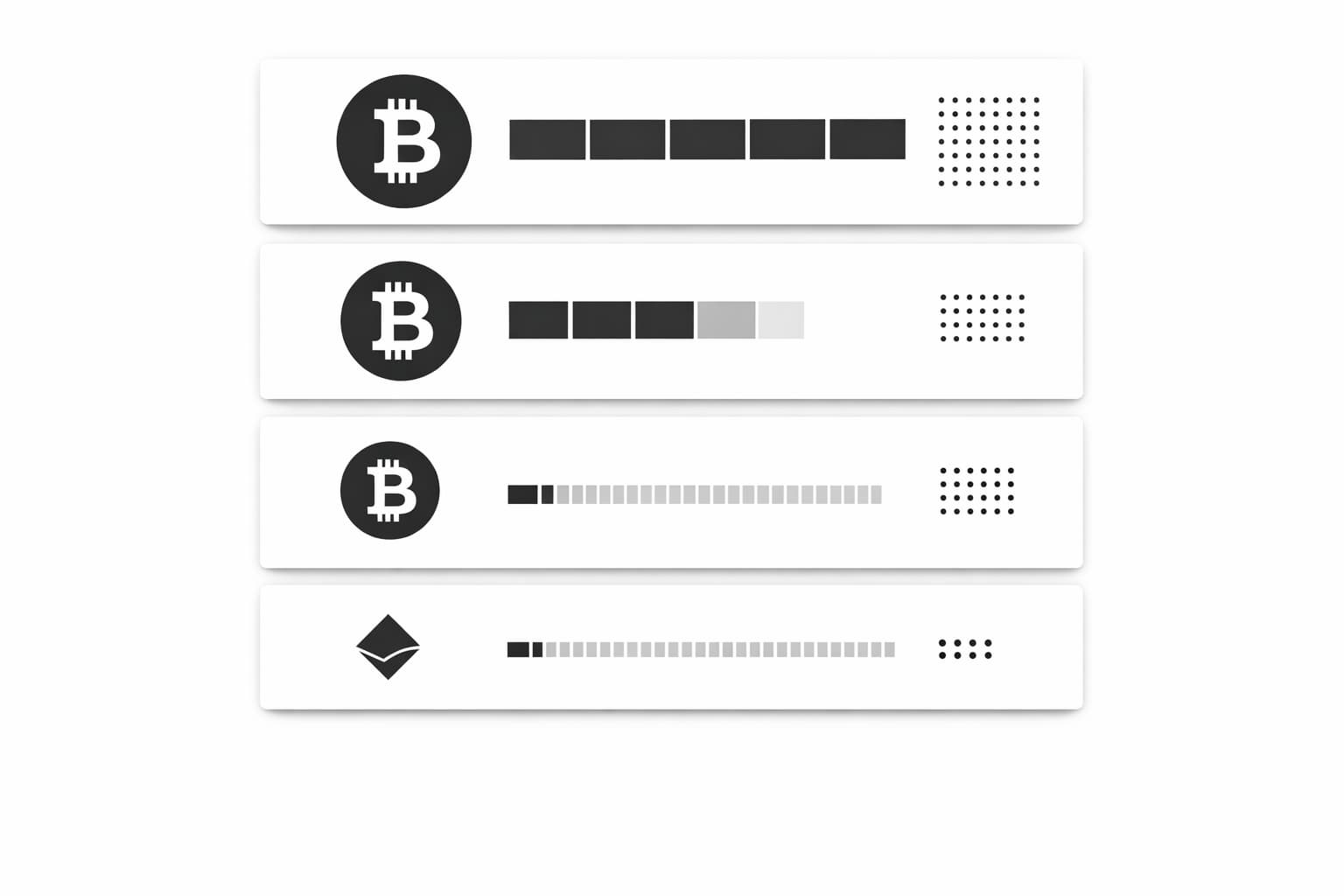
Here is a clear breakdown of the most common Bitcoin denominations:
- 1 Satoshi (sat) is the smallest, indivisible unit of Bitcoin.
- 100 satoshis are equal to 1 microbitcoin (μBTC).
- 100,000 satoshis are equal to 1 millibitcoin (mBTC).
- 100,000,000 satoshis are equal to 1 Bitcoin (BTC).
Thinking in these terms makes it easier to conceptualize the cost of everyday goods and services. For instance, a coffee might cost tens of thousands of satoshis instead of a tiny fraction of a Bitcoin, which is a much more intuitive way to handle daily commerce.
How to Buy Satoshis (Sats)
You don't directly buy satoshis as a separate asset; you acquire them by purchasing a fraction of a bitcoin. Any amount of bitcoin you buy, no matter how small, is composed of satoshis. For example, if you decide to purchase $20 worth of bitcoin on an exchange, you are in fact buying a specific number of sats equivalent to that dollar value.
This distinction is becoming more user-friendly as many modern cryptocurrency exchanges and digital wallets now offer an option to display your balance in sats. Viewing your holdings as "100,000 sats" instead of "0.001 BTC" can feel more tangible and motivating, especially for those just starting their Bitcoin portfolio allocation. This shift in perspective helps users better understand and track their accumulation of Bitcoin's smallest unit, preparing them for a future where everyday transactions could be priced in sats.
The Future of the Satoshi: Will 1 Sat Ever Equal $1?
The idea of a single satoshi reaching parity with the US dollar is a popular topic of speculation within the Bitcoin community. While an exciting thought, achieving this milestone would require a monumental shift in global finance. For one satoshi to equal one dollar, the price of a single Bitcoin would need to reach an incredible $100 million, since there are 100 million satoshis in every BTC.
This valuation would push Bitcoin's total market capitalization to an astronomical figure: approximately $2.1 quadrillion, calculated by multiplying 21 million coins by a $100 million price tag. To put that into perspective, this figure would dwarf the value of all other major asset classes combined, including global real estate and stock markets. Such a scenario would imply that Bitcoin has not just succeeded but has become the primary global reserve asset, absorbing value on an unprecedented scale.
Reaching this point depends on complex market dynamics and a level of global adoption that is currently difficult to envision. It would also require an economic environment where Bitcoin performs in a downturn so exceptionally that it attracts a significant portion of global capital. Therefore, while theoretically possible within Bitcoin's fixed-supply model, the "one sat equals one dollar" scenario remains firmly in the area of long-term speculation.
Related Terms
To fully grasp the concept of a satoshi, it helps to understand the foundational technologies and ideas it connects to. Here are brief definitions of several important related terms you will encounter when learning about Bitcoin.
- Bitcoin: A decentralized digital currency that enables peer-to-peer transactions on a global scale without the need for a central bank or administrator.
- Blockchain: The distributed and immutable public ledger technology that records all transactions for cryptocurrencies like Bitcoin in a secure and transparent manner.
- Satoshi Nakamoto: The pseudonym for the person or group of people who created Bitcoin, published its white paper in 2008, and developed the first blockchain database.
- Lightning Network: A "layer-2" payment protocol that operates on top of Bitcoin, designed to enable fast transactions with extremely low fees, ideal for microtransactions in sats.
- Microtransaction: A very small financial payment, which becomes practical on the Bitcoin network by denominating value in satoshis rather than whole bitcoins.
- Digital Currency: A form of currency that exists only in digital or electronic form, not in physical form, of which Bitcoin is the first and most well-known example.
Frequently Asked Questions
- How many satoshis are in 1 Bitcoin?
- There are exactly 100,000,000 (one hundred million) satoshis in a single Bitcoin. This high level of divisibility is a core feature, making Bitcoin practical for smaller transactions, much like cents are to a dollar. This ensures the currency can scale for micropayments and everyday use as its value increases.
- What is 1 satoshi worth?
- The value of a single satoshi isn't fixed; it changes with Bitcoin's market price. You can calculate it by dividing the price of one Bitcoin by 100 million. For instance, if Bitcoin is trading at $65,000, one satoshi would be worth $0.00065. Its value is directly tied to Bitcoin's performance.
- How much is 100,000 satoshi in dollars?
- The value of 100,000 satoshis depends entirely on the current price of Bitcoin. Since 100,000 sats is one-thousandth of a Bitcoin, you just divide the BTC price by 1,000. If one Bitcoin is worth $65,000, then 100,000 satoshis would be worth $65. This value fluctuates constantly with the market.
- Will 1 satoshi ever equal 1 dollar?
- For one satoshi to equal one U.S. dollar, the price of a single Bitcoin would need to reach $100 million. While this is a highly speculative scenario, it is mathematically possible. Such a valuation would require a massive increase in Bitcoin's market capitalization, likely driven by widespread global adoption.
Sources
Author

Crypto analyst and blockchain educator with over 8 years of experience in the digital asset space. Former fintech consultant at a major Wall Street firm turned full-time crypto journalist. Specializes in DeFi, tokenomics, and blockchain technology. His writing breaks down complex cryptocurrency concepts into actionable insights for both beginners and seasoned investors.