Can Bitcoin Be Banned? A Guide to Government Actions in 2026

Can Governments Really Ban Bitcoin?
No, a government cannot truly turn off the global Bitcoin network, but it can make owning and using it extremely difficult for its citizens. This is the central paradox when people ask, "Can Bitcoin be banned?" The question has two very different answers depending on whether you're talking about the technology itself or how people access it.
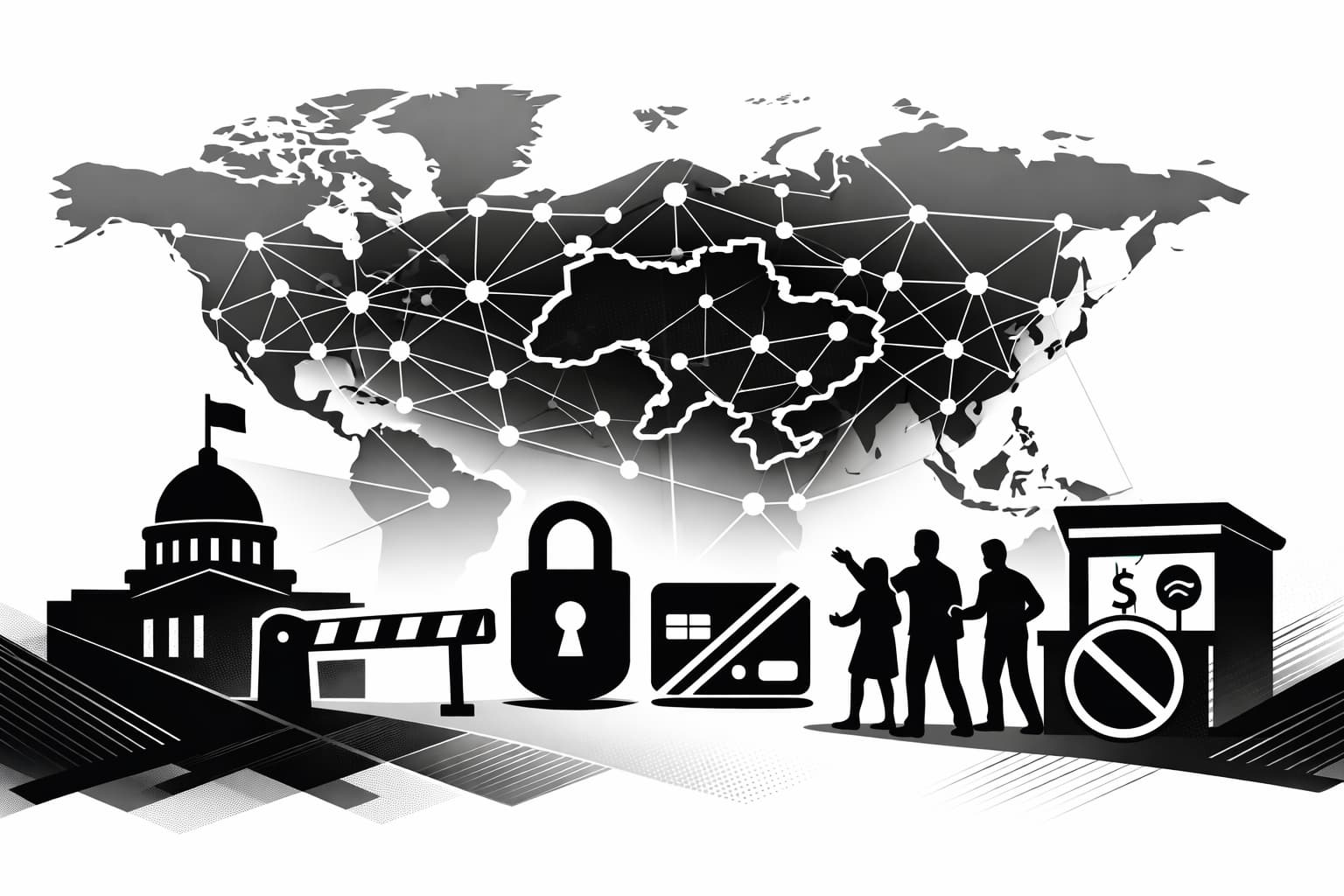
Think of Bitcoin like the internet. No single country can shut down the entire internet for the whole world. It's a decentralized network of computers that don't answer to one authority. Similarly, the Bitcoin network operates on thousands of computers globally, making it resilient to any single point of failure or attack. However, a government can block websites and restrict internet access within its own borders. In the same way, governments can target the on-ramps and off-ramps—the places where you exchange traditional money for Bitcoin—making it a practical nightmare to participate in the network.
Why This Question Matters in 2026
As we move through April 2026, the question of government control over digital assets feels more urgent than ever. Following the last major market cycle, regulators worldwide have shifted their focus from observation to action. Many countries are rolling out their own central bank digital currencies (CBDCs), which naturally puts them in conflict with decentralized alternatives like Bitcoin. For investors and everyday users, understanding the tools governments have at their disposal is key to managing risk and protecting their financial autonomy in an evolving digital world.
Why Would a Government Want to Ban Bitcoin?
While the technical side of shutting down Bitcoin is one challenge, it's equally important to understand why a government might even consider such a drastic step. The question of "can Bitcoin be banned" is often rooted in a fundamental conflict between this new technology and the traditional roles of a state. The motivations are not about technology itself, but about control, stability, and public safety.
Threat to Monetary Sovereignty
At its core, a government's power is tied to its control over its currency. Central banks manage the economy by adjusting interest rates and printing money, like a pilot using controls to steer through turbulence. Bitcoin operates entirely outside of this system. It has a fixed supply and a decentralized network that no single entity can direct. This presents a direct challenge to a nation's ability to conduct monetary policy. Many governments are exploring their own alternatives, like government-controlled digital currencies (CBDCs), to maintain control in a digital age.
Concerns Over Illicit Activities
Another major reason for government hostility is the perceived use of cryptocurrencies for illegal purposes. Since Bitcoin transactions can be sent across borders without a bank's permission, regulators worry about its role in money laundering, tax evasion, and financing terrorism. While the blockchain's public ledger makes transactions traceable, the ability to transact with a degree of anonymity alarms agencies tasked with monitoring the flow of money to prevent criminal activity.
Consumer and Investor Protection
Finally, many governments view strict regulation or a ban as a duty to their citizens. The crypto market is famous for its extreme price swings and has been plagued by scams and hacks. From a regulator's perspective, allowing the public to freely engage with such a volatile asset class without safeguards is irresponsible. They see it as their job to protect people from financial ruin, similar to how they regulate stocks or other risky investments.
The Spectrum of Government Action: How a 'Ban' Could Work
When we ask the question, "can bitcoin be banned," it's easy to picture a government flipping a single switch to turn it off. In reality, the Bitcoin network itself is decentralized and has no off-switch. Instead, a government "ban" would look more like a series of escalating actions designed to make using Bitcoin as difficult as possible. Think of it like a government trying to ban cars. They can’t destroy every road, but they can make it nearly impossible to buy gas, register a vehicle, or get a driver’s license.
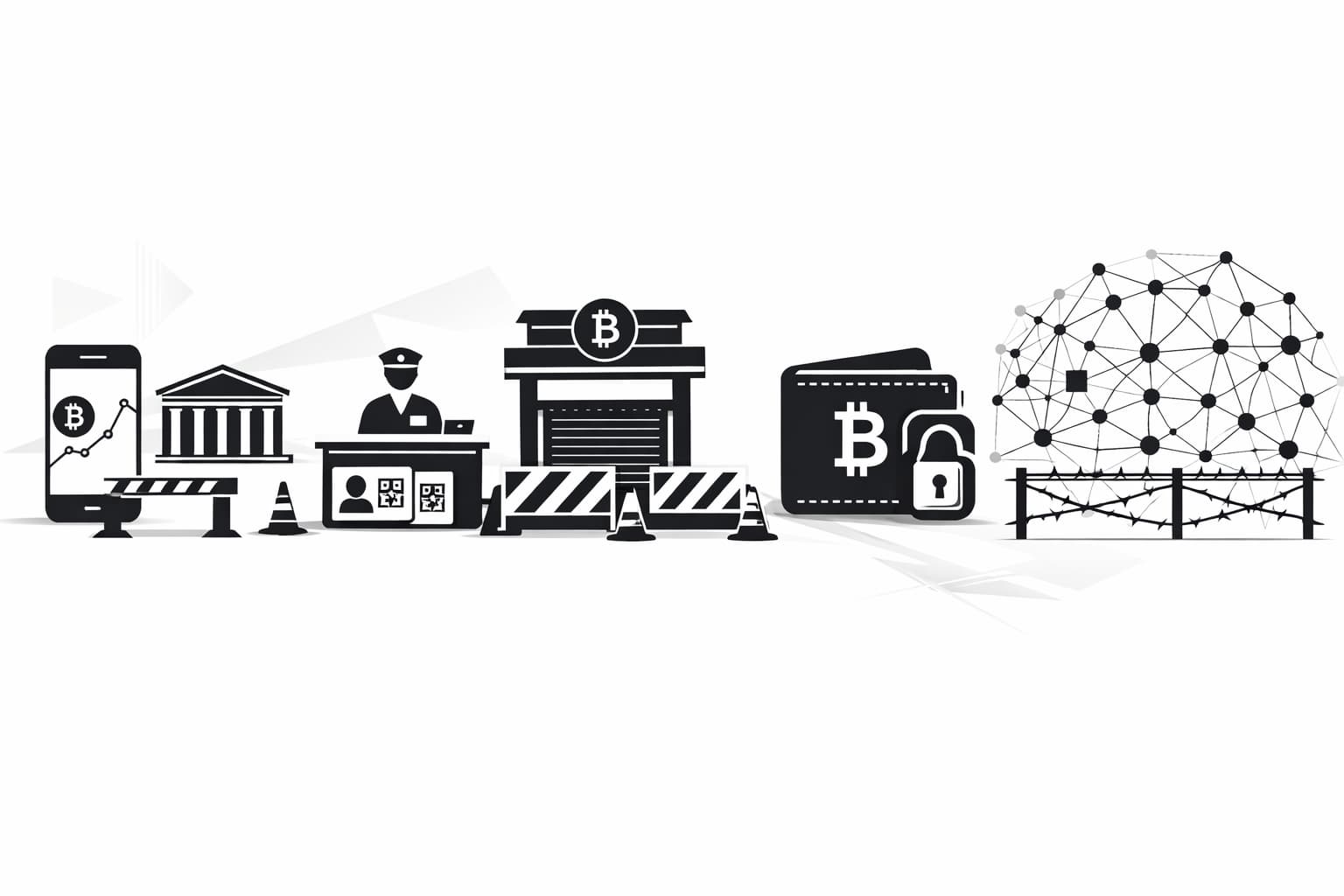
Governments can take several steps to effectively restrict or ban Bitcoin within their borders, ranging from mild inconveniences to severe prohibitions. Here are the primary methods they can employ:
- Restricting On-Ramps and Off-Ramps: This is the most common first step. Governments can order banks and financial institutions to block or refuse transactions to and from known cryptocurrency exchanges, making it very hard for citizens to buy Bitcoin with their local currency or sell it back into cash.
- Banning Centralized Exchanges: A more direct move is to make it illegal for cryptocurrency exchanges to operate within the country. This forces users toward less regulated offshore platforms or peer-to-peer (P2P) trading, which can be more complex and carry different risks.
- Prohibiting Bitcoin Mining: Governments can outlaw the energy-intensive process of Bitcoin mining. Citing concerns over electricity consumption or financial stability, they can shut down mining operations, which affects the global security and decentralization of the network.
- Outlawing Self-Custody: This is the most extreme and technically challenging measure. A government could make it illegal for individuals to hold their own private keys, effectively banning non-custodial wallets. Enforcing such a law would be incredibly difficult, as it would be akin to banning the possession of a specific string of numbers and letters.
Taken together, these actions create a powerful chilling effect. While they may not destroy the Bitcoin network itself, they can effectively push it to the fringes of a country's economy, making it an impractical tool for the average person and achieving a ban in practice, if not in theory.
Global Case Studies: Bitcoin Bans and Restrictions in Practice
Theory is one thing, but what happens when governments actually try to clamp down on Bitcoin? Looking at real-world examples gives us the clearest picture of what works, what doesn't, and what unexpected outcomes can arise. The experiences of China and Nigeria offer two powerful, yet very different, lessons on the challenges governments face.
China's Detailed Ban: Pushing Activity Underground
China provides the most forceful example of a state attempting to eradicate cryptocurrency. The government's campaign unfolded over several years, starting with a ban on financial institutions handling crypto, then escalating to a complete shutdown of the country's massive Bitcoin mining industry in 2021. Finally, it declared all cryptocurrency transactions illegal. On the surface, it worked; major exchanges withdrew and visible trading disappeared. However, the activity never truly stopped. It simply moved into the shadows. Citizens now use virtual private networks (VPNs) to access foreign exchanges and rely on peer-to-peer networks to trade, demonstrating that even a total ban struggles to extinguish a decentralized network.
Nigeria's Banking Restrictions: An Unexpected Outcome
Nigeria took a different approach with surprising results. Instead of an outright ban, Nigeria's central bank in 2021 prohibited banks from servicing cryptocurrency exchanges. This action was designed to cut off the "on-ramps" and "off-ramps" that allow people to convert their local currency, the naira, into Bitcoin and back again. The move was expected to stifle the local crypto scene. Instead, it had the opposite effect. Users quickly pivoted to peer-to-peer (P2P) trading platforms, which connect buyers and sellers directly. This shift not only made transactions harder for authorities to monitor but also helped propel Nigeria to become one of the world's leaders in Bitcoin adoption, showing how restrictions can sometimes fuel the very behavior they aim to prevent.
Could the US Government Ban Bitcoin?
Having looked at how different countries have approached Bitcoin, it's natural to ask about the United States. In the US, an outright technical ban—making the software illegal or trying to shut down the network—is highly improbable. The legal and political hurdles would be immense, touching on constitutional rights like freedom of speech, as some argue that code itself is a form of speech.
Instead of a direct assault, US government action is more likely to focus on the access points. Think of it this way: instead of making a specific type of car illegal, the government could make it illegal for gas stations to sell it fuel or for mechanics to service it. The car would still exist, but using it would become a massive headache. Similarly, the government can target the financial "on-ramps" and "off-ramps" where people convert US dollars into Bitcoin and back again. This means regulating exchanges, banks, and payment processors that interact with cryptocurrencies.
This approach involves a collection of different government bodies, each with its own perspective. The Securities and Exchange Commission (SEC) often views digital assets as securities, while the Treasury Department is concerned with preventing money laundering. At the same time, the Commodity Futures Trading Commission (CFTC) treats Bitcoin as a commodity. This patchwork of oversight makes a single, coordinated ban unlikely. Instead, the question isn't truly "can Bitcoin be banned," but rather how restrictive the rules will become. For the foreseeable future, heavy regulation is the more probable path in the United States.
Conclusion: The Unstoppable Network vs. The Reach of Law
So, can bitcoin be banned? The answer isn't a simple yes or no. Instead, it reveals a fascinating tension between a borderless technology and the power of sovereign nations. While the Bitcoin network itself is incredibly resilient and difficult to shut down, governments can build significant barriers. By controlling the financial on-ramps and off-ramps, they can make it extremely difficult for the average person to buy, sell, or use it legally and safely.
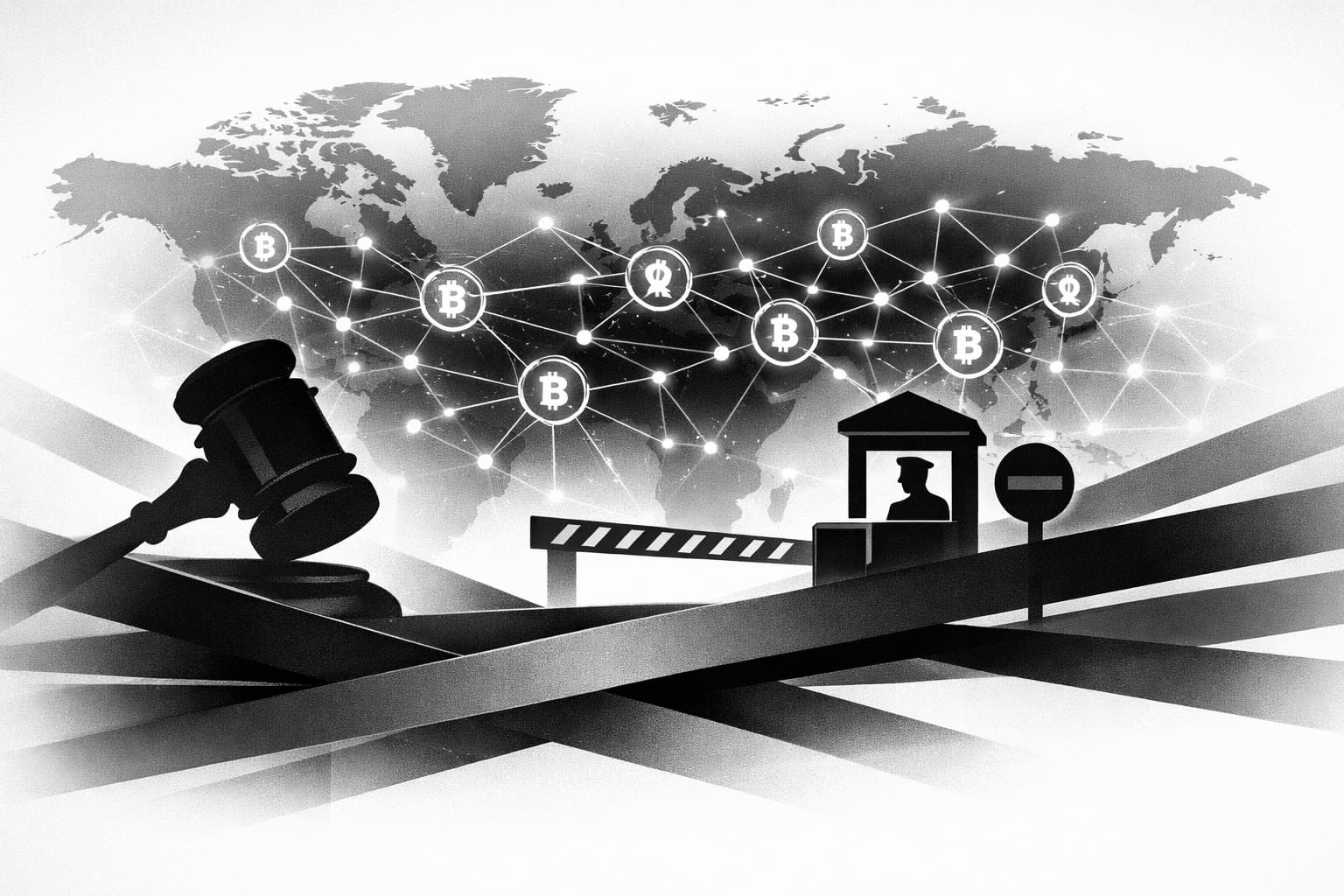
The future isn't a simple choice between a banned or a free Bitcoin. It’s a complex map of varying regulations. The experience of using Bitcoin will likely depend more on your passport than on the technology itself, creating a diverse global field of crypto adoption for years to come.
Key Takeaways
- Technical Ban is Infeasible: Shutting down the global Bitcoin network is practically impossible for any single government due to its decentralized design.
- Governments Target Access Points: The most effective "ban" involves restricting exchanges and financial institutions that connect traditional money to the crypto world.
- Regulation Over Prohibition: Most major economies are moving towards regulating Bitcoin through taxes and reporting rules, not outright banning it.
- A Patchwork of Laws: The future of Bitcoin access will vary greatly from one country to another, without a single global policy.
Frequently Asked Questions
- Why can't Bitcoin be banned?
- Bitcoin's decentralized design means it isn't controlled by any single company or country. The network runs on thousands of computers worldwide, so no single government can shut it down entirely. A nation can only ban its use within its own borders, but the global network will continue to operate unaffected.
- Can Bitcoin get shut down?
- Shutting down the Bitcoin network would require a coordinated global effort to find and disable every computer running the software, which is virtually impossible. The network was specifically designed to be resilient and censorship-resistant, ensuring it can withstand attempts to take it offline. It has no central point of failure.
- Is Bitcoin going to be banned?
- While some countries have banned it, a worldwide ban is highly unlikely. Major economies like the United States and the European Union are creating regulatory frameworks instead of outright prohibitions. The global trend is moving towards integrating Bitcoin into the financial system with clear rules, not making it illegal everywhere.
- Can Bitcoin be illegal?
- Yes, Bitcoin can be made illegal in certain jurisdictions. A government has the authority to outlaw the ownership or use of Bitcoin within its borders, as seen in countries like China and Bolivia. The legality of Bitcoin is not universal and depends entirely on the laws of your specific country.
Sources
Author

Crypto analyst and blockchain educator with over 8 years of experience in the digital asset space. Former fintech consultant at a major Wall Street firm turned full-time crypto journalist. Specializes in DeFi, tokenomics, and blockchain technology. His writing breaks down complex cryptocurrency concepts into actionable insights for both beginners and seasoned investors.