Top RWA Crypto List for 2026: Real World Asset Rankings
What Are RWA Crypto Coins? (And Why They Matter in 2026)
RWA crypto coins, or Real World Asset tokens, are digital tokens on a blockchain that represent ownership of tangible or intangible assets from the traditional financial world. These assets can include anything from U.S. Treasuries and private credit loans to real estate, fine art, and carbon credits. By tokenizing these items, their value can be brought on-chain, creating a digital representation that can be traded, collateralized, and integrated into decentralized finance (DeFi) protocols.
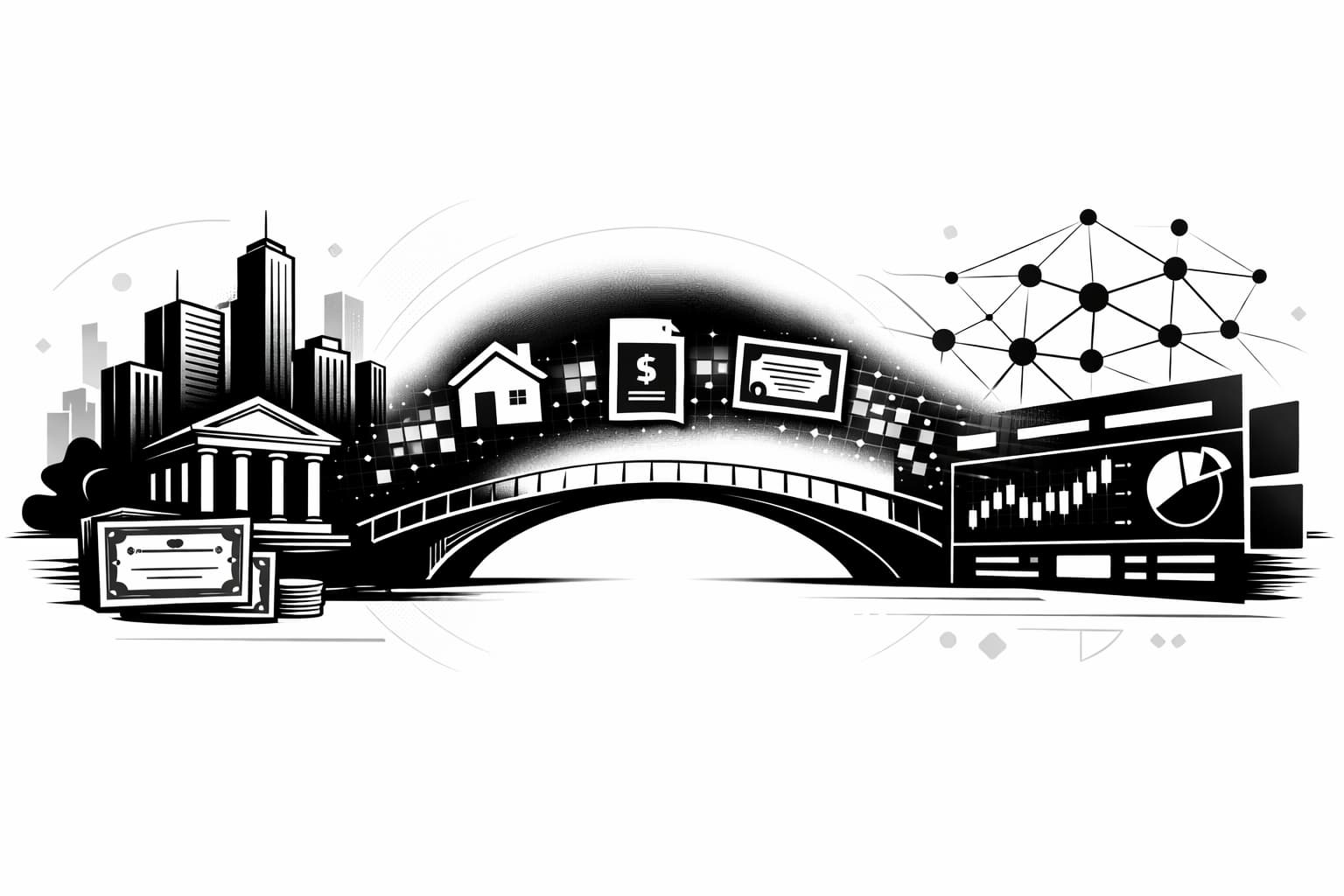
This process creates a powerful bridge between traditional finance (TradFi) and the fast-paced world of DeFi. For centuries, assets like commercial real estate or private equity were illiquid and accessible only to a select few. Tokenization shatters these barriers, enabling fractional ownership and creating liquid markets for previously stagnant capital. This infusion of stable, off-chain value provides a grounding force for the often-volatile crypto markets.
In 2026, the importance of this bridge cannot be overstated. As the DeFi ecosystem matures, investors are increasingly seeking sustainable, real-world yields rather than purely speculative gains. The best RWA crypto coins offer just that—the potential for reliable returns backed by proven, income-generating assets. This shift is attracting institutional capital and solidifying DeFi's role as a legitimate alternative financial system. Understanding the top projects in this space is essential for anyone building a resilient crypto portfolio, which is why we've compiled this complete real world assets crypto list.
How We Ranked the Top RWA Crypto Projects
Understanding the world of Real World Assets requires more than just a simple directory. To provide a truly actionable guide, we didn't just compile a list; we created a ranked hierarchy. Our methodology goes beyond surface-level metrics to give you a clear picture of which projects lead the pack in 2026. This approach ensures our real world assets crypto list is both reliable and insightful.
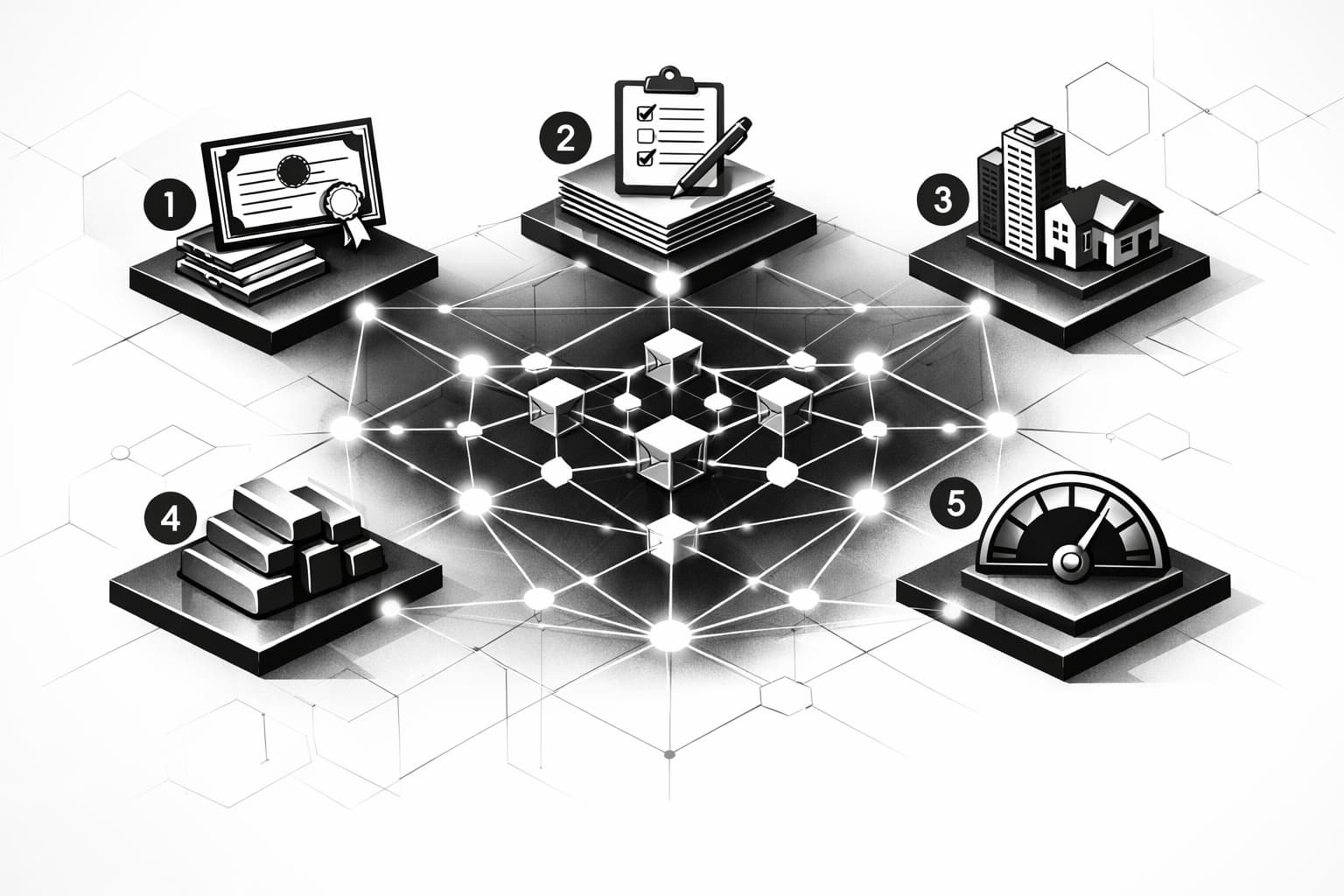
Each project was evaluated against a framework with several factors designed to measure stability, growth potential, and trustworthiness. Here are the core pillars of our ranking system:
- Underlying Asset Quality: We analyzed the quality and transparency of the assets backing each token. Projects collateralized by low-risk assets like U.S. Treasuries scored higher than those backed by opaque or speculative private credit. Verifiable, on-chain proof of reserves was a key factor.
- Market Cap & Total Value Locked (TVL): While not the only metric, market capitalization and TVL are strong indicators of market trust and liquidity. We looked for consistent growth and a substantial asset base.
- Protocol Maturity & Security: We assessed the project's history, the experience of its team, and the results of third-party security audits. A track record of secure operation and resilience against exploits was heavily weighted.
- Ecosystem Adoption: A project's value is also determined by its utility. We measured adoption by looking at the number of integrations with other DeFi protocols, active user growth, and the breadth of its partnerships.
By balancing these quantitative and qualitative factors, we developed the following ranking of top RWA crypto coins. This method helps cut through the noise to identify the platforms building a sustainable foundation for the future of finance.
The Complete RWA Crypto List for 2026
Having established our rigorous evaluation criteria, we now present the definitive RWA crypto list for 2026. These projects represent the leaders in their respective niches, from tokenizing U.S. government debt to building the foundational blockchains for regulated assets. Each one offers a unique value proposition for investors looking to gain exposure to real-world assets through decentralized finance.
For a quick overview, here is a summary of our top picks:
Project | Ticker | Primary Asset Type | Market Cap (2026 Est.) |
|---|---|---|---|
Ondo Finance | ONDO | Tokenized US Treasuries | $5.0 Billion |
MANTRA | OM | RWA L1 Blockchain | $3.5 Billion |
Centrifuge | CFG | Private Credit & Securitization | $2.8 Billion |
Polymesh | POLYX | Regulated Securities Blockchain | $2.2 Billion |
Goldfinch | GFI | Emerging Market Credit | $1.5 Billion |
Maple Finance | MPL | Institutional Lending | $1.2 Billion |
1. Ondo Finance (ONDO) — Best for Tokenized US Treasuries
Ondo Finance has firmly established itself as the market leader for tokenizing low-risk, high-quality assets. Its primary focus is on bringing U.S. Treasuries to the blockchain, offering crypto-native investors a stable yield backed by one of the world's safest financial instruments. The project's flagship product, OUSG, is a tokenized representation of a short-term U.S. Treasuries ETF managed by BlackRock. This provides unparalleled transparency and security.
The key value proposition for Ondo is simplicity and trust. It bridges the gap between traditional finance (TradFi) and DeFi by offering a yield-bearing "stablecoin alternative" that is fully backed by real-world, bankruptcy-remote assets. With a Total Value Locked (TVL) that consistently outpaces competitors, Ondo's institutional-grade approach, clear backing, and partnerships with top-tier custodians have made it the go-to platform for investors seeking on-chain access to U.S. government debt.
2. MANTRA (OM) — Best for RWA-Focused L1 Blockchain
While many RWA projects are applications built on general-purpose blockchains, MANTRA is building the highway itself. It is a security-first Layer 1 blockchain designed from the ground up to meet the specific needs of real-world assets. Its architecture prioritizes compliance, identity verification, and governance, addressing the major hurdles that have kept many institutional players out of DeFi.
MANTRA's goal is to become the core infrastructure for a compliant RWA ecosystem. By building modules for asset tokenization, KYC/AML checks, and regulatory reporting directly into its chain, it simplifies the process for developers and businesses to launch their own regulated tokens. This focus on providing the essential tools for others to build with makes MANTRA a foundational bet on the growth of the entire RWA sector, aiming to be the "Ethereum for real-world assets."
3. Centrifuge (CFG) — Pioneer in Private Credit Tokenization
As one of the earliest projects in the space, Centrifuge has carved out a critical niche in tokenizing private credit. Its platform, Tinlake, allows businesses to convert tangible but illiquid assets—such as invoices, mortgage payments, and royalty streams—into non-fungible tokens (NFTs). These NFTs can then be used as collateral to access liquidity from DeFi lending pools. This process effectively allows small and medium-sized enterprises to unlock capital that would otherwise be tied up in their balance sheets.
Centrifuge's long history gives it a significant advantage in experience and network effects. It has successfully financed billions in assets, proving the viability of its model. By creating a bridge for off-chain business assets to enter the on-chain world, Centrifuge is not just a crypto project; it is a genuine financial development that expands access to capital. It continues to be one of the key players in RWA tokenization, demonstrating a sustainable and impactful use case for blockchain technology.
4. Polymesh (POLYX) — Top Blockchain for Regulated Securities
Polymesh stands apart by being an institutional-grade, permissioned blockchain built specifically for one thing: regulated securities. Unlike open networks like Ethereum or MANTRA, every participant on Polymesh—from issuers to investors—must complete an identity verification process. This design choice is critical for meeting the strict compliance requirements associated with security tokens.
The platform’s core strengths are its built-in mechanisms for governance, identity, compliance, and settlement. For example, rules about who can hold a token or how it can be traded can be programmed directly at the asset level, ensuring regulatory adherence automatically. This makes Polymesh highly attractive to financial institutions looking to issue tokenized equity, bonds, or other securities without the legal ambiguity of public blockchains. POLYX is the native token used for network security and paying transaction fees.
5. Goldfinch (GFI) — Leader in Emerging Market Credit
Goldfinch is tackling a massive real-world problem by using DeFi to provide capital to businesses in emerging markets. Its model facilitates undercollateralized lending, something largely absent in traditional DeFi. Instead of requiring crypto collateral, Goldfinch extends credit lines to fintech lenders and debt funds across the globe, who then provide loans to their local communities.
The protocol’s unique feature is its decentralized credit assessment process. It uses a network of "Backers" who stake their capital and vet the creditworthiness of the borrowers (the fintech lenders). This "trust through consensus" approach allows the protocol to make lending decisions without relying on traditional collateral. By channeling DeFi liquidity to productive businesses in Africa, Southeast Asia, and Latin America, Goldfinch offers both a compelling social impact and a source of uncorrelated, real-world yield.
6. Maple Finance (MPL) — Top for Institutional Lending
Maple Finance operates as a decentralized corporate credit market, connecting blue-chip crypto institutions with on-chain liquidity. It is a leading platform for undercollateralized lending, but its focus is squarely on established, creditworthy borrowers like market makers, hedge funds, and asset managers within the digital asset industry. These institutions borrow to fund their operations, and lenders earn a sustainable yield in return.
The platform operates through "lending pools" managed by experienced "Pool Delegates." These delegates are responsible for negotiating terms and performing due diligence on borrowers, adding a layer of professional credit assessment to the process. For lenders, Maple offers a way to earn yield from institutional-grade borrowers without directly managing the loans. For borrowers, it provides a transparent and efficient way to secure capital. This model has proven resilient and is a vital piece of infrastructure for the professional crypto economy.
Key Categories of Real World Asset Tokens
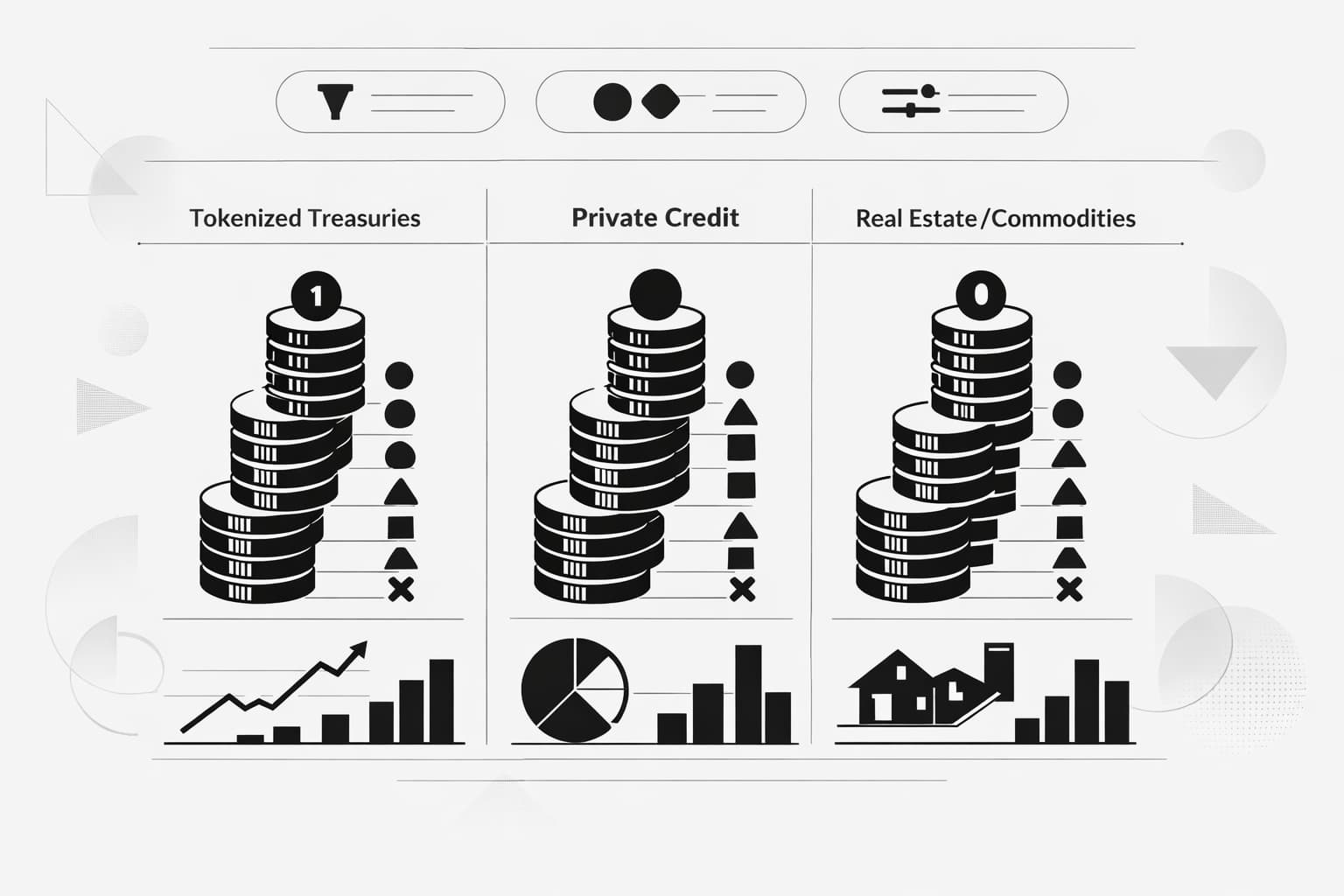
To build a truly effective real world assets crypto list, we must first understand that not all RWAs are created equal. The sector is incredibly diverse, moving far beyond early tokenized assets like stablecoins. Different protocols focus on bringing distinct types of off-chain value onto the blockchain. Understanding these categories is the first step for any investor looking to gain specific exposure to this growing market. Below, we break down the most significant categories you'll find in our 2026 rankings.
Tokenized Treasuries & Bonds
This is arguably the most foundational category within RWA crypto. Projects in this space focus on tokenizing government debt securities, such as U.S. Treasury Bills. This provides crypto-native investors with a simple way to access stable, low-risk yield from traditional finance without leaving the blockchain ecosystem. The tokens represent a direct claim on the underlying securities. Leading examples include Ondo Finance (ONDO) and Franklin Templeton's on-chain money market fund, represented by the BENJI token.
Private Credit & Receivables
Private credit protocols act as a bridge between DeFi capital and real-world businesses seeking financing. These platforms allow companies to tokenize assets like invoices, trade receivables, or future revenue streams and use them as collateral to borrow funds. This creates a new source of liquidity for businesses and offers DeFi lenders a source of uncorrelated yield backed by tangible business operations. Centrifuge and Goldfinch are pioneers in this space, facilitating billions in financing for growing companies.
Real Estate
Real estate has long been a popular but highly illiquid asset class. RWA protocols are changing that by enabling fractionalized ownership of properties. Through tokenization, a single building can be divided into thousands of digital shares, allowing investors to buy and sell small pieces of high-value real estate on secondary markets. This dramatically lowers the barrier to entry for real estate investing and introduces much-needed liquidity to the market, making it an exciting area to watch.
Risks and Challenges of Investing in RWA Crypto
While the potential of real world assets in crypto is exciting, a clear-eyed view of the risks is essential for any investor. The bridge between the digital and physical worlds introduces unique challenges that are not present in purely on-chain assets. Understanding these potential downsides is key to making informed decisions in this growing market.
Regulatory uncertainty remains a significant hurdle. Governments worldwide are still determining how to classify and regulate tokenized securities, real estate, and other assets. A sudden policy change in a key jurisdiction could dramatically affect a project's legality and a token's value, creating an unpredictable environment for investors.
Another major concern is counterparty and custodian risk. RWA tokens are only as valuable as the off-chain asset they represent and the legal framework that backs them. Investors must trust that a third-party custodian is securely holding and managing the physical asset. If that custodian fails or acts maliciously, the token could become worthless, regardless of the smart contract's integrity.
Finally, investors face challenges in asset verification and technical security. Ensuring the underlying asset is genuine, properly valued, and not over-leveraged requires reliable off-chain auditing. At the same time, the smart contracts governing the tokens are still susceptible to bugs and exploits, adding a layer of on-chain risk to the off-chain complexities.
Conclusion: The Future of RWA in Crypto
The world of Real World Assets is no longer a niche corner of the crypto market; it's a foundational pillar for the next wave of growth. As our ranked list of rwa crypto coins has shown, top-tier projects are successfully bringing tangible, yield-bearing assets like real estate, private credit, and government bonds onto the blockchain. This powerful integration promises to unlock trillions of dollars in value, creating more stable and predictable returns within the DeFi ecosystem.
Looking ahead, the momentum in 2026 is undeniable. As regulatory frameworks mature and tokenization technology advances, the scope of the real world assets crypto list will only expand. Keeping an eye on the latest developments in RWA tokenization will be essential for any investor. The bridge between traditional and decentralized finance has been built, and the value is just beginning to cross over.
Frequently Asked Questions
- What are RWA coins in crypto?
- RWA coins are blockchain tokens representing ownership of real-world assets like real estate, bonds, or private credit. These digital tokens aim to bring the stability and vast value of traditional physical and financial assets into the decentralized finance (DeFi) ecosystem, making them more liquid and accessible to a global audience.
- Which crypto is backed by real assets?
- By definition, all RWA tokens are backed by real-world assets. For instance, Ondo Finance (ONDO) is backed by assets like U.S. Treasury ETFs, providing token holders with exposure to government-backed securities. Similarly, Pax Gold (PAXG) is a token where each unit is backed by one troy ounce of physical gold.
- Which blockchain is best for RWA?
- There isn't a single 'best' blockchain, as different platforms offer unique advantages. Purpose-built blockchains like Polymesh and MANTRA are designed specifically for regulated assets, prioritizing security and compliance. However, many leading RWA projects are also built on established networks like Ethereum to leverage its vast ecosystem and liquidity.
- What are the top RWA cryptos?
- The top RWA cryptos include market leaders like Ondo Finance (ONDO), known for tokenizing U.S. Treasuries, and Centrifuge (CFG), a pioneer in financing real-world assets like invoices and mortgages. Another key project is MANTRA (OM), which is building a security-first blockchain specifically designed for the issuance and trading of RWAs.
Sources
Author

Crypto analyst and blockchain educator with over 8 years of experience in the digital asset space. Former fintech consultant at a major Wall Street firm turned full-time crypto journalist. Specializes in DeFi, tokenomics, and blockchain technology. His writing breaks down complex cryptocurrency concepts into actionable insights for both beginners and seasoned investors.