RWA Tokenization Companies: 10 Key Players in 2026

What Makes a Top RWA Tokenization Company in 2026?
RWA tokenization is the process of converting ownership rights in a real-world asset — such as real estate, treasury bonds, private credit, or commodities — into digital tokens on a blockchain. These tokens represent a legally enforceable claim on the underlying asset, enabling fractional ownership, 24/7 transferability, and programmable compliance without removing the asset from its traditional legal framework.
The market has matured dramatically heading into 2026. Total value locked across asset tokenization platforms surpassed $50 billion in on-chain RWAs, with institutional names like BlackRock, Franklin Templeton, and JPMorgan running active tokenized products. This is no longer an experimental niche — it's a functioning market segment attracting serious capital.
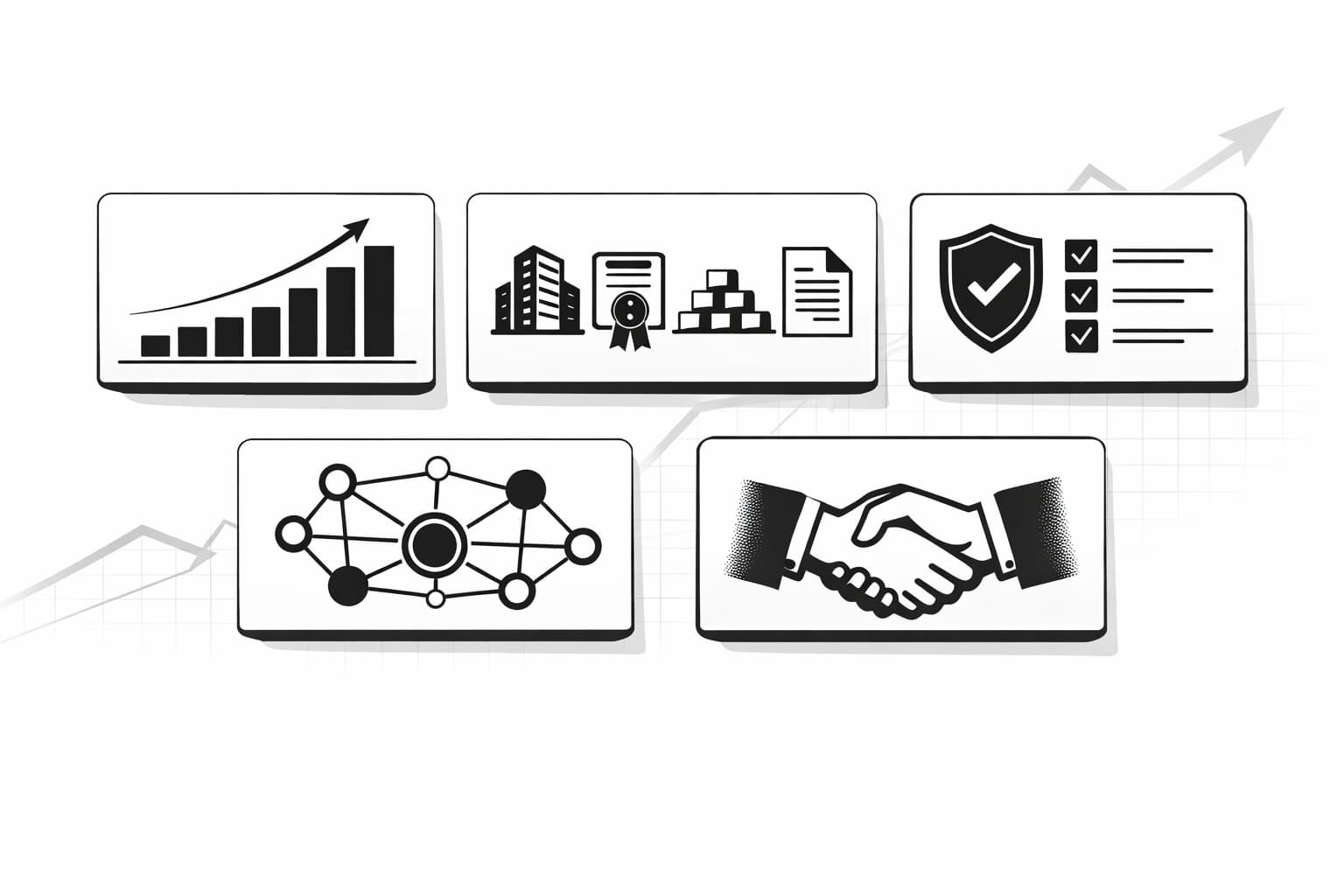
So how do you separate the genuine leaders from the noise? This ranking evaluates rwa tokenization companies across five concrete criteria:
- Total Value Locked (TVL): The clearest signal of real adoption and capital trust
- Asset class coverage: Breadth across bonds, real estate, credit, and commodities
- Regulatory compliance: Licensing, jurisdiction clarity, and investor protection frameworks
- Blockchain infrastructure: Chain choices, interoperability, and smart contract security
- Institutional partnerships: Validated by the counterparties willing to sign on
Each company below earned its place through specific, verifiable strengths — not marketing spend. For broader context on how these platforms actually work under the hood, see our guide to real-world tokenization use cases before diving into the rankings.
Top RWA Tokenization Companies and Asset Tokenization Platforms
With the criteria established, it's time to look at who's actually delivering. The ten companies below were selected based on a combination of total value locked or assets under management, breadth of supported asset classes, regulatory standing, and measurable institutional adoption. This isn't a directory — it's a ranked list, ordered from the most established platforms by TVL and market influence down to the emerging innovators redefining specific niches. Whether you're evaluating entry points as an investor or assessing partners as a finance professional, these are the names worth knowing in 2026.
1. Securitize — Best for Regulated Securities Tokenization
Securitize sits at the top of any credible ranking of RWA tokenization companies for one simple reason: it operates as an SEC-registered transfer agent, broker-dealer, and investment adviser simultaneously. That trifecta of regulatory licenses gives it an end-to-end compliance infrastructure that 20 of the top competitors can't match. Its partnerships speak volumes — BlackRock chose Securitize as the transfer agent and placement agent for its BUIDL fund (the BlackRock USD Institutional Digital Liquidity Fund), which crossed $500 million in AUM within weeks of launch. KKR also tokenized a portion of its Health Care Strategic Growth Fund II through Securitize, marking a significant milestone for private equity on-chain.
The platform supports a wide range of asset types including private equity, private credit, real estate funds, and structured debt. Investors can hold, transfer, and receive distributions entirely on-chain, with compliance logic baked directly into the token layer. Securitize's DS Protocol handles investor whitelisting, transfer restrictions, and corporate actions automatically, reducing the administrative overhead that has historically made private securities so illiquid.
With total tokenized assets on its platform surpassing $1 billion AUM across multiple funds and issuers (per Securitize public disclosures, Q1 2026), Securitize isn't just a tokenization tool — it's the infrastructure layer that institutional giants trust when they want to bring traditional assets on-chain without compromising regulatory standing.
2. Ondo Finance — Best for Tokenized US Treasuries
Ondo Finance has carved out a dominant position in one of the fastest-growing corners of the RWA market: tokenized government securities. Its flagship product, OUSG (Ondo Short-Term US Government Bond Fund), gives on-chain investors exposure to short-duration US Treasuries with same-day liquidity — something previously unavailable in DeFi. By early 2026, Ondo's total TVL had surpassed $700 million (source: RWA.xyz, January 2026), making it one of the largest asset tokenization platforms by on-chain value.
What distinguishes Ondo from other yield-bearing RWA products is its multi-chain presence. OUSG and its sister product USDY (a yield-bearing stablecoin alternative) are available across Ethereum, Solana, Mantle, and several other networks, dramatically expanding the addressable audience. This accessibility has made Ondo a go-to for DeFi protocols integrating RWA assets as collateral or yield sources.
Ondo's institutional focus is evident in its minimum investment thresholds and its reliance on established custodians like BlackRock and PIMCO funds as the underlying assets. It isn't trying to serve retail speculators — it's building plumbing for institutions and sophisticated DeFi protocols that want stable, yield-generating collateral without leaving the on-chain ecosystem.
3. Centrifuge — Best for Tokenizing Private Credit and Real-World Loans
Centrifuge pioneered the model of connecting DeFi liquidity pools to real-world borrowers — before most people had heard the term "RWA." Its infrastructure allows asset originators (think invoice financiers, trade finance companies, and SME lenders) to tokenize their loan portfolios and pool them into structured tranches that DeFi protocols can fund. The result is a direct pipeline from on-chain capital to off-chain economic activity.
The numbers back up its pioneer status. Centrifuge has facilitated over $600 million in total financed volume across its asset pools (source: Centrifuge app.centrifuge.io, cumulative through 2025). Its integrations with MakerDAO (which used Centrifuge pools as RWA collateral for DAI) and Aave's RWA market cemented its role as foundational infrastructure for the credit side of tokenized assets. Its Centrifuge Chain — a Polkadot parachain purpose-built for asset tokenization — handles on-chain securitization logic, while the Tinlake application provides the investor-facing interface.
For investors, Centrifuge pools offer senior and junior tranche options, allowing risk-adjusted participation in real-world credit. It remains one of the few asset tokenization platforms that has genuinely scaled private credit on-chain rather than simply promising to do so.
4. RealT — Best for Fractional Real Estate Tokenization
RealT has built something genuinely novel: a system where anyone in the world can buy a fraction of a US rental property for as little as $50 and start receiving weekly rental income in stablecoins. Each property is held by a Delaware LLC, and investors receive ERC-20 tokens representing fractional ownership of that LLC — a legally coherent structure that has held up operationally since RealT launched in 2019.
By 2026, RealT has tokenized over 600 US residential and commercial properties with a combined portfolio value exceeding $100 million (source: realt.co property listings, 2026). Rental income is distributed weekly in USDC or DAI directly to token holders' wallets, eliminating the friction of traditional real estate income distribution. The tokens are also usable as collateral within the RealT-integrated RMM (RealT Money Market), extending their utility beyond passive income.
The platform's accessibility is its defining feature among asset tokenization companies. There's no accredited investor requirement for non-US participants, which opens a segment of the real estate market that has historically been closed to smaller global investors. The trade-off is concentration in US residential real estate and the inherent illiquidity of secondary markets for niche property tokens — but for what it does, RealT does it better than anyone else.
5. Polymesh — Best Institutional-Grade Blockchain for Asset Tokenization
Most RWA tokenization companies build on top of general-purpose blockchains and then layer compliance on afterward. Polymesh took the opposite approach: it built a purpose-designed blockchain where identity verification, compliance logic, and settlement finality are protocol-level features, not afterthoughts. The result is a chain specifically engineered for regulated assets.
Polymesh's architecture enforces that every address is linked to a verified identity through its Confidential Identity Layer, making anonymous transfers of security tokens structurally impossible. Transfer restrictions, investor accreditation checks, and corporate actions like dividend distributions are handled at the chain level rather than through smart contracts that can be misconfigured. This design has attracted exchanges and issuers running security token offerings (STOs) who need compliance guarantees that general-purpose chains can't provide.
Its governance model involves a committee of industry participants — including exchanges, custodians, and law firms — who guide protocol upgrades, giving institutional stakeholders a voice in the network's development. For enterprises that need a blockchain they can explain to regulators without apology, Polymesh is a compelling choice.
6. Tokeny (ERC-3643) — Best for Compliant Token Issuance Infrastructure
Tokeny is less of a platform and more of the standard-setting infrastructure that other asset tokenization platforms are built on. As the creator of the ERC-3643 (T-REX) standard — now an official Ethereum token standard — Tokeny established the technical framework for compliant, permissioned security tokens on Ethereum. The standard integrates directly with OnchainID, a decentralized identity protocol, enabling automated KYC and AML checks at the token transfer level.
The company's institutional client list includes some of the largest financial institutions in Europe, and it has facilitated the issuance of tokens representing billions in underlying assets across equity, debt, and real estate. Rather than operating a marketplace, Tokeny sells white-label infrastructure to banks, asset managers, and exchanges that want to issue compliant tokens under their own brand.
Its adoption as a formal Ethereum standard means that any developer building on ERC-3643 benefits from a growing ecosystem of compatible wallets, custody solutions, and DeFi protocols. For institutions that want Ethereum's network effects without sacrificing regulatory compliance, Tokeny's infrastructure is often the starting point.
7. ADDX — Best for Asian Market Access to Tokenized Private Markets
ADDX is Singapore's most prominent regulated tokenization platform, operating under a Capital Markets Services licence from the Monetary Authority of Singapore (MAS). It focuses specifically on democratizing access to private markets — hedge funds, private equity, private credit, and structured products — that have traditionally required minimum investments of $1 million or more. On ADDX, that threshold drops to as low as $10,000.
The platform has listed over 60 deals spanning asset classes and geographies, with issuers including Hamilton Lane, Partners Group, and UOB Asset Management. By fractionalizing these offerings through tokenization, ADDX allows accredited investors across Asia to build diversified private market exposure that was previously the exclusive domain of ultra-high-net-worth individuals and family offices.
Its regulatory standing is central to its value proposition. Every deal on ADDX is structured in compliance with Singapore securities law, and the platform handles custody, administration, and secondary trading within a single regulated environment. For investors in Asia seeking exposure to tokenized private markets with institutional-grade legal protection, ADDX is the clearest option available.
8. Zoniqx — Best for Enterprise RWA Tokenization Infrastructure
Zoniqx positions itself as the enterprise backbone for organizations that want to tokenize assets without building proprietary infrastructure from scratch. Its proprietary DynaSet™ framework provides a modular, configurable tokenization stack that supports equities, real estate, commodities, funds, and debt instruments across multiple blockchains. The blockchain-agnostic design means enterprise clients aren't locked into a single network.
The company's white-label capabilities are a particular draw for financial institutions that need to deliver tokenized products under their own brand without the cost and regulatory complexity of building in-house. Compliance is baked into the stack, with automated transfer restrictions, investor eligibility checks, and reporting tools designed to satisfy requirements across multiple jurisdictions.
Zoniqx's client base skews toward banks, asset managers, and fintechs that are in the early stages of their tokenization journey and need a proven, customizable platform. While it doesn't publish TVL figures publicly, its enterprise contract pipeline and growing list of institutional deployments make it one of the more consequential infrastructure providers among RWA tokenization companies operating in 2026.
9. Maple Finance — Best for Institutional On-Chain Lending via Tokenized Pools
Maple Finance built its reputation as the venue for institutional, undercollateralized lending in DeFi — and rebuilt it after the difficult lessons of 2022. Following exposure to the FTX collapse, Maple pivoted decisively toward secured lending and more rigorous borrower due diligence, emerging with a credit model that balances DeFi efficiency with traditional underwriting discipline. By 2026, it had originated over $2.5 billion in total loans since inception (source: Maple Finance dashboard, maplefi.com, 2026).
Maple's pool delegate system is central to how it works. Independent credit professionals manage lending pools, underwrite borrowers, and set terms — while DeFi liquidity providers supply the capital and earn yield. This hybrid model blends institutional credit expertise with on-chain capital efficiency in a way that pure DeFi protocols can't replicate.
Its current product suite includes cash management pools backed by US Treasuries, secured lending facilities for crypto-native institutions, and RWA credit pools that channel capital into off-chain business lending. For institutional lenders and borrowers looking for on-chain credit infrastructure with real compliance structures, Maple remains one of the most mature options in the market.
10. LCX — Best for EU-Regulated Security Token Exchange
LCX operates at the intersection of regulatory clarity and token market access in Europe. Headquartered in Liechtenstein and regulated under both the Liechtenstein Blockchain Act and the EU's MiCA framework, LCX offers a legally coherent environment for security token issuance, trading, and custody that few European competitors can match. Its dual regulatory standing makes it particularly relevant for issuers and investors who need EU-compliant tokenization infrastructure.
The platform provides end-to-end tokenization services — from structuring and issuance through to secondary market trading on its regulated exchange. It has listed security tokens representing real estate, equity, and fund interests, and its tokenization tools allow issuers to configure compliance parameters aligned with EU investor protection requirements. The LCX Terminal also provides trading infrastructure for both security tokens and other digital assets within a single regulated interface.
For a full breakdown of its exchange features and fee structure, the LCX exchange review covers the platform in detail. What sets LCX apart in this ranking is its genuine regulatory depth — not just a single license, but a framework that anticipates the direction of European digital asset regulation rather than scrambling to catch up with it.
How These Asset Tokenization Companies Compare: Key Metrics
With so many platforms now active in the space, choosing the right one comes down to a handful of concrete factors: what assets they tokenize, which blockchains they run on, how they're regulated, and who they're actually built for. The table below distills each major player into a single scannable row — useful whether you're an institutional allocator or a retail investor exploring on-chain exposure for the first time.
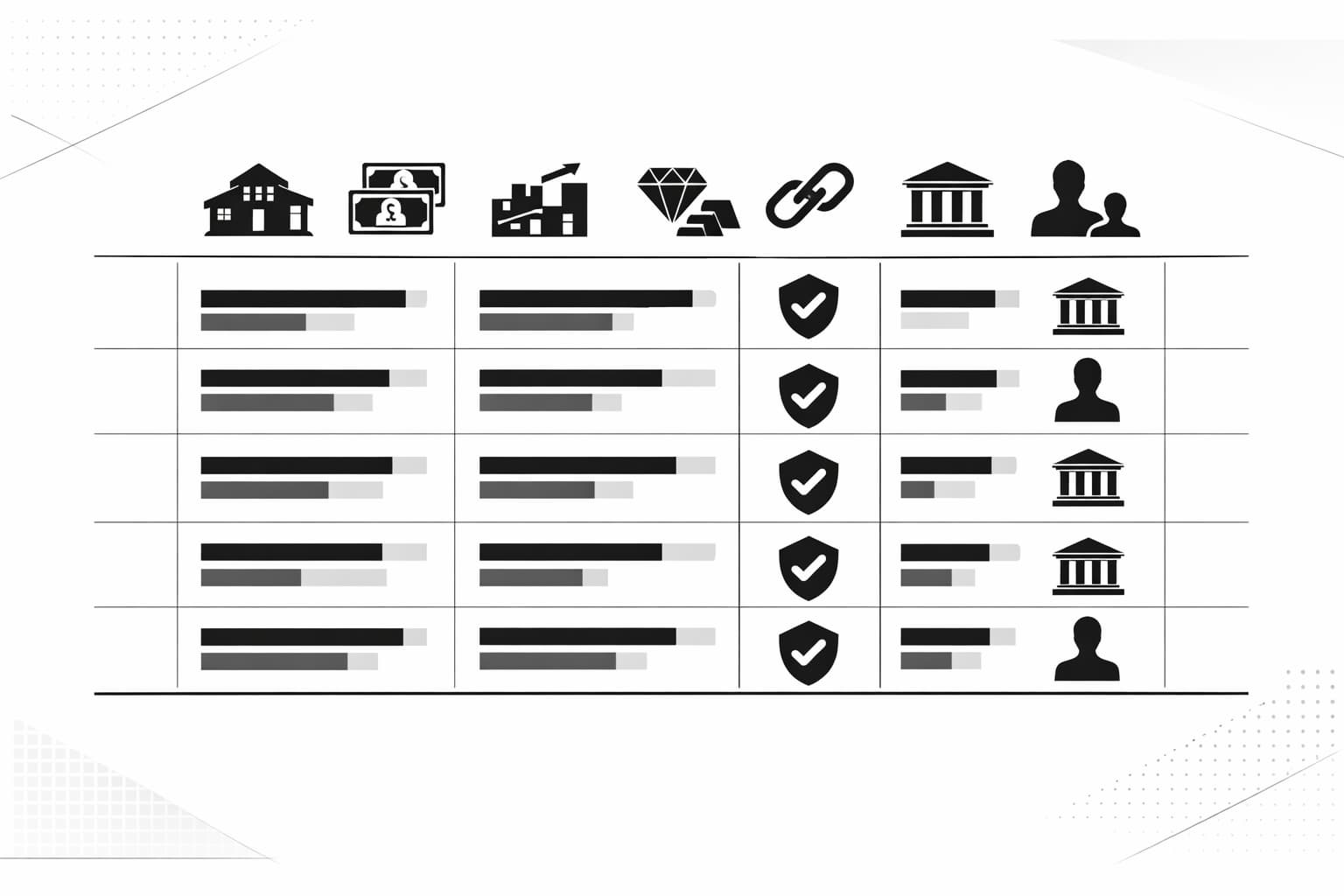
One detail worth noting: settlement mechanisms vary significantly across platforms, and the stablecoins used in RWA settlement can affect both liquidity and counterparty risk depending on the platform you choose.
Company | Primary Asset Class | Blockchain | Regulatory Status | Best For |
|---|---|---|---|---|
Securitize | Private equity, funds | Ethereum, Avalanche | SEC-registered transfer agent | Asset managers, family offices |
Ondo Finance | Treasuries, bonds | Ethereum, Solana | Accredited investors only | DeFi-native institutions |
Centrifuge | Private credit, invoices | Centrifuge Chain (Polkadot) | SPV-based, jurisdiction-dependent | SME lenders, DeFi protocols |
RealT | Real estate | Ethereum, Gnosis | Regulation A+ compliant | Retail investors globally |
Polymesh | Security tokens (equities, funds) | Polymesh (purpose-built) | Protocol-level compliance enforcement | STO issuers, regulated exchanges |
Tokeny (ERC-3643) | Equity, debt, real estate | Ethereum | White-label; issuer-dependent | Banks, asset managers issuing tokens |
ADDX | Private equity, hedge funds, credit | Private (MAS-regulated) | MAS Capital Markets Services licence | Accredited investors in Asia |
Zoniqx | Equities, real estate, commodities | Multi-chain (agnostic) | Enterprise compliance stack; varies | Banks, fintechs building tokenization |
Maple Finance | Corporate credit | Ethereum, Solana | Institutional KYC required | Institutional lenders and borrowers |
LCX | Real estate, equity, funds | Ethereum | Liechtenstein Blockchain Act + MiCA | EU-based issuers and investors |
Challenges Facing RWA Tokenization Companies Today
Even the strongest asset tokenization platforms operate against real headwinds. Understanding these obstacles matters as much as knowing the rankings — because they directly affect which companies are likely to scale and which may stall.
- Regulatory fragmentation: The US, EU, and Asia each enforce distinct licensing regimes. What qualifies as a compliant tokenized security in Singapore may trigger registration requirements under US law. Following SEC regulatory developments in 2026, platforms serving American institutions face sharper scrutiny around disclosure and custody standards.
- Liquidity constraints: Secondary markets for tokenized real-world assets remain thin. Most tokens trade peer-to-peer or through closed venues, limiting price discovery and exit options for investors.
- Smart contract risk: A single exploitable vulnerability can freeze or drain tokenized assets worth hundreds of millions. Audit quality varies significantly across platforms.
- Legal enforceability: Bridging on-chain token ownership with off-chain legal title — especially across jurisdictions — is still an unsolved problem for most RWA tokenization companies.
These aren't theoretical risks. They're active filters separating platforms built for long-term institutional trust from those chasing short-term capital.
How to Choose the Right RWA Tokenization Platform for Your Needs
With so many asset tokenization platforms competing for attention, the right choice comes down to your specific goals, not the biggest brand name. Ask yourself what you actually need before committing.

Use these decision factors to narrow your shortlist:
- Asset type supported: Real estate, treasuries, private credit, and commodities each require specialized platforms — confirm your target asset is actively offered.
- Jurisdiction and regulatory compliance: Check whether the platform holds relevant licenses in your country and whether tokens qualify as securities under local law.
- Minimum investment threshold: Retail-friendly platforms may start at $50–$100; institutional issuance platforms often require $100,000 or more.
- Technical requirements: Some platforms demand wallet setup and on-chain interaction; others offer a traditional account interface for non-crypto users.
- Liquidity and exit options: Verify whether secondary market trading exists, or whether your capital will be locked for months or years.
- Fee structure and yield transparency: Platform fees, management costs, and net yield should be clearly disclosed before you invest.
Individual investors chasing fractional real estate exposure will find platforms like RealT more accessible. DeFi users seeking on-chain treasury yield should look toward Ondo Finance or Maple. Enterprises planning compliant security token issuance need the legal infrastructure that companies like Securitize or Tokeny provide. Match the platform to the problem — not the other way around.
Frequently Asked Questions
- Who is the leader in RWA tokenization?
- Securitize and Ondo Finance currently lead the market by TVL and institutional adoption. Securitize powers BlackRock's BUIDL fund, while Ondo dominates tokenized treasuries. That said, leadership shifts by asset class — no single company controls all categories, and competition across the sector is intensifying rapidly.
- What are the top RWA tokens by market cap?
- Notable tokenized RWA products include Ondo's OUSG, Franklin Templeton's BENJI, and Centrifuge's CFG. These tokens represent on-chain ownership of real-world assets like treasuries and credit. Market caps change frequently, so check live on-chain data sources like DeFiLlama or RWA.xyz for current figures.
- What is RWA tokenization?
- RWA tokenization converts ownership rights in real-world assets — such as bonds, real estate, or commodities — into digital tokens recorded on a blockchain. The core benefits include fractional ownership, around-the-clock liquidity, and programmable compliance built directly into the token's smart contract.
- Which tokenization platform is the best?
- There's no universal answer — the right platform depends on your situation. Securitize suits regulated securities, RealT focuses on real estate, Ondo excels at yield products, and ADDX serves Asian private markets. Evaluate platforms based on your asset type, jurisdiction, and whether you're a retail or institutional user.
- What is the downside of tokenization?
- Key risks include regulatory uncertainty across jurisdictions, smart contract vulnerabilities, and limited secondary market liquidity for many tokenized assets. Enforcing on-chain ownership rights through traditional legal systems remains complex. Custodian and counterparty risk also persist, even when assets are represented on a blockchain.
- Can you tokenize a house?
- Yes — real estate is one of the most active RWA tokenization use cases. Typically, a property is placed into a legal entity such as an LLC or SPV, and fractional ownership tokens are then issued on-chain. Platforms like RealT already facilitate this, though applicable legal frameworks vary significantly by country.
- Can XRP be used to tokenize assets?
- The XRP Ledger has native token issuance capabilities and a built-in decentralized exchange, making it technically suited for asset tokenization. Ripple has actively pursued RWA partnerships in real estate and financial instruments. However, XRPL is one of several competing networks in this space, alongside Ethereum, Stellar, and Polygon.
Sources
Author

Crypto analyst and blockchain educator with over 8 years of experience in the digital asset space. Former fintech consultant at a major Wall Street firm turned full-time crypto journalist. Specializes in DeFi, tokenomics, and blockchain technology. His writing breaks down complex cryptocurrency concepts into actionable insights for both beginners and seasoned investors.