Tokenization Examples: 9 Real Use Cases Happening Now
What tokenization means in practice
Tokenization means turning something into a digital token, but the term has two common uses: creating blockchain-based tokens that represent ownership in an asset, and replacing sensitive data like card numbers with non-sensitive token values for security.
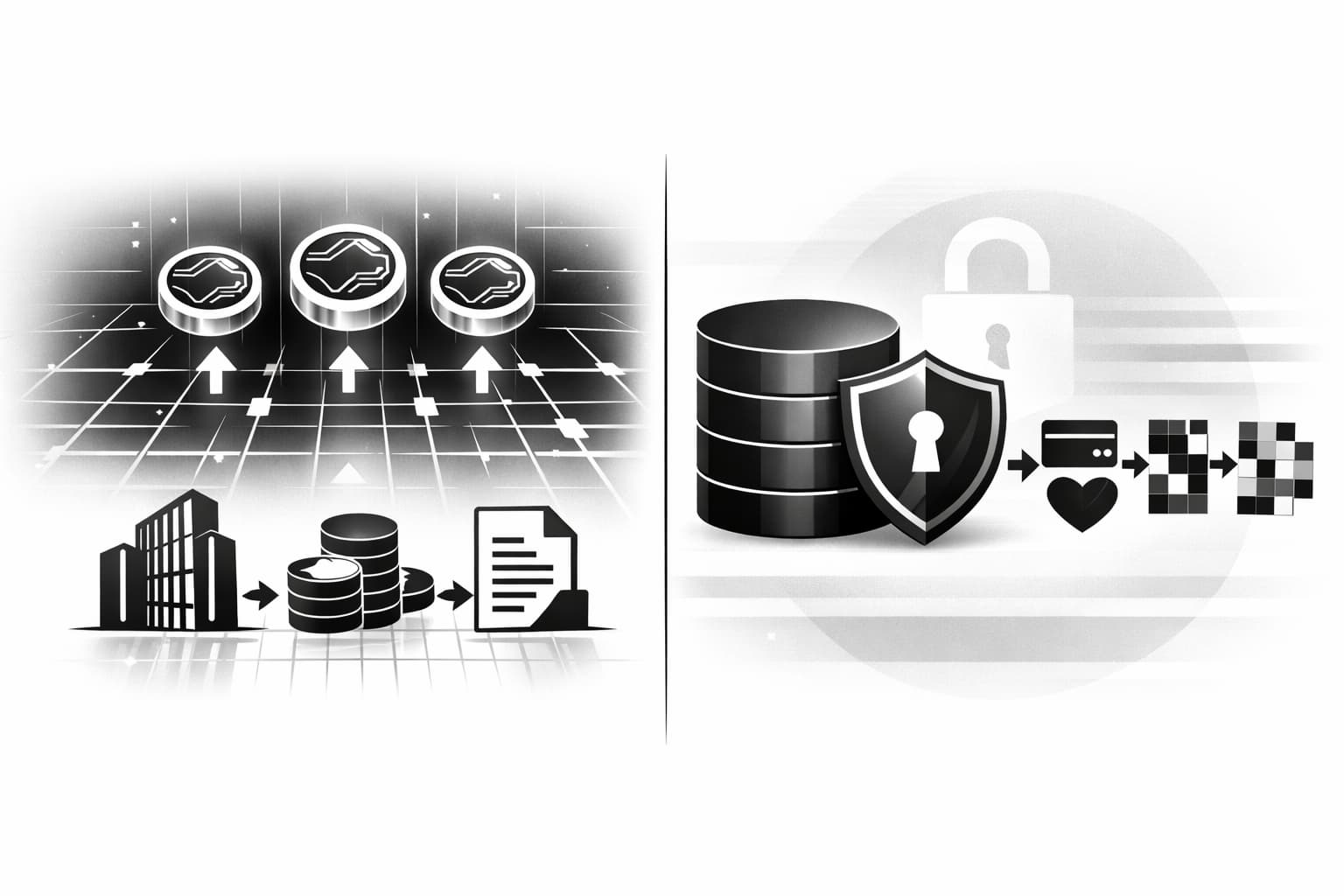
That split explains why people looking for tokenization examples often find two very different topics in the same search results. In one context, tokenization is about assets such as funds, bonds, real estate, or commodities moving onto blockchain rails. In the other, it is about protecting payment details, personal records, and other sensitive information inside business systems. This article covers both meanings so readers can compare what is already live today with what is still taking shape.
Asset tokenization vs data tokenization
Asset tokenization creates a digital representation of ownership or rights tied to something of value. A token might stand for a share of a property, a slice of a private credit fund, or a claim on a government bond. If you are new to the concept, it helps to start with how blockchain works and then see how token records can track ownership, transfers, and access rules.
Data tokenization means something else. Here, a sensitive value such as a credit card number is swapped for a token that has no usable meaning outside the secure system that issued it. Businesses use this approach to cut exposure, reduce breach risk, and support compliance. So when you see examples of tokenization, some will be about finance and ownership, while others will be about security and privacy. [1][2]
Why tokenization matters now
Interest has picked up because several trends are meeting at once. Real-world asset activity has grown, with more attention on funds, debt instruments, and other RWA in crypto models. At the same time, banks, asset managers, and fintech firms have moved from theory into pilots and early production systems. [3][4]
Companies also face tighter expectations around data handling, privacy, and payment security. Better digital infrastructure, clearer rules in some markets, and stronger institutional tools have made tokenization more practical than it was a few years ago. As a result, today’s tokenization examples are no longer just concept pieces. Many are already operating in live environments. [1][3]
Quick list of tokenization examples happening now
Now that the basic idea is clear, it helps to see the market at a glance. The fastest way to understand today’s tokenization examples is to group them by the assets and records already being put on-chain or represented by digital tokens in live products.
Below is a skimmable list of the most visible examples of tokenization in 2026, mixing financial assets, business operations, and data-security uses. Some are already active at meaningful scale, while others are earlier but moving from pilots into real adoption.
- Real estate — Property ownership or income rights are split into digital shares, making fractional access and secondary trading easier.
- Bonds — Governments, banks, and institutions issue tokenized bonds to improve settlement speed and recordkeeping.
- Gold and commodities — Tokens represent claims on vaulted gold or other commodities, giving investors simpler digital access.
- Private funds — Fund interests are tokenized to support cleaner administration, transfer rules, and investor access.
- Stocks and securities — Equity-like instruments and regulated securities are being tested or issued in token form on approved platforms.
- Art and collectibles — High-value works are divided into fractional ownership units or linked to digital provenance records.
- Intellectual property — Royalties, licensing rights, and creator revenue streams are packaged into tokens for tracking and payout.
- Supply chain assets — Inventory, shipping documents, and warehouse receipts are tokenized to improve traceability and financing.
- Payment and data tokenization — Card numbers and sensitive data are replaced with tokens to cut fraud exposure and reduce risk.
In the next sections, we’ll break these tokenization examples down by category so it’s easier to see what is live now, what is gaining traction, and where limits still exist.
Real estate tokenization examples
One of the clearest tokenization examples in the market today is real estate. Instead of treating a property as a single large asset that only a few buyers can afford, ownership or economic rights can be split into digital tokens and sold in smaller pieces. In practice, that means a commercial building, apartment block, or rental home can be packaged so more investors can participate without buying the whole property. [3][5]
That sounds simple, but the structure matters. In most live examples of tokenization, investors are not receiving a deed in their own name for a slice of the building. More often, they buy tokens linked to shares in a legal entity that owns the property, or rights to a portion of income such as rent and potential sale proceeds. So while the token is digital, the underlying ownership still depends on traditional legal paperwork, local property law, and securities compliance.
Fractional ownership and investor access
Fractionalization is the main reason tokenized real estate gets attention. A property worth $5 million can be divided into thousands of smaller units, letting investors enter at far lower minimums than a direct purchase would require. That opens the door to broader participation, portfolio diversification, and easier distribution across a larger investor base.
For sponsors and property owners, tokenization can also widen fundraising options. Rather than relying only on a small group of private investors, they can issue digital units through a platform that handles onboarding, disclosures, and transfers. Among current tokenization examples, this is one of the more practical models because it fits assets that already produce cash flow and can be valued using familiar methods.
Can you tokenize a house?
Yes, but only if the legal structure is set up correctly. In many cases, the house is placed into an LLC or similar entity, and the tokens represent membership interests or shares in that entity. That approach makes transfer mechanics easier, but it also means investors usually own an indirect interest, not direct title to the home itself.
There are also securities rules to follow. If tokens are sold as investment interests, the offering may need registration or an exemption, and buyers may face eligibility checks, holding periods, and resale limits. On top of that, the property needs reliable title, clear operating documents, and platform support for issuance, reporting, and investor records. [5]
What readers should watch for
Liquidity is often the biggest gap between the promise and the reality. A token may be easier to divide than a building, but that does not guarantee an active resale market. Investors should also check how the property is valued, who manages compliance, how tokens are stored or custodied, and what rights the token actually carries.
Before investing, look closely at whether the token represents direct title, a beneficial interest, debt, or equity in a holding company. That difference affects voting rights, income distributions, tax treatment, and what happens if the property is sold or refinanced. In short, real estate offers strong tokenization examples already live today, but the legal wrapper still matters as much as the token itself.
Tokenized securities and financial instrument examples
Beyond property and private assets, some of the clearest tokenization examples are now appearing in capital markets. Here, the idea is simple: represent a regulated financial instrument on blockchain-based rails so issuance, transfer, recordkeeping, and settlement can happen with fewer manual steps. In practice, that does not mean finance is being rebuilt overnight. It means specific products are being tested and, in some cases, issued in live markets. [3][4][6]
That distinction matters when looking at examples of tokenization in finance. Some products are already active with banks, exchanges, and regulated investors. Others, especially tokenized public equities, are still moving through legal and market-structure questions.
Tokenized bonds already in the market
Tokenized bonds are among the most credible live use cases today. Banks and public institutions have issued digital bonds on blockchain infrastructure to shorten settlement cycles, improve transparency, and reduce administrative friction. DBS, for example, has been involved in digital bond work aimed at making issuance and distribution more efficient for institutional participants. Similar pilots and live deals have appeared in Europe and Asia, often with major banks or central-market operators involved. [4][7]
The benefit is not just “putting a bond on-chain.” A tokenized bond can connect investor records, coupon payments, and settlement logic through smart contracts, while still operating inside existing securities rules. In some structures, that can also support smaller denominations, which may widen investor access where regulations allow. Even so, most activity today remains focused on institutional markets rather than open retail trading.
STOs and digital securities
Security token offerings, or STOs, are another important category. An STO is a fundraising or issuance model where the token represents a security, such as equity, debt, or a profit-sharing interest. That makes it very different from a utility token, which is meant to provide access to a product or network, and different again from unregistered crypto assets sold without clear securities compliance.
In an STO, the legal wrapper matters as much as the technology. Issuers still need to follow securities laws, investor qualification rules, disclosures, transfer restrictions, and, in many markets, broker-dealer or exchange requirements. So while STOs were once pitched as a fast replacement for IPOs, the more realistic view is that they are a digital format for regulated securities issuance. [5][6]
Are stocks going to be tokenized?
Probably yes, but in stages. The trend is heading toward tokenized equities, yet public stocks are harder to move on-chain than private securities or bonds. That is because listed shares sit inside a dense system of exchanges, custodians, clearinghouses, transfer agents, and national securities regulations.
As a result, the near-term model is likely to be limited and controlled: tokenized shares issued in private markets, exchange-backed pilots, or broker platforms offering blockchain-based representations of equities under strict compliance rules. Fully open, globally tradable tokenized stocks are still unlikely in the short run. Still, as regulators, exchanges, and large financial firms keep testing the model, this remains one of the most watched examples of tokenization for the next phase of market infrastructure. [3][6]
Commodity and fund tokenization examples
Beyond property and traditional securities, some of the clearest tokenization examples now sit in commodities and pooled investment products. This is where digital assets and real-world assets meet in a very direct way: a token can stand for a claim on something tangible, such as gold, or for an interest in a fund with defined rules around who can buy, hold, or transfer it.
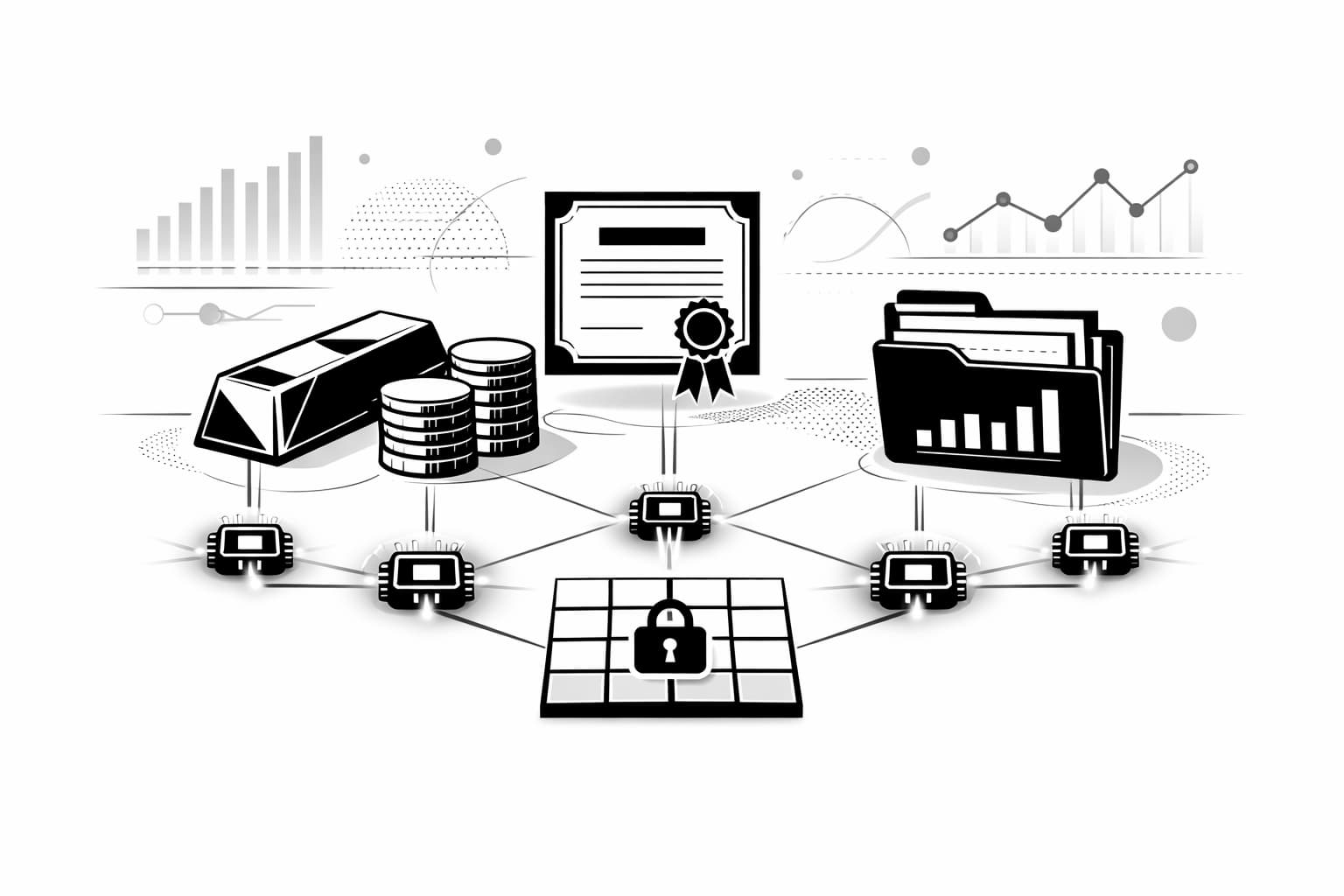
That matters because these markets often involve paperwork, intermediaries, and limited access. In contrast, tokenized structures can package ownership, compliance checks, and transaction records into one digital instrument. The result is not a new asset class on its own, but a new delivery format for assets investors already know.
Gold and commodity-backed tokens
One of the easiest examples of tokenization to grasp is tokenized gold. Products such as PAXG are designed so that each token represents a claim tied to a specific amount of physical gold held in custody. Instead of arranging vault storage or buying through a traditional dealer, investors can gain exposure through a digital token that moves on blockchain rails. [8]
In practice, that can make gold easier to divide, transfer, and hold alongside other digital assets. It also helps explain why commodity-backed tokens are often discussed near stablecoins: both connect tokenized units to offchain assets, even though one tracks cash equivalents and the other tracks commodities.
Funds and alternative assets
Funds are another area where live tokenization examples are becoming more practical than theoretical. A tokenized money market product, private credit fund, or alternative investment vehicle can automate parts of the investor journey, from subscription processing to ownership records and periodic reporting. [3][4]
Just as important, tokenization can encode transfer restrictions so holdings move only between eligible investors. That is especially useful for private funds, where rules around accreditation, jurisdiction, lockups, and secondary transfers already exist. Fractional access is another draw. Smaller minimums can open fund exposure to a wider set of qualified buyers without changing the underlying asset itself. For managers, this can reduce admin friction; for investors, it can make access and recordkeeping much cleaner.
Art, collectibles, and intellectual property tokenization examples
Beyond property, funds, and securities, some of the most talked-about tokenization examples involve creative works and collectible assets. This area gets attention fast, but the real-world structure is often less clear than the headlines suggest. In practice, tokenization here usually means recording ownership interests, rights, or provenance data in a digital token while the legal terms sit in a separate contract or platform agreement.
That distinction matters. A token can point to an asset, represent a share of economic value, or help track transfers over time. Still, the token itself does not automatically replace copyright law, title records, or a licensing contract. For readers comparing tokenization examples, this is where hype and working models tend to split.
Art and collectible ownership models
In art and collectibles, tokenization is often used for fractional ownership. A high-value painting, rare trading card, vintage watch, or signed memorabilia item can be placed into a legal structure, and tokens can represent partial interests in that structure. This lowers the entry cost for buyers and can make secondary trading easier, at least on approved platforms.
Another live use case is authenticity and provenance tracking. A token can store or reference records tied to an artwork or collectible: when it was minted, who verified it, past sales, and custody history. That creates a clearer chain of evidence, though it still depends on trusted input at the start. If the initial record is wrong, the token preserves the error.
This is also where NFTs and digital ownership often enter the conversation. They can support proof of origin or transfer history, but buyers still need to check what legal rights come with the token and what rights do not.
Music, media, and IP rights
For music, film, photography, and other media, examples of tokenization often focus on royalty streams and licensing rights. A token can represent a claim on a portion of future income, such as streaming revenue, sync licensing fees, or usage payments. Smart contract logic can then automate how funds are split among token holders when payments arrive.
There are also models where tokens package access or usage rights. For example, a token might grant a commercial license for a media asset, limited reproduction rights for an image, or membership-style access to a creator’s catalog. In each case, the useful part is not the token alone but the legal agreement and payment rules attached to it.
So, among today’s examples of tokenization, art and IP are real but highly contract-driven. The technology can improve recordkeeping, transferability, and payout automation. Even so, ownership, royalties, and licensing still depend on enforceable legal terms behind the token.
Supply chain and business process tokenization examples
Beyond investment products, some of the most practical tokenization examples are showing up in day-to-day operations. Companies are assigning digital tokens to physical goods, documents, and process milestones so multiple parties can reference the same record without relying on scattered spreadsheets or disconnected software. In this setting, tokenization is less about trading and more about coordination. [9]
Tracking physical goods with digital tokens
One of the clearest examples of tokenization is mapping a token to a batch of raw materials, a shipping container, a pallet, or even a single serialized item. As goods move from manufacturer to freight carrier to warehouse to retailer, the token can be updated with status changes such as packed, shipped, received, inspected, or returned. The same approach can apply to certificates of origin, quality inspections, maintenance logs, and temperature records for sensitive products.
This creates a shared timeline tied to a specific asset or shipment. In practice, that can help businesses trace where a product came from, which partner handled it, and whether required checks happened on time.
Why enterprises care
Enterprises care because shared records reduce friction. Instead of each company maintaining its own version of events and then reconciling later, partners can work from a common token-linked history. That improves auditability, speeds up reconciliation, and makes it harder to alter records after the fact.
It also helps with fraud reduction. If a token is tied to a verified item or certificate, it becomes easier to spot duplicate claims, fake documentation, or inventory mismatches. When disputes do arise, teams can pair operational token records with tools like blockchain forensics to review transaction trails. Among current examples of tokenization, this business-process layer is one of the most immediately useful because it solves record-sharing problems companies already have today.
Payment and data-security tokenization examples
So far, this guide has focused on asset ownership and transfer. There is another major category behind many everyday tokenization examples: replacing sensitive data with a safe substitute. In this model, the “token” is not an investment unit. It is a stand-in value that lets systems process, store, or share information without exposing the original data.
That matters because some of the most common examples of tokenization are already built into payments, healthcare systems, and internal business platforms. These setups are less about market access and more about lowering breach risk while keeping normal operations moving.
Credit card and payment tokenization
In card payments, merchants often keep a token instead of the full primary account number (PAN). When a customer saves a card for subscriptions, one-click checkout, or recurring billing, the business can charge the token later without storing raw card details in its own environment. If the merchant database is exposed, the attacker gets tokens rather than live card numbers. [1][2]
This does not remove PCI DSS duties entirely, but it can shrink the amount of sensitive data a merchant handles and reduce audit scope. It also supports PAN masking in dashboards, customer service tools, and receipts, where staff may only need the last four digits. Many digital wallets and payment gateways rely on this approach today. It is a good reminder that some tokenization examples are already routine, even if users never notice them. That practical difference also helps explain CBDC vs instant payments and how programmable digital money works, which solve different problems.
Tokenization for sensitive business data
The same idea applies outside payments. Hospitals, insurers, and enterprise data teams can tokenize patient identifiers, policy numbers, tax IDs, employee records, and other personal identifiers. Analysts and support teams still work with linked records, but the original values stay protected in a separate secure system.
As a result, tokenization lowers the impact of a breach and limits unnecessary exposure during testing, reporting, and internal data sharing. For businesses handling regulated information, that makes tokenization one of the most practical examples of tokenization in use right now. [2]
Benefits, limits, and risks of tokenization
Across these tokenization examples, the pattern is clear: tokenization can improve how ownership, transfer, and access work, but it does not remove the hard parts of law, markets, and operations. In other words, some gains are already visible today, while others still depend on adoption, regulation, and market depth.
The main benefits
The most proven benefits are practical. Fractionalization can split expensive assets into smaller units, making participation easier in cases where minimum buy-ins were once high. Faster settlement is also real in certain setups, especially when transfer and recordkeeping happen on connected digital infrastructure rather than through several separate intermediaries. Transparency is another clear advantage: a shared ledger can make issuance, transfers, and ownership changes easier to audit. [3][4][6]
Programmability adds another layer. Rules for transfers, payouts, or compliance checks can be built into the token itself or the surrounding system, which may reduce manual processing. Some examples of tokenization also point to broader investor access, but that benefit is more conditional. It depends on who is legally allowed to buy, how the offering is structured, and whether the product is easy to access and trade. If readers are still sorting out basic terms, it helps to compare token vs coin before judging these claims.
The main constraints
The biggest limits are outside the code. Legal enforceability matters most: a token only works as an ownership claim if courts, contracts, and local rules recognize it. Liquidity is another weak point. Many examples of tokenization exist, but active secondary markets are still uneven, so a tokenized asset may be easier to issue than to sell later.
Custody remains a serious operational issue, especially for institutions and less technical users. On top of that, platform fragmentation can trap assets inside separate systems that do not connect well. Finally, compliance is jurisdiction-specific. Securities, funds, payments, and data uses all face different rules, which means the value of tokenization often rises or falls based on local regulation rather than technology alone. [3][5][6]
How to evaluate a tokenization project before you trust it
After reviewing live tokenization examples across finance, business, and data protection, the next step is simple: ask better questions. A polished app or a well-known chain does not make a project trustworthy. The best examples of tokenization hold up when you inspect the legal setup, the asset backing, and the path from token to real-world claim.
In practice, readers should treat any tokenized real estate, bond, commodity, or security like a hybrid of an investment product and a software system. That means checking both the off-chain promises and the on-chain mechanics. If you need to hold the asset yourself, it also helps to understand basic crypto wallets before committing funds.
A simple due diligence checklist
Use this quick framework before you trust a platform, issuer, or marketplace:
Question to Ask | Why It Matters |
|---|---|
What legal rights does the token give me? | A token may represent ownership, a revenue claim, or only platform access. Those are very different outcomes. |
Who holds the asset in custody? | If a property deed, bond, or gold reserve sits with a weak custodian, token ownership may not protect you. |
Is there real liquidity? | A listed token is not the same as an active market with buyers, sellers, and fair pricing. |
Which rules and regulators apply? | Credible projects usually explain securities law, licensing, investor limits, and jurisdiction clearly. |
Can I redeem the token, and how? | Redemption terms show whether the token connects cleanly to the underlying asset or stays trapped on-platform. |
- Asset backing: Is there an audit, reserve report, or legal record proving the asset exists?
- Issuer structure: Is there an SPV, trustee, fund vehicle, or other defined legal wrapper?
- Smart contracts: Are contracts audited, upgradeable, and explained in plain language?
- Platform reputation: Has the operator handled redemptions, reporting, and outages well?
What tokenization is likely to look like next
Looking ahead, the strongest growth will likely come from RWAs where tokenization solves a clear operational problem: faster settlement, shared records, fractional access, or simpler collateral movement. Enterprise adoption should keep rising in private markets, treasury products, trade finance, and controlled internal systems. By contrast, some consumer-facing tokenization examples may stay niche until regulation, custody, and secondary-market liquidity improve. [3][4]
So the most credible examples of tokenization in 2026 are not the loudest ones. They are the projects with clear legal rights, dependable custody, working redemption, and a platform that can earn trust over time.
Frequently Asked Questions
- What is a real life example of tokenization?
- A real-world asset example is tokenized gold or real estate, where ownership is represented by digital tokens on a blockchain. A data-security example is payment tokenization, where a merchant stores a secure token instead of your actual credit card number to reduce fraud risk.
- Are stocks going to be tokenized?
- Tokenized stocks are technically possible and have already appeared in pilot programs and limited offerings. Whether they become mainstream depends on securities regulation, custody requirements, transfer restrictions, investor protections, and whether exchanges and brokers build the infrastructure needed to support compliant trading at scale.
- Can I tokenize my house?
- You can only tokenize a house if the legal structure, title arrangement, compliance process, and platform all support it. Creating tokens alone does not transfer ownership under property law. In practice, tokenization usually sits on top of formal legal agreements, entity structures, and recorded title rights.
- Which crypto is best for tokenization?
- There is no single best blockchain for tokenization. The right choice depends on compliance tools, smart contract features, security, transaction costs, developer support, and whether your project needs a public network or an enterprise-focused system. The use case matters more than picking a popular chain name.
- What is an example of tokenization?
- A simple example is a building divided into digital ownership tokens that represent shares of the property. Another common example is a credit card number being replaced with a secure token during payment processing, so sensitive card data is not exposed to merchants.
- Is Nasdaq tokenizing stocks?
- Major exchanges and financial institutions, including groups tied to traditional markets, have explored tokenization and related infrastructure. Still, readers should separate pilots and technical experiments from fully launched tokenized stock markets. Exploration does not always mean public trading is live, regulated, or widely available.
- Can XRP tokenize real estate?
- Real estate can be tokenized on several blockchain networks, including ecosystems connected to XRP-related tools and infrastructure. The bigger issue is not the chain brand but the legal setup, title handling, investor rights, and compliance process. Blockchain records can support ownership tracking, but they do not replace property law.
Sources
Author

Crypto analyst and blockchain educator with over 8 years of experience in the digital asset space. Former fintech consultant at a major Wall Street firm turned full-time crypto journalist. Specializes in DeFi, tokenomics, and blockchain technology. His writing breaks down complex cryptocurrency concepts into actionable insights for both beginners and seasoned investors.