Rollup Security: How L2s Inherit Ethereum's Protection
What Is Rollup Security? A Plain-English Definition
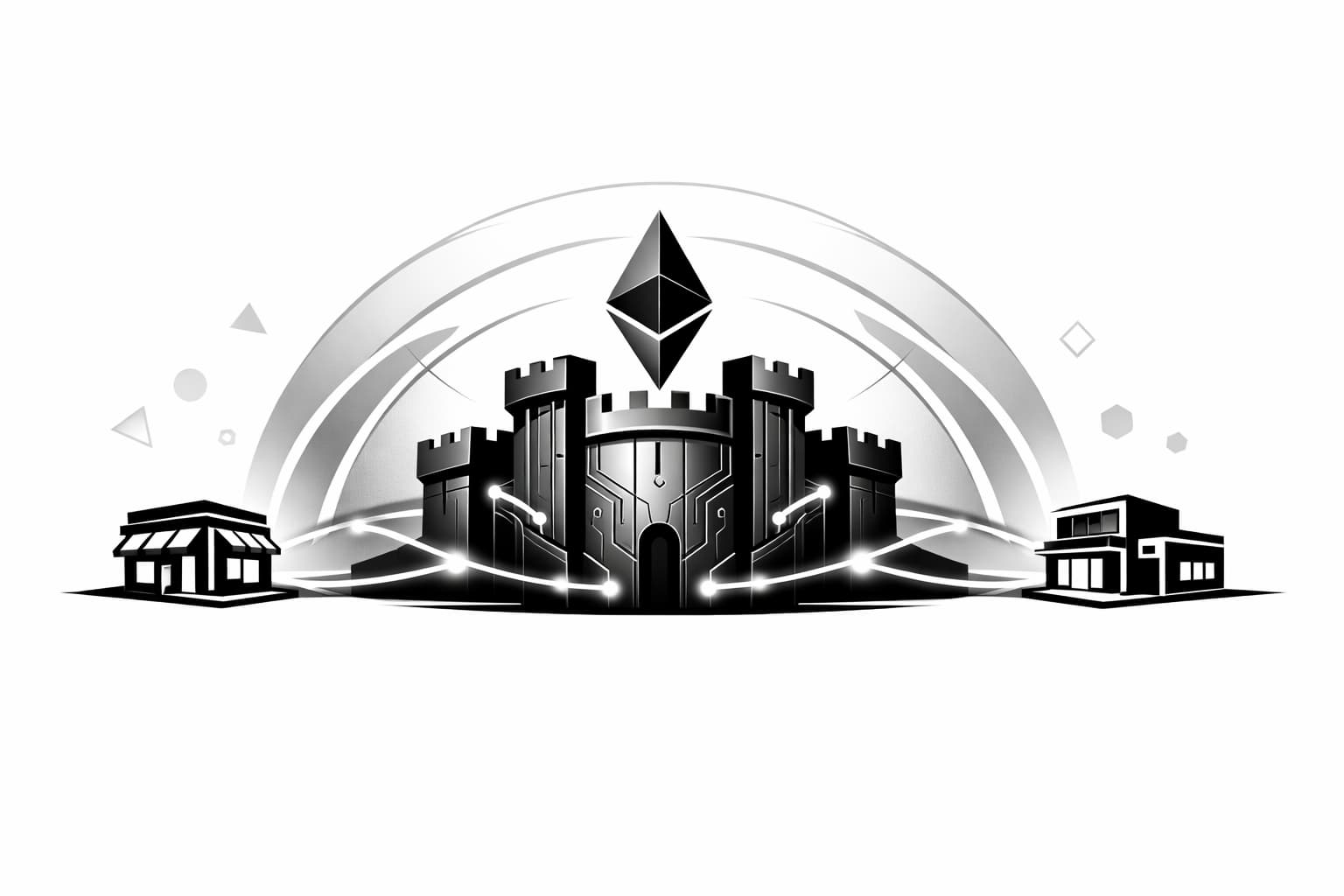
Rollup security refers to the set of guarantees that protect users' funds and transaction records on a Layer 2 network — guarantees that are ultimately enforced not by the Layer 2 itself, but by the Ethereum blockchain sitting underneath it.
If that still sounds abstract, don't worry. Let's back up and build from the ground up.
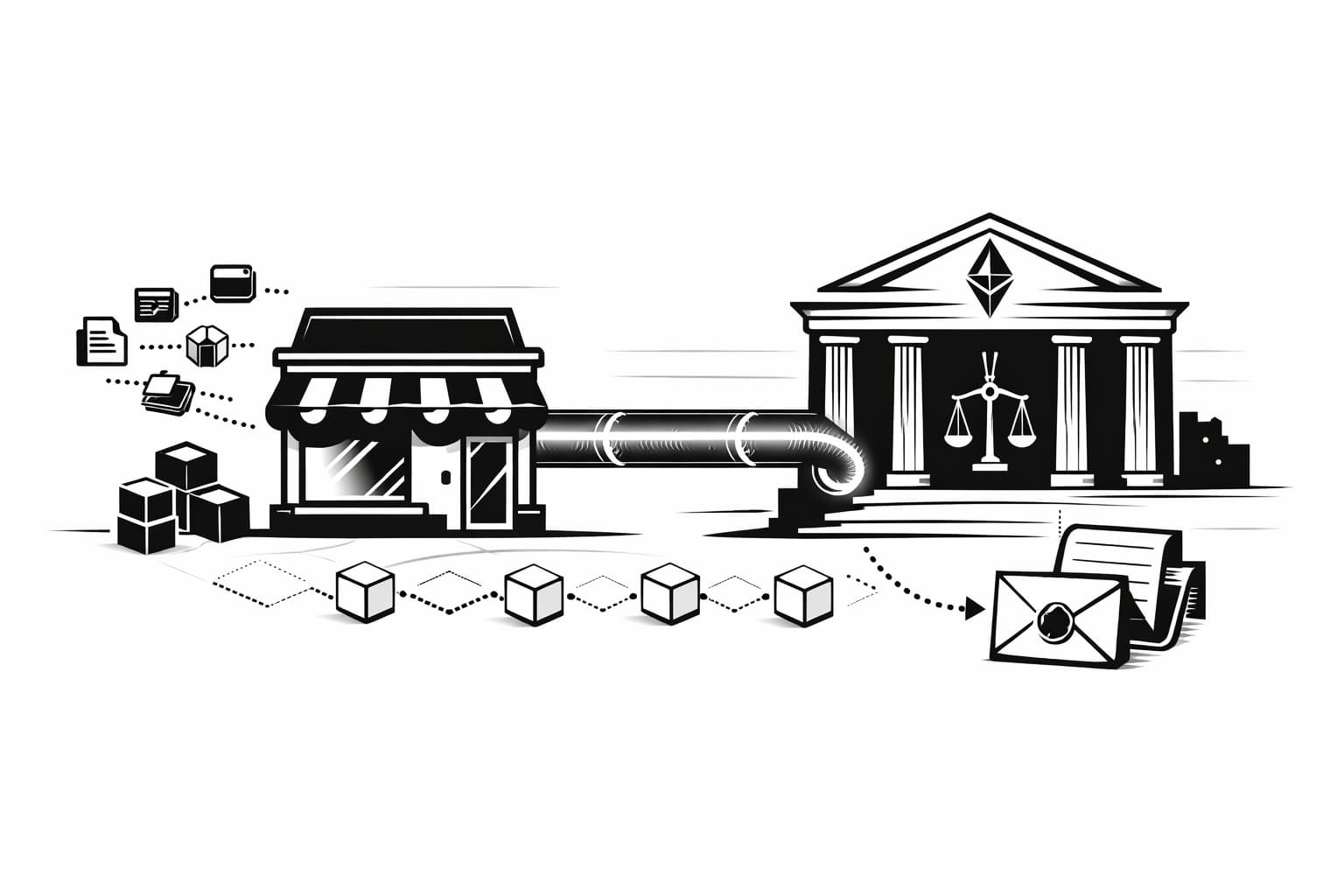
A rollup is a type of network that runs alongside Ethereum, processing transactions faster and more cheaply than Ethereum's main chain can on its own. Think of Ethereum as a busy city courthouse — thorough, trustworthy, and permanent, but slow and expensive. A rollup is like a local branch office that handles the day-to-day paperwork, then regularly submits certified summaries back to the courthouse for the official record.
That "certified summary" is the key to understanding the l2 security model. Rollups don't just run independently and hope for the best. They periodically post compressed proof of every transaction they've processed back onto Ethereum's main chain. Once that proof lands on Ethereum, it inherits all of Ethereum's battle-tested protections — its massive network of validators, its years of proven reliability, and its near-impossibility to alter or corrupt.
In other words, rollup security is borrowed security. The branch office does the work; the courthouse provides the authority.
Why Rollup Security Matters to You
Understanding rollup security isn't just an academic exercise — it has a direct impact on your money, your experience, and your peace of mind when using crypto in 2026.
Think about what drew most people to Layer 2 networks in the first place: transactions that cost cents instead of dollars, and confirmations that arrive in seconds rather than minutes. Those benefits are genuinely exciting. But speed and low fees only mean something if the network holding your funds is actually safe. A cheap transaction that puts your assets at risk isn't a bargain — it's a trap.
This is exactly where the L2 security model becomes practical knowledge, not just background noise. Different rollups inherit Ethereum's protections in different ways and to different degrees. Some offer stronger guarantees than others. Knowing how to tell the difference lets you make informed choices about which networks deserve your trust.
As more value moves onto Layer 2 networks, the question of rollup security grows more important for everyday users. Think of it like choosing a bank — you'd want to know who's backing it before you make a deposit.
A Quick Background: Why Layer 2 Networks Were Created
Before we can appreciate how rollups borrow Ethereum's security, it helps to understand the problem they were built to solve in the first place.
Think of Ethereum as a single-lane highway connecting millions of drivers. When traffic is light, everyone moves smoothly. But as more people discovered Ethereum — using it to trade digital assets, run applications, and send money across borders — that highway became severely congested. And unlike a real highway where you simply wait in line, Ethereum asks drivers to bid for space. The more you pay, the faster you move. Those bids are called gas fees — small payments made to the network's processors (called validators) in exchange for handling your transaction.
The Scalability Problem on Ethereum
At peak congestion, gas fees on Ethereum have spiked to the equivalent of $50, $100, or even more just to complete a single transaction — figures documented during the 2021 DeFi and NFT booms. For someone sending a $20 payment, that's obviously absurd. The root cause is Ethereum's architecture: every transaction must be verified by thousands of computers worldwide to maintain its ironclad security. That process is thorough — but slow. If you want to understand how blockchain technology works at a foundational level, this trade-off between speed and trustworthiness sits right at the heart of it.
Computer scientists describe this tension as the scalability trilemma — the idea that a blockchain can realistically optimize for only two of three properties at once: decentralization (many independent validators), security (resistance to attacks), and scalability (high speed and low cost). Ethereum deliberately chose decentralization and security. Scalability was the trade-off.
How Rollups Fit Into the Layer 2 Picture
Several approaches emerged to ease this congestion. State channels let two parties transact privately off-chain, settling only the final result on Ethereum — useful but limited in scope. Sidechains are separate blockchains that run alongside Ethereum with their own security rules, which means they don't fully inherit Ethereum's protection. Think of sidechains as a parallel road that looks similar but has different traffic laws and fewer safety guardrails.
Rollups took a smarter approach. Rather than leaving Ethereum's security behind, they bundle hundreds of transactions together, process them on a faster separate layer, and then post a compressed summary back to Ethereum for final verification. The express lanes get added to the highway — but the highway's safety standards still apply to every car that uses them. That's precisely why rollups have become the leading standard among Layer 2 solutions, and why the l2 security model they operate under is considered far superior to alternatives.
How Rollups Inherit Ethereum Security: The Core Mechanism
At its heart, the rollup security model works like a franchise arrangement — the Layer 2 network runs its own operation, sets its own pace, and serves its own customers, but it is contractually bound to follow rules set and enforced by a much larger authority: Ethereum itself.
Think of a fast-food franchise. A local franchise owner can hire their own staff, manage their own kitchen, and serve hundreds of customers a day without the corporate head office approving each burger. But every few hours, they submit reports back to headquarters. If something looks wrong, corporate has the power to step in and correct it. Rollups work the same way — they move fast and keep costs low, but Ethereum holds the final say over what counts as valid.
Here is how rollups inherit Ethereum security in three steps:
- Transactions are processed off-chain: Users submit their transactions to the rollup, where they are ordered and executed at high speed, entirely outside Ethereum's main chain.
- Data or proofs are posted to Ethereum: Periodically, the rollup compresses a summary of its activity — either raw transaction data or a cryptographic proof — and publishes it to Ethereum Layer 1, anchoring its state to the most secure record available.
- Ethereum acts as the final arbiter: If any transaction is disputed or a proof turns out to be invalid, Ethereum's smart contracts serve as the court of last resort, with the power to enforce the correct outcome.
Step 1: Transactions Are Processed Off-Chain
When you send tokens or interact with an app on a rollup, your transaction goes to something called a sequencer — think of it as the franchise manager who decides the order in which work gets done. The sequencer batches hundreds or thousands of transactions together and executes them on the rollup's own mini-network. Because this all happens away from Ethereum's busy main chain, it is dramatically faster and cheaper. To understand why Ethereum itself can't do this at scale, it helps to know a little about how the Ethereum Virtual Machine works and why block space is a limited resource.
Step 2: Data or Proofs Are Posted to Ethereum
Speed alone doesn't make a system trustworthy. What makes rollups genuinely secure is what happens next: the rollup regularly reports back to Ethereum. Depending on the type of rollup, this report is either a compressed snapshot of all the transaction data (so anyone can independently verify what happened) or a compact cryptographic proof that mathematically guarantees the transactions were valid. Either way, this anchors the rollup's entire history to Ethereum's permanent, tamper-resistant record. The franchise has filed its paperwork with headquarters.
Step 3: Ethereum Acts as the Final Arbiter
This is where the borrowed trust really shows its value. If someone suspects a rollup has processed a fraudulent transaction — or if a submitted proof doesn't check out — Ethereum's smart contracts step in automatically. These are self-executing programs living on Ethereum that have the authority to review the evidence and enforce the correct outcome. No single person, company, or even the rollup operator itself can override this process. The franchise contract is legally binding, and corporate always wins a dispute.
Together, these three steps form a tight loop: operate independently, report honestly, and submit to Ethereum's judgment. That loop is what the l2 security model is built on.
Optimistic Rollups vs. ZK Rollups: Two Paths to Security
Not all rollups borrow Ethereum's trust in the same way — there are two distinct approaches, each with its own philosophy about how to prove that a batch of transactions is honest.
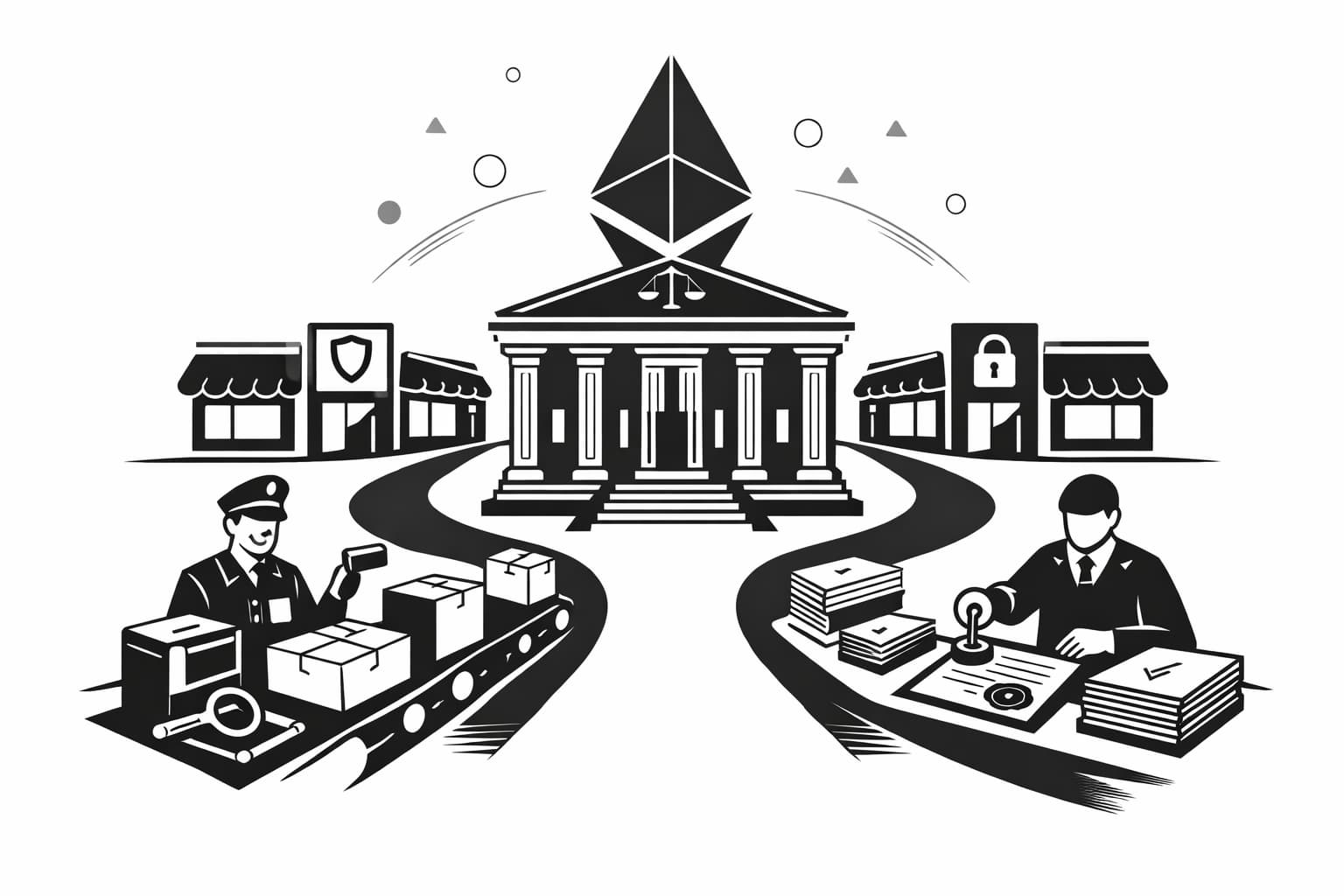
Think of it like two different ways a franchise location might report back to headquarters. One method says, "Here's what we did — speak up if something looks wrong." The other says, "Here's a certified, mathematically verified proof of everything we did, signed before we submitted it." Both methods protect the customer. But the process, speed, and guarantees look quite different.
Optimistic Rollups: The Fraud Proof Model
Optimistic rollups take the first approach. The name itself tells the story: they are optimistic by default, assuming that every batch of transactions submitted to Ethereum is valid — unless someone can prove otherwise. This is the same logic as "innocent until proven guilty."
When a rollup operator posts a batch of transactions to Ethereum, a window opens — typically seven days — during which anyone watching the network can examine the data and raise a challenge. If a transaction looks fraudulent, a challenger can submit what's called a fraud proof: essentially a piece of evidence that forces Ethereum's smart contracts to replay the suspicious transaction and verify whether the operator cheated. If fraud is confirmed, the dishonest operator loses their staked funds and the bad transaction is rejected.
The trade-off is time. Because Ethereum waits out that seven-day challenge window before treating funds as fully settled, withdrawals from optimistic rollups back to Ethereum mainnet can take up to a week. Arbitrum and Optimism are the two most prominent examples of this model, and between them they secure tens of billions of dollars in assets, according to data tracked by L2Beat.
ZK Rollups: The Validity Proof Model
ZK rollups take the opposite approach. Instead of asking Ethereum to trust the batch and wait for objections, a ZK rollup generates a validity proof — a piece of cryptographic math — before the batch is ever posted. This proof tells Ethereum's smart contracts, "Every single transaction in this batch is correct, and here is the mathematical guarantee." Ethereum verifies the proof and accepts the batch immediately.
The "ZK" stands for zero-knowledge, which refers to a clever property of these proofs: you can confirm that something is true without revealing the underlying details. Imagine a notary who can certify that a document is authentic without actually reading its contents aloud. That's the spirit of it.
Because validity is proven before posting rather than assumed after, ZK rollups offer near-instant finality. Withdrawals can settle in minutes rather than days. zkSync and StarkNet are leading examples of this architecture, and both have been processing real transactions on Ethereum mainnet for several years.
Optimistic Rollups | ZK Rollups | |
|---|---|---|
Security Model | Innocent until proven guilty | Proven valid before submission |
Proof Type | Fraud proof (reactive) | Validity proof (proactive) |
Withdrawal Time | ~7 days | Minutes to hours |
Finality Speed | Slow (challenge period required) | Fast (math verified upfront) |
Examples | Arbitrum, Optimism | zkSync, StarkNet |
Neither path is strictly "better" — they reflect genuine engineering trade-offs. Optimistic rollups are generally simpler to build and have been battle-tested longer. ZK rollups demand far more complex cryptography but reward users with faster finality. What they share is the same foundation: both ultimately anchor their security to Ethereum, inheriting its settlement guarantees no matter which proof method they choose.
What the L2 Security Model Protects — and What It Doesn't
Understanding rollup security means being honest about both its strengths and its limits — because no system, however well-designed, protects against everything.
Think back to the franchise analogy. A McDonald's franchisee benefits enormously from the parent brand's reputation, supply chain, and quality standards. But that doesn't mean every individual location is immune to a bad hire, a broken piece of equipment, or a poorly managed shift. The corporate backing is real and valuable — it just doesn't reach into every corner of daily operations. Rollups work the same way.
When you use a rollup, Ethereum's security genuinely guarantees several important things. Your transaction data is recorded and available for anyone to inspect — you can see how on-chain transactions are tracked and verified to appreciate just how transparent this record-keeping is. Ethereum also ensures that no single party can quietly erase your funds from the final settlement record, and that once a transaction is confirmed on the main chain, it is effectively permanent. These protections — data availability, censorship resistance, and settlement finality — are the real inheritance rollups receive from Ethereum.
Risks That Remain on the L2 Layer
The honest picture, though, includes risks that Ethereum's security cannot reach. Three stand out in particular.
- Sequencer centralization. Most rollups today rely on a single sequencer — a server that orders and processes transactions before they're posted to Ethereum. If that sequencer goes offline or acts badly, users may face delays or temporary censorship, even if their funds remain safe on-chain.
- Bridge vulnerabilities. Moving assets between Ethereum and an L2 requires a bridge — and bridges have been among the most exploited targets in crypto history. A flaw in a bridge's smart contract code can result in real losses that Ethereum's security cannot reverse.
- Upgradeability and admin keys. Many rollup contracts can still be upgraded by a small team holding special administrative keys. If those keys are compromised — or the team acts in bad faith — the system's rules could change without users' consent.
None of this makes rollups unsafe. It makes them selectively safe, which is an important distinction. Knowing where the protections end is exactly how you make smarter decisions — much like learning how to assess platform risk in crypto before committing funds anywhere.
The l2 security model is genuinely powerful, but treating it as a complete guarantee would be a mistake. Awareness of these gaps is not a reason to avoid rollups — it's a reason to engage with them thoughtfully.
Real-World Rollup Security in 2026: Where Things Stand
Knowing how rollup security should work in theory is one thing — understanding where things actually stand today is another. The honest answer is that rollup security exists on a spectrum, and not every network has reached the finish line yet.
Think of it as a franchise that's still building out its locations. Some branches are fully up to standards, operating exactly as the parent brand intended. Others are still in a kind of supervised probationary period — technically open for business, but with the franchisor holding a spare set of keys just in case something goes wrong. In rollup terms, this means some networks still have admin keys — special controls held by a small team that can override the system in an emergency. That's a meaningful trust assumption, even if it's rarely exercised.
A helpful way to track this is the rollup maturity spectrum, which runs from heavily supervised "training wheels" deployments all the way to fully trustless, code-governed systems. L2Beat maintains a widely respected risk framework that scores rollups across categories like upgradeability, data availability, and sequencer decentralization — it's worth bookmarking if you're putting real money to work on any L2.
As of 2026, leading networks have made real progress. Arbitrum has advanced its decentralization roadmap significantly. Base, backed by Coinbase, has grown into one of the most active chains for everyday users. zkSync continues maturing its ZK proof infrastructure toward a more trustless state. None are perfect, but all have moved meaningfully up the maturity ladder. If you're exploring DeFi protocols on Arbitrum, Base, and Optimism, understanding where each sits on this spectrum helps you weigh the risks more clearly.
Key Takeaways
- Rollup security is borrowed trust. Layer 2 networks process transactions independently but settle their final records on Ethereum, inheriting its battle-tested enforcement power — much like a franchise operating under an established brand's guarantee.
- The inheritance mechanism works through data and proof posting. By publishing transaction data and validity evidence directly to Ethereum, rollups ensure that Ethereum's validators — not the L2 itself — have the final say on what's legitimate.
- Optimistic and ZK rollups take different paths to the same destination. Optimistic rollups assume honesty and allow a challenge window; ZK rollups submit cryptographic proofs that make fraud mathematically impossible to hide.
- No security model is complete. Bridge contracts, centralized sequencers, and immature governance remain real risks that Ethereum's base layer cannot fix on its own.
- When evaluating an L2 in 2026, look for decentralized sequencers, audited bridge contracts, and a clear upgrade governance process — these signal a network that's maturing beyond borrowed trust toward standing on its own.
Frequently Asked Questions
- What is Layer 2 security?
- Layer 2 security refers to the mechanisms that protect users on L2 networks like rollups. Most of this security is inherited from Ethereum by posting transaction data or proofs directly on-chain. However, L2s also carry additional trust assumptions — particularly around centralized sequencers and bridges — that users should understand before committing funds.
- What is the difference between L1 and L2 in blockchain?
- Layer 1 is the base blockchain — Ethereum — responsible for consensus and final settlement. Layer 2 sits on top, processing transactions faster and at lower cost, then periodically posting results back to L1. Think of L1 as the main highway and L2 as an express lane: traffic moves quicker, but it ultimately feeds back onto the same road.
- Are rollups as secure as Ethereum?
- Rollups inherit Ethereum's settlement security, so funds are generally well protected. However, they're not perfectly equivalent to Ethereum — centralized sequencers, immature fraud-proof systems, and bridge vulnerabilities introduce additional risks. Security varies considerably depending on each rollup's design and how far along it is in its decentralization roadmap.
- What is the difference between an optimistic rollup and a ZK rollup?
- Optimistic rollups assume transactions are valid by default, relying on a challenge window — typically seven days — for fraud proofs if something looks wrong. ZK rollups submit a cryptographic validity proof with every batch, enabling much faster finality. Both inherit Ethereum's security, but through different mechanisms with distinct trade-offs around speed, cost, and complexity.
Sources
Author

Crypto analyst and blockchain educator with over 8 years of experience in the digital asset space. Former fintech consultant at a major Wall Street firm turned full-time crypto journalist. Specializes in DeFi, tokenomics, and blockchain technology. His writing breaks down complex cryptocurrency concepts into actionable insights for both beginners and seasoned investors.