FedNow vs CBDC: Why the US Chose Instant Payments
FedNow vs CBDC: The Short Answer
Is FedNow a CBDC? FedNow is not a CBDC. FedNow is a payment system the Federal Reserve operates so banks and credit unions can move money instantly. A CBDC, by contrast, would be a new digital form of central bank money that people or businesses could potentially hold directly.[1][2]
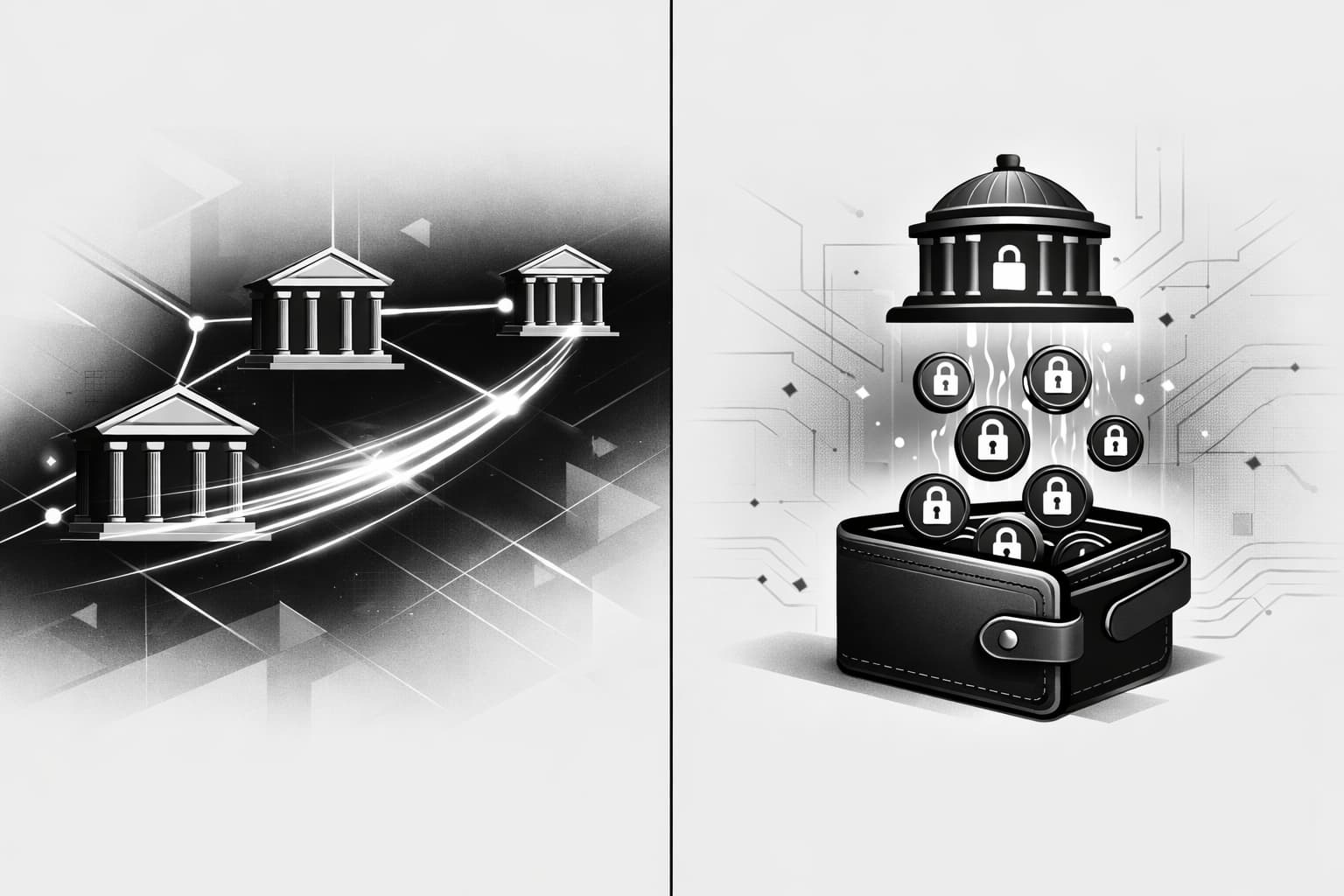
That distinction sits at the heart of the fednow vs cbdc debate. FedNow improves how existing dollars move through the banking system. A central bank digital currency would change what the dollar itself can be in digital form. In practice, that means the United States did not simply pick FedNow instead of a digital dollar. Rather, policymakers moved ahead with faster payment rails while putting off a much more politically charged decision about whether the Federal Reserve should issue digital money to the public.
What FedNow Is
FedNow is an instant payments network for financial institutions. If your employer, bank, or payment app uses a participating bank, money can move in seconds, any time of day, including weekends and holidays. Think of it as upgraded plumbing for payments: your bank account stays the same, your dollars stay the same, but the transfer happens much faster.[1]
What a CBDC Is
A CBDC would be a digital dollar issued by the central bank itself. Depending on the design, it could let households or businesses hold digital money that is a direct claim on the Federal Reserve, not just on a commercial bank. In plain English, that is not faster bank transfers; it is a different kind of state-backed digital money.[2]
Why People Confuse Them
People mix up the fednow digital dollar question because both ideas involve the Federal Reserve, digital transfers, and payment modernization. Still, they solve different policy problems. FedNow focuses on speed and settlement. A CBDC raises bigger questions about privacy, bank funding, government power, and the future design of money.
What Is FedNow and How Does It Work?
To understand the fednow vs cbdc debate, it helps to start with what FedNow actually is. FedNow is an instant payment and settlement service run by the Federal Reserve. It allows participating banks and credit unions in the United States to send and receive payments in real time, 24 hours a day, every day of the year. In plain terms, it is a faster way for financial institutions to move money that already exists in ordinary bank accounts.[1]
That distinction matters. FedNow is not a new form of money, and it is not the same as a fednow digital dollar. It does not create a separate token, wallet, or government-issued consumer account. Instead, it acts as payment infrastructure: a rail that carries existing U.S. dollars between financial institutions and settles those transfers almost immediately on the books of the Federal Reserve.[1]
FedNow as a payment rail, not a new currency
When someone sends money through a bank that offers FedNow-based services, the payment instruction travels over the FedNow network, and the funds are settled in central bank money between participating institutions. The sender and recipient still hold regular deposits at their banks or credit unions. So while FedNow is digital, it is not a digital dollar in the policy sense usually associated with a CBDC.[1]
That is why many policymakers describe FedNow as plumbing rather than money redesign. It improves how payments move, without changing what the dollar is.
Who can access FedNow
Consumers and businesses do not join FedNow directly. Access comes through banks, credit unions, and service providers connected to those institutions. If your financial institution offers instant payments using FedNow, you may see it as a feature inside your banking app or payment service. If it does not, you cannot use FedNow on your own.[1]
In other words, the Federal Reserve operates the system, but private financial institutions remain the main point of contact for end users.
Why instant settlement matters
Faster settlement can make everyday finance work better. Employers can send payroll faster. Households can pay urgent bills without waiting days for funds to clear. Families can send emergency transfers when timing matters. Small businesses can improve cash flow because incoming payments arrive right away instead of sitting in transit.
As a result, FedNow addresses a practical problem in the U.S. payment system: delays. That policy goal is narrower than creating a CBDC, which helps explain why the United States moved first on payment rails before taking on the harder political question of whether to redesign public money.
What Is a CBDC and Does the US Have One?
A central bank digital currency, or CBDC, is a digital form of sovereign money issued by a country’s central bank. In plain terms, it would be a direct digital claim on the central bank, much like physical cash is today. That makes it different from ordinary bank deposits, which are liabilities of commercial banks, not the Federal Reserve. It is also different from private digital assets. Stablecoins are issued by private firms and aim to maintain a fixed value, while cryptocurrencies such as Bitcoin are not state money and usually do not hold a stable price. If you want more background on private digital assets, see this stablecoins beginner guide and this overview of crypto wallets.[2]
This distinction matters in the fednow vs cbdc debate. FedNow improves how payments move between banks. A CBDC would raise a separate question: should the public have access to digital money issued by the central bank itself?
Retail CBDC vs Wholesale CBDC
There are two main types of CBDC. A retail CBDC would be for households and businesses, functioning as consumer-facing digital cash. People could potentially hold and use it for everyday payments. A wholesale CBDC, by contrast, would be limited to financial institutions and used for interbank settlement or securities transactions. In practice, wholesale systems are closer to back-end financial plumbing, while retail CBDCs touch the public directly and therefore bring bigger privacy, banking, and political questions.[3]
Does the US Have a CBDC Today?
No. As of 2026, the United States does not have a retail CBDC, and it has not launched a digital dollar for general public use. The Federal Reserve has researched the idea, published discussion papers, and tested technical concepts, but study is not the same as issuance.[2] So when people ask whether FedNow is the fednow digital dollar, the answer is no. FedNow is a payment service; a US CBDC remains a policy proposal, not a live product.
Can the Fed Issue a Digital Dollar?
Legally and politically, that is where things get complicated. The Federal Reserve has signaled that it would not move ahead with a retail CBDC without clear support from the executive branch and Congress.[2] Many legal analysts also expect congressional authorization would be needed before any digital dollar could launch. Even then, lawmakers would still have to settle hard questions about privacy, government visibility into transactions, the role of banks, and whether public demand is strong enough to justify a redesign of money itself.
FedNow vs CBDC: Key Differences at a Glance
With the basics in place, the easiest way to understand fednow vs cbdc is to separate two questions that often get blurred together: How do payments move? and What kind of money is being used? FedNow addresses the first question. A CBDC would address the second.
That distinction matters in policy debates. FedNow speeds up transfers of existing bank deposits over public payment rails. A central bank digital currency, by contrast, would introduce a new form of central bank money for everyday use. So while the two can sound similar in headlines, they sit at different layers of the financial system.
Side-by-side comparison table
Category | FedNow vs CBDC |
|---|---|
Issuer | FedNow is a payment service operated by the Federal Reserve; a CBDC would be digital money issued by the central bank itself. |
Who can hold it | FedNow users hold money in bank or credit union accounts; with a CBDC, households or firms could potentially hold digital central bank money directly or through intermediaries. |
Role of banks | FedNow keeps banks at the center of customer relationships; a CBDC could preserve banks as intermediaries, but it could also reduce their deposit role depending on design. |
Privacy implications | FedNow follows current banking and payment-data rules; a CBDC raises bigger questions about transaction visibility, data access, and government oversight. |
Settlement | FedNow enables instant settlement between participating financial institutions using reserve balances; a CBDC would settle using the digital currency itself as a direct claim on the central bank. |
Creates new money | FedNow does not create new money; a CBDC would create a new monetary instrument, even if it exists alongside cash and bank deposits. |
Why FedNow is not a digital dollar
This is the heart of the fednow digital dollar confusion. Fast payments do not automatically mean new money. FedNow makes today’s dollars move faster, but those dollars remain bank deposits. Nothing about the service turns them into a retail claim on the Federal Reserve.[1][2]
In other words, FedNow upgrades payment rails without redesigning money itself. A CBDC would do more than speed up transfers; it would change what the public can hold and how state-issued money fits beside bank deposits. That is why US policymakers treated these as separate choices: improve payments first, while leaving the far more political question of a digital dollar unresolved.
Why the US Chose Instant Payments Before a Digital Dollar
In the fednow vs cbdc debate, the most practical answer is also the least dramatic: US policymakers moved first on payment speed, not on reinventing money itself. FedNow addressed a clear and immediate weakness in the financial system: payments in the United States were often too slow for a modern economy. By contrast, a retail central bank digital currency would have raised much bigger questions about privacy, bank funding, and the federal government's place in everyday transactions.[1][2]

That distinction matters. FedNow did not require the country to settle a national argument over whether Americans should hold digital money directly tied to the central bank. Instead, it improved the rails beneath bank payments while leaving the existing structure of deposits, private banks, and consumer accounts in place.
- Immediate infrastructure fix: FedNow helped banks and credit unions send money in real time, solving a payment problem that households and businesses already felt.
- Lower legal and political risk: Updating payment rails was far less contentious than deciding whether the US should issue a fednow digital dollar alternative.
- Less disruption to banks: Instant payments preserved the current role of commercial banks rather than inviting a shift of deposits toward the central bank.
- Fewer privacy fears: FedNow did not trigger the same public anxiety about government visibility into retail transactions.
- Easier policy sequencing: Officials could improve the payment system first and postpone a much larger fight over the design of digital money.
A faster, lower-risk policy win
From a policy standpoint, FedNow was the easier win. It modernized payment plumbing without rewriting the rules of the monetary system. In other words, officials could support faster settlement, better cash-flow timing, and wider access to instant payments without taking on the far more divisive task of creating a new form of sovereign retail money.
Protecting the role of private banks
Caution also reflects how the US financial system is built. Commercial banks fund loans with customer deposits. A CBDC, depending on its design, could pull some of those deposits into central bank-backed wallets or accounts, especially in times of stress. Policymakers worry that even a limited digital dollar could amplify bank runs or weaken the deposit base that supports everyday lending.[2][3]
Privacy and political resistance
Then there is politics. A CBDC debate quickly turns into a debate about surveillance, civil liberties, and state power. Critics ask who could see transactions, under what legal standard, and whether programmable features might someday limit how money is used. Even if many of those fears depend on design choices, they are still politically potent. So the US choice was not simply FedNow instead of a digital dollar. It was, first, fix payments; later, if ever, decide whether to redesign money.
Would a CBDC Replace Cash, Banks, or Crypto?
One reason the fednow vs cbdc debate gets confusing is that people often treat these tools as if they are trying to do the same job. They are not. FedNow is a payment rail for moving bank deposits faster. A CBDC, by contrast, would be a new form of central bank money in digital form. That difference matters when people ask whether either one would replace cash, banks, or crypto.
Will CBDC replace cash?
In official discussions, most US and international CBDC proposals have been framed as a complement to cash, not a full replacement.[2][5] Policymakers often describe a digital dollar as an added payment option for an economy that is already becoming more digital. Even so, public concern has been real. Critics worry that once a CBDC exists, cash could slowly lose support or acceptance over time.
That concern helps explain the politics around the fednow digital dollar conversation. FedNow does not replace cash either. It simply lets banks and credit unions send money instantly between accounts. So if the policy goal is faster payments, FedNow can improve the system without changing what money itself is.
Would a CBDC replace banks?
Probably not, but it could change their role. Most serious CBDC proposals keep private banks and payment firms involved as intermediaries for onboarding, compliance, and customer service. Still, if people shifted large balances from bank deposits into central bank-backed digital money, banks could lose a stable source of funding. That is one reason US officials have moved carefully.[2][3]
Is CBDC a cryptocurrency?
No. A CBDC would be state-issued money, backed by the central bank and governed by public rules. It would not be a decentralized asset like Bitcoin. Some CBDC designs might use distributed ledger technology, while others might not. If you want a primer, see how blockchain works and this cryptocurrency beginner guide.[3]
Is Bitcoin or XRP a CBDC?
No. Bitcoin is not a CBDC, and XRP is not a CBDC. They are private digital assets, not liabilities of a central bank. Bitcoin was designed to operate without a central issuer; you can learn more in Bitcoin basics. In short, crypto assets may compete with or complement parts of the payment system, but they are not digital dollars issued by the Federal Reserve.
Global CBDC Progress: What Other Countries Are Doing
Looking abroad helps put the fednow vs cbdc debate in context. Many central banks are studying digital currencies, and a smaller group has moved into live pilots or full launches. A few countries, including The Bahamas, Jamaica, and Nigeria, have already introduced retail CBDCs in some form. Others, such as China, have run large pilot programs, while the European Central Bank and Bank of England have spent years on design, consultation, and legal review.[4][5][6][7]
Countries Exploring, Piloting, and Launching CBDCs
At a high level, the global picture is mixed. Some governments see CBDCs as a way to expand financial access, modernize state payment systems, or reduce dependence on private networks. In other places, the focus is cross-border payments or keeping public money relevant in a more digital economy. So while momentum is real, most countries are still testing ideas rather than fully replacing existing money systems.[3][4]
Why the US Timeline Is Slower
The US has not ignored this trend. Instead, it has moved carefully. Part of that reflects American law: issuing a true fednow digital dollar would likely require clear support from Congress, not just technical work by the Federal Reserve.[2] Politics also matters. Privacy, government power, and the role of banks remain contested. On top of that, the US has a very large and complex banking system, which makes any redesign of digital money harder to roll out quickly.
Pros and Cons of FedNow and CBDCs
By this point, the fednow vs cbdc debate is less about picking a single winner and more about weighing tradeoffs. Each approach can improve payments, but they do so in different ways and with different policy risks. That is why the US conversation has stayed cautious: faster payments are one thing; redesigning the public’s relationship with money is another.
FedNow pros and limits
FedNow’s main strength is practical speed. It helps banks and credit unions move money in seconds, which can reduce late fees, ease cash-flow stress, and make everyday payments more predictable. In that sense, it offers real benefits without changing what a dollar is. It also fits within the current banking system, which makes adoption easier from a legal and operational standpoint.[1]
Still, FedNow has limits. It depends on financial institutions choosing to participate and on consumers already having bank or credit union accounts. So while the fednow digital dollar debate often treats FedNow as a broad public solution, it does not by itself solve access gaps for the unbanked or underbanked.
CBDC pros and risks
A US CBDC could, in theory, expand payment efficiency and give people access to digital public money with fewer intermediaries. It might improve settlement safety, support competition in payments, and offer a new platform for inclusion if designed well.[2][3]
On the other hand, the risks are harder to ignore. Privacy concerns sit at the center of public opposition, especially if transaction data could be monitored too closely. A CBDC could also pull deposits away from banks in times of stress, raising financial stability concerns. So in fednow vs cbdc, the real policy question is not which is better in the abstract, but which problem the US is trying to solve first.
Bottom Line: FedNow Is Payment Infrastructure, Not a US CBDC
At the simplest level, the fednow vs cbdc debate comes down to function. FedNow helps banks and credit unions move existing US dollars instantly. A CBDC would be a new form of central bank money for the public. Those are related ideas, but they are not the same policy choice.

That is why the US path makes sense in practical terms. Washington moved first on payment speed and settlement, where the legal and operational case was clearer. By contrast, the fednow digital dollar question remains open because it raises harder issues around privacy, the role of banks, government authority, and the structure of money itself.
What readers should remember
- FedNow is a payment rail, not a digital dollar.
- A US CBDC does not exist as of 2026, and no launch decision has been made.
- The US chose to upgrade payments first because that was easier to implement and less politically divisive.
- The digital dollar debate is unresolved for legal, political, and institutional reasons.
- In short, this was not “FedNow instead of money reform,” but “fix payment infrastructure first, debate money redesign later.”
Frequently Asked Questions
- Is FedNow a CBDC?
- No. FedNow is a real-time payment network for banks and credit unions, while a CBDC would be a new digital form of central bank money. FedNow moves existing bank deposits between accounts almost instantly; it does not create, issue, or circulate a digital dollar.
- Why aren't more banks using FedNow?
- Adoption takes time because banks must complete technical integration, compliance reviews, operational testing, staffing, and customer-demand analysis. Participation is growing, but institutions do not all move at the same speed. Some banks prioritize instant payments quickly, while others wait until the business case is stronger.
- What banks will use FedNow?
- Any participating bank or credit union can use FedNow, and the roster changes as more institutions sign on. Because availability expands over time, the best approach is to check directly with your financial institution or review official Federal Reserve resources for the latest participant information.
- Will FedNow replace cash?
- No. FedNow does not replace cash; it enables faster digital transfers between bank accounts. Cash remains a separate payment option for consumers and businesses. The service is best understood as payment infrastructure that improves electronic transactions, not as a substitute for physical currency.
- What is FedNow digital currency?
- FedNow is not a digital currency, so the phrase is misleading. It is an instant payments service operated through financial institutions that transfers regular US dollars already held in bank accounts. In other words, FedNow speeds up payments without introducing a new form of money.
- Is XRP replacing FedNow?
- No. XRP is a crypto asset associated with a private network, while FedNow is a Federal Reserve-operated payment service. They belong to different systems, governance structures, and regulatory frameworks. FedNow handles instant bank-to-bank payments in the US, whereas XRP serves a separate market and purpose.
- Can the Fed issue a digital dollar?
- Potentially, but only within a clear legal and political framework. Many observers believe congressional authorization would be required before the Federal Reserve could launch a US retail CBDC. As of now, no retail digital dollar has been issued, and the debate remains unsettled.
- Is FedNow a real thing?
- Yes. FedNow is a live instant payment service operated by the Federal Reserve. Consumers and businesses do not use it directly through the Fed; instead, they access it through participating banks and credit unions that offer FedNow-enabled payment services to their customers.
Sources
Author

Crypto analyst and blockchain educator with over 8 years of experience in the digital asset space. Former fintech consultant at a major Wall Street firm turned full-time crypto journalist. Specializes in DeFi, tokenomics, and blockchain technology. His writing breaks down complex cryptocurrency concepts into actionable insights for both beginners and seasoned investors.