DePIN Scams: A 2026 Guide to Spotting Red Flags & Fakes

The DePIN Promise vs. The Harsh Reality of Scams
Decentralized Physical Infrastructure Networks, or DePIN, represent one of the most exciting frontiers in the crypto space. The idea is groundbreaking: using token incentives to build and maintain real-world infrastructure, from wireless networks and cloud storage to energy grids and mapping services. Imagine a world where communities, not corporations, own the networks they rely on every day. This is the powerful vision that attracts so many to DePIN.
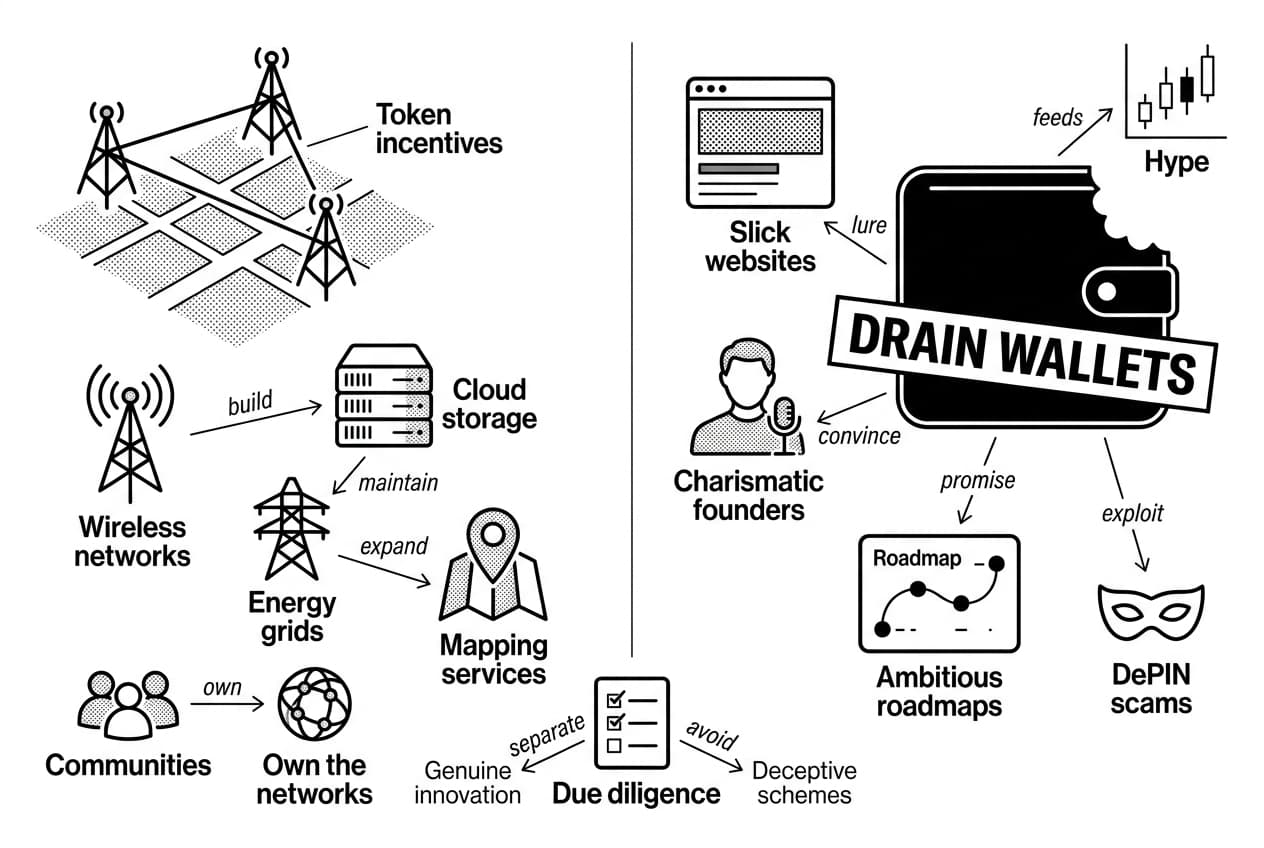
But with great promise comes great risk. As we've seen throughout 2026, the hype surrounding this sector has created a fertile breeding ground for fraud. For every legitimate project building tangible value, there are several sophisticated DePIN scams designed to exploit investor enthusiasm and drain wallets. These projects often have slick websites, charismatic founders, and ambitious roadmaps, making them difficult to distinguish from the real thing at first glance.
That's why this guide exists. Simply knowing about the potential isn't enough; you need a systematic process to protect your capital. We're going to move beyond just listing common DePIN red flags. Instead, this article will provide you with a step-by-step checklist for conducting your own DePIN due diligence. By following this process, you can learn to separate genuine innovation from deceptive schemes and invest with confidence.
Common Types of DePIN Scams in 2026
Before you can begin your investigation, you need to know what you’re looking for. Scammers are inventive, but their methods often fall into predictable patterns. Recognizing these common DePIN scams is the first step in protecting your capital. By understanding their playbooks, you can spot the telltale signs before it's too late.
The 'Vaporware' Project: Selling Hardware for a Ghost Network
This is one of the most financially damaging DePIN scams. A project announces a revolutionary network and begins selling expensive, proprietary hardware—miners, sensors, or hotspots—needed to participate. They create a sense of urgency, promising huge rewards for early adopters. The problem? The network is a ghost. It either never gets built, remains perpetually in a useless "testnet" phase, or fails to attract any real-world customers. By the time investors realize they own a useless piece of plastic, the founders have vanished with the hardware sales revenue.
The Centralized Imposter: Corporate Theater in a Decentralized Costume
Many projects use the "decentralized" label as a marketing gimmick. In reality, they are completely controlled by a single company. This is a major DePIN red flag. The project might run all the core servers, keep the code in a private repository, or have a backdoor to control the entire network. This centralization defeats the purpose of DePIN and exposes investors to the same risks as a traditional startup, except with far less transparency and regulatory oversight. If the company fails or acts maliciously, the entire network and your investment can disappear overnight.
The Token Pump-and-Dump: All Hype, No Infrastructure
This scheme focuses entirely on the project's token, not the physical infrastructure. The team spends millions on influencer marketing, fake partnerships, and exchange listings to generate massive hype and drive up the token price. They promise a future network of devices but never actually build it. Unsuspecting buyers purchase the token based on this hype. Once the price reaches a peak, the founders and early insiders sell their massive holdings, causing the price to crash and leaving everyone else with worthless tokens.
The Phishing & Wallet Drainer Attack
Beyond flawed project models, some scammers target your assets directly. They create convincing fake websites, Discord servers, or Twitter accounts that mimic the real project. They might announce a surprise airdrop or a critical "wallet migration" to create urgency. Their goal is to trick you into connecting your wallet and signing a malicious transaction. These sophisticated phishing and wallet drainer attacks can empty your account in seconds, and the funds are almost always impossible to recover.
Your Step-by-Step DePIN Due Diligence Checklist
Now that you understand the common schemes, it's time to build your defense. Performing thorough depin due diligence is the single most effective way to protect your capital from opportunistic projects. Think of this checklist not as a chore, but as a systematic investigation. Following these steps will help you look past the hype and evaluate a project based on its fundamental strengths and weaknesses.
This process requires a bit of detective work, but each step is designed to uncover the truth behind the marketing. Let's walk through it together.
Step 1: Analyze the Whitepaper and Vision
Every DePIN project starts with a whitepaper, but many are filled with buzzwords and vague promises. Your job is to cut through the noise and find the substance. Don't just skim it; dissect it. Ask yourself: what specific, real-world problem is this decentralized infrastructure trying to solve? If the answer isn't immediately clear, that's a problem.
Look for a detailed explanation of the technical architecture. How does the network actually function? A legitimate project will outline its technology, even if it's complex. Be wary of papers that rely heavily on jargon without explaining the mechanics. Most importantly, examine the economic model. Is there a sustainable loop where providers are fairly compensated and users have a compelling reason to pay for the service? A plan that relies solely on token price appreciation is not a business model; it's a house of cards and one of the most common depin red flags.
Step 2: Investigate the Team and Backers
An anonymous team is one of the biggest risks in any crypto project. While privacy is a core tenet of the space, for projects building real-world infrastructure, accountability is paramount. Start by looking for a "Team" page on their website. Are the founders and key developers public?
Once you have names, your investigation begins. Search for them on professional networks like LinkedIn. Do their profiles seem genuine? Does their past experience align with the massive challenge of building a decentralized physical network? A team of marketing specialists with no engineering background is a serious concern. Next, look at the project's investors or venture capital backers. Are they well-known firms with a strong track record, or are they unheard-of entities? A quick search on a firm's portfolio will tell you if they back serious technology or just chase hype.
Step 3: Scrutinize the Tokenomics
Tokenomics, or the economics of the token, will often tell you the true intentions of a project's founders. Your primary focus here should be on the token distribution and vesting schedules. A project should provide a clear chart or document showing how the total supply of tokens is allocated.
Watch out for large allocations to the team, advisors, and private sale investors. While they deserve to be compensated, an allocation greater than 25-30% combined can be a warning sign. Even more critical is the vesting schedule. This refers to the timeline over which their tokens are unlocked. A short vesting period with no "cliff" (an initial lock-up period) is a massive red flag. It allows insiders to sell their holdings quickly, often crashing the price for retail participants. A long vesting schedule (e.g., a 1-year cliff followed by 3 years of gradual unlocking) shows the team is committed to the project's long-term success.
Step 4: Verify the Physical Infrastructure
This is the "physical" part of DePIN, and it cannot be faked—at least not for long. A project can claim to have thousands of active hardware nodes, but you must verify it. Start by looking for a public network explorer or a real-time dashboard. This is a non-negotiable feature for any legitimate DePIN project in 2026.
This dashboard should show you key metrics: the number of active providers, their geographic distribution, the amount of work being done on the network, and the rewards being paid out. If the project doesn't have a public explorer, that's a major cause for concern. Plus, check the community channels like Discord and Telegram. Are you seeing real people posting photos of their hardware, discussing setup issues, and sharing performance data? This organic, user-generated proof is much more valuable than glossy marketing materials.
Step 5: Audit the Smart Contracts and Code
The code underlying the project is its foundation. Flaws or backdoors in the smart contracts can lead to a complete loss of funds. You must confirm that the project has undergone at least one independent, third-party security audit from a reputable firm.
Projects typically display badges or link directly to these audit reports on their websites. Don't just see the badge and move on; click through and read the summary. Did the audit find any critical or major vulnerabilities? If so, did the team fix them? An audit is not a guarantee of safety, but a lack of one is a deal-breaker. You should also check for a public GitHub repository. Seeing active, ongoing development is a healthy sign. This is a vital part of your due diligence, so take your time to Audit the Smart Contracts and Code properly.
Step 6: Evaluate Community and Governance
Finally, assess the health and authenticity of the project's community. Many depin scams use bots to inflate their follower counts and create a false sense of activity. Your job is to see through this.
Spend time in their Discord or Telegram. Are the conversations substantive? Are users helping each other, discussing the technology, and asking intelligent questions? Or is the chat dominated by price speculation, emojis, and hype? A genuine community is a project's best asset. Also, look into the governance structure. Is there a clear process for token holders to vote on proposals and influence the network's future? A project that claims to be decentralized but makes all decisions behind closed doors is not aligned with the spirit of web3 and presents a significant risk.
Key DePIN Red Flags: A Quick Reference Guide
After walking through the detailed process, it's helpful to have a quick checklist. When you're evaluating a new project, run through these common DePIN red flags. If you find a project hitting several of these points, it’s a strong signal to proceed with extreme caution or walk away entirely. Think of this as your final safety check before committing any capital.
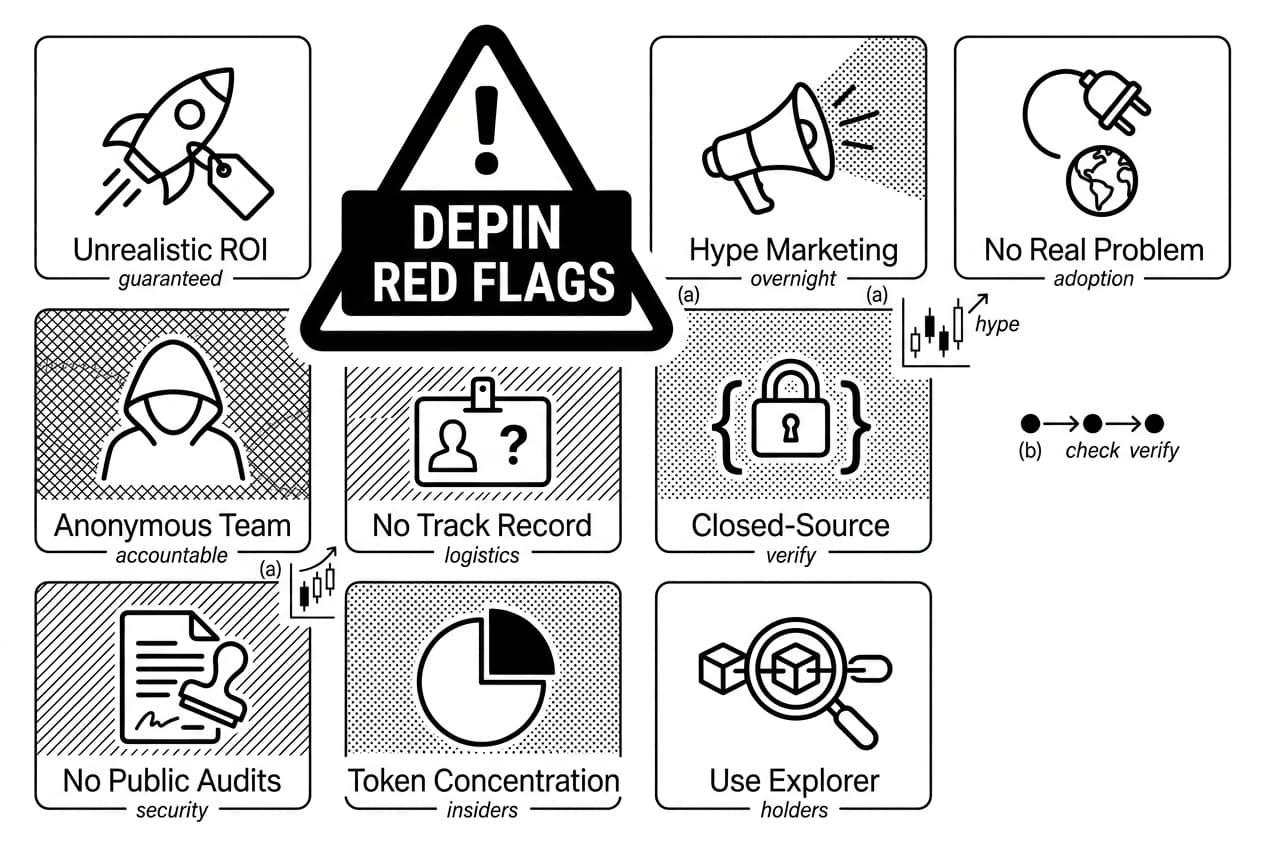
Here are the most significant warning signs to watch for in 2026:
- Unrealistic ROI and Hype-Driven Marketing: Be skeptical of projects promising guaranteed, astronomical returns. Legitimate DePIN networks focus their messaging on the technology, network adoption, and solving a real-world problem, not on creating overnight millionaires. Sustainable growth is gradual; hype is temporary.
- Anonymous or Inexperienced Team: While pseudonyms are common in crypto, a DePIN project requires real-world logistics, manufacturing, and business development. If the team behind a physical infrastructure network is completely anonymous or lacks a verifiable track record, it is a massive risk. You need to know who is accountable for building and managing the network.
- Closed-Source Code and No Public Audits: Transparency is a cornerstone of web3. A project that keeps its code private and has not undergone independent security audits is hiding something. You have no way to verify their technical claims or the security of the network you're being asked to invest in.
- Extreme Token Concentration with Insiders: Use a blockchain explorer to check the token distribution. If you see a small number of wallets (often belonging to the team and early investors) holding the vast majority of the token supply, this creates a high risk of market manipulation and a "rug pull." A healthy project has a more distributed and fair token allocation.
- Lack of a Clear Use Case or Demand Driver: Ask yourself: who will actually pay to use this network's service? If the only reason to participate is to earn tokens, and there is no clear external demand for the bandwidth, storage, or data being provided, the economic model is a house of cards. Without real customers, the token's value is based purely on speculation and is destined to collapse.
What Real Decentralization Looks Like
After spotting so many DePIN red flags, it's easy to become cynical. But genuine projects are building the future, and they share common traits that stand in stark contrast to the scams. Understanding these positive signals is a critical part of your DePIN due diligence. Instead of just looking for what's wrong, you can start identifying what's right.
First, look for genuine community ownership. In a healthy DePIN ecosystem, governance power and token rewards aren't hoarded by the founding team and a handful of private investors. The tokenomics should clearly incentivize and reward a wide base of infrastructure providers and users. Governance proposals and discussions should come from a variety of community members, not just the core team. This shows that power is actually distributed.
Next, a legitimate project relies on transparent and functioning DAOs (Decentralized Autonomous Organizations). A real DAO isn't just a marketing buzzword; it's an active hub for decision-making. You should be able to easily find and review proposals, see voting results, and track treasury spending on a public blockchain. If the "DAO" is a ghost town or all decisions are rubber-stamped by the team, it's decentralized in name only.
True DePIN is also permissionless. This means anyone, anywhere, can contribute resources to the network and earn rewards without needing approval from a central authority. Whether it's running a sensor, providing storage, or operating a wireless hotspot, the barrier to entry should be technical, not political. If you have to apply and be accepted by the company to participate, it’s a service provider network, not a decentralized one.
Finally, inspect the project's commitment to open-source development. The core software and hardware designs should be publicly available, often on platforms like GitHub. This transparency allows independent experts to audit the code, verify the technology's claims, and ensure there are no hidden backdoors. Closed-source projects ask you to trust them blindly—a risk you should not be willing to take.
Tools and Resources for Your Investigation
Knowing the theory behind spotting DePIN scams is one thing, but conducting your own investigation requires the right set of tools. Think of this as your digital detective kit. Using these resources will help you verify claims, analyze on-chain activity, and perform the thorough DePIN due diligence necessary to protect your capital in 2026.
On-Chain and Market Analysis
- Blockchain Explorers (Etherscan, Solscan): These are non-negotiable. Use explorers to verify the official contract address, examine the distribution of token holders, and track the flow of funds from the project's main wallets. Concentrated ownership in a few wallets is a significant red flag.
- Token Analytics Platforms (DEXTools, CoinGecko): Move past the marketing hype and look at raw market data. These platforms show you trading volume, liquidity pool information, and price history. Look for healthy, consistent activity, not suspicious pumps or a complete lack of liquidity.
Code and Security Verification
- GitHub: A project's public code repository is a window into its development soul. Is the code being updated regularly? Are multiple developers contributing? An abandoned or empty GitHub is a clear warning that no real infrastructure is being built.
- Security Audit Reports: Don't just take the project's word that it's audited. Visit the websites of reputable audit firms like Trail of Bits or Quantstamp. Search for the project's name to find the official, published report. If you can't find it there, the audit claim might be fake.
The Future of DePIN: Navigating a High-Risk, High-Reward Sector
The world of Decentralized Physical Infrastructure Networks is undeniably a frontier, complete with vast opportunities and hidden dangers. After walking through the common tactics behind depin scams and the specific depin red flags to watch for, it can be easy to feel discouraged. However, the goal isn't to scare you away from the sector entirely, but to arm you with the knowledge to engage with it safely and intelligently.
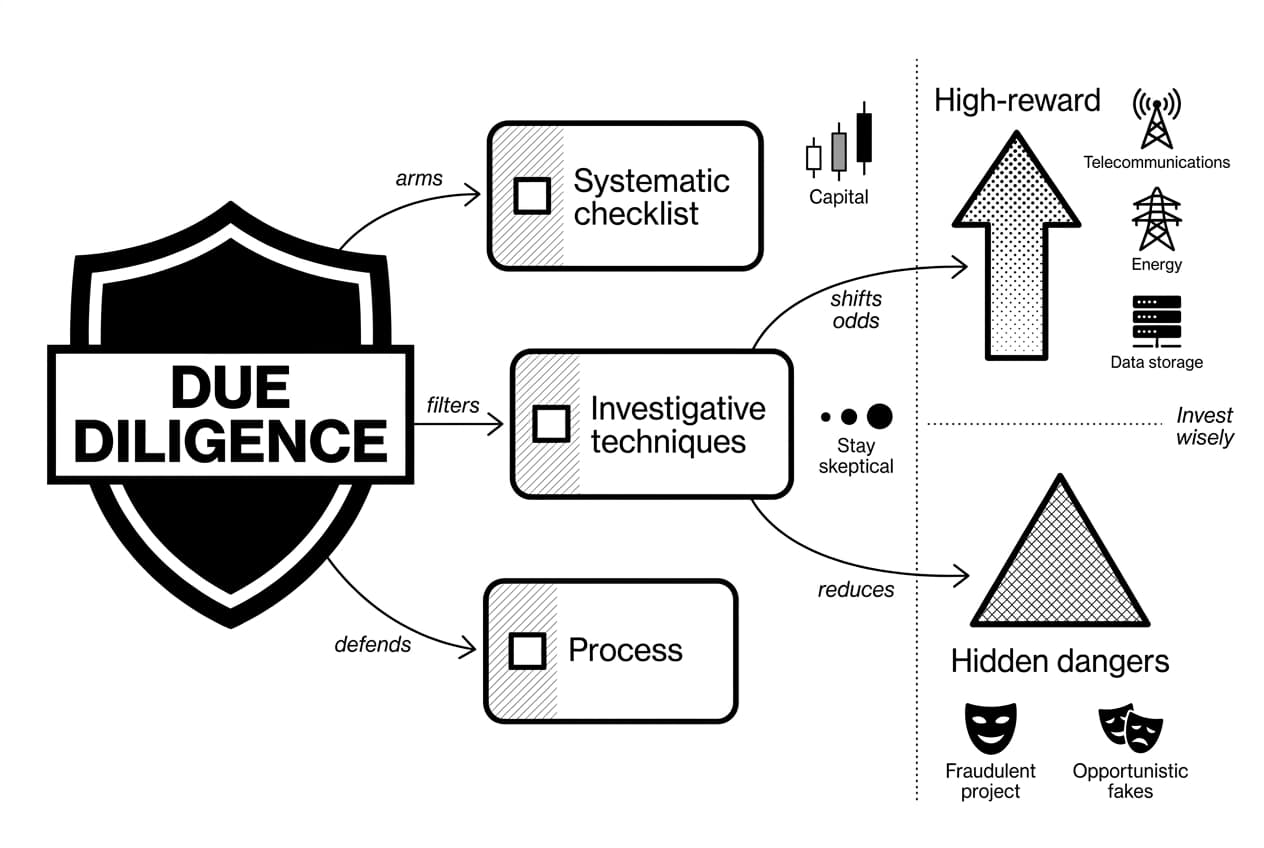
For every fraudulent project, there are teams building major technology. The potential of legitimate DePIN to reshape industries like telecommunications, energy, and data storage is immense. This is the high-reward part of the equation, and it's what attracts so much capital and talent to the space.
Ultimately, your success and safety come down to process. The systematic checklist and investigative techniques we've covered are not just suggestions; they are your primary defense. By committing to thorough depin due diligence, you shift the odds dramatically in your favor. You learn to separate the genuine builders from the opportunistic fakes. Invest wisely, stay skeptical, and you can confidently participate in this exciting and evolving ecosystem.
Frequently Asked Questions
- What does DePIN stand for?
- DePIN stands for Decentralized Physical Infrastructure Networks. It is a model where communities collectively build and operate real-world infrastructure, like wireless networks or data storage. Participants contribute resources and are rewarded with cryptocurrency tokens, creating a more distributed and user-owned alternative to traditional centralized services.
- What is an example of a DePIN?
- Several prominent projects illustrate the DePIN concept. Helium is building a decentralized wireless network for IoT devices, while Filecoin offers decentralized data storage as an alternative to cloud giants. Render Network creates a distributed network for GPU computing power, serving artists and developers who need intensive rendering capabilities.
- How can you tell if a DePIN project is a scam?
- Key red flags include anonymous teams, promises of impossibly high returns, and a lack of independent security audits. Also, be wary of projects with closed-source technology or where a small group of insiders holds most of the tokens, as this centralization poses a significant risk to participants.
- Does DePIN have a future?
- Yes, the DePIN model shows significant potential to create more efficient and community-owned infrastructure, disrupting traditional industries. However, the sector is still very new, experimental, and carries high risk. While the future looks promising, investors should proceed with caution and conduct thorough research before participating in any project.
Sources
Author

Crypto analyst and blockchain educator with over 8 years of experience in the digital asset space. Former fintech consultant at a major Wall Street firm turned full-time crypto journalist. Specializes in DeFi, tokenomics, and blockchain technology. His writing breaks down complex cryptocurrency concepts into actionable insights for both beginners and seasoned investors.