Bittensor Explained: Decentralized AI Network & TAO Crypto

What Is Bittensor? A Plain-English Definition
Bittensor is a decentralized blockchain network that creates an open marketplace for artificial intelligence (AI) services. Instead of mining cryptocurrency by solving math puzzles, participants earn TAO tokens by contributing and validating AI models across a network of 50+ specialized subnets.

If you've ever wondered what Bitcoin would look like if it ran on brainpower instead of raw computing power, Bittensor is pretty close to that answer. The native token, TAO, works similarly to Bitcoin — it's earned, it's scarce, and it's designed to reward genuine work. The difference is that the "work" here isn't crunching meaningless numbers. It's building and improving real artificial intelligence. That distinction matters a lot in 2026, when AI has quietly become one of the most valuable and contested resources on the planet.
To understand why that matters, think about how blockchain technology works at its core: it takes something that was previously controlled by a central authority — like a bank controlling your money — and distributes it across thousands of independent participants. Bittensor applies that same logic to AI itself.
The Problem Bittensor Was Built to Solve
Right now, the most powerful AI systems in the world are owned by a very small number of companies. A handful of Big Tech giants control the data, the computing infrastructure, and increasingly the business models that determine who gets access to cutting-edge AI — and on what terms. That concentration creates a serious problem: a single point of failure, limited transparency, and almost no room for independent innovation.
Think of it like the early internet, but imagining that only three companies were allowed to build websites. Progress would still happen, but it would happen slowly, expensively, and only in directions those companies found profitable. Bitcoin's original breakthrough was proving that you don't need a central bank to run a financial system. Bittensor is asking the same provocative question about AI: do you really need Google or OpenAI to run an intelligence network? Its answer is a firm no.
Decentralization, in this context, isn't just a philosophical preference. It's a practical solution to a real bottleneck in how AI gets built, shared, and improved.
A Brief History of the OpenTensor Foundation
Bittensor was created by Ala Shaabana and Jacob Steeves, two researchers who shared a frustration with how siloed AI development had become. They founded the OpenTensor Foundation to steward the project, publishing the original Bittensor white paper as a kind of manifesto for open AI infrastructure. Their core argument was elegant: if you attach financial incentives to sharing AI knowledge — the way Bitcoin attaches incentives to securing a ledger — you can build a self-sustaining ecosystem of intelligence that nobody controls.
What started as a research experiment gained serious traction as developers recognized the potential. The mainnet launched and gradually expanded its architecture to support specialized subnets — think of these as individual channels, each dedicated to a specific AI task like text generation, image recognition, or data validation. By 2026, the network has grown to host more than 50 active subnets, each with its own community of contributors and validators. That growth didn't happen by accident. It happened because the incentive structure actually works: do useful AI work, get paid in TAO.
From a niche whitepaper to a living network with dozens of specialized communities, Bittensor's trajectory mirrors the early days of Ethereum — a project that looked academic on paper until developers started building things that people actually wanted to use.
What Is TAO Crypto? The Fuel Behind the Network
TAO is the native token of the Bittensor network — think of it the way ETH powers Ethereum, or the way gas powers a car engine. Without TAO, the entire system of AI miners, validators, and subnets simply stops moving.
Every meaningful action on Bittensor runs through TAO. Want to access AI services from a subnet? TAO. Want to reward a miner who contributed useful intelligence? TAO. Want to stake your position and earn a share of the network's output? You guessed it — TAO. It's not just a speculative asset sitting on an exchange. It's the economic glue holding a decentralized AI ecosystem together.
TAO Supply, Halving, and Tokenomics
Here's where the Bitcoin analogy becomes almost impossible to ignore. Bittensor was deliberately designed with a hard cap of 21 million TAO — the exact same maximum supply as Bitcoin. That's not a coincidence. The founders wanted TAO to carry the same sense of digital scarcity that made Bitcoin feel trustworthy to early adopters. This supply cap is documented in the official Bittensor documentation published by the OpenTensor Foundation.
The issuance model mirrors Bitcoin's too. TAO is released as a block reward — a set amount of new tokens created each time a block is added to the chain. Over time, those rewards get cut in half through halving events, slowing the rate at which new TAO enters circulation. This predictable, shrinking supply schedule is designed to prevent inflation from quietly eroding the token's value.
What makes Bittensor's emission model unique is where those rewards go. Rather than flowing to a single pool of miners, TAO emissions are distributed across active subnets. Each subnet competes for a share of the daily issuance based on its performance and the stake behind it — creating a kind of internal market where well-performing AI networks attract more resources.
How TAO Gains Value
Setting aside price charts entirely, there are three concrete demand drivers worth understanding:
- Staking demand. Validators and subnet participants must lock up TAO to earn rewards. The more the network grows, the more TAO gets pulled off the market and staked.
- Subnet creation bonds. Launching a new subnet requires burning or bonding TAO. As the number of subnets expands beyond 50 and counting, this creates consistent structural demand.
- AI service usage. Businesses and developers accessing intelligence from Bittensor subnets pay in TAO, creating real transactional demand tied directly to how useful the network becomes.
The cleaner way to think about it: TAO gains value the same way any well-designed network token does — when more people need it to do more things. As Bittensor's subnet ecosystem deepens and real-world AI use cases multiply, that utility case grows stronger on its own merits.
How Does Bittensor Work? Step-by-Step Breakdown
Now that you understand what TAO is and why it exists, the natural next question is: how does the whole machine actually run? Think of the Bittensor network as a competitive marketplace — AI models are the products on the shelves, quality inspectors decide which products deserve the best placement, and TAO tokens are the currency that pays everyone involved. Three roles keep this marketplace humming: miners, validators, and subnet owners.
Miners: The AI Model Providers
In Bitcoin, miners point expensive hardware at a math puzzle and whoever solves it first wins the block reward. Bittensor miners do something fundamentally different — they run AI models and compete to produce the best possible responses to tasks set by the network.
Picture a subnet focused on text generation. Every miner in that subnet receives the same prompt — say, "Summarize the latest developments in quantum computing" — and each one fires back an answer using whatever AI model they've built or fine-tuned. The miner with the sharpest, most accurate, most useful response earns the biggest slice of TAO rewards. Bad answers? Smaller rewards. Consistently terrible answers? The miner gets squeezed out by hungrier competitors. This creates constant pressure to improve, which is exactly the point.
Validators: The Quality Gatekeepers
Validators are the quality inspectors in this marketplace. They send tasks to miners, collect the responses, and score them. To participate as a validator, you must stake TAO — essentially put your own tokens on the line as a deposit of good faith. Stake more TAO, carry more influence over how rewards get distributed.
Here's why this system stays honest: validators earn their own TAO rewards, but only when their scores align with the broader consensus of other validators. If a validator starts grading dishonestly — maybe to favor a miner they secretly control — their scores drift from the consensus and their rewards shrink. Cheating becomes financially painful, almost automatically. It's a beautifully self-correcting incentive structure.
Yuma Consensus: How Agreement Is Reached
So how does the network turn dozens of individual validator scores into a single fair ranking? That's where Yuma Consensus comes in. Named after Yuma, Arizona, the mechanism works roughly like this: every validator submits their ranking of miners, and the network mathematically combines those rankings — weighted by each validator's TAO stake — into one agreed-upon score for each miner. TAO rewards then flow proportionally based on that collective score, not the opinion of any single judge.
Think of it like a panel of judges at a cooking competition. One judge might love spicy food and score accordingly, but the final leaderboard reflects the weighted average of all the judges. No single opinion dominates, and judges who rate wildly out of step with everyone else lose credibility — and earnings — over time.
The result is a network that continuously ranks AI quality without any central authority calling the shots. Miners improve their models to climb the rankings. Validators stay honest to protect their stake. And the whole ecosystem inches forward together.
- Miners run AI models and compete on output quality — not raw computing power.
- Validators score miner responses and must stake TAO, which keeps their evaluations honest.
- Yuma Consensus combines all validator rankings into a single fair score, weighted by stake.
- TAO rewards flow automatically based on consensus scores — no human committee decides who gets paid.
- The competitive structure means the network's AI quality improves over time as a natural byproduct.
Bittensor Subnets Explained: The Network's Building Blocks
A Bittensor subnet is an independent AI marketplace operating inside the broader Bittensor network, where miners compete to deliver a specific type of intelligence — whether that's writing text, predicting stock prices, or processing images.
Think of the overall Bittensor network as a giant smartphone operating system, like iOS or Android. If that's the OS, then each subnet is its own app store — completely self-contained, specialized in one thing, and governed by its own rules. Just as the App Store hosts everything from banking apps to fitness trackers, Bittensor hosts subnets that cover wildly different AI tasks. The magic is that they all share the same underlying infrastructure and the same currency: TAO.
Here's why that matters to you. Instead of one monolithic AI system trying to do everything, Bittensor breaks intelligence into focused, competitive markets. Each subnet attracts the best miners for that specific task, which means the quality of output stays high — and the ecosystem keeps expanding without anyone at the center calling the shots.
To make that concrete, here are some of the most active subnets running on the network today:
- Subnet 1 – Text Prompting: Rewards miners for generating high-quality text responses to natural language queries — the original flagship subnet.
- Subnet 8 – Time-Series Prediction: Miners compete to produce the most accurate financial and market forecasts from historical data.
- Subnet 18 – Multimodal: Handles tasks that combine text and image inputs, pushing toward more general AI capabilities.
- Subnet 21 – Storage: Incentivizes miners to provide decentralized data storage that the network can rely on.
- Subnet 44 – Text-to-Speech: Miners generate natural-sounding audio from written text, competing on voice quality and accuracy.
- Subnet 13 – Data Scraping: Rewards miners for indexing and surfacing real-time web data that feeds other AI applications.
With more than 50 active subnets in 2026, the range of what Bittensor "does" is genuinely hard to summarize in one sentence — and that diversity is the point.
The Two Types of Subnets
Not every subnet is created equal. There are two distinct categories you need to understand.
The first is the root network — think of it as the parliament of Bittensor. It doesn't run an AI task itself. Instead, it governs how newly minted TAO gets distributed across all the other subnets. Validators in the root network vote on which subnets deserve a larger slice of emissions based on performance and contribution. If a subnet is producing genuinely valuable AI output, it gets rewarded with more TAO to distribute to its miners and validators. This creates a natural selection pressure: useful subnets thrive, low-quality ones starve.
The second category is application subnets — everything else. These are the working subnets that run actual AI tasks day-to-day. Each one has its own scoring system, its own definition of "good output," and its own community of miners and validators competing inside it. Subnet 1 judges text quality differently than Subnet 8 judges forecast accuracy, for example. That independence lets each subnet be precisely tuned to its domain.
Notable Subnets in 2026: What They Do
The diversity across active subnets tells you a lot about how ambitious this ecosystem has become. Subnet 1 started everything — text prompting was Bittensor's proof of concept, demonstrating that you could actually pay miners competitively for useful AI output. Subnet 8 then showed the model could stretch into quantitative finance, where accurate time-series predictions have obvious real-world value. By the time Subnet 44 launched text-to-speech, it was clear the network wasn't going to stay in one lane.
What's significant about having 50-plus specialized subnets isn't just the number — it's the signal. Each new subnet represents a team of developers who looked at Bittensor's architecture and decided it was a better foundation for their AI service than building something centralized from scratch. That vote of confidence compounds over time.
How to Launch a Subnet
Here's where Bittensor gets genuinely different from traditional AI platforms: anyone can create a subnet. The process is permissionless by design, meaning no committee approves your application or decides whether your idea is worthy.
The steps work roughly like this:
- Define your AI task. What will miners compete to produce? Text? Predictions? Images? You need a clear, measurable objective.
- Write your incentive mechanism. This is the scoring system validators will use to rank miner outputs. It's the most technically demanding part.
- Bond TAO to register your subnet. You lock up a set amount of TAO as a commitment — this is a skin-in-the-game requirement that discourages spam registrations.
- Attract miners and validators. Your subnet only becomes valuable when participants join and start competing.
The TAO bond requirement is a meaningful barrier — it filters out half-formed ideas — but it's not a gatekeeping committee. If you have the TAO and the technical chops, the network is open to you. That permissionless structure is exactly why the subnet count keeps climbing and why Bittensor's ecosystem depth is difficult for centralized competitors to replicate.
Key takeaways from this section:
- A subnet is a self-contained AI marketplace within Bittensor, specialized for one type of task.
- The root network governs TAO emissions; application subnets do the actual AI work.
- Over 50 active subnets in 2026 cover everything from text generation to financial forecasting.
- Anyone can launch a subnet by bonding TAO — no permission required, just commitment and code.
- Subnet diversity is a strength: specialized competition produces higher-quality AI output than one-size-fits-all systems.
Bittensor vs. Bitcoin: Similarities and Key Differences
The "Bitcoin for AI" comparison isn't just a catchy marketing phrase — it's actually a useful map for understanding how Bittensor was deliberately designed. Satoshi Nakamoto built Bitcoin around a simple but powerful idea: make the network reward useful work, and a decentralized economy will grow around it. Bittensor's creators took that same blueprint and swapped out one question: instead of asking who can solve a meaningless math puzzle fastest, they asked who can produce the most useful AI output.
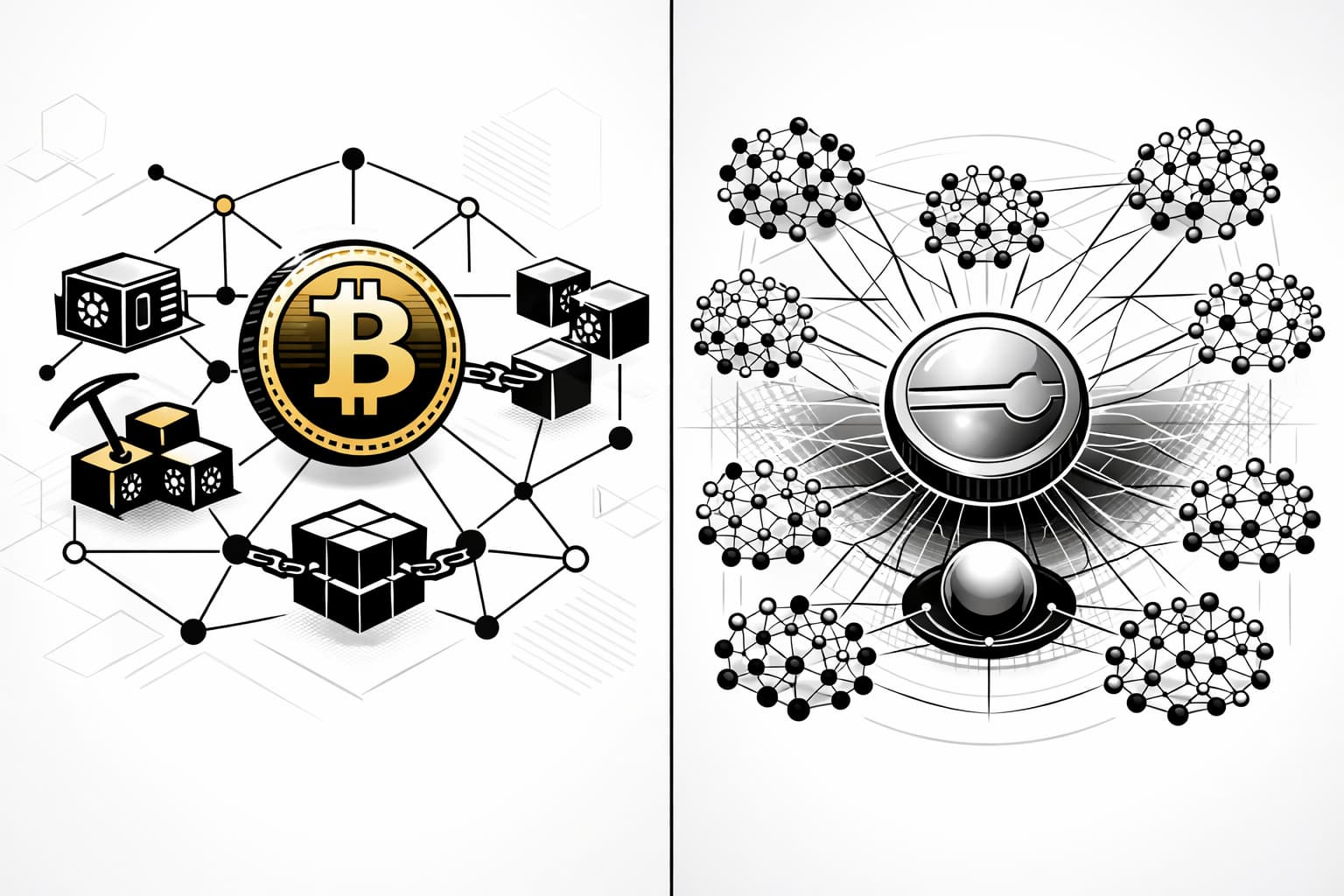
If you already understand how Bitcoin mining works, you're about 70% of the way to understanding Bittensor. The remaining 30% is the interesting part.
Bitcoin | Bittensor | |
|---|---|---|
Supply Cap | 21 million BTC | 21 million TAO |
Mining Mechanism | Proof-of-Work (hash computation) | Proof-of-Intelligence (AI output quality) |
Consensus Type | Nakamoto Consensus | Yuma Consensus |
Primary Purpose | Decentralized money | Decentralized AI compute market |
Token Name | BTC | TAO |
The hard cap of 21 million tokens is the most deliberate mirror of all. It signals scarcity, predictable issuance, and a resistance to inflationary monetary policy — values that resonate deeply with the crypto community Bittensor is building around. The key philosophical shift, though, is that Bitcoin miners burn electricity to earn rewards, while Bittensor miners burn intelligence. Raw energy expenditure is replaced by genuinely useful output. That's not a small tweak — it's the entire point.
AI Training vs. AI Inference: Why the Distinction Matters
To fully appreciate what Bittensor incentivizes, it helps to know that AI work comes in two very different flavors. Training is the expensive, time-consuming process of teaching an AI model — think of it like putting a student through years of school. You feed it massive datasets, run billions of calculations, and eventually produce a finished model. This can cost millions of dollars and weeks of compute time. Inference, on the other hand, is what happens when you actually use that trained model — asking it a question and getting an answer back in seconds.
Bittensor primarily incentivizes inference. Miners in each subnet serve real queries from real users, and validators score the quality of those responses. This is a deliberate design choice, and a smart one: inference is where the day-to-day economic demand actually lives. Every time someone queries a chatbot, runs an image generation tool, or requests a market prediction, that's inference happening at scale.
Training markets do exist within the ecosystem, but near-term, inference is where the opportunity is most tangible. Demand is constant, measurable, and growing fast — which makes it ideal for a token-incentivized network trying to prove its value in real time rather than in theory.
TAO Staking: How to Earn Rewards on Bittensor
Staking TAO simply means locking up your tokens to support the validators who keep Bittensor running — and earning a slice of newly minted TAO in return.
Think of it like depositing money into a high-yield savings account, except instead of a bank holding your funds, you're backing a validator node on a decentralized network. The validator does the heavy lifting; you supply the capital and collect a share of the rewards. You don't need to run any servers or understand machine learning to participate — owning TAO is enough to get started.
Step-by-Step: How to Stake TAO
- Get a Bittensor wallet. Download the Bittensor CLI (command-line interface) or use a community-built dashboard like Taostats. During setup, you'll generate a coldkey — your secure, offline master key — and a hotkey for day-to-day activity. Treat your coldkey like the seed phrase to a hardware wallet: never share it.
- Acquire TAO. Purchase TAO on a centralized exchange that lists it, then transfer it to your coldkey address. Double-check the address before sending — crypto transactions are irreversible.
- Choose a validator. Browse active validators on community dashboards like Taostats.io. Look at their uptime history, commission rate (the percentage they keep before passing rewards to you), and how much stake they already hold. A validator with strong uptime and a reasonable commission — typically somewhere between 8% and 18% — is a solid starting point.
- Delegate your stake. Using the Bittensor CLI, run the delegate command and point it at your chosen validator's hotkey address. Your TAO is now staked and earning rewards with each block — roughly every 12 seconds on the Bittensor network.
- Monitor your rewards. Check your dashboard regularly. Rewards accumulate automatically, and you can compound them by re-staking or withdraw them at any time, subject to the unbonding period.
Staking is one of several ways to participate in decentralized infrastructure networks. If you're curious about earning tokens simply for showing up early, it's also worth reading about DePIN token airdrops and participation rewards — a related strategy many active crypto participants are combining with staking in 2026.
Staking Risks and What to Watch Out For
Staking is not risk-free, and being clear-eyed about the downsides will serve you better than chasing yield blindly.
- Validator underperformance. If your chosen validator goes offline frequently or behaves dishonestly, your rewards shrink. Bittensor's consensus system penalizes poor performers — a concept similar to slashing in Ethereum's proof-of-stake. Diversifying across two or three validators reduces this exposure.
- Price volatility. Your rewards are denominated in TAO. If the token price drops significantly while your capital is locked, the real-world value of those rewards falls with it. Only stake what you're comfortable holding long-term.
- Unbonding periods. When you decide to unstake, your TAO isn't instantly available. There's a waiting period — typically measured in blocks — before you regain full control. Plan around this if you might need liquidity quickly.
- Opportunity cost. TAO locked in staking can't be deployed elsewhere. Weigh the staking yield against other opportunities before committing a large position.
None of these risks should scare you away entirely — they simply reward preparation. Spend an hour researching validators before delegating, start with a smaller amount to get comfortable with the mechanics, and treat staking as a long-term position rather than a quick trade.
Bittensor and the DePIN Movement: Decentralized AI Infrastructure
Bittensor belongs to a fast-growing category of crypto projects that are taking real-world resources — computing power, storage, internet bandwidth — and building decentralized networks around them instead of relying on a handful of corporate giants to own everything.
This category has a name: Decentralized Physical Infrastructure Networks (DePIN). Think of DePIN projects as the crypto world's answer to Big Tech monopolies over physical resources. Filecoin does this for data storage. Helium does it for wireless bandwidth. Bittensor does it for AI compute and intelligence. The common thread is that ordinary people contribute real hardware and get paid in crypto — cutting out the middleman entirely.
Why does this matter so much in 2026? Because AI has a serious concentration problem. A small number of companies — controlling massive clusters of expensive GPUs — effectively gatekeep who gets to build and run advanced AI models. Independent researchers, smaller startups, and developers in emerging markets often simply can't compete. The GPU shortages driving demand for decentralized compute have made this bottleneck even more painful, pushing AI builders to look for alternatives to the usual cloud giants.
Bittensor's subnet model directly addresses this. Instead of renting expensive time on a centralized server farm, developers can tap into a globally distributed pool of machines that are already up and running — incentivized by TAO rewards to stay that way.
Key Takeaways
- DePIN projects decentralize ownership of real-world resources like storage, bandwidth, and compute.
- Bittensor fits squarely into this movement by decentralizing AI infrastructure specifically.
- GPU scarcity in 2026 has made decentralized compute a practical necessity, not just an ideological preference.
- Bittensor's subnet ecosystem gives developers a working alternative to expensive, centralized AI cloud services.
The Future of Bittensor: What Comes Next
After years of quiet, builder-focused development, Bittensor is entering a phase where its structural decisions are starting to matter at scale. The roadmap ahead isn't about promises — it's about upgrades already shipping and pressures already building.
Dynamic TAO (dTAO): Subnet Token Markets Explained
The biggest recent shift in Bittensor's architecture is the Dynamic TAO upgrade, commonly called dTAO. Before this change, TAO emissions were allocated to subnets through validator votes — a system that worked, but concentrated a lot of power in the hands of a small group. dTAO rewires that entirely.
Here's the core idea: each subnet now has its own token, traded directly against TAO in a built-in liquidity pool. Think of it like each subnet opening its own stock on a small exchange. When people buy a subnet's token with TAO, they're signaling confidence in that subnet's work — and the market price directly influences how much TAO that subnet earns in emissions. High demand for a subnet's token means more rewards flow its way. Low demand means the opposite.
This creates a genuinely market-driven system for liquidity and token markets within the network itself. Subnet owners now have a real incentive to attract stakers and demonstrate value, not just lobby validators. Stakers, in turn, can express precise opinions about which AI services deserve to grow.
It's a meaningful structural change — and measuring decentralized network health gets more nuanced as a result, since token price, staking activity, and subnet output all become intertwined signals.
The broader challenge for Bittensor in 2026 and beyond is competing against well-funded centralized AI giants. The network's answer isn't to out-spend them — it's to build infrastructure that nobody owns and nobody can shut down. Whether that proposition attracts enough builders, stakers, and real users is the open question worth watching.
Key Takeaways: What You Need to Remember About Bittensor
Whether you read every word of this guide or jumped straight to the end, here are the five things worth holding onto. Think of this as your cheat sheet for the next time someone asks you to explain Bittensor at a meetup.
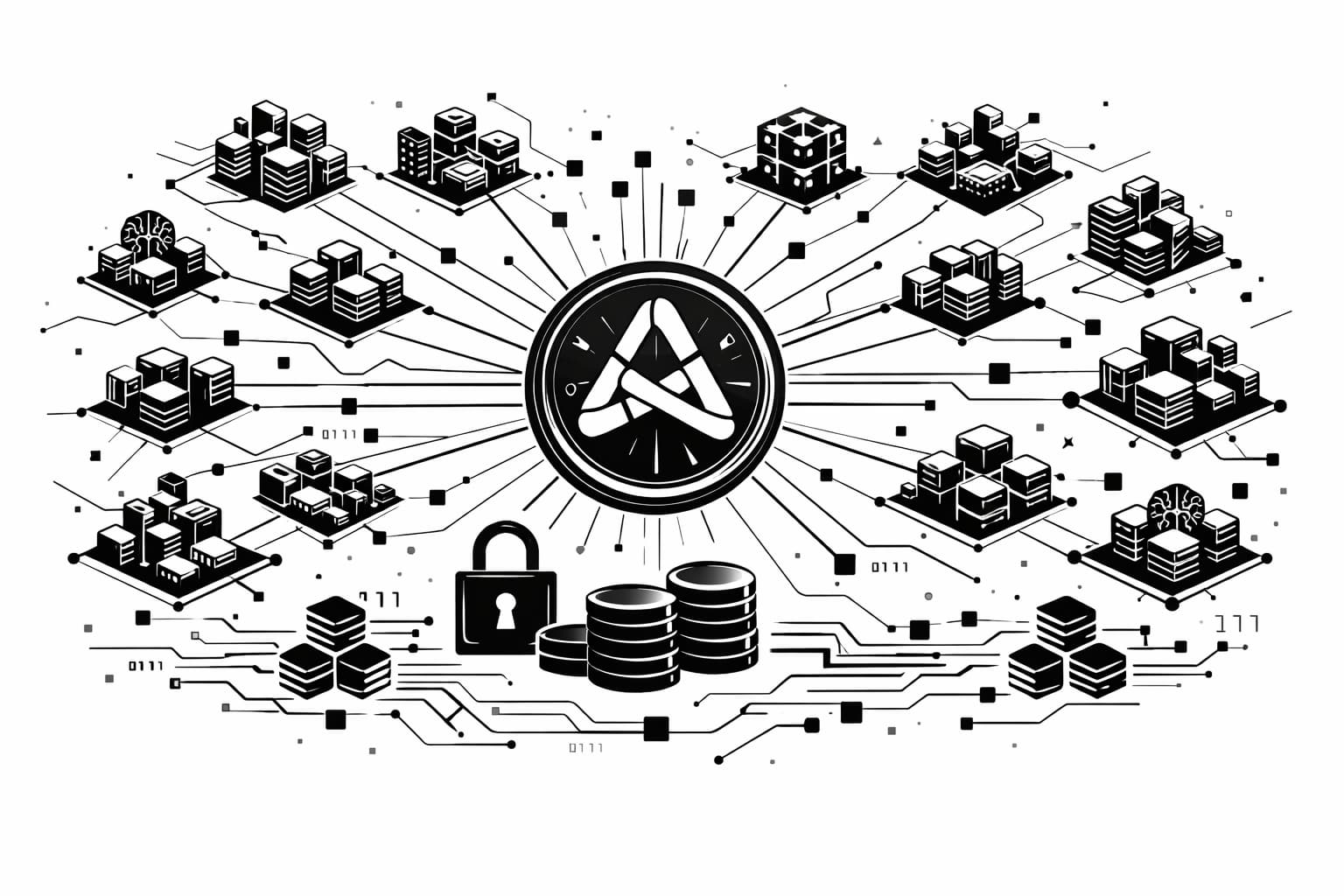
- Bittensor is Bitcoin for AI. Just as Bitcoin created a decentralized, censorship-resistant network for money, Bittensor is building one for artificial intelligence — where no single company owns or controls the intelligence being produced.
- TAO is the network's currency and reward token. With a hard cap of 21 million coins mirroring Bitcoin's supply, TAO is issued to miners and validators who contribute real, useful AI work — not just computing power for its own sake.
- Subnets are the engine of specialization. Each of Bittensor's 50-plus subnets is an independent AI marketplace focused on a specific task — text generation, image creation, data storage, and more. Together, they form a full-stack decentralized AI ecosystem.
- Staking connects you to the network's growth. By staking TAO to validators on specific subnets, you earn a share of emissions while directing resources toward the AI tasks you believe matter most.
- This is infrastructure, not just a token. Bittensor is laying the groundwork for an AI future that isn't owned by a handful of corporations — one where open competition, not closed boardrooms, determines which intelligence wins.
The project is still early, and the road ahead has real challenges. But the foundation is already more developed than most people realize.
Frequently Asked Questions
- How does TAO crypto work?
- TAO is Bittensor's native token, earned by miners providing AI services and validators scoring their outputs. Like Bitcoin, it has a hard cap of 21 million coins. TAO is used for staking, paying for network services, and participating in governance decisions across the protocol.
- What is the point of Bittensor?
- Bittensor exists to decentralize AI development and break Big Tech's grip on machine learning. It builds an open marketplace where anyone can contribute AI compute and earn TAO in return. The goal is a world where no single company controls the most powerful AI models.
- What are Bittensor subnets?
- Subnets are independent AI task marketplaces operating within the Bittensor network. Each one focuses on a specific use case — such as text generation, image synthesis, or data prediction — with its own miners, validators, and TAO reward pool. As of 2026, there are over 50 active subnets.
- What are the best Bittensor subnets?
- It depends on what you need. Subnet 1 handles text prompting, while Subnet 8 focuses on time-series forecasting. Subnets with strong validator participation and high emission allocations generally signal healthy activity. For live rankings and performance data, community dashboards like taostats.io are a reliable starting point.
- What is subnet 44 on the Bittensor network?
- Subnet 44 is one of Bittensor's application-specific subnets, dedicated to a particular AI workload. Subnet assignments and functions can evolve as the network grows, so it's worth checking official Bittensor documentation or a community explorer like taostats.io for the most current and accurate details.
- What are the two types of subnets?
- Bittensor has two distinct subnet categories. The root network, Subnet 0, governs how TAO emissions are distributed across the entire ecosystem. Application subnets — numbered 1 through 64 and beyond — each run a specific AI workload, with their own miners and validators competing for token rewards.
- Can Bittensor reach $10,000?
- No one can responsibly predict a specific price target for TAO. What matters more are the fundamentals: a fixed 21 million supply cap, growing subnet adoption, and rising demand for decentralized AI infrastructure. Those factors carry more weight than any price projection, which depends on unpredictable market conditions.
- Can TAO reach $1,000?
- Speculating on exact price levels isn't useful or reliable. TAO does have structural positives — a capped supply and real utility across 50-plus active subnets — but price outcomes hinge on many unpredictable variables. Do your own research, understand the risks, and never invest more than you can afford to lose.
Sources
Author

Crypto analyst and blockchain educator with over 8 years of experience in the digital asset space. Former fintech consultant at a major Wall Street firm turned full-time crypto journalist. Specializes in DeFi, tokenomics, and blockchain technology. His writing breaks down complex cryptocurrency concepts into actionable insights for both beginners and seasoned investors.