DePIN and AI: How Decentralized Infrastructure Powers AI in 2026
What is DePIN? A Simple Analogy
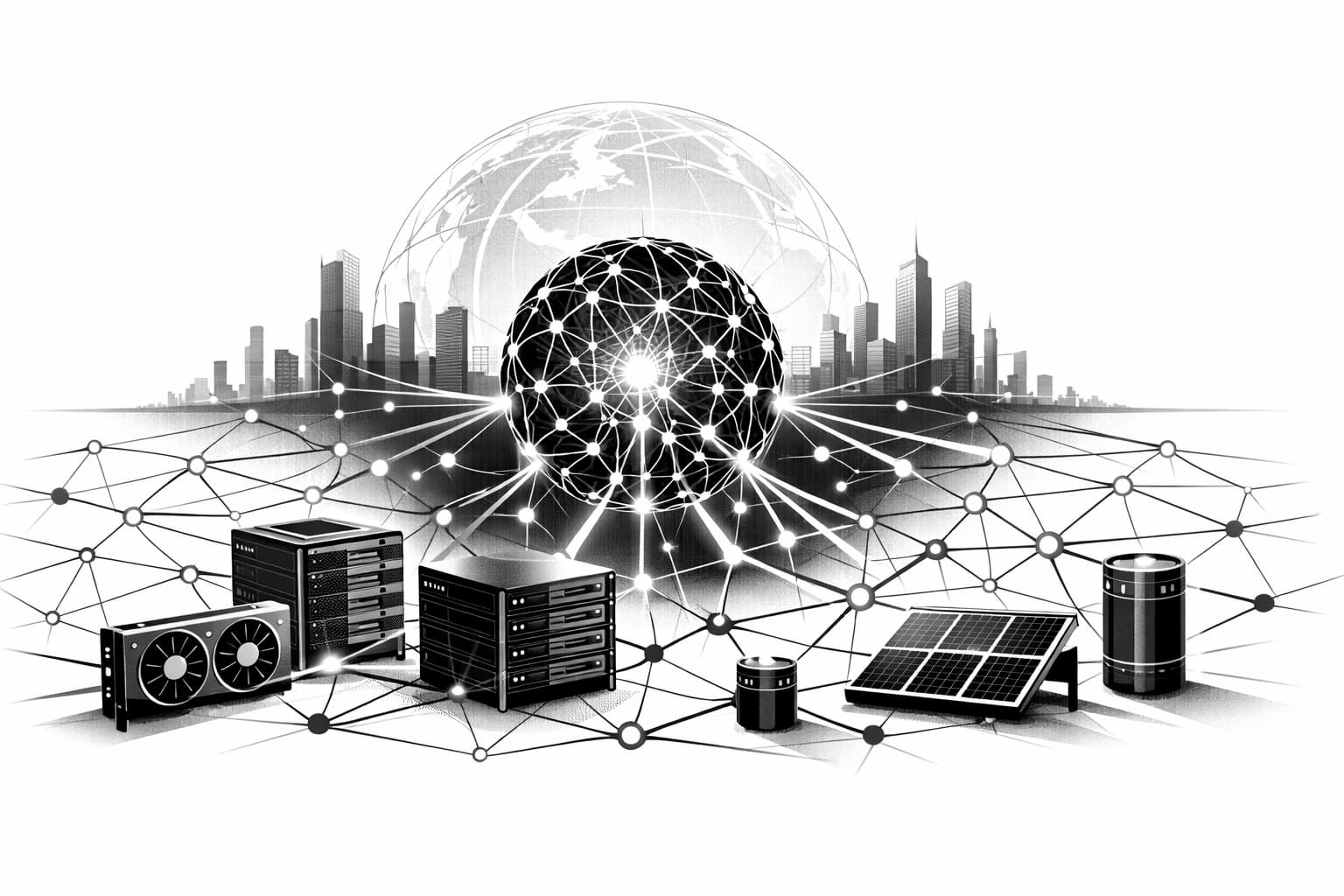
DePIN, which stands for Decentralized Physical Infrastructure Networks, are systems that use cryptocurrency tokens to encourage a global community of people to build and operate real-world infrastructure.
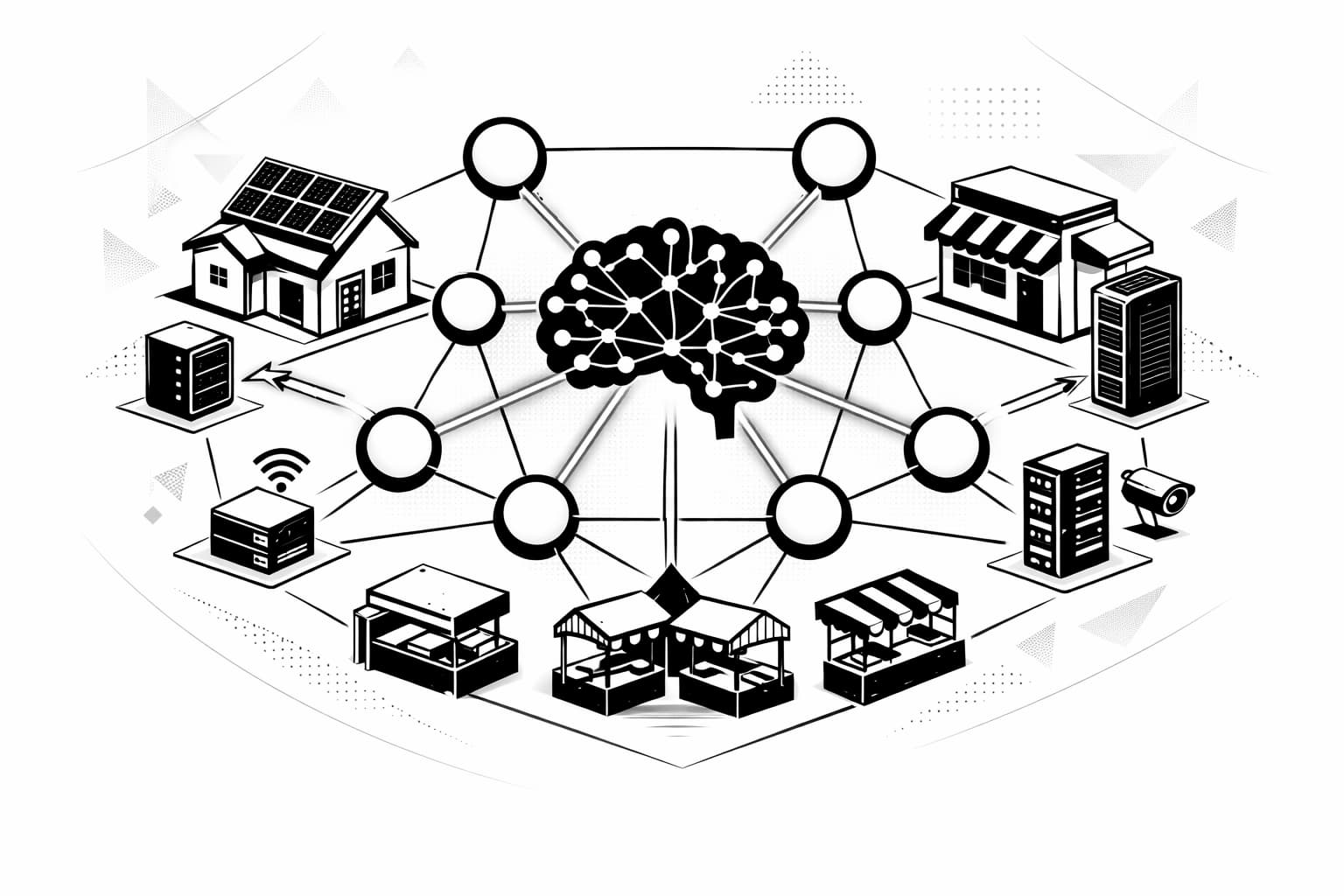
Why does this matter? Today, the physical hardware that powers our digital world—things like computer servers, data storage, and wireless hotspots—is overwhelmingly owned by a handful of giant corporations. This creates bottlenecks, raises costs, and limits access. DePIN offers a radical alternative by creating open and permissionless marketplaces for these resources. This shift is especially important as we consider the massive requirements of new technologies, making the relationship between DePIN and AI a critical one for the future.
To make this tangible, think of DePIN like a community-owned Airbnb, but for digital resources. Instead of individuals listing a spare bedroom for rent, they can list their unused computing power, hard drive space, or even bandwidth from their internet router. Someone who needs that resource—like an AI developer training a new model—can rent it directly from the provider, often at a lower cost and with more flexibility than going through a large company. The entire network is coordinated automatically and transparently, without a central authority taking a big cut.
The Core Components of a DePIN Network
While these networks can become quite complex, they all share three fundamental building blocks that work together to create a self-sustaining system:
- The Physical Hardware Providers: These are the individuals and businesses who own the actual devices—the servers, GPUs, storage drives, or sensors—and connect them to the network to offer their services. They are the "hosts" in our Airbnb analogy.
- The Blockchain Coordinator: This is the transparent and tamper-proof digital ledger that acts as the rulebook and trust layer. It tracks who is providing what service, confirms the work was done correctly, and ensures everyone gets paid fairly without needing a middleman.
- The Token Incentive Layer: This is the economic engine of the network. Providers are rewarded with the network's native cryptocurrency tokens for their contributions. These tokens not only serve as payment but can also give holders a say in the network's governance, creating a powerful incentive to participate and maintain the infrastructure.
The AI Infrastructure Crisis: Why AI Needs a New Foundation
Artificial intelligence is advancing at a breathtaking pace, with new models and applications appearing almost daily. But beneath this exciting surface, the very foundation supporting the AI industry's growth is showing deep cracks. The incredible demand for AI has created a crisis built on three core challenges: a shortage of computing power, a scarcity of accessible data, and unsustainable energy consumption. To continue its progress, AI needs a completely new and more resilient foundation.
The GPU Compute Bottleneck
Think of GPUs, or Graphics Processing Units, as the specialized, high-performance engines required to train and run complex AI models. They perform the trillions of calculations needed for machine learning. The problem is that the production and access to these essential chips are controlled by just a handful of giant technology companies. This creates a severe GPU compute bottleneck that stifles innovation across the board.
For startups, researchers, and even established companies outside the inner circle, this centralization results in sky-high costs and months-long waiting lists for powerful hardware. This means a few corporations effectively act as gatekeepers, deciding who gets to build the next generation of AI. This not only makes building AI incredibly expensive but also concentrates immense power in the hands of a select few, limiting the potential for a more open and competitive ecosystem. The current system of centralized depin ai infrastructure simply cannot scale to meet global demand.
The Data Moat Problem
Even with unlimited computing power, an AI model is useless without high-quality data. Machine learning models learn by analyzing vast datasets, and the quality of that data directly determines the model's performance. Here again, we see a problem of centralization. The world's most valuable datasets—billions of images, search queries, and social interactions—are locked away inside the digital vaults of Big Tech companies.
These corporations have built what are known as "data moats." They collect enormous amounts of user data to train their own proprietary AI systems, creating a powerful competitive advantage that is nearly impossible for newcomers to overcome. This practice starves the broader research community and smaller developers of the very fuel needed for innovation. When the best data is kept under lock and key, it hinders the collective progress of an entire field, making the case for a new approach where depin and ai work together to unlock information.
How DePIN Powers AI: A Symbiotic Relationship
We've seen that modern AI is facing a critical resource crisis. It's hungry for computing power, desperate for high-quality data, and consumes an immense amount of energy. Simply building more centralized data centers isn't a sustainable answer. This is where the powerful combination of DePIN and AI provides a revolutionary path forward. The relationship is truly symbiotic: DePIN offers the distributed, real-world resources AI needs to function, while AI provides the immense demand that makes these decentralized networks economically viable and vibrant.
Let's break down the specific ways this incredible partnership works, solving each of AI's major bottlenecks one by one.
1. Decentralized Compute for Training and Inference
Think about the graphics processing units (GPUs) that power advanced AI. Today, access to these powerful chips is controlled by a handful of giant cloud companies. For a small startup or independent researcher, renting this computing power is often incredibly expensive, and sometimes there are months-long waiting lists. It’s like trying to book a flight when only three airlines exist, and they all fly out of one airport.
DePIN compute networks completely change this dynamic. They create a global, open marketplace for computing power. This DePIN AI infrastructure pools together GPUs from countless sources—independent data centers, crypto mining farms, and even individual gamers with high-end PCs. It’s less like a centralized airline and more like an Airbnb for computation; anyone with spare capacity can rent it out. This competition drives down costs and makes powerful resources accessible to everyone. This helps with both of AI’s main computational tasks:
- Training: This is the intensive "schooling" phase where an AI model learns from massive datasets. DePIN networks can provide the sustained, heavy-duty power needed for this process at a fraction of the traditional cost.
- Inference: This is when a trained model is put to work, making predictions or generating content in real time. DePIN allows these tasks to run on a distributed network of machines closer to the end-user, reducing lag and improving performance.
2. Crowdsourced Data Collection and Verification
An AI is only as smart as the data it learns from. The old saying "garbage in, garbage out" is especially true for machine learning. Acquiring diverse, high-quality, real-world data is one of the biggest challenges in building effective AI. Centralized companies spend billions trying to collect this data, but their reach is limited.
DePIN introduces a groundbreaking model: incentivizing people around the world to contribute data. By rewarding participants with network tokens, DePIN projects can build datasets of a scale and quality that were previously unimaginable. For example, a project could pay drivers to contribute anonymized dashcam footage to train better self-driving car models. Another could reward homeowners for sharing data from their smart thermostats to build more efficient energy-saving algorithms. This crowdsourced approach ensures a constant flow of fresh, verified data from the real world, helping to create AI models that are more accurate, less biased, and more useful in our daily lives.
3. Decentralized Storage for AI Models and Datasets
The AI models themselves, along with the vast datasets used to train them, are enormous digital files. A single advanced model can take up petabytes of space. Storing this data on centralized servers like Amazon S3 is not only expensive but also creates a single point of failure. If the server goes down or the company decides to remove the data, it could be lost forever.
Decentralized storage networks, such as Filecoin and Arweave, offer a more resilient and cost-effective solution. Think of it this way: instead of storing your precious photo album in a single safe, you make encrypted copies of each photo and store them in thousands of different safes all over the world. DePIN storage networks do this with data. They break files into encrypted pieces and distribute them across a global network of hard drives. This makes storage much cheaper and ensures the data is censorship-resistant and permanently available, which is essential for preserving important AI models and the knowledge they contain.
4. Sustainable Energy via Decentralized Grids
The dirty secret of the AI boom is its massive energy consumption. Data centers powering AI computations draw as much electricity as entire countries, placing a huge strain on power grids and the environment. As AI grows, this problem will only get worse.
A fascinating frontier for DePIN powering AI is in the energy sector. New DePINs are emerging that create decentralized energy grids. They can coordinate and optimize energy production and consumption among a network of participants, from large solar farms to individual homes with solar panels. These networks can intelligently route AI computation jobs to locations where energy is currently abundant, cheap, and green. For instance, a training job could automatically be sent to a network of computers in a region experiencing a surplus of solar power during the day. This not only lowers the cost of computation but also helps balance the main power grid and makes the entire AI ecosystem more sustainable.
Top DePIN and AI Projects to Watch in 2026
Understanding the theory behind how DePIN powers AI is one thing, but seeing it in action is what makes the potential truly click. The abstract concepts of decentralized compute and data become concrete when we look at the projects building this new foundation. These are not just ideas on a whiteboard; they are active networks with real users, shaping the future of depin and ai right now. Let's explore some of the leading players in this exciting space.
Compute Networks
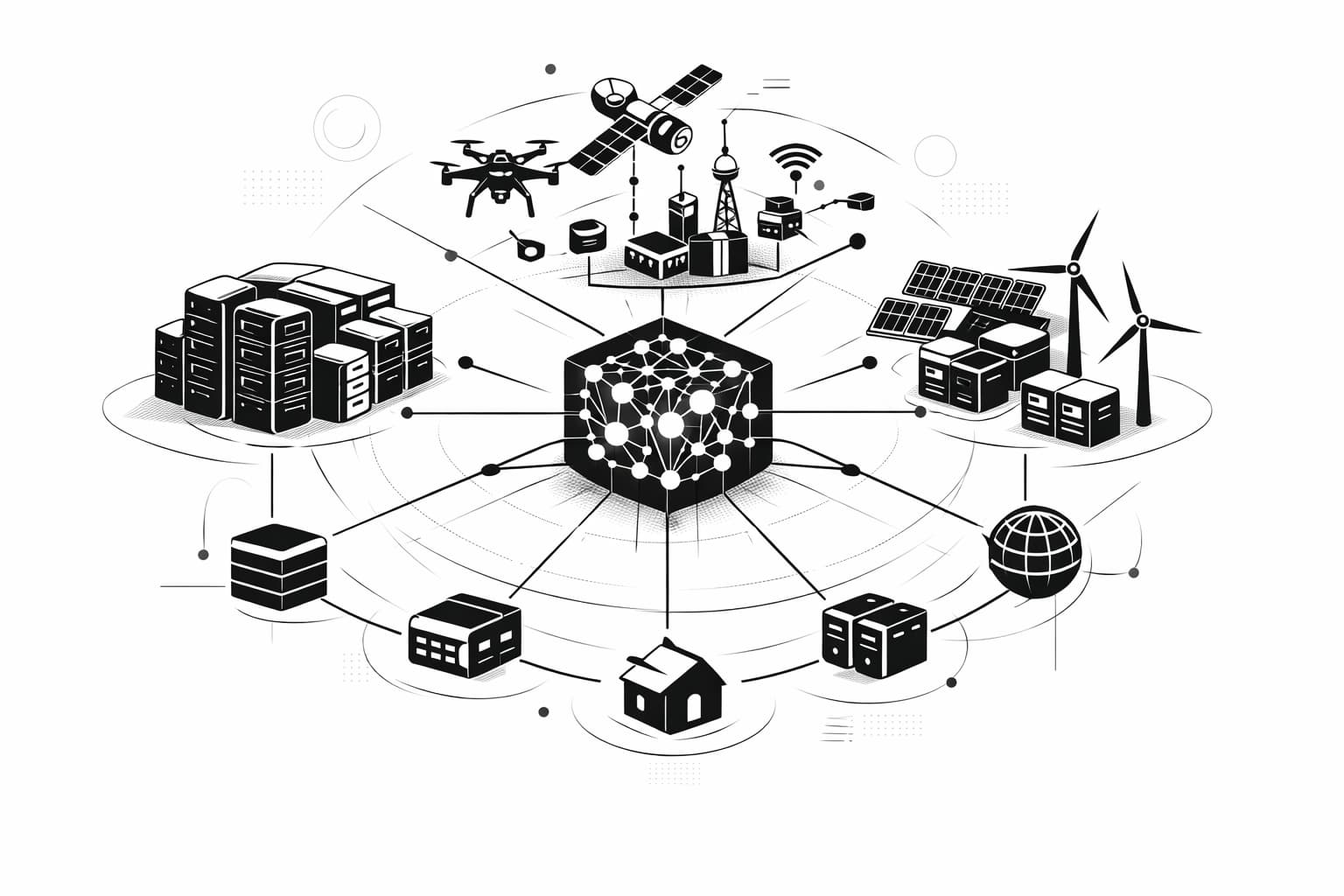
At its core, artificial intelligence requires immense computational power, primarily from specialized chips called GPUs. Traditionally, this power has been concentrated in the hands of a few large tech companies. DePIN compute networks change this by creating open marketplaces where anyone can rent out or purchase GPU power, creating a more accessible and resilient global supercomputer.
- Bittensor (TAO): This project is more than just a GPU rental service. Think of it as a collaborative, competitive market for intelligence itself. Instead of just selling raw processing power, developers create and run specialized AI models on the network. The models that provide the most value and intelligence to the network are rewarded. It creates a powerful incentive for continuous innovation, turning the network into a constantly improving, decentralized brain.
- Render Network (RNDR): Originally famous in the world of digital art for providing decentralized GPU power to render complex 3D graphics and animations, Render is perfectly positioned to serve the AI industry. The same powerful GPUs used for visual effects are exactly what AI models need for training and inference. Render offers a massive, globally distributed network of high-end GPUs, providing a critical piece of the depin ai infrastructure.
- Akash Network (AKT): Often called the "Airbnb for cloud computing," Akash provides a decentralized and open-source cloud platform. It allows users to lease computing resources from those who have spare capacity. For AI developers, this means a more flexible and often much cheaper alternative to traditional cloud providers like Amazon Web Services or Google Cloud. You can find the exact compute specifications you need from a global marketplace, rather than being locked into a single company's offerings.
Data and Storage Networks
If compute is the AI's brain, then data is its food. AI models are trained on vast datasets, and accessing, storing, and verifying this data is a monumental task. DePIN data networks are building the decentralized libraries and delivery systems that AI needs to learn and grow.
- Grass: This is a fascinating project that allows individuals to monetize their unused internet bandwidth. How? Grass uses this collective bandwidth to scrape public web data, which is then cleaned and prepared to be used for training AI models. In essence, regular people can contribute to building the data layer for AI and get rewarded for it, turning a passive resource—your internet connection—into an active one.
- Filecoin (FIL): As AI models and their datasets become larger, the need for reliable and permanent storage grows. Filecoin is designed to be a decentralized storage network for humanity's most important information. Think of it as a permanent, verifiable archive. For AI, this means datasets can be stored securely and cost-effectively for the long term, ensuring that valuable training data isn't lost or tampered with.
- CESS (Cumulus Encrypted Storage System): CESS is another key player focused on providing a secure and scalable decentralized storage solution. It emphasizes features like data privacy and efficient retrieval, making it a strong contender for businesses and developers who need to store and manage large amounts of sensitive data for AI applications.
Integrated Platforms and Ecosystems
While some projects specialize in one area like compute or storage, others are building more complete platforms that combine multiple elements. These projects aim to be a one-stop-shop for developers building on the intersection of depin powering ai.
Projects like OORT, for example, are developing integrated ecosystems that bundle decentralized storage, compute, and data services together. The goal is to create a effortless experience for developers, allowing them to build sophisticated AI-powered applications without having to piece together different services from various networks. These integrated platforms are critical for simplifying development and accelerating the adoption of decentralized AI.
This is just a snapshot of a rapidly evolving field. Each of these projects plays a unique role, contributing a vital piece to the puzzle of a more open, efficient, and democratized future for artificial intelligence.
Challenges and Risks in the DePIN & AI Field
While the vision of DePIN powering the next wave of AI is exciting, it's important to approach it with a clear-eyed view of the hurdles that still exist. Like any groundbreaking technology, the road to mass adoption has its share of bumps. These are not reasons to dismiss the model, but rather the very problems that builders in the space are working hard to solve in 2026.
Network Performance and Reliability
Centralized cloud providers like Amazon Web Services have one big advantage: control. Their servers are in known locations, maintained by their own teams, offering predictable performance. A DePIN network, on the other hand, is more like a global, distributed team of freelancers. While this offers incredible scale and cost savings, it can also introduce variability. Network latency, which is the small delay it takes for data to travel, can be higher if a computation has to bounce between providers in different parts of the world. For AI tasks that require instantaneous responses, this can be a significant challenge. Ensuring consistent, high-speed performance across thousands of independent nodes is a primary technical focus for every depin ai infrastructure project.
Data Privacy in a Trustless World
A common question is: "If a stranger is processing my data, how do I know it's safe?" This is a perfectly valid concern. Sending sensitive training data across a decentralized network requires new methods of security. While the blockchain itself is secure, the data being processed on individual computers needs protection. Innovators are tackling this with advanced cryptographic techniques, like federated learning, where an AI model learns from data without the raw data ever leaving the user's device. Think of it as a teacher sending a test to students and only getting the final scores back, never seeing the students' scratch paper. Implementing these privacy-preserving methods is key to building trust.
The Delicate Art of Tokenomics
Perhaps the most complex challenge lies in designing a project's economic system, or "tokenomics." Every DePIN network has a native digital token used to pay for services and reward providers. Creating a sustainable economy is a delicate balancing act. The rewards must be attractive enough to convince people to supply their GPU power, but the cost must be low enough to attract AI developers to use the network. If the token's price is too volatile or the reward system is poorly designed, the entire network can collapse. The long-term success of depin and ai platforms depends on getting this economic engineering just right.
The Future of DePIN Powering AI
While the partnership between DePIN and AI is already solving critical infrastructure problems today, the long-term vision is where things get truly game-changing. Looking ahead, we can see the dawn of a fully autonomous, machine-to-machine (M2M) economy. This is a world where AI agents act as independent economic participants, directly commissioning the resources they need to operate and improve.
Imagine an AI developing a new weather prediction model. When it needs more processing power for a complex simulation, it doesn't wait for a human developer. Instead, it automatically broadcasts a request to a decentralized compute network, finds the best price, and pays for the resources instantly with cryptocurrency. Think of it like a smart appliance ordering its own replacement filter from an open marketplace when the old one wears out—no human approval needed. In this future, DePIN powering AI becomes a smooth, background process.
This automated world has profound implications. It creates a truly permissionless environment for innovation. An AI developer in a small town could have the same access to world-class computational power as a researcher at a massive tech company. By breaking down centralized barriers, this new DePIN AI infrastructure creates a more democratic and competitive ecosystem. It could unleash a wave of creativity by lowering the cost and complexity of building powerful AI applications, leading to breakthroughs we can hardly imagine today.
Ultimately, the combination of DePIN and AI points toward a future that is not only more efficient but also more resilient and equitable. It’s about building a foundational layer for intelligence that is owned by its users, not a handful of corporations, ensuring the benefits of the AI revolution are accessible to all.
Key Takeaways
Feeling a bit overwhelmed? Don't worry. Here are the most important points to remember about the powerful connection between decentralized networks and machine learning.
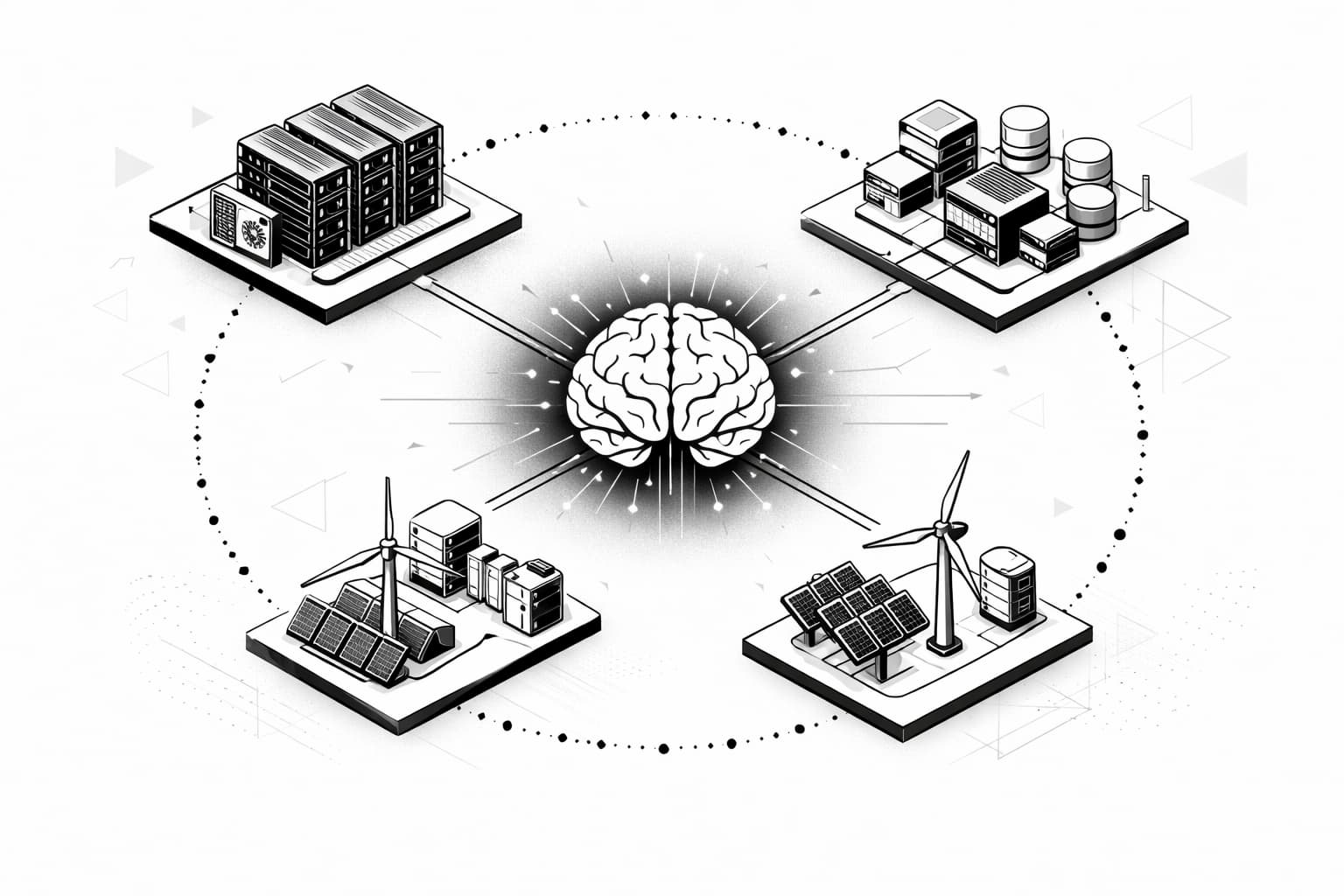
- AI Has a Resource Problem: Modern AI models demand enormous amounts of computing power, data, and energy. Centralized providers are struggling to keep up, creating a significant bottleneck for innovation.
- DePIN Is the Solution: Decentralized Physical Infrastructure Networks (DePIN) create a global marketplace for resources. By connecting millions of individual providers, DePIN offers the vast, distributed infrastructure AI needs to grow sustainably.
- A Symbiotic Relationship: This isn't a one-way street. While DePIN provides the raw materials for AI, AI can, in turn, help optimize and manage these complex decentralized networks, creating a powerful, self-improving loop.
- Democratizing Technology: The ultimate result of the DePIN and AI partnership is more accessible and affordable technology. It shifts power away from a few tech giants, opening the door for more creators and businesses to build the future.
Frequently Asked Questions
- What is AI DePIN?
- AI DePIN describes projects using decentralized physical infrastructure networks specifically for artificial intelligence. This model allows anyone to contribute resources like compute power, data, or storage for AI tasks. In return, contributors earn crypto tokens, creating a permissionless and globally accessible marketplace for essential AI infrastructure.
- What does DePIN stand for?
- DePIN stands for Decentralized Physical Infrastructure Networks. It is a blockchain-based model where individuals and businesses get rewarded with crypto tokens for contributing real-world hardware resources. This includes providing assets like GPUs for computing, hard drives for storage, or sensors for data collection, building a crowdsourced digital economy.
- Does DePIN have a future?
- Yes, DePIN has a significant future, especially in solving major bottlenecks for high-growth industries like AI. The model democratizes access to physical resources that are typically expensive and centralized. With its market capitalization growing quickly, DePIN is positioned to become a foundational layer for many digital services.
- What are some examples of AI crypto projects?
- Key AI DePIN projects include Bittensor (TAO), which creates a decentralized marketplace for machine learning intelligence. Render offers a distributed network of GPUs for complex rendering and AI computation tasks. Another example is Grass, which lets users share unused internet bandwidth to help scrape public web data for training AI models.
Sources
Author

Crypto analyst and blockchain educator with over 8 years of experience in the digital asset space. Former fintech consultant at a major Wall Street firm turned full-time crypto journalist. Specializes in DeFi, tokenomics, and blockchain technology. His writing breaks down complex cryptocurrency concepts into actionable insights for both beginners and seasoned investors.