Crypto Bankruptcy: A Guide to What Happens to Your Assets
What Is Crypto Bankruptcy? A Plain-English Explainer
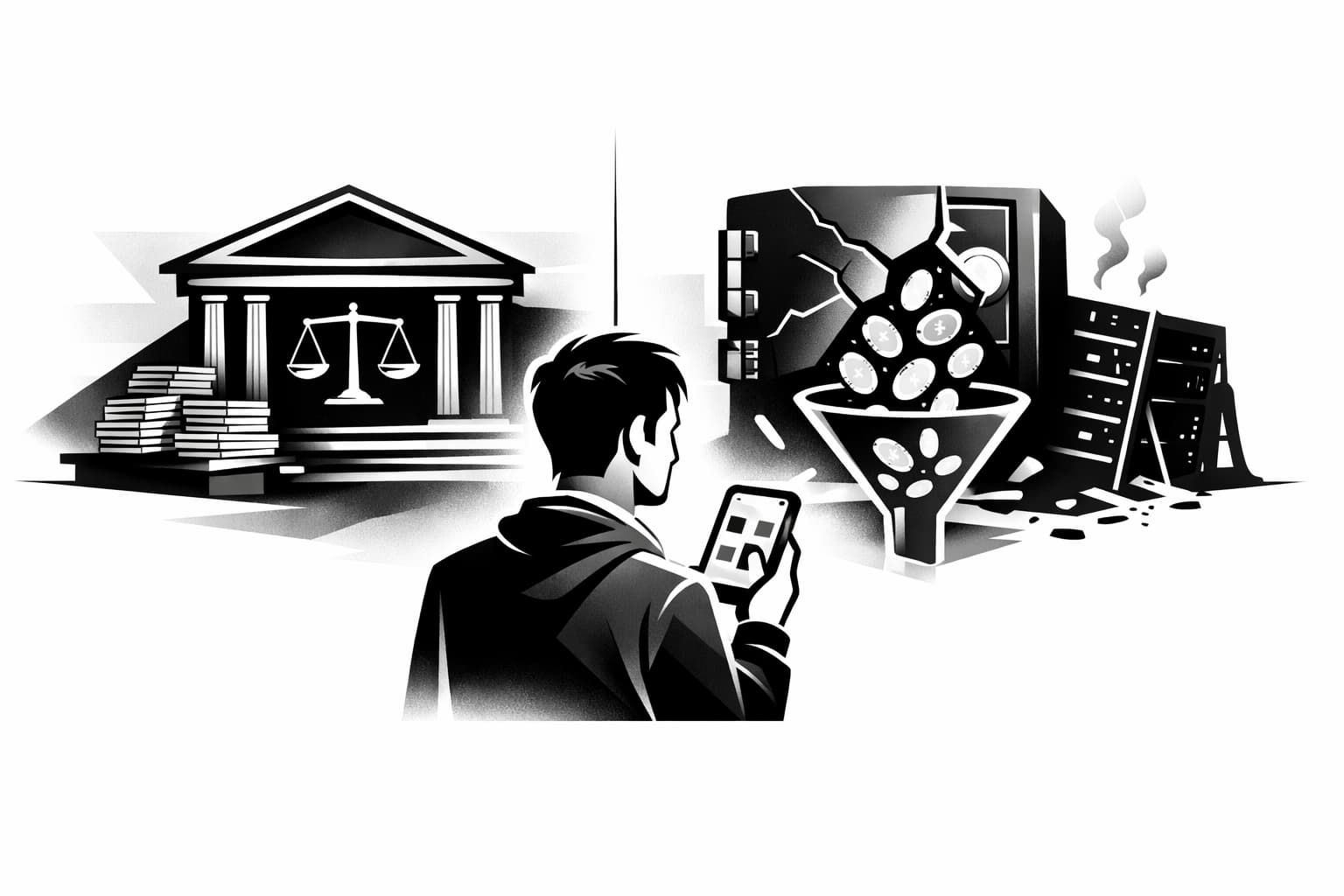
In simple terms, crypto bankruptcy is the legal process a digital asset company, like an exchange or lender, goes through when it can no longer pay its debts. This matters deeply to anyone who holds cryptocurrency on a centralized platform. When you deposit funds onto an exchange, you are giving that company custody of your assets. If that company fails, your ability to access your Bitcoin, Ethereum, or other tokens is suddenly at risk, and the company's financial troubles become your problem.
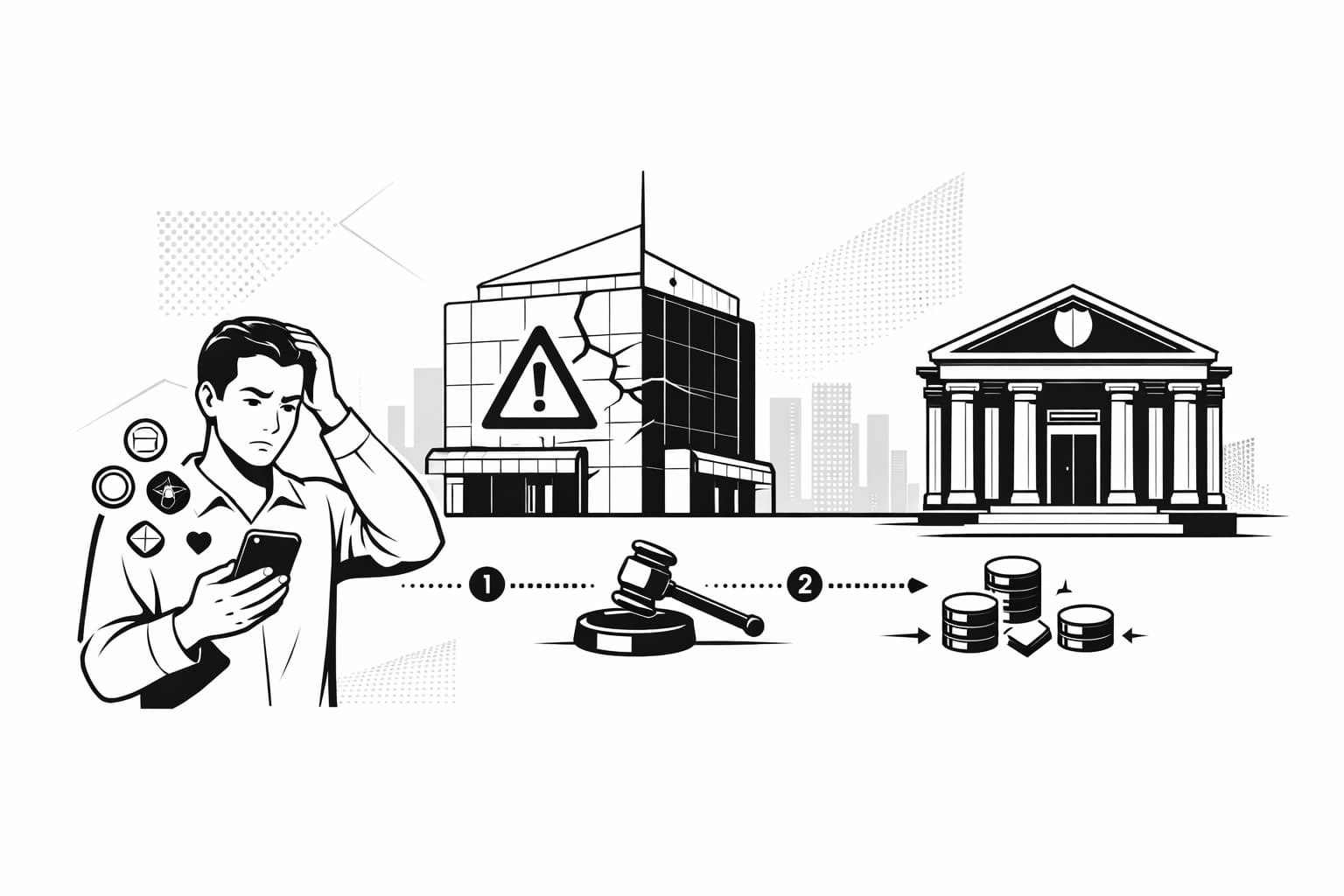
This situation is fundamentally different from what happens during traditional bank failures. If your local bank goes under, your deposits are typically protected up to a certain limit by government-backed insurance like the FDIC. No such safety net exists for cryptocurrency. When a crypto exchange goes bankrupt, your assets are not automatically safe; they become part of a complex legal proceeding to sort out who gets paid from the company's remaining resources. Understanding this distinction is the first step in protecting yourself in the digital asset market.
The Legal Process: Chapter 11 vs. Chapter 7
When you hear the term crypto bankruptcy, it might sound like a final, definitive end. However, the legal path a company takes is not always so simple. In the United States, a struggling company typically follows one of two main routes, and understanding the difference is key to knowing what might happen to your funds. Think of it as a fork in the road: one path leads to rehabilitation, the other to a final sale.
Most of the major crypto collapses you've heard about, including the high-profile cases of FTX and Celsius, initially filed for Chapter 11. This choice signals an intent to fix the business rather than shut it down completely, which has significant implications for customers waiting to recover their assets.
Chapter 11: Reorganization
Chapter 11 bankruptcy is best understood as a business rehabilitation. The company is given breathing room from its creditors to try and sort out its finances. Under court supervision, the company's leadership attempts to create a plan to restructure its debt, cut costs, and hopefully return to profitability. The ultimate goal is to pay back creditors, including users like you, over time. This process can be incredibly long and complex, often taking years. But it holds out the possibility that the reorganized company could eventually make its users whole, or at least return a larger percentage of their funds than an immediate shutdown would allow.
Chapter 7: Liquidation
In contrast, Chapter 7 is a closing-down sale. This is the path taken when there's no realistic hope of the company recovering. When a firm enters Chapter 7, the court appoints a neutral third party called a trustee. The trustee’s job is straightforward: take control of all the company's assets, sell them for the highest possible price, and distribute the proceeds to creditors according to a legally defined pecking order. Once the assets are sold and the money is paid out, the company officially ceases to exist. This is the true end of the line, and it often occurs if a Chapter 11 reorganization plan fails.
What Happens to Your Crypto When an Exchange Goes Bankrupt?
When a crypto exchange files for bankruptcy, it triggers a legal process that can feel confusing and overwhelming for users. The unfortunate reality is that getting your funds back is rarely simple or quick. Here is the typical sequence of events you can expect.
- Trading and withdrawals are frozen. This is usually the first public sign of trouble. The platform halts all activity to preserve its remaining assets.
- The company files for bankruptcy protection. The exchange officially enters a court-supervised process, often under Chapter 11 to attempt reorganization or Chapter 7 for liquidation.
- Customers are classified as unsecured creditors. In most cases, you become one of many parties owed money by the company, without any specific collateral backing your claim.
- A long court process begins to recover assets. A trustee is appointed to find and gather all company assets, which can take months or even years.
- Customers may eventually receive a percentage of their funds back. After secured creditors are paid, any remaining funds are distributed among unsecured creditors, which often means receiving only a fraction of your original holdings.
Are Your Assets Legally Yours? Custody and Terms of Service
A shocking realization for many during a crypto bankruptcy is that the crypto they held on an exchange might not have been legally theirs. When you sign up for an exchange, the terms of service often state that the company holds the assets in custody for you. This legal distinction is small but has massive consequences. Unlike money in an FDIC-insured bank account, your crypto assets are often treated as the company's property. This means that in a bankruptcy proceeding, your funds are pooled with the company's other assets. This is the fundamental difference from self-custody, where you control your own private keys and your assets are never in someone else's hands.
The Creditor Priority List: Where Do Customers Stand?
Imagine a line for payment where there isn't enough money to go around. That's the essence of the creditor priority list. In a bankruptcy, the court decides who gets paid first from the company's remaining assets. At the very front of this line are secured creditors—large lenders who have collateral, like a mortgage on a building. Also paid first are the administrative costs of the bankruptcy itself, such as legal and accounting fees. Unfortunately, individual customers are typically classified as unsecured creditors, placing them near the back of the line. This is why, as we saw in cases like Celsius and Voyager, customers often only receive a portion of their initial investment back after a very long wait.
The Asset Recovery and Clawback Process
Once an exchange declares bankruptcy, the court appoints a trustee whose job is to track down every last asset the company owns. This is an intensive financial investigation. They will look to sell off office buildings, company hardware, and any digital assets the company still holds. The process can also involve "clawbacks," where the trustee sues to recover money that was paid out shortly before the bankruptcy filing. This could include large executive bonuses, questionable investments, or even the high-profile political donations seen in the FTX case. Every dollar recovered from these efforts goes into the pot to eventually be distributed to creditors, including customers.
Case Studies: Lessons from Major Crypto Bankruptcies
To truly understand what happens when a crypto exchange goes bankrupt, theory isn't enough. We need to look at the real-world consequences. Examining some of the most significant major crypto bankruptcies shows us precisely how these complex situations unfold for everyday users and provides critical lessons for protecting your assets today.
FTX: The Danger of Commingled Funds
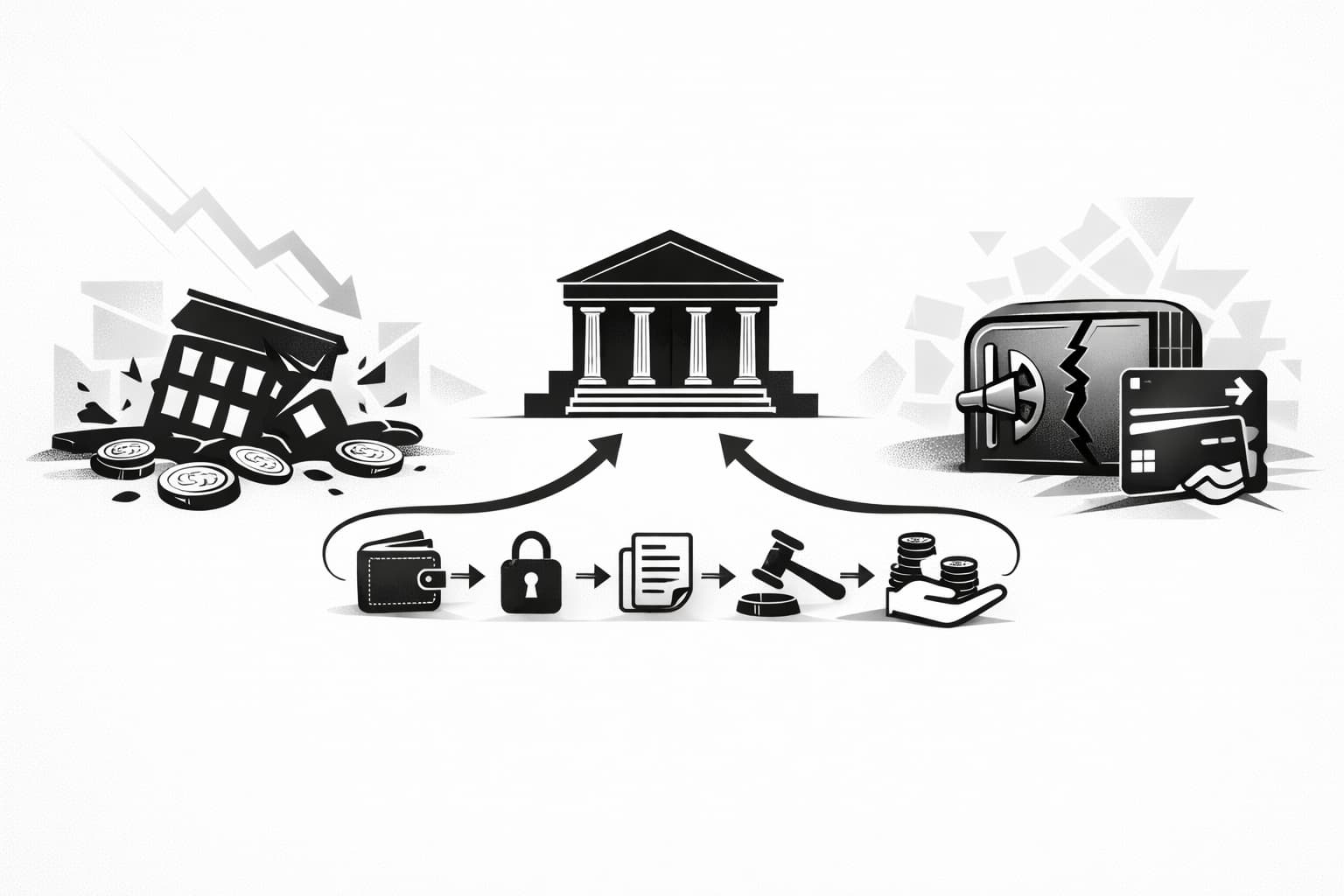
The collapse of FTX in late 2022 sent shockwaves through the industry, largely because of a practice known as commingling funds. In simple terms, FTX did not keep customer assets separate from its own corporate funds. It illegally mixed customer deposits with the capital of its sister trading firm, Alameda Research, which then used that money for risky ventures. Think of it like a valet taking your car for a joyride; you gave them your keys for safekeeping, not for their personal use.
When Alameda's bets went sour, a massive hole was blown in the balance sheet, and the customer funds used to back those trades were gone. The key lesson here is the absolute importance of asset segregation. Reputable platforms should be able to prove, through audits or "proof of reserves," that your assets are held 1-to-1 and are not being used for other purposes.
Celsius & Voyager: The 'Earn Program' Trap
Both Celsius Network and Voyager Digital attracted users with high-yield "Earn" programs, promising impressive returns on deposited crypto. However, buried in the terms of service was a key detail that most users missed. When you moved your assets into these Earn accounts, you legally transferred ownership to the company. You were no longer the owner of your crypto; you became an unsecured creditor—you gave the company a loan.
This distinction became devastatingly clear during their crypto bankruptcy proceedings. Because the assets legally belonged to Celsius and Voyager, they were pooled with all other company assets to pay off debts. Customers in these programs were pushed to the back of the line for repayment. The takeaway is clear: always read the fine print. If a service offers returns that seem too good to be true, understand the legal structure and the risks you are accepting.
Mt. Gox: A Decade-Long Recovery Saga
The story of Mt. Gox is a cautionary tale about time. After a massive hack led to its collapse in 2014, the company entered one of the longest and most complex bankruptcy proceedings in crypto history. For over a decade, creditors were stuck in legal limbo, watching the value of their claimed Bitcoin skyrocket while being unable to access it.
It's only now, in 2026, that final repayments are being distributed. This case powerfully illustrates that even if you are recognized as a creditor with a valid claim, the process is not quick. Legal battles, asset recovery, and administrative procedures can stretch on for years. The lesson from Mt. Gox is one of patience and managed expectations. A crypto bankruptcy resolution is a marathon, not a sprint.
How to Protect Your Assets from Crypto Bankruptcies in 2026
While the lessons from past collapses are valuable, the most powerful tool you have is proactive risk management. Understanding the legal complexities of a crypto bankruptcy is important, but taking concrete steps today can prevent you from ever needing to become an expert. Here are practical strategies to secure your digital assets in the current environment.
Self-Custody: 'Not Your Keys, Not Your Coins'
The most fundamental principle of asset protection in this space is self-custody. When you leave your crypto on an exchange, you are entrusting them with your private keys—the digital equivalent of the password and deed to your assets. Taking control of these keys yourself is the only way to ensure true ownership. This can be done using a hardware wallet, which keeps your keys offline and secure, or a reputable software wallet on your computer or phone. This simple act removes your assets from the exchange’s balance sheet, shielding them from company creditors in a bankruptcy proceeding.
Diversify Your Counterparty Risk
Even if you use centralized exchanges for trading, it's wise not to concentrate all your activity on a single platform. Spreading your assets across several reputable exchanges reduces your counterparty risk—the danger that one company’s failure could wipe out your entire portfolio. Think of it as the digital version of not putting all your eggs in one basket. This strategy is a core part of surviving a crypto downturn and protecting against unforeseen platform-specific issues, from insolvency to a major security breach.
Scrutinize Terms of Service and 'Earn' Programs
The fine print matters immensely. Before participating in any high-yield "Earn" or staking programs, carefully read the terms of service. As we saw in the Celsius case, many of these agreements legally reclassify your deposited assets as a loan to the company. This subtle change converts you from an asset owner to an unsecured creditor, placing you far down the line for repayment if the company faces bankruptcy. Look specifically for language about ownership, custody, and what happens to your funds in the event of insolvency.
The Future of Regulation and Investor Protection
While taking personal responsibility for your assets is essential, the industry and regulators are also working to prevent history from repeating itself. The painful lessons from the collapses of the early 2020s have spurred a global conversation about creating stronger safeguards. The goal is to build a system where a catastrophic crypto bankruptcy doesn't automatically mean devastating losses for everyday users.
Several promising regulatory trends are emerging to better protect investors. One of the most significant is the push for mandatory Proof of Reserves (PoR) audits. Think of this as a regular, transparent financial health check, forcing an exchange to publicly prove it holds customer assets on a one-to-one basis. Lawmakers are also focusing on stricter custody rules that would legally separate customer funds from a company's operational cash, much like in traditional banking. This simple separation could prevent customer deposits from being caught in a company's financial distress.
Finally, discussions are underway to create insurance programs similar to the FDIC for bank deposits or SIPC for brokerage accounts. While a fully-formed crypto insurance fund is still on the horizon in 2026, these initiatives aim to provide a safety net, potentially reimbursing users up to a certain limit if an exchange fails. Together, these measures are designed to bring greater stability and trust to the market.
Key Takeaways
Understanding the risks of a crypto bankruptcy can feel overwhelming, but remembering a few fundamental principles can safeguard your financial future. As we've explored the legal processes and historical examples, several key lessons stand out. Keeping these points in mind will help you make more informed decisions in the evolving digital asset space.
- Your Assets Aren't Always Yours: The most significant lesson from past cases is that crypto held on an exchange might not legally belong to you during a bankruptcy. Courts may view those assets as belonging to the company, making you an unsecured creditor with a low chance of full recovery.
- Self-Custody Provides the Strongest Shield: The old adage "not your keys, not your coins" is more relevant than ever. Storing your digital assets in a personal hardware wallet that you control is the most effective way to protect them if an exchange collapses.
- The Legal Process is a Marathon, Not a Sprint: What happens when a crypto exchange goes bankrupt is a slow, complex legal proceeding. It can take years to resolve, and you should not expect a quick or complete return of your funds. Patience and realistic expectations are vital.
- Vigilance is Your Best Policy: Do your own research before using any platform. Understand their terms of service, look into their financial stability, and never keep more assets on an exchange than you are willing to lose. Personal diligence remains your primary line of defense.
Frequently Asked Questions
- What happens if a crypto exchange collapses?
- When an exchange collapses, it freezes trading and withdrawals before filing for bankruptcy. Customers then become 'unsecured creditors' in a lengthy legal process. You'll likely wait years to recover your funds, and it's common to only receive a small fraction of what your crypto was originally worth.
- Will bankruptcy take my crypto?
- It depends on who is bankrupt. If your exchange fails, the crypto held there is at risk as part of their assets. If you personally declare bankruptcy, crypto you hold in a self-custody wallet is considered a personal asset that a trustee can legally liquidate to pay off your debts.
- Why did FTX collapse?
- FTX collapsed due to a combination of fraud and gross mismanagement. It improperly mixed customer funds with its trading firm, Alameda Research, which then lost billions on risky bets. This created a massive hole in the balance sheet that FTX couldn't fill, leading to a bank run and its swift failure.
Sources
Author

Crypto analyst and blockchain educator with over 8 years of experience in the digital asset space. Former fintech consultant at a major Wall Street firm turned full-time crypto journalist. Specializes in DeFi, tokenomics, and blockchain technology. His writing breaks down complex cryptocurrency concepts into actionable insights for both beginners and seasoned investors.