Arbitrum Withdrawal Time: Why L2 to ETH Takes So Long

What Is an L2 Withdrawal? (Plain-English Definition)
An L2 withdrawal is simply the process of moving your crypto funds from a faster, cheaper secondary network — called a Layer 2, or L2 — back to the main Ethereum blockchain, which is known as Layer 1, or L1.
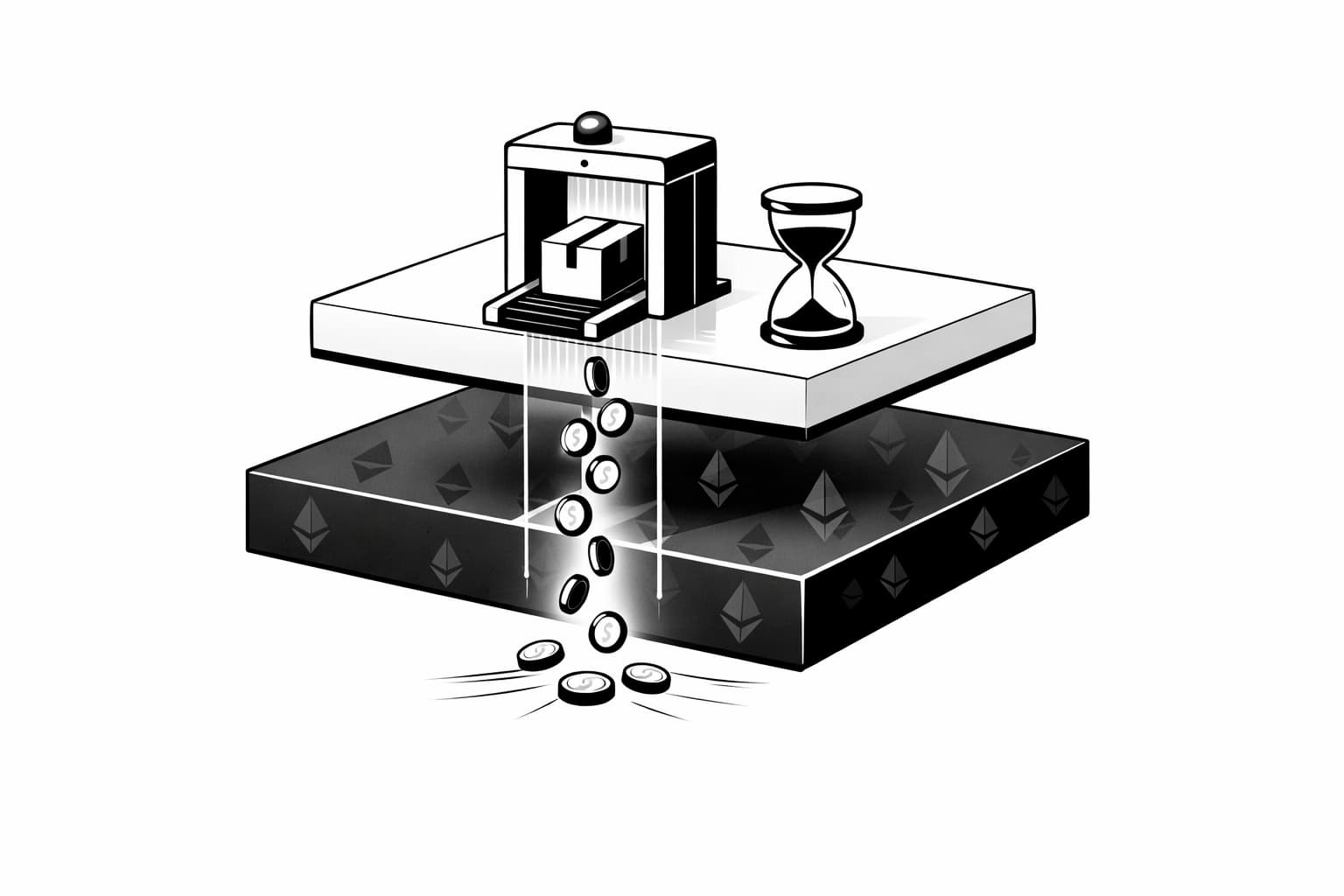
Think of it like moving money between two bank accounts at different institutions. Your local credit union might process transactions instantly and charge almost nothing, but if you want to wire funds to a major bank — say, to buy a house or access a broader service — there's paperwork, verification, and a waiting period involved. The L2 is your nimble credit union. Ethereum mainnet is the big bank.
Why would you need to move funds back to Layer 1 at all? Plenty of real reasons: maybe you want to sell your ETH on a centralized exchange that only supports mainnet deposits, or you need to interact with a protocol that hasn't deployed on any L2 yet. Whatever the reason, the path back to Ethereum is not always as quick as you might hope.
A Quick Background: How L2s Like Arbitrum Work
Arbitrum is a type of L2 called an optimistic rollup. The name tells you a lot: it processes a large batch of transactions off the main Ethereum chain, then "rolls up" a compressed summary of those transactions and posts it to Ethereum — optimistically assuming everything in that batch is valid. To understand the deeper mechanics of why Ethereum works this way, it helps to read about how the Ethereum Virtual Machine works.
This architecture is exactly why Arbitrum withdrawals are so fast and cheap going in — and why coming back out takes considerably longer. That optimistic assumption needs time to be challenged and verified, and that window of verification is the root cause of the delay we'll explore throughout this article.
Why Does Arbitrum Withdrawal Time Take Up to 7 Days?
Arbitrum withdrawal time takes up to 7 days because of the optimistic rollup challenge period. During this window, anyone can submit a fraud proof if they believe a transaction batch is invalid. Once the 7 days pass with no challenge, funds are released to Ethereum mainnet.
If you've just tried to move funds off Arbitrum for the first time, that 7-day wait probably felt like a surprise — maybe even a frustrating one. But here's the reassuring part: the wait isn't a glitch, a delay caused by network congestion, or a sign that something went wrong. It's a deliberate security mechanism baked into how Arbitrum was designed from day one.
The Optimistic Rollup Model: Trusting but Verifying
Arbitrum is what's known as an optimistic rollup — a type of Layer 2 network that processes transactions off the main Ethereum blockchain to keep costs low and speeds high. The word "optimistic" is the key to understanding everything. Rather than verifying every single transaction upfront, the system assumes they're all valid by default and only investigates if someone raises a flag.
Think of it like your monthly bank statement. Your bank doesn't call you to confirm every purchase as it happens. Instead, the charges post automatically — but you have a window of time, usually 30 to 60 days, to dispute anything that looks wrong. Optimistic rollups work on the same basic principle. Transactions go through unless someone submits a fraud proof, which is essentially a formal challenge saying, "wait, that batch of transactions doesn't add up."
This design keeps the network fast and cheap under normal conditions, while still preserving a meaningful safety net for edge cases.
What Happens During the 7-Day Window?
The L2 withdrawal process follows a clear sequence once you initiate it. Here's what actually happens, step by step:
- You submit your withdrawal on Arbitrum. The transaction is recorded on the Arbitrum network, typically within a few seconds.
- Your transaction gets bundled into a batch. Arbitrum groups many transactions together and posts a compressed summary — called a state root — to Ethereum. This usually happens within a few minutes to an hour.
- The 7-day challenge window opens. From the moment that batch is posted to Ethereum, a countdown begins. Any independent observer — called a validator — can scrutinize the batch and submit a fraud proof if they spot an inconsistency.
- The window closes with no challenge. In practice, the overwhelming majority of batches pass through this period without any dispute, because the transactions are legitimate.
- Your funds are released to Ethereum mainnet. Once the 7 days expire cleanly, a final transaction unlocks your ETH or tokens on Layer 1, and they arrive in your Ethereum wallet.
So if you initiate a withdrawal on a Monday morning, you're typically looking at the following Monday before the funds land — assuming no complications. The 7-day clock starts from when your batch hits Ethereum, not from when you clicked "withdraw," so the total wait is usually just over 7 days when you account for batching time.
The important takeaway here is that the system is working exactly as intended. The challenge period exists to protect every user on the network — including you. That said, waiting a week to access your own funds isn't always practical, and in 2026 there are some well-established ways to work around it.
Step-by-Step: How a Standard Arbitrum Withdrawal Works
Now that you understand why the waiting period exists, let's walk through exactly what happens when you actually start a withdrawal — button by button, screen by screen.
What You Need Before You Start
A little preparation goes a long way here. Before you touch the bridge, make sure you have these three things ready:
- A compatible wallet — MetaMask is the most common choice and works smoothly with Arbitrum. If you haven't set one up yet, check out our guide on how to set up a crypto wallet before continuing.
- ETH for gas fees on both networks — Gas fees are small payments you make to compensate the computers processing your transaction, similar to a postage stamp on a letter. You'll need a small amount on Arbitrum to send the withdrawal, and a separate amount on Ethereum mainnet to claim your funds at the end.
- The official bridge URL — Use bridge.arbitrum.io and double-check the address before connecting your wallet.
The Withdrawal Process, Step by Step
Once you're prepared, the actual process is straightforward. The only thing requiring real patience is the wait in the middle — everything else takes just minutes.
- Connect your wallet to the Arbitrum bridge at bridge.arbitrum.io.
- Select the token and amount you want to withdraw to Ethereum mainnet.
- Confirm the transaction in your wallet and pay the Arbitrum gas fee.
- Wait out the 7-day challenge period while your withdrawal is recorded and verified.
- Return to the bridge after the challenge period ends and click "Claim."
- Claim your ETH on Ethereum mainnet after 7 days by confirming the final transaction.
That's genuinely all there is to it. The Arbitrum withdrawal time feels long, but your only active job is steps one through three and then step six — the rest happens automatically in the background.
Fast Withdrawals: How to Skip the 7-Day Wait
Good news: the 7-day challenge period is a technical requirement of the protocol, but it doesn't have to be your problem to wait through. A category of services called fast withdrawal bridges exists for exactly this reason — and in 2026, they've become genuinely reliable tools for everyday users.
How Third-Party Fast Bridges Work
Think of a fast withdrawal bridge like a currency exchange desk at an airport. You need local cash right now; the desk hands it over immediately and handles the slower official conversion process on your behalf. You pay a small fee for the convenience. That's essentially the model here.
In practice, a fast bridge service employs liquidity providers — entities that keep pools of ETH sitting ready on Ethereum mainnet. When you initiate a fast withdrawal, the bridge pays you your ETH on mainnet almost immediately, often within minutes. It then takes ownership of your slower Arbitrum withdrawal and waits out the 7-day period to reclaim those funds itself.
The trade-offs are worth understanding before you commit. Fast bridges typically charge a small percentage fee on your withdrawal amount, and you're placing some degree of trust in the bridge's smart contracts and liquidity reserves. Sticking to well-audited services integrated with the best DeFi protocols on Arbitrum significantly reduces that risk. For most users moving modest amounts, the fee is a fair price for skipping a week-long wait.
Arbitrum Orbit Fast Withdrawals: The Technical Edge
For teams building their own chains on top of Arbitrum, there's a more structural solution. Arbitrum Orbit chains can be configured with a Data Availability Committee (DAC) — a small group of trusted validators that confirm transaction data off the main chain. According to Arbitrum's own documentation, this setup can allow the challenge period to be shortened dramatically, achieving settlement speeds far faster than a standard optimistic rollup withdrawal.
That said, there's a hard floor on how fast any L2 withdrawal can ever be. Settlement ultimately depends on the parent chain — Ethereum's own finality, which takes roughly 12 to 15 minutes. No matter how a chain is configured, it can't finalize before Ethereum itself does. So the practical lower bound for even the fastest Orbit withdrawals sits around that 15-minute mark, not zero.
For everyday users, the takeaway is simple: if you're in a hurry, fast bridges are your most accessible option today. If you're a developer or business building on Arbitrum infrastructure, Orbit's configurable challenge periods offer a far more powerful long-term solution.
L2 Withdrawal vs. Deposit: What's the Difference?
Here's something that surprises almost every first-time Arbitrum user: moving funds onto the network is fast, but moving them off is a completely different experience.
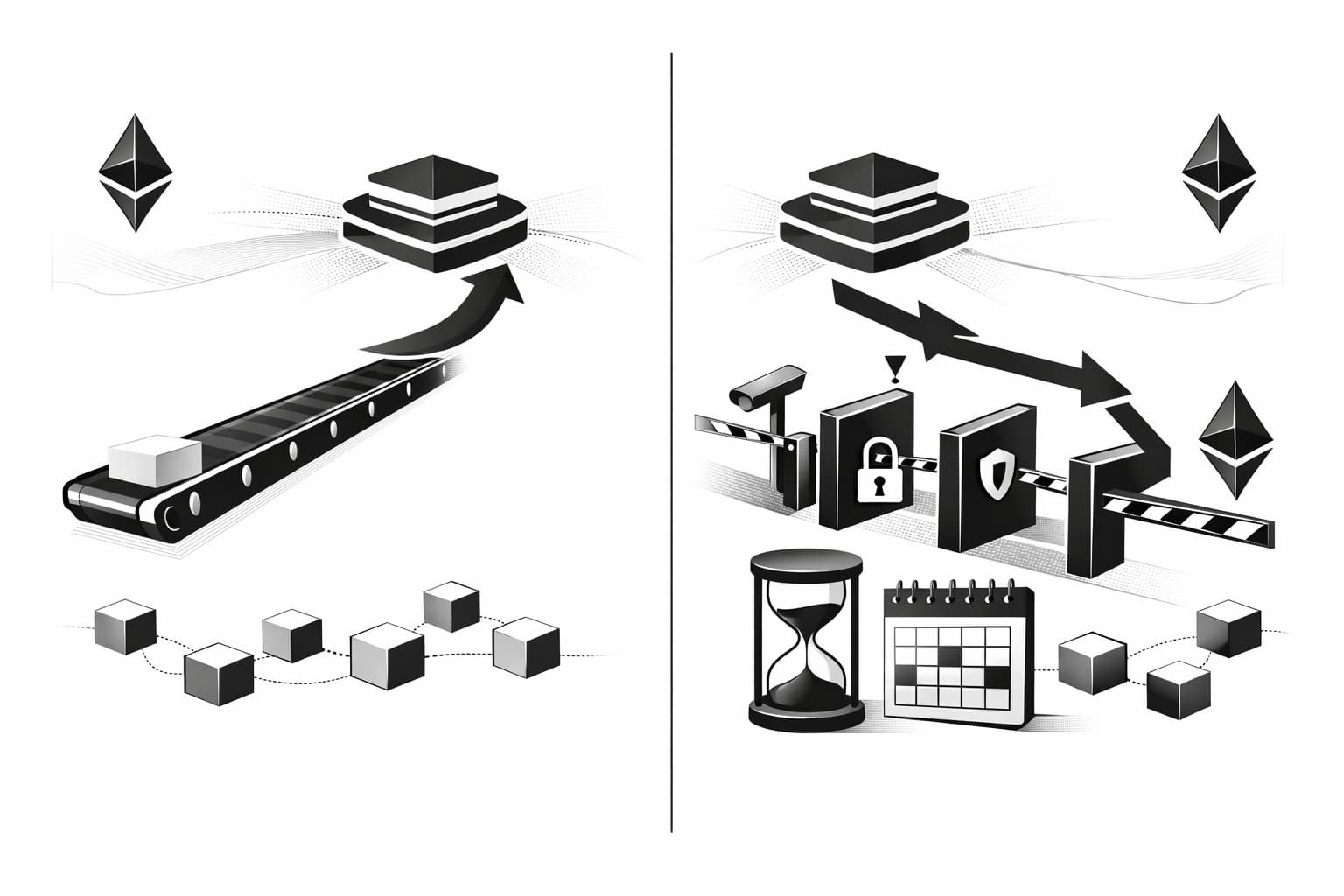
Think of it like a hotel. Checking in is quick — the front desk just confirms your reservation and hands you a key. Checking out, though, involves settling your bill, returning your room key, and waiting for everything to be verified. The asymmetry isn't an accident; it's just how the process works on each end.
When you deposit from Ethereum to Arbitrum, the network simply watches for your transaction to be confirmed on the Ethereum blockchain — usually within about 15 minutes. No challenge period needed, because Ethereum's security is doing the heavy lifting from the start. An L2 withdrawal, by contrast, flows in the opposite direction and requires that full 7-day window so that anyone can flag a fraudulent transaction before your funds are released.
Feature | L2 Deposit (L1 → L2) | L2 Withdrawal (L2 → L1) |
|---|---|---|
Direction | Ethereum → Arbitrum | Arbitrum → Ethereum |
Typical Time | ~15 minutes | ~7 days |
Requires Claim Step | No | Yes |
Security Mechanism | Ethereum finality | Optimistic fraud-proof challenge period |
Once you see the two processes side by side, the difference makes intuitive sense. Deposits inherit Ethereum's trust automatically. Withdrawals have to earn that trust through time — and that's exactly what the challenge period is designed to do.
Why the Wait Is Actually a Security Feature
That 7-day window isn't a bug in the system — it's the system working exactly as designed.
Think of it like a bank's dispute resolution period. When you contest a charge on your credit card, the bank doesn't reverse it instantly. They hold the funds while they investigate, giving everyone time to present evidence. The 7-day challenge period on optimistic rollups like Arbitrum works the same way. After a batch of transactions is posted to Ethereum, a window opens where anyone — not just the protocol's developers — can examine that batch and submit a fraud proof if something looks wrong.
This open verification process is what allows L2s to inherit Ethereum's security without forcing every transaction through Ethereum's slower, more expensive consensus. The assumption is that transactions are valid, but the system backs that assumption up with a real enforcement mechanism. Bad actors can't quietly slip a fraudulent withdrawal through because the entire window exists specifically to catch them.
So the wait isn't the price you pay for using an L2. It's the guarantee that your funds are truly safe when they arrive.
Common Reasons Your Withdrawal Might Be Delayed
Even after the standard 7-day challenge period ends, some withdrawals still get stuck — and the culprit is usually something small and fixable.
Ethereum Network Congestion
When Ethereum mainnet is busy, the final claim transaction can stall or become expensive. Think of it like trying to merge onto a packed highway. Try submitting your claim during off-peak hours (typically early UTC mornings) when gas fees dip.
Forgetting to Claim
The 7-day period ending doesn't automatically send funds to your wallet — you still need to manually trigger the claim transaction. Set a calendar reminder so you don't leave money sitting uncollected.
Wallet or RPC Issues
Sometimes your wallet simply can't "see" the pending withdrawal. This usually means a stale RPC endpoint — essentially your wallet's connection to the Ethereum network. Switching to a fresh public RPC in your wallet settings often resolves this instantly.
When in doubt, the Arbitrum bridge interface itself is the most reliable place to check your withdrawal status and resubmit any stuck transactions.
Key Takeaways
- The standard Arbitrum withdrawal time is 7 days — not a bug, but a deliberate security window that gives the network time to catch and reject any fraudulent transactions.
- L2 withdrawals move funds from a Layer 2 network back to Ethereum mainnet, which is a fundamentally different process from depositing, and it requires more verification steps.
- Fast withdrawal services — offered by bridges like Hop, Across, and others — let you skip the wait entirely, usually for a small fee.
- Delays beyond 7 days are almost always caused by a missed claim step, network congestion, or a paused bridge — all fixable with a little patience and the right support channel.
- The wait is worth understanding. Knowing why the process works this way helps you plan smarter and avoid unnecessary stress next time you move funds.
Frequently Asked Questions
- How long does an Arbitrum transfer take?
- Deposits from Ethereum to Arbitrum typically take 10–15 minutes. Withdrawals going the other direction take 7 days because of the optimistic rollup challenge period, which allows time to dispute fraudulent transactions. Fast bridge services can cut that withdrawal wait down to minutes, though they charge a fee for the convenience.
- Why is my crypto withdrawal taking so long?
- Standard Arbitrum withdrawals require a 7-day challenge window so the network can verify no fraud occurred. After that window closes, you must also manually claim your funds — it does not happen automatically. On top of that, Ethereum network congestion during the claim transaction can add extra delays and higher gas costs.
- How fast is the Arbitrum network?
- Arbitrum itself confirms transactions in seconds, so the network is genuinely fast for everyday use. The slowdown happens specifically at the withdrawal bridge back to Ethereum mainnet, not within Arbitrum itself. Arbitrum Orbit chains can achieve even faster settlement finality depending on how they are configured.
- What does "too many L2 withdrawals" mean?
- This message typically points to rate-limiting or congestion on a bridge contract. Some bridges cap the number of withdrawals per address or per time window to prevent spam and protect against liquidity exhaustion. If you hit this limit, check the specific bridge's documentation for restrictions and recommended wait times before retrying.
- What is an L2 deposit?
- An L2 deposit means sending ETH or ERC-20 tokens from Ethereum mainnet to a Layer 2 network like Arbitrum. The process usually takes 10–15 minutes because Arbitrum continuously monitors confirmed Ethereum transactions and automatically credits your L2 account once the deposit is detected on-chain.
- What is L2?
- Layer 2 refers to a blockchain network built on top of Ethereum that handles transactions faster and at lower cost. It periodically posts compressed transaction data back to Ethereum, inheriting its security. Well-known examples include Arbitrum, Optimism, and Base, all designed to reduce the load on Ethereum mainnet.
Sources
Author

Crypto analyst and blockchain educator with over 8 years of experience in the digital asset space. Former fintech consultant at a major Wall Street firm turned full-time crypto journalist. Specializes in DeFi, tokenomics, and blockchain technology. His writing breaks down complex cryptocurrency concepts into actionable insights for both beginners and seasoned investors.