Altcoins Payment Gateway: How to Accept Crypto Payments

What Is an Altcoins Payment Gateway?
An altcoins payment gateway is a service that helps businesses accept crypto payments in multiple cryptocurrencies beyond Bitcoin, including stablecoins and major altcoins, while managing checkout, blockchain confirmations, and settlement into crypto or local currency.
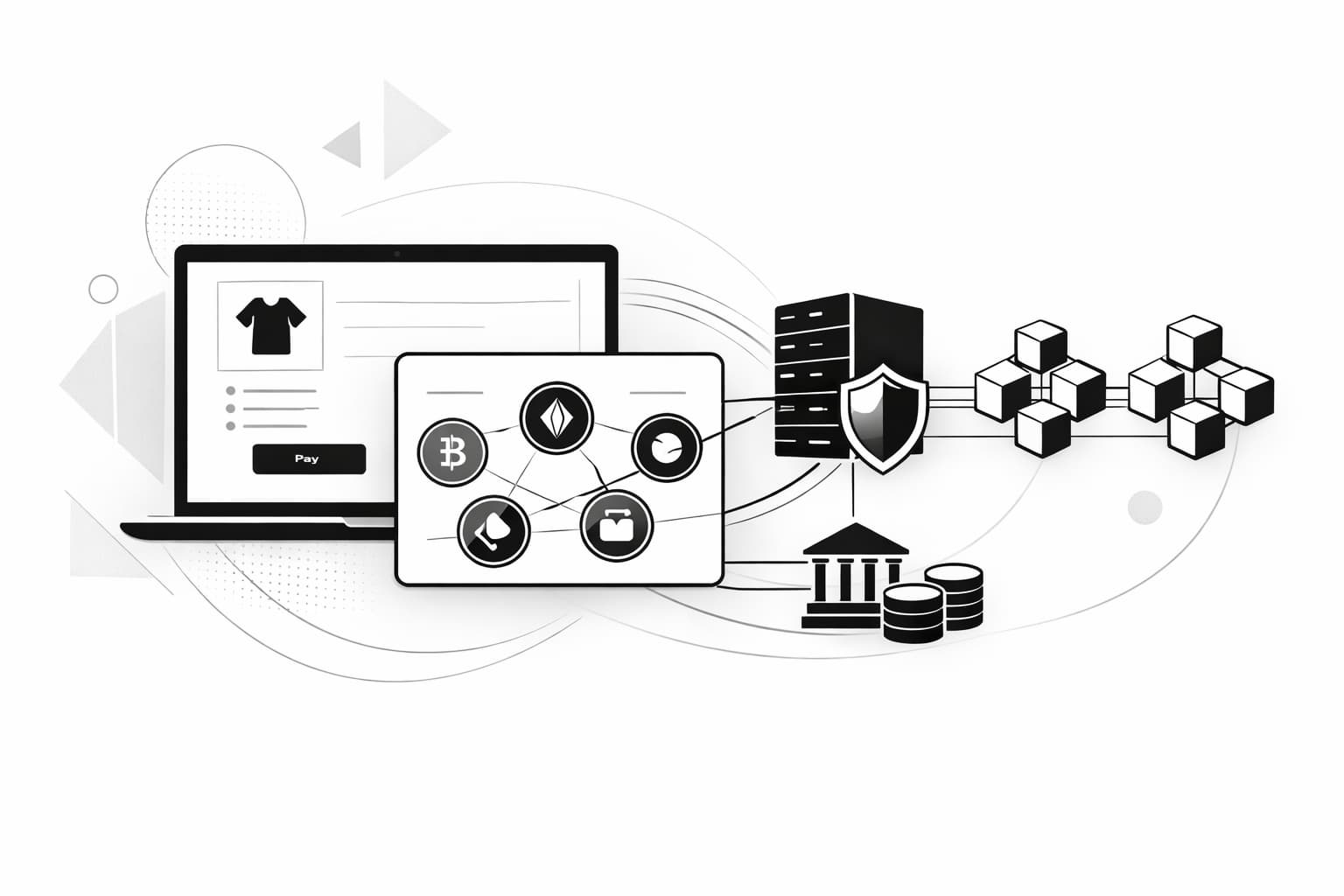
In simple terms, it acts as the bridge between your customer’s wallet and your business. Instead of asking a buyer to manually send funds and wait for your team to verify the payment, the gateway creates a payment flow, tracks the transaction onchain, confirms when it is complete, and records the result for your order system. If you are new to what altcoins are or need a refresher on cryptocurrency basics, it helps to think of the gateway as the crypto version of a checkout tool built for many coins and networks.
How it differs from a standard payment gateway
A traditional payment gateway connects card networks, banks, and merchant accounts. An altcoins payment gateway is crypto-native. It supports wallet-based payments, receives funds on blockchain networks, and settles based on onchain transactions rather than card authorization and bank clearing. That changes how payments are confirmed, how refunds are handled, and how merchants choose between direct crypto settlement or automatic conversion. Card payments also sit inside a mature dispute framework, while crypto payments are generally irreversible once confirmed onchain, which changes refund and support workflows.[3]
Why altcoins matter for merchants
For merchants, altcoins expand customer choice. Some buyers prefer stablecoins for price consistency, while others hold assets like ETH, SOL, or other major tokens and want to pay directly. In many cases, certain networks offer lower transaction costs or faster confirmation times than others, though fees and speed can still vary widely by chain and network conditions.[1] As a result, an altcoins payment gateway can help businesses reach global users, reduce friction at checkout, and offer settlement options that better fit cash flow and accounting needs.
How Crypto Payment Gateways Function
Once you know what an altcoins payment gateway is, the next question is simple: what actually happens after a customer clicks the crypto payment option? In practice, the flow is fairly structured. The gateway creates a payment request, watches the selected blockchain for the transfer, and then routes funds based on the merchant’s settlement rules.
The payment flow from customer to merchant
- Checkout selection: At checkout, the customer chooses crypto instead of card or bank transfer. A good altcoins payment gateway will show supported coins and networks clearly so the buyer can pick the right asset and chain.
- Invoice generation: The gateway creates an invoice tied to the order amount, expiry time, accepted coin, and network. This helps lock in pricing and reduces confusion if market rates move during checkout.
- Wallet address display: The customer is shown a destination address, and often a QR code, plus the exact amount to send. If your team needs a refresher on crypto wallet basics or how wallet addresses work, those details matter here.
- Blockchain confirmation: After the customer sends funds, the gateway detects the transaction, checks the receiving address, and waits for the required number of confirmations before marking the payment as approved.
- Conversion: If enabled, the gateway can swap the incoming coin into another asset, often a stablecoin or local currency, based on your rules.
- Settlement: The merchant receives funds in the chosen format: the original coin, a stablecoin balance, or fiat paid out to a bank account.
- Reporting: Finally, the system updates the order record, logs transaction IDs, fees, exchange rates, and settlement details for accounting and reconciliation.
Settlement options: crypto, stablecoins, or fiat
Merchants usually choose between three settlement models. Direct crypto settlement sends the received asset to your business wallet, which suits teams comfortable holding digital assets. Stablecoin settlement reduces price swings while keeping funds on-chain. Fiat conversion, on the other hand, moves value into traditional currency and pays out to your bank, which can simplify bookkeeping and cash flow planning. Providers such as Coinbase Commerce and Stripe note that merchant setups can vary between direct crypto receipt, conversion, and fiat payout depending on product and region.[2][3]
Some businesses prefer a hybrid setup. For example, you might keep a portion in crypto for treasury purposes and convert the rest into fiat for expenses. That flexibility is often where an altcoins payment gateway becomes most useful in day-to-day operations, especially for merchants balancing growth, working capital, and accounting simplicity.
Benefits and Trade-Offs of Using an Altcoins Payment Gateway
Once you understand how an altcoins payment gateway works, the next step is deciding whether it fits your business model. For many merchants, the appeal is clear: broader payment choice, access to crypto-holding customers, and, in some cases, faster settlement than traditional cross-border methods. At the same time, accepting altcoins introduces new operational and financial questions that need careful planning.
Key Benefits for Online Businesses
An altcoins payment gateway can help online businesses sell across borders with fewer payment barriers. Customers who do not have access to major card networks, or prefer paying with digital assets, can complete purchases more easily. That can open the door to crypto-native buyers who actively look for merchants that accept more than just Bitcoin or a single token.
Support for multiple cryptocurrencies also gives customers more choice at checkout. For merchants, settlement flexibility is a major advantage. You may choose to receive the original asset, convert instantly into fiat, or use stablecoins for merchant settlement to reduce exposure to price swings. In addition, some businesses value having less dependence on card processors, chargeback systems, and banking delays. The trade-off is that the merchant must define how crypto receipts are recorded, valued, and reconciled in finance systems from day one.
Main Risks and Limitations
Still, the trade-offs are real. Token prices can move fast, and even short holding periods may affect margins. Network fees also vary by chain and can make small transactions less attractive during busy periods.[1] Then there is the refund issue: crypto payments are not naturally reversible, so returns and mistaken payments often require a separate manual process.[3]
On top of that, merchants must handle compliance duties, including tax reporting, sanctions screening, and local rules around digital assets. FATF guidance and tax authorities such as the IRS make clear that businesses dealing with digital assets may face recordkeeping, reporting, and control obligations depending on jurisdiction and activity.[4][5] Customer support can become more demanding as well, especially when buyers send funds on the wrong network or expect card-like dispute handling. In short, an altcoins payment gateway can expand payment options, but it works best for merchants prepared to manage the added complexity.
Key Features to Look for in a Payment Processor
Once you move from theory to vendor selection, the best choice usually comes down to day-to-day usability. A strong altcoins payment gateway should fit how your business invoices customers, settles funds, and manages risk without adding extra manual work.

Feature | Why It Matters |
|---|---|
Chain support | Lets you accept popular assets on the networks customers already use, reducing payment friction and failed checkouts. |
Fiat conversion | Helps protect margins by converting incoming crypto into local currency or stablecoins on receipt. |
API/SDK | Gives your team flexibility to build custom checkout flows, billing logic, and backend automation. |
Plugins | Speeds up deployment for stores on platforms such as WooCommerce with less developer effort. |
KYC/AML | Supports policy checks, transaction monitoring, and account controls that may be required for your region or industry. |
Settlement speed | Affects cash flow, treasury planning, and how quickly you can access crypto or fiat proceeds. |
Security | Protects funds and payment data through wallet controls, approval rules, and incident response safeguards. |
Currency and chain support
Start with coverage. Many merchants need support for USDT, USDC, ETH, BNB, and selected long-tail altcoins, not just one or two major assets. It also matters which networks are supported. A processor that handles both EVM-compatible chains and non-EVM chains gives customers more payment options and can lower fees. Check whether the provider supports the exact token-standard and chain combination you expect to accept, since USDT on one network is not the same as USDT on another.
Integration and developer tools
Next, look at implementation options. Some teams want a hosted checkout page and simple payment links. Others need APIs, SDKs, invoice tools, webhooks, and subscription support. If you run an ecommerce store, ready-made plugins for WooCommerce and similar platforms can cut launch time significantly. Clear documentation matters just as much as feature depth, because setup mistakes in crypto payments can lead to failed orders or support tickets.
Compliance, security, and operations
Finally, review the operating model. Ask how the provider handles KYC and AML screening, whether it is custodial or non-custodial, and what wallet protections are in place, such as MPC-based approvals or role-based access controls. On the finance side, reconciliation tools, payout records, tax exports, and audit-friendly reporting save time every month. Fast settlement is helpful, but reliable reporting and safe fund handling are what keep the system workable long term. Security controls should also align with your broader payment environment and internal access policies.[6]
How to Choose the Right Altcoins Payment Gateway
Once you know which features matter, the next step is matching a provider to how your business actually sells. The best altcoins payment gateway for one merchant may be a poor fit for another. A SaaS company with global subscriptions will weigh recurring billing and automatic settlement differently than an online retailer shipping into a handful of countries. Start with your business model, then narrow your options by where your customers are based, which coins they already use, and how much technical support you have in-house.
It also helps to think in operating terms, not just feature lists. Ask how the gateway will fit into your accounting workflow, refund process, tax reporting, and customer support. A polished demo means little if reconciliation is messy or settlement is slow. If possible, test the provider with a small pilot before rolling it out across all products or regions.
Questions merchants should ask before signing up
- What are the total fees, including processing, conversion, withdrawal, and network-related charges?
- Which altcoins and chains are supported, and can you choose which ones appear at checkout?
- Can funds settle in crypto, fiat, or both, and how often are payouts made?
- How are underpayments, overpayments, expired invoices, and failed transactions handled?
- What is the refund or charge dispute process, and what parts remain manual?
- What compliance checks apply in your countries of operation, including KYC, AML, and sanctions screening?
- Does the provider offer clean reporting and exports for finance teams?
When a hosted gateway is better than a custom setup
A hosted gateway is often the better choice when speed matters more than deep customization. You can launch faster, reduce development work, and shift part of the security and infrastructure burden to the provider. That makes sense for small teams, pilots, or merchants testing demand.
By contrast, a custom setup gives you more control over branding, wallet logic, and checkout flow, but it asks for more engineering time and ongoing maintenance. In practice, choose hosted if you want to start accepting payments quickly. Choose custom if crypto payments are becoming a core part of your product experience.
How to Accept Crypto Payments Step by Step
Once you have chosen a provider, the next step is getting your checkout live without disrupting daily operations. A good altcoins payment gateway should let you move from setup to first payment in a controlled, low-risk way. In most cases, the process starts with creating a merchant account, completing business verification, and choosing which coins and networks you want to accept. After that, connect your settlement wallet and, if supported, link your bank account for fiat payouts.
Before launch, set payment rules inside the dashboard. That includes confirmation thresholds, refund settings, settlement preferences, and notification alerts. Then run a few test transactions with small amounts and confirm that payment status updates match what you see on-chain in blockchain scanners. This helps catch network selection errors, webhook issues, or accounting mismatches early. It also gives your support and finance teams a chance to practice the process before real customer volume arrives.
Basic setup for non-technical teams
For many merchants, the fastest path is a hosted payment page or a ready-made plugin for platforms like Shopify, WooCommerce, or Magento. These tools usually require only API keys, wallet details, and a few dashboard settings. You can enable accepted altcoins, set invoice expiration times, and customize branding without writing code. This approach works well for small teams that want a simple launch and easy day-to-day management.
Advanced setup for developers
If you need more control, use the provider’s API to create custom invoices, embed payment requests directly into checkout, and trigger webhooks when transactions are detected, confirmed, or settled. Your backend can then match each payment to an order, update inventory, and push settlement data into your accounting system. After launch, monitor failed payments, delayed confirmations, and conversion activity so your altcoins payment gateway stays accurate as volume grows. It is also worth defining fallback logic for expired invoices, partial payments, and duplicate callbacks so operations stay clean under load.
Compliance, Security, and Customer Experience Best Practices
Once your altcoins payment gateway is live, day-to-day operations matter just as much as setup. Merchants need a clear process for compliance, wallet protection, and customer support so crypto payments stay manageable as volume grows. This is where trust is built: not only with regulators and banking partners, but with customers who want a smooth, predictable checkout.

Reducing compliance and fraud risk
Start with basic due diligence. Know which products, regions, and customer types create higher risk, and confirm whether your provider supports screening, sanctions checks, and recordkeeping. In many markets, merchants also need to understand when KYC, AML, tax reporting, or licensing rules apply directly to them versus the payment processor. Choosing regulated infrastructure can make this easier, especially if it includes blockchain transaction monitoring, suspicious activity alerts, and clear audit trails.[4]
On the security side, limit wallet access, use role-based permissions, enable hardware-backed storage where possible, and document refund approval steps. Refunds should follow a written policy that covers exchange-rate handling, network fees, and destination address verification. If your crypto checkout touches broader card or ecommerce systems, align access controls and logging with your existing payment security standards as well.[6]
Improving checkout conversion
Conversion often drops when payment instructions are vague or the wrong network is shown by default. Make supported chains obvious, display the exact asset and network together, and give customers enough time before the invoice expires. Stablecoins can reduce price anxiety and help shoppers complete payment faster. Simple on-screen instructions, status updates, and quick support options also make an altcoins payment gateway easier to trust and use.
References
- Chainalysis, The 2024 Geography of Cryptocurrency Report, discussing network usage, stablecoin activity, and cross-border crypto payment trends.
- Coinbase Commerce Help and product documentation, merchant settlement and supported asset guidance.
- Stripe documentation on crypto and stablecoin payment products, including settlement and payment flow considerations.
- Financial Action Task Force (FATF), guidance on virtual assets and virtual asset service providers.
- IRS digital assets guidance and business tax reporting resources.
- PCI Security Standards Council guidance on payment security controls and access management principles.
Frequently Asked Questions
- What is an altcoins payment gateway?
- An altcoins payment gateway is a service that enables businesses to accept payments in various cryptocurrencies beyond Bitcoin, including stablecoins and major altcoins. It streamlines the payment process by managing checkout, blockchain confirmations, and settlement into either crypto or local currency.
- How does an altcoins payment gateway differ from a traditional payment gateway?
- Unlike traditional payment gateways that connect banks and card networks, an altcoins payment gateway is designed for cryptocurrency transactions. It facilitates wallet-based payments, handles blockchain confirmations, and offers different settlement options based on onchain transactions.
- What are the benefits of using an altcoins payment gateway for merchants?
- Using an altcoins payment gateway allows merchants to offer more payment options to customers, potentially increasing sales. It also provides flexibility in settlement methods, enabling businesses to choose between receiving crypto, stablecoins, or fiat currency.
- What are the risks associated with accepting altcoin payments?
- The main risks include price volatility of cryptocurrencies, which can affect profit margins, and the irreversible nature of crypto transactions, complicating refunds. Additionally, merchants must navigate compliance and reporting requirements related to digital assets.
- What features should I look for in an altcoins payment gateway?
- Key features to consider include support for multiple cryptocurrencies and networks, integration options like APIs and plugins, and robust compliance and security measures. It's also important to ensure the gateway aligns with your business's accounting and operational needs.
Sources
Author

Crypto analyst and blockchain educator with over 8 years of experience in the digital asset space. Former fintech consultant at a major Wall Street firm turned full-time crypto journalist. Specializes in DeFi, tokenomics, and blockchain technology. His writing breaks down complex cryptocurrency concepts into actionable insights for both beginners and seasoned investors.