Altcoin ETF Guide 2026: How They Work & Top Options
What Is an Altcoin ETF? (Plain-English Definition)
An altcoin ETF is a type of investment fund that tracks the price of one or more alternative cryptocurrencies, letting you gain exposure to crypto markets without ever needing to buy, store, or manage digital coins yourself. It trades on a traditional stock exchange, just like shares of Apple or Nike. You get the price movement without the technical headache.

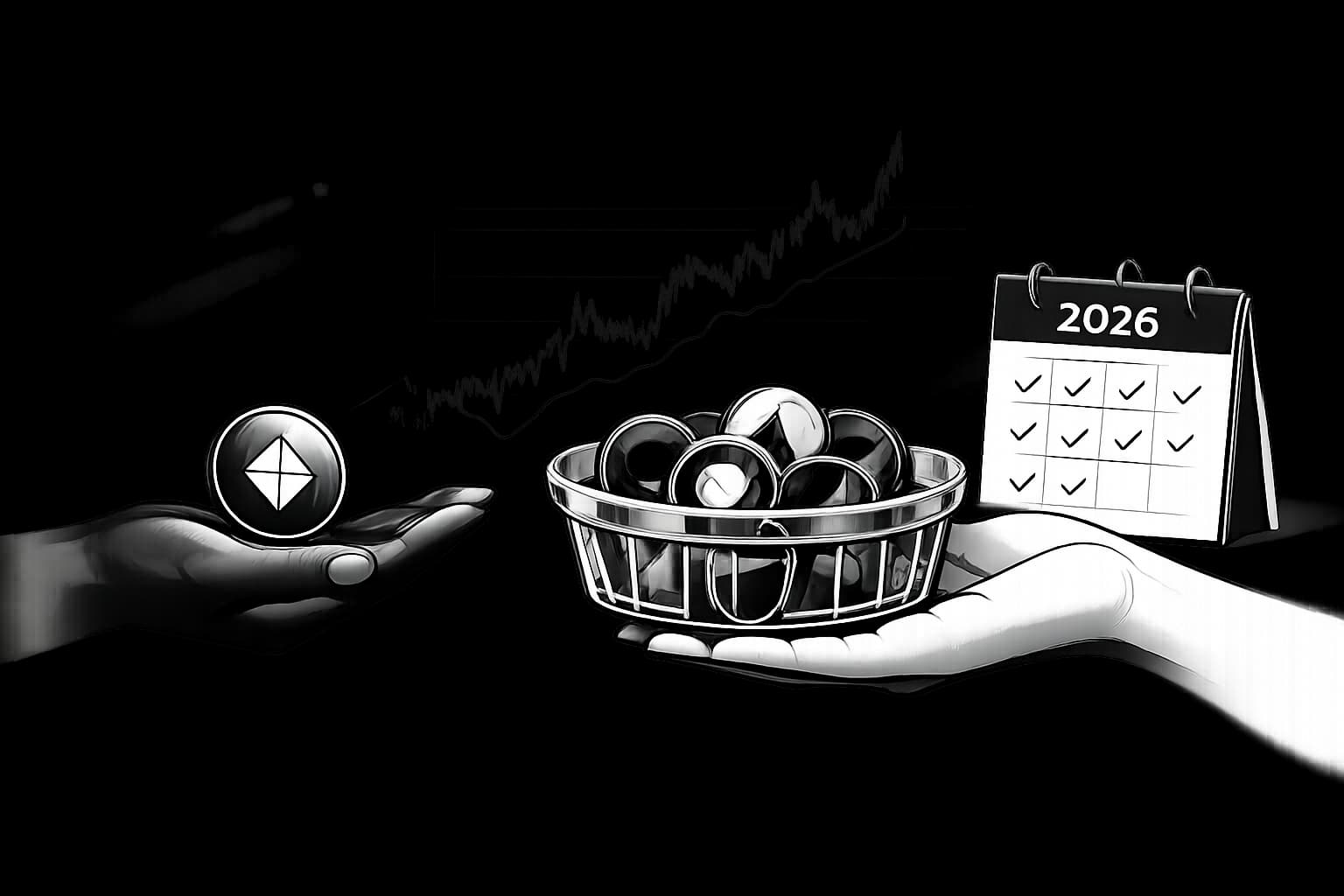
Think of it like shopping for fruit at a grocery store. You could theoretically plant a mango tree, a lemon bush, and a strawberry patch in your backyard — but that takes time, expertise, and real risk of things going wrong. Or you could just walk to the produce aisle and pick up a pre-packed fruit basket. An altcoin ETF is that fruit basket. Someone else does the heavy lifting of acquiring and holding the crypto, and you simply buy a share of the result.
The practical difference matters more than it might seem. When you own cryptocurrency directly, you need a digital wallet, a private key (essentially a password that, if lost, means your coins are gone forever), and a clear plan for keeping everything secure. With an altcoin ETF, you buy shares through a regular brokerage account — the same place you might already hold stocks or retirement funds. No wallets, no keys, no cold storage required.
ETF vs. ETP vs. ETN: What's the Difference?
These three abbreviations get thrown around together, and the distinctions are worth knowing before you go any further.
- ETF (Exchange-Traded Fund): The most common structure. An ETF is a registered investment fund that holds underlying assets — in this case, crypto — and issues shares that trade on a stock exchange throughout the day. It is regulated, transparent, and generally considered the most investor-friendly structure.
- ETP (Exchange-Traded Product): The umbrella term. Every ETF is technically an ETP, but not every ETP is an ETF. ETPs include a broader family of exchange-traded instruments, some of which use different legal structures depending on the country they are issued in. You will see this term used often in European crypto markets.
- ETN (Exchange-Traded Note): A debt instrument issued by a financial institution, like a bank. Instead of actually holding the crypto, the bank promises to pay you a return linked to the asset's price. This introduces counterparty risk — meaning if the bank goes under, your investment could be at risk even if the crypto itself performed well.
For most beginners, an ETF is the structure you want. It offers the cleanest, most regulated path into crypto-linked investing.
Why "Altcoin" Matters Here
Bitcoin was the first cryptocurrency, created in 2009. Every other cryptocurrency that came after it is broadly called an altcoin — short for "alternative coin." That includes thousands of projects, but the names most relevant to this guide are Ethereum (ETH), Litecoin (LTC), and Chainlink (LINK).
Bitcoin ETFs arrived first, largely because regulators felt more comfortable with Bitcoin's size, liquidity, and relatively simple use case as a store of value. Altcoins are a different story. They often serve specific technical purposes — Chainlink, for example, connects blockchain smart contracts to real-world data — which makes evaluating them more complex. That complexity is exactly why altcoin ETFs deserve their own conversation, separate from Bitcoin ETF guides. The approval timelines, the underlying risks, and the investor considerations are all meaningfully different.
So when you see the term altcoin ETF, think: a fund that gives you exposure to crypto that isn't Bitcoin, through a familiar, exchange-traded structure.
Why Altcoin ETFs Matter: The Case for Regulated Crypto Exposure
Understanding what an altcoin ETF is only gets you halfway there — the more interesting question is why it matters to someone sitting at home with a regular brokerage account.
Think of it this way: imagine you wanted to invest in gold back in 2004. You could either rent a storage vault, buy physical bars, and worry about insurance — or you could simply buy shares of the SPDR Gold ETF through your existing account in about 30 seconds. Altcoin ETFs do the same thing for digital assets. They bring crypto into a world most investors already understand, trust, and have paperwork filed for.
In 2026, this shift feels less like a novelty and more like an inevitability. Institutional money managers, pension funds, and major banks have all started treating digital assets as a legitimate asset class. The regulatory groundwork laid after Bitcoin and Ethereum ETF approvals opened a door that altcoin ETF products are now walking through.
The Problem Altcoin ETFs Solve
Buying altcoins the traditional way involves a surprisingly long to-do list. You sign up for a crypto exchange, complete identity verification, fund the account, place the trade — and then face a genuinely stressful decision: do you leave your coins on the exchange, or move them to a private wallet?
A private wallet means managing a private key — essentially a 64-character password that, if lost, means your investment is gone forever. No customer support, no password reset. Exchanges, meanwhile, have been hacked before. These aren't hypothetical problems; they're real barriers that keep many everyday investors on the sidelines.
An altcoin ETF removes all of that friction. You buy shares through Fidelity, Charles Schwab, or any standard brokerage — the same way you'd buy Apple stock. No new accounts, no private keys, no cold storage anxiety. You can even hold certain ETFs inside a tax-advantaged account like an IRA, which could mean deferred or reduced taxes on gains depending on your situation. For investors curious about real-world use cases for altcoins, this regulated access makes it far easier to get meaningful exposure to projects they already believe in.
Risks You Still Can't Avoid
That said, an ETF wrapper doesn't magically make crypto safe. It just changes where the risks live.
- Price volatility: Altcoins can swing 20–40% in a matter of days. The ETF will follow those swings just as faithfully as the underlying asset.
- Tracking error: This is the gap between what the underlying altcoin actually returned and what the ETF returned. Small differences in timing, fees, or fund structure can cause the ETF to underperform its asset slightly.
- Expense ratios: ETFs charge an annual management fee, expressed as a percentage of your investment. A 0.75% expense ratio on a $10,000 position costs you $75 per year — not enormous, but worth comparing across products.
- Regulatory uncertainty: Even in 2026, the rules around crypto ETFs are still evolving. A change in SEC guidance or a country-level ban could affect fund operations, liquidity, or availability.
None of these risks are reasons to avoid altcoin ETFs automatically — but they're reasons to go in with clear eyes rather than assuming the regulated format equals guaranteed safety.
How Altcoin ETFs Work: A Step-by-Step Breakdown
Now that you know what an altcoin ETF is, let's pull back the curtain and see exactly how one functions day to day — because understanding the mechanics makes it much easier to decide whether one belongs in your portfolio.
At its core, an altcoin ETF is a fund that pools investor money to gain exposure to one or more cryptocurrencies, then issues shares that trade on a stock exchange. Here's a simple way to picture it: imagine a Litecoin ETF that holds 10,000 LTC in a secure, regulated custodial account and issues 1,000 shares to investors. Each share effectively represents 10 LTC. If Litecoin's price rises, the value of each share rises proportionally — no crypto wallet required on your end.
The fund manager handles all the messy parts: buying the coins, storing them safely, and keeping the books. You simply buy and sell shares through your regular brokerage account, just like you would with a stock.
Spot Altcoin ETFs vs. Futures-Based ETFs
Not all altcoin ETFs are built the same way. The two main structures are spot ETFs and futures-based ETFs, and the difference matters more than it might seem at first glance.
- Spot ETFs hold the actual cryptocurrency. If you buy shares in a spot Litecoin ETF, the fund literally owns real LTC on your behalf. The share price tracks the live market price of Litecoin as closely as possible.
- Futures-based ETFs don't hold any coins at all. Instead, the fund buys futures contracts — essentially agreements to buy or sell a crypto at a set price on a future date. Think of it like betting on where the price will land, rather than owning the asset itself.
Futures ETFs were the first structure regulators approved, but they come with a known drawback called roll costs — fees incurred when old contracts expire and new ones are purchased — which can silently drag on returns over time. Spot ETFs, by contrast, track prices more cleanly. As of 2026, spot structures have become the dominant model for newly approved altcoin ETFs, including those tied to assets like Chainlink and Litecoin.
What Is NAV and Why Does It Matter?
Net Asset Value (NAV) is just a fancy term for the total value of everything the fund holds, divided by the number of shares outstanding. If our hypothetical Litecoin ETF holds 10,000 LTC worth $1,000,000 and has issued 1,000 shares, the NAV per share is $1,000.
In a perfect world, the ETF's share price on the stock exchange always equals its NAV. In practice, supply and demand can push the share price slightly above (premium) or below (discount) that figure. This is where a clever mechanism called creation and redemption steps in.
Large institutional investors — called authorized participants — are authorized to create new ETF shares by depositing the underlying asset into the fund, or redeem shares by pulling assets out. When the ETF trades at a premium, they create new shares and sell them, pushing the price back down. When it trades at a discount, they buy shares cheaply and redeem them, pushing the price back up. It's a self-correcting system that keeps the ETF price honest.
For everyday investors, this matters because you can trust that the price you're paying for a share closely reflects what the underlying crypto is actually worth — unlike some closed-end funds, which can trade wildly out of line with their assets for extended periods.
- Each ETF share represents a proportional slice of the fund's total crypto holdings.
- Spot ETFs hold real coins; futures ETFs hold price contracts — and each comes with different cost and tracking implications.
- NAV is the fund's true per-share value, calculated from the live price of the underlying assets.
- The creation/redemption mechanism acts like a price-correction valve, keeping ETF shares aligned with NAV.
- In 2026, spot structures dominate new altcoin ETF approvals, offering cleaner price tracking for assets like Litecoin and Chainlink.
The 2026 Altcoin ETF Tracker: What's Approved and What's Pending
After years of cautious foot-dragging, the SEC has shifted into a noticeably different gear when it comes to crypto ETF approvals — and 2026 is shaping up to be the most active year yet for altcoin funds.
You already know how altcoin ETFs work from earlier sections. Now let's get practical: which ones actually exist, which are still waiting in line, and what does the current regulatory environment look like for everyday investors trying to plan ahead?
The short answer is that the crypto ETF pipeline is fuller than it's ever been. Following Bitcoin's spot ETF approval in early 2024 and Ethereum's approval later that year, asset managers got the message loud and clear — the door is open, at least a crack. Firms like CoinShares, ARK Invest, Grayscale, VanEck, and Bitwise have all filed or expanded filings for a range of altcoin ETFs. For deeper context on the regulatory shifts driving all of this, the SEC's landmark 2026 crypto regulatory changes are worth understanding before you invest a single dollar.
Here's a snapshot of where things stand as of April 2026:
ETF Name | Underlying Asset | Issuer | Status | Expense Ratio |
|---|---|---|---|---|
Grayscale Ethereum Trust ETF | Ethereum (ETH) | Grayscale | Approved | 2.50%* |
Bitwise Ethereum ETF | Ethereum (ETH) | Bitwise | Approved | 0.20%* |
Canary Litecoin ETF | Litecoin (LTC) | Canary Capital | Pending | TBD |
CoinShares Litecoin ETF | Litecoin (LTC) | CoinShares | Pending | TBD |
21Shares Chainlink ETF | Chainlink (LINK) | 21Shares | Pending | TBD |
VanEck Solana ETF | Solana (SOL) | VanEck | Pending | TBD |
Grayscale XRP Trust ETF | XRP | Grayscale | Pending | TBD |
*Expense ratios sourced from publicly available SEC filings and issuer disclosures; verify current rates before investing.
Think of the SEC review process like a building permit application. You can draw up the blueprints and submit everything correctly, but the city (the SEC) still has to inspect, ask questions, and give the final sign-off. Some projects sail through; others sit in review for months. The altcoin ETF queue right now has a lot of very good blueprints waiting for that stamp of approval.
For the most current status updates as filings move through the review process, check the latest altcoin ETF regulatory updates — the situation can shift quickly.
Litecoin ETF: Approval Status in 2026
Litecoin is one of the oldest altcoins around — it launched back in 2011, making it practically ancient by crypto standards. That long track record is actually one reason it's near the front of the altcoin ETF line.
Canary Capital filed for a spot Litecoin ETF in late 2024, making it one of the earliest post-Bitcoin-ETF altcoin filings. CoinShares followed with its own application. As of April 2026, neither has received final SEC approval, but both applications are actively under review and have not been rejected — which is meaningfully different from being denied.
Why does Litecoin get favorable attention from regulators? A few reasons stand out. First, LTC uses a proof-of-work consensus mechanism — the same fundamental system Bitcoin uses — which the SEC has historically been more comfortable with than proof-of-stake systems. Second, Litecoin has never been classified as a security by U.S. regulators, a legal hurdle that has tripped up other altcoins. Third, it has years of reliable market data and established liquidity, both things the SEC looks for when assessing whether a sound surveillance-sharing agreement can be built.
What should investors watch for? The key signal will be whether the SEC issues a formal approval or requests additional information in its review letters. Approval of a Litecoin ETF would likely open the door wider for other proof-of-work altcoin funds. A denial, on the other hand, would send issuers back to the drawing board on their legal arguments.
Chainlink ETF: Is a LINK ETF Coming?
Chainlink occupies an interesting position in the crypto world. It's not a payment coin like Bitcoin or Litecoin — it's a decentralized oracle network, meaning it connects smart contracts on the blockchain to real-world data like stock prices, weather feeds, or sports scores. Think of it as the reliable postal service that delivers outside information to the sealed world of blockchain applications.
21Shares, a firm with a strong track record in European crypto products, filed for a spot Chainlink ETF in the U.S. in 2025. As of April 2026, the filing remains pending. No other major issuer has publicly filed a competing LINK ETF application in the U.S. market, though that could change quickly given how fast this space moves.
The case for a Chainlink ETF is straightforward: LINK is one of the top-ten cryptocurrencies by market capitalization, it underpins a vast amount of decentralized finance infrastructure, and institutional interest in its technology has grown steadily. That said, the SEC's comfort level with utility tokens — assets that power a specific network function rather than simply acting as currency — is still evolving. The regulator will need to be convinced that a sufficiently liquid and manipulation-resistant market exists for LINK before giving the green light.
If you're watching this space, keep an eye on whether the SEC asks 21Shares for additional disclosures about LINK's market structure. That would be a sign the conversation is progressing rather than stalling.
XRP and Other Notable Altcoin ETF Filings
XRP has had a famously rocky relationship with U.S. regulators — the SEC's multi-year lawsuit against Ripple Labs cast a long shadow over any ETF prospects. However, with that legal dispute largely resolved by 2025, the path cleared considerably. Grayscale and several other issuers have filed for XRP ETF products, and market participants are cautiously optimistic about approval timelines in 2026.
Solana is another name generating serious filing activity. VanEck and ARK Invest have both submitted applications for spot Solana ETFs. SOL's case is complicated slightly by its proof-of-stake design and past questions about token distribution, but the sheer scale of Solana's developer ecosystem makes it hard for issuers to ignore. If you're curious about the underlying technology, it helps to first understand what Solana is and why it attracts ETF interest before evaluating any fund built around it.
Beyond these names, filings for Avalanche (AVAX) and Polkadot (DOT) ETFs have also surfaced, though they remain early-stage. The broader takeaway? The altcoin ETF pipeline in 2026 is genuinely busy — and the approvals that do come through will likely set important precedents for everything that follows.
Top Altcoin ETFs to Know in 2026
Now that you understand how the approval process works, it's time to look at what's actually sitting on the shelf — the specific altcoin ETF products you can research (and potentially buy) today.
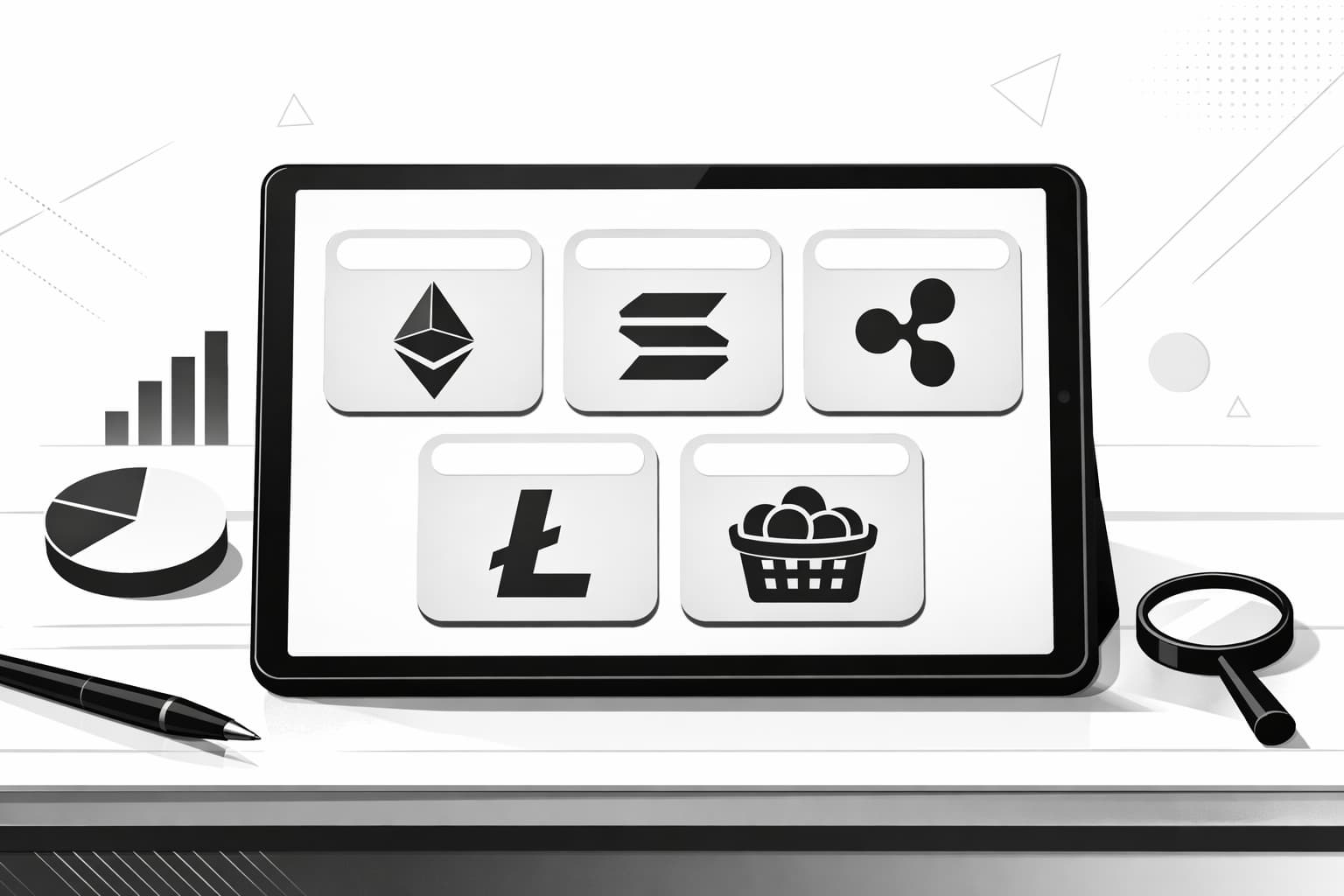
Think of this like walking into a grocery store for the first time. Some aisles offer variety packs — a little of everything — while others stock single-ingredient products for shoppers who know exactly what they want. Crypto ETFs work the same way.
Multi-Asset Crypto ETFs: Diversified Altcoin Exposure
Multi-asset crypto ETFs hold a basket of different cryptocurrencies, similar to how an S&P 500 index fund holds hundreds of stocks at once. Instead of betting everything on one coin, you get a slice of several simultaneously.
A standout example is the CoinShares Compass Crypto Index ETF (ticker: DIME). Rather than picking winners by gut feeling, DIME tracks a rules-based index that weights holdings by factors like market capitalization and liquidity. Its holdings typically span major altcoins alongside Bitcoin and Ethereum, giving investors broad digital-asset exposure in a single trade. (Expense ratio and AUM figures are approximate and subject to change — always verify current data with your broker or the fund's official prospectus.)
- Underlying assets: Basket of top cryptocurrencies by market cap
- Expense ratio: Approximately 0.95% (verify before investing)
- Where to buy: Major brokerage accounts (Fidelity, Schwab, TD Ameritrade)
This kind of fund tends to suit investors who believe in crypto broadly but don't want the stomach-churning risk of a single coin collapsing. Spreading exposure across assets smooths out some of that volatility.
Single-Asset Altcoin ETFs: Targeted Bets
If you have a strong conviction about a specific project — say, you've done your homework on Ethereum's smart contract ecosystem, or you're following the litecoin ETF approval story closely — a single-asset product might suit you better.
- Ethereum ETFs (e.g., iShares Ethereum Trust): AUM exceeding $10B (approximate, as of early 2026) | Expense ratio ~0.25% | Available on NYSE Arca
- Litecoin ETFs: Pending final SEC approval as of mid-2026 | Expected expense ratio ~0.50%
- Chainlink ETFs: Early-stage filings active | No AUM data yet available
A targeted chainlink etf, for instance, makes sense if you specifically believe decentralized oracle networks will become foundational infrastructure — and you want pure exposure to that thesis without diluting it across a basket.
The honest trade-off? Single-asset funds concentrate your risk. If that one coin stumbles, there's nothing else in the fund to cushion the fall. Choose based on how much research you've done — and how much volatility you can genuinely tolerate.
How to Buy an Altcoin ETF: A Beginner's Walkthrough
Good news: buying an altcoin ETF is almost identical to buying a stock. Most altcoin ETFs trade on major exchanges like the NYSE or Nasdaq, which means you can access them through any mainstream brokerage — Fidelity, Charles Schwab, TD Ameritrade, or even a mobile app like Robinhood. No crypto wallet required.
Here's the process broken down into five straightforward steps:
- Open a brokerage account — Sign up with a regulated broker if you don't already have one. Most accounts can be opened online in under 15 minutes with a government-issued ID.
- Fund your account — Transfer money from your bank using an ACH transfer or wire. Many brokers let you start with as little as $1.
- Search for the ETF by its ticker symbol — Every ETF has a unique ticker (for example, a Litecoin ETF might trade under a short code like "LTCE"). Type it into the search bar just like you would for a company stock.
- Place your order — Choose between a market order (buys immediately at the current price) or a limit order (only buys if the price hits a level you set). Limit orders give you more control, especially with assets that can move quickly.
- Monitor your position — Track performance through your brokerage dashboard. Set price alerts so you're not checking your phone every five minutes.
If you ever want to compare this experience to buying altcoins directly on a decentralized exchange, you'll quickly appreciate how much simpler the ETF route is for beginners.
What to Check Before You Buy: Expense Ratio, AUM, and Liquidity
Before you hit "buy," run through three quick checks on any altcoin ETF — or really, any ETF at all.
- Expense ratio: This is the annual fee the fund charges, expressed as a percentage of your investment. A 0.50% expense ratio means you pay $5 per year on every $1,000 invested. Lower is generally better, but a slightly higher fee can be worth it for a well-managed fund.
- AUM (Assets Under Management): Think of this as the fund's total size — how much money investors have collectively put in. A higher AUM suggests the fund is stable and trusted. A brand-new ETF with very low AUM carries a small risk of being shut down if it doesn't attract enough investors.
- Average daily volume: This measures how many shares trade hands each day and tells you how liquid the ETF is. High volume means you can buy or sell quickly without moving the price against yourself. Low volume can make it harder to exit your position cleanly.
These three numbers take about two minutes to find on any financial data site. Making them a habit before every purchase is one of the simplest ways to invest more confidently.
Altcoin ETF Risks and Disclosures: What Every Investor Should Know
No investment comes without trade-offs — and altcoin ETFs carry a specific set of risks that every investor deserves to understand before putting real money in.
Start with the obvious: altcoins are simply more volatile than Bitcoin. When crypto markets sell off, smaller coins tend to fall harder and faster. A Bitcoin ETF might drop 20% in a rough week; a Solana or Chainlink ETF could drop twice that. That's not a reason to avoid them, but it is a reason to size your position carefully. See how to size crypto within a broader portfolio before committing a dollar amount.
There's also regulatory risk — something Bitcoin ETF holders rarely face but altcoin investors absolutely must consider. Approval isn't permanent. The SEC retains authority to revisit products if circumstances change, new legislation passes, or a specific token becomes subject to enforcement action. A Litecoin ETF or Chainlink ETF approved today could face headwinds tomorrow.
If you're holding a futures-based ETF rather than a spot product, there's an additional layer called counterparty risk — meaning your returns depend partly on the financial health of the futures counterparties involved, not just the underlying asset's price. Spot ETFs largely sidestep this, which is one reason investors often prefer them.
Finally, don't overlook management fees. A 0.75% annual fee sounds small, but over ten years it quietly eats a meaningful chunk of your gains through compounding. Always compare expense ratios before choosing between similar products.
Altcoin ETF vs. Buying Altcoins Directly: Which Is Right for You?
This is genuinely a personal decision — and there's no single right answer. Think of it like buying a house through a real estate fund versus purchasing property yourself. The fund is easier, regulated, and fits neatly into your existing accounts. Owning the property directly gives you full control, but also full responsibility.
An altcoin ETF wins on simplicity. You buy shares through your regular brokerage, it fits inside a tax-advantaged account like an IRA, and you never worry about wallet security or lost seed phrases. For most beginners, that peace of mind has real value.
Buying altcoins directly wins on control and cost. There are no annual management fees eating into your returns, you can move assets into DeFi protocols to earn yield, and you genuinely own the underlying token. That said, direct ownership comes with real responsibilities — you'll want to spend time evaluating platform risk when holding crypto directly, since exchange failures and hacks remain genuine concerns.
- Choose an ETF if: you want simplicity, regulatory protection, and tax-wrapper access, or you're new to crypto entirely.
- Choose direct ownership if: you're comfortable managing wallets, want zero ongoing fees, or plan to participate in DeFi ecosystems.
- Consider both: many experienced investors hold a core ETF position for convenience and a smaller direct allocation for flexibility.
Neither path is wrong. The best choice is whichever one you'll actually stick with — because consistency beats perfection in long-term investing every time.
Key Takeaways
If you've made it this far — or skipped straight to the end — here's everything covered in this guide distilled into five essential points:
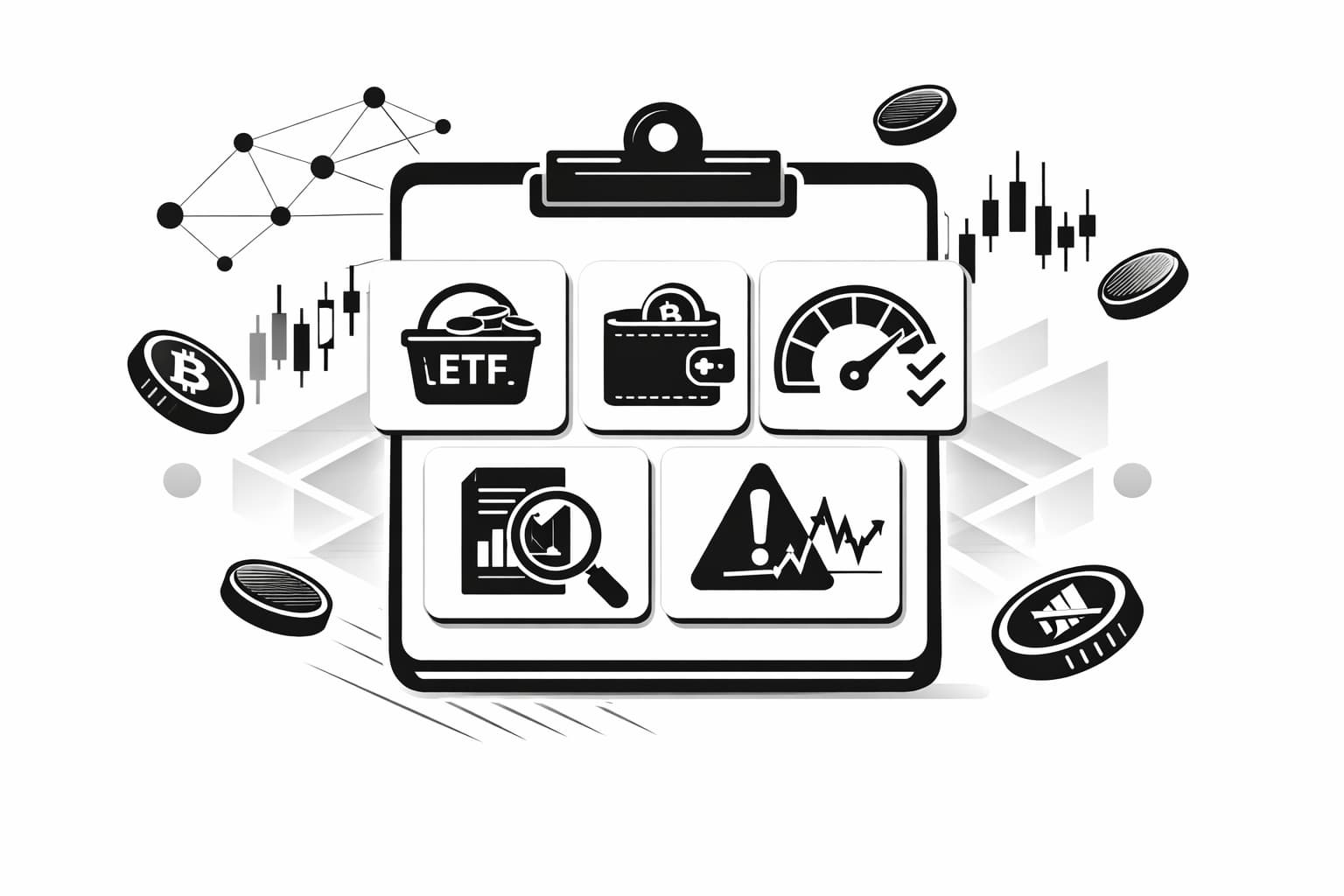
- An altcoin ETF is a regulated fund that tracks a cryptocurrency other than Bitcoin, letting you gain exposure to assets like Ethereum, Litecoin, or Chainlink through a standard brokerage account — no crypto wallet required.
- Unlike direct ownership, you don't hold the actual coins. Think of it like owning a slice of a gold vault without ever touching the gold yourself — convenient, but with some trade-offs in control and flexibility.
- The 2026 approval picture is moving fast. A litecoin ETF and a chainlink ETF are both actively under SEC review, with growing expectations of approval following the 2024–2025 Bitcoin and Ethereum precedents.
- Before buying any altcoin ETF, check the expense ratio, the fund structure (spot vs. futures), issuer reputation, and trading volume. Small differences in fees compound significantly over time.
- The main risks include price volatility, tracking error, regulatory shifts, and liquidity gaps — none of which are dealbreakers, but all worth understanding before you invest a single dollar.
Frequently Asked Questions
- Is there an ETF for altcoins?
- Yes, altcoin ETFs exist in 2026 in several forms. Single-asset products tracking Ethereum and Litecoin are available, alongside multi-asset crypto ETFs that hold a basket of altcoins in one fund. Availability varies by jurisdiction and broker, so check what's accessible in your region before investing.
- Which crypto ETF is best?
- The best crypto ETF depends entirely on your investment goal. If you want broad exposure, a multi-asset fund offers built-in diversification, while a single-asset ETF suits targeted bets on one coin. Evaluate each option by its expense ratio, assets under management, and the quality of its underlying holdings before deciding.
- Is there an ETF for Litecoin?
- As of 2026, a spot Litecoin ETF is in active filing stages, with Canary Capital among the key issuers pursuing approval from the SEC. The product has drawn notable regulatory attention given Litecoin's long track record and commodity-like classification. See the dedicated Litecoin ETF section of this article for the full breakdown.
- Did Litecoin ETF get approved?
- As of April 2026, a spot Litecoin ETF has not yet received final SEC approval. The filing is progressing through the SEC's review process, and a decision hinges on the agency confirming its regulatory framework for non-Ethereum altcoin products. Approval could follow once that milestone is formally reached.
- Is there an ETF for Chainlink?
- As of 2026, a spot Chainlink ETF has been filed but has not yet received SEC approval. Issuers including Grayscale and 21Shares have shown interest in LINK-based products. The regulatory outlook remains cautious, as the SEC continues evaluating altcoins that may carry securities classification risk.
- Is a Chainlink ETF coming?
- A Chainlink ETF is plausible but not guaranteed in the near term. The SEC's more open posture toward altcoin ETFs in 2026 is encouraging, and Chainlink's strong institutional interest and top-tier market cap work in its favor. However, unresolved questions around LINK's securities status could delay any formal approval timeline.
- Does XRP have an ETF?
- As of April 2026, a spot XRP ETF is under active SEC review, with multiple issuers having filed applications. The SEC's evolving stance on XRP's legal classification — following years of litigation with Ripple — has meaningfully improved the product's approval outlook. A final decision is anticipated within 2026.
- What are the top 5 altcoins?
- As of 2026, the top five altcoins by market cap are generally Ethereum, BNB, XRP, Solana, and Litecoin, though rankings shift with market conditions. Market cap matters here because regulators and asset managers typically prioritize larger, more liquid assets when structuring ETF products. Coins with higher market caps tend to attract institutional filings first and face a smoother path through regulatory review.
Sources
Author

Crypto analyst and blockchain educator with over 8 years of experience in the digital asset space. Former fintech consultant at a major Wall Street firm turned full-time crypto journalist. Specializes in DeFi, tokenomics, and blockchain technology. His writing breaks down complex cryptocurrency concepts into actionable insights for both beginners and seasoned investors.