Metaverse Scam Guide: How to Stay Safe in Virtual Worlds

Metaverse Scam Guide: How to Stay Safe in Virtual Worlds
What a metaverse scam is and why virtual worlds attract fraud
A metaverse scam is a fraud that uses virtual worlds, NFT projects, digital land sales, gaming economies, or related social channels to trick people into sending money, connecting wallets, sharing recovery phrases, or trusting fake identities. The usual goal is theft, market manipulation, or data collection.

The metaverse itself is not automatically fraudulent. Many platforms are real products with active communities, working marketplaces, and legitimate creators. Even so, virtual worlds attract fraud because they combine hype, anonymity, digital assets, and fast-moving investment stories. When money, identity, and access are tied to wallets and tokens, a single bad click can lead to permanent loss. Consumer alerts from the U.S. Federal Trade Commission and complaint data from the FBI Internet Crime Complaint Center regularly show that crypto-related fraud often relies on impersonation, fake investment pitches, and phishing.
In practice, readers will run into a few repeating risk categories: wallet-draining links, fake land and NFT sales, rug pulls, pump-and-dump tokens, phishing messages, and AI-generated impersonation of founders, moderators, or support staff. These patterns often appear across metaverse platforms, Discord servers, X posts, livestreams, and influencer promotions. If you are also exploring crypto gaming, this GameFi guide offers helpful background on how these ecosystems work.
Why hype, FOMO, and novelty make users vulnerable
Excitement changes judgment. Virtual real estate launches, limited avatar drops, whitelist promises, and “early access” offers create urgency that pushes people to act before they verify. New users may assume that expensive graphics, celebrity mentions, or fast-rising prices signal safety. In reality, novelty often lowers skepticism and rewards speed over caution.
Metaverse platform risk vs scam project risk
There is an important difference between platform risk and scam risk. A legitimate metaverse platform can still expose users to hacks, copycat listings, weak moderation, or volatile asset prices. By contrast, some projects are fraudulent from the start, built to steal funds, harvest wallet permissions, or vanish after minting. Knowing that difference helps you judge whether you are facing a risky environment or an outright trap.
The most common types of metaverse scams
Most metaverse scam patterns fall into a few easy-to-spot categories.
- Fake investments and virtual land schemes
- Rug pulls and abandoned projects
- Pump-and-dump token promotions
- Phishing scams and malicious wallet prompts
- Fake profiles and AI impersonation
- Phony NFT sales and counterfeit marketplaces
Once you can name the pattern, it becomes much easier to slow down and check what is really happening before you connect a wallet or send funds. Blockchain analysis firms such as Chainalysis have repeatedly documented losses tied to rug pulls, phishing, and market manipulation in crypto markets, which overlap heavily with metaverse projects and NFT ecosystems.
Fake investment opportunities and virtual land schemes
One of the oldest versions of a metaverse scam is the pitch that sounds like a rare early opportunity. It may promise virtual land in a popular world, discounted token presales, guaranteed returns, or VIP access before a public launch. In many cases, the website looks polished, the roadmap sounds ambitious, and the countdown timer creates pressure to buy fast.
The warning signs are usually clear on closer inspection: vague team details, unverifiable partnerships, aggressive referral rewards, and claims that prices can only go up. Some offers even copy real projects and change only the wallet address or sale page. If you are considering a presale, review basic crypto presale risk checks before spending anything.
Rug pulls and abandoned metaverse projects
Another common pattern starts with heavy marketing and strong community hype. A team sells tokens, land parcels, avatars, or access passes, collects funds, and then stops building. Sometimes the founders vanish outright. In other cases, they stay visible but quietly miss deadlines, remove features, and stop answering hard questions.
This is what many people mean by a rug pull: insiders raise money first and leave buyers holding assets tied to a project that no longer has real support. A stalled roadmap, disabled comments, and unexplained treasury moves can all point in that direction.
Pump-and-dump token promotions
Some scams work by manipulating price rather than selling a fake product. Influencers, private chat groups, or fake communities promote a thinly traded token as the next big metaverse winner. As new buyers rush in, insiders sell into the spike. The price then drops sharply, often within hours.
If the promotion focuses more on hype than use, ownership, or liquidity, treat it with caution. Sudden volume surges and repeated “buy now” messages are classic signs.
Phishing scams, fake profiles, and phony NFT offers
Finally, many losses happen through deception at the account and wallet level. Scammers create cloned login pages, fake support accounts, AI-generated video messages, and social profiles that imitate founders or moderators. They send links to “verify” a wallet, claim you have won an airdrop, or offer a limited NFT mint on a counterfeit marketplace.
Once you approve the wrong transaction, the damage can be immediate. That is why phishing and impersonation remain such effective forms of metaverse scam activity. If you are newer to digital collectibles, start with NFTs explained so fake offers are easier to spot.
Red flags that signal a metaverse scam
After you know the main scam patterns, the next step is spotting warning signs early. In many cases, a metaverse scam looks polished at first glance, but small details give it away. Before you sign up, connect a wallet, or send funds, pause and run through a simple checklist. If several red flags appear at once, treat that as a reason to walk away.
Red Flag | Why It’s Risky |
|---|---|
Guaranteed returns | Promises of fast, fixed profit are a common sign of fraud or price manipulation. |
Anonymous or unverifiable team | If no one can be identified, victims have little recourse when funds disappear. |
Copied branding or lookalike site | Scammers often imitate trusted brands to steal logins, wallet access, or payments. |
Pressure to act now | Urgency is used to stop you from checking links, contracts, and project details. |
Thin or vague documentation | Poor whitepapers, missing terms, and unclear roadmaps can hide weak or fake projects. |
Website, wallet, and marketplace warning signs
Start with the basics: check the URL carefully, including spelling, extra characters, and odd subdomains. A site that asks for a wallet connection before showing basic information deserves extra scrutiny. Read every wallet prompt. If the request includes broad token approvals, permission changes, or unclear contract actions, stop until you understand exactly what you are signing.
On marketplaces, low-quality listings are another clue. Watch for stolen artwork, inconsistent pricing, broken descriptions, and seller accounts with little history. If the project documentation is thin, copied, or filled with vague claims instead of specifics, that is a bad sign.
Community and social media red flags
Then look at the project’s public activity. A channel with huge follower counts but generic comments, repeated phrases, or very low real discussion may be bot-driven. Be wary of sudden hype waves, especially when accounts push “last chance” messages at the same time.
Celebrity mentions also need verification. If an endorsement cannot be confirmed on the celebrity’s official channels, assume it may be fake. In short, when branding looks rushed, pressure is high, and proof is thin, step back before risking money or wallet access.
How scammers bypass ad reviews and use social media to spread fraud
After spotting red flags, the next step is understanding how a metaverse scam reaches you in the first place. Many fraud campaigns do not look amateur at all. They appear as sponsored posts, polished video ads, “breaking news” clips, and sleek landing pages that feel like real product launches. That presentation is the trap.
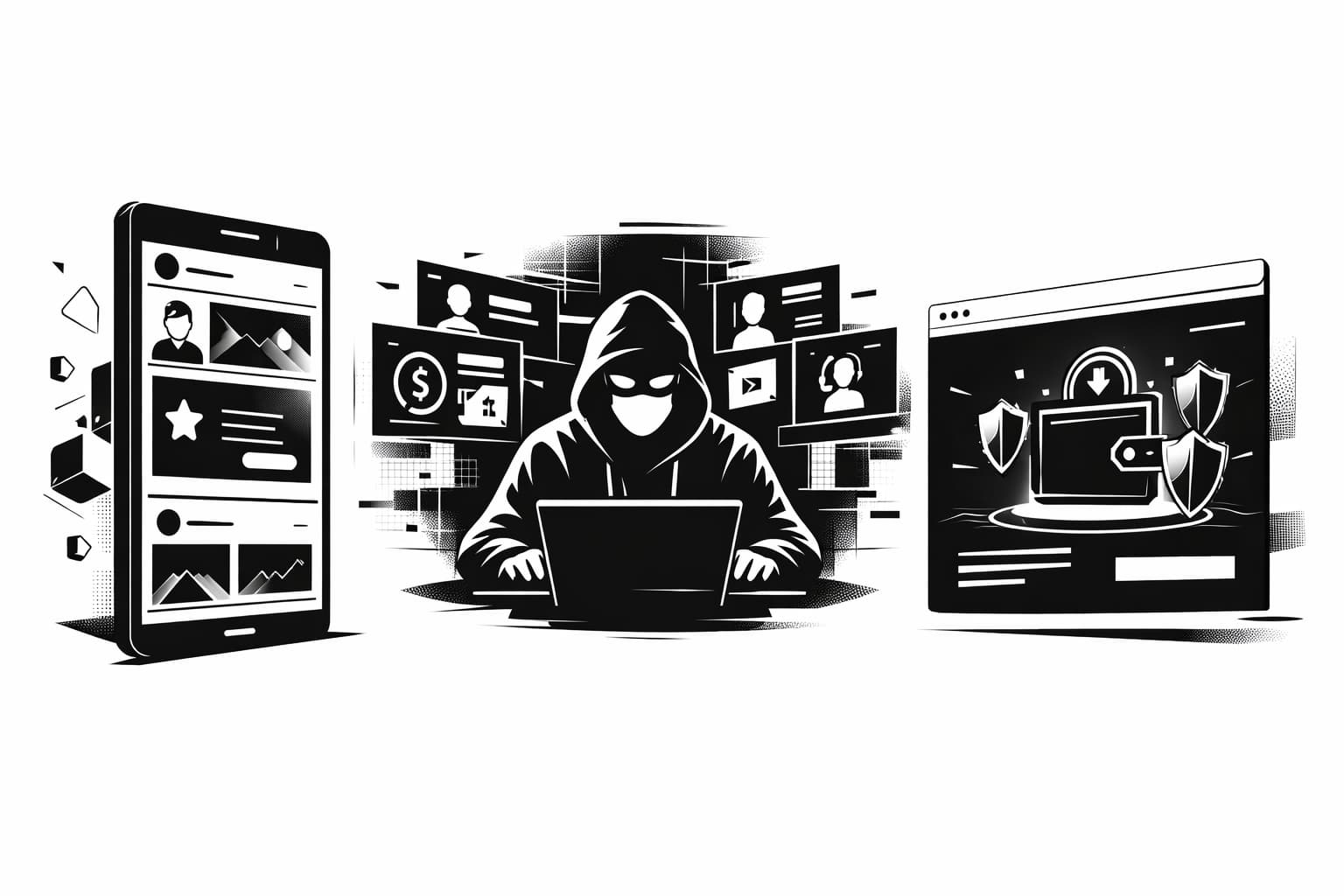
Scammers often test multiple ad versions, swap domains quickly, and redirect users after a click so moderation teams see one page while victims see another. Some buy aged social accounts, hijack small media pages, or build fake community profiles that post in waves to create the impression of momentum. Law-enforcement briefings from agencies such as Europol have warned that online fraud groups routinely use impersonation, ad abuse, and social engineering to make scams look legitimate at scale.
Malvertising, cloned brands, and fake authority signals
One common tactic is malvertising: paid ads that mimic trusted brands, virtual world platforms, wallet providers, or major marketplaces. Others clone news sites, copy logos, and use verified-looking badges, countdown timers, press mentions, or edited screenshots of celebrity and influencer support. Even professional design, active comment sections, and media-style language can be staged.
For that reason, treat marketing as unverified until you confirm the source independently. Visit the official site by typing the URL yourself, check social handles from the project’s real homepage, and compare announcements across several trusted channels. A polished campaign may sell confidence, but it does not prove legitimacy.
The role of AI in metaverse scams
As scams in virtual worlds become more polished, AI is making a metaverse scam cheaper to run and harder to spot. In the past, fraud often relied on sloppy messages or obvious fake profiles. Now, scammers can generate realistic avatars, cloned voices, polished support replies, and convincing testimonials in minutes. That means identity-based fraud can scale fast without looking low-effort. Security researchers and major platforms have repeatedly warned about the rise of deepfake audio, synthetic profile images, and AI-written phishing messages.
Just as concerning, AI helps scammers tailor their approach. Instead of sending the same pitch to everyone, they can create personalized messages based on your posts, wallet activity, or community memberships. A fake “urgent” warning, refund offer, or whitelist invite may sound specific enough to feel real.
How AI makes impersonation and phishing more believable
Scammers now use AI to mimic founders, customer support staff, moderators, and community managers across chat, email, Discord, Telegram, and social platforms. You might see a video avatar announcing a token update, hear a voice note that sounds like a project lead, or receive a direct message written in the same tone as official support. Synthetic reviews and staged user success stories add social proof. The lesson is simple: verify identity through official channels before clicking links, sharing codes, or connecting a wallet.
How to stay safe in the metaverse: a practical security checklist
Once you know how a metaverse scam typically works, the next step is building habits that slow you down before money or wallet access is on the line. In practice, most losses happen during rushed clicks, weak wallet setup, or poor project checks. This checklist gives you a simple way to reduce risk before you explore, connect, sign, or buy.
Before you connect a wallet or buy anything
- Verify the domain name character by character, and open links only from official project channels you found independently.
- Check the project’s website, Discord, X, or marketplace pages for consistency in branding, announcements, and contact details.
- Confirm contract details against official sources, and avoid minting or buying from copied listings or unofficial contract addresses.
- Research the team’s credibility, past projects, and public history; anonymous teams are not always frauds, but they raise the risk.
- Review the roadmap for realistic promises, clear timelines, and sensible economics instead of hype-heavy claims about guaranteed returns.
- Assess community quality by reading real discussions; a chat full of bots, pressure tactics, or nonstop price talk is a warning sign.
- Learn the basics of wallet setup before spending money by reading crypto wallet basics.
General security habits for metaverse users
- Use strong, unique passwords for every exchange, wallet app, email account, and metaverse platform.
- Enable two-factor authentication wherever possible, preferably with an authenticator app instead of SMS.
- Separate wallets by purpose: keep a smaller “hot” wallet for exploring and a separate wallet for higher-value assets.
- Protect your recovery phrase offline, never paste it into websites or chats, and review how to protect your seed phrase.
- Review every transaction prompt before signing, paying attention to token approvals, spending limits, and destination addresses.
- Revoke old token approvals you no longer need, especially after testing new apps or virtual world integrations.
- Keep devices updated, remove suspicious browser extensions, and avoid logging in or signing transactions on shared networks.
- Treat direct messages, urgent support offers, and “exclusive” investment tips with skepticism, even if they appear to come from known accounts.
In short, staying safe in virtual worlds is less about one perfect tool and more about repeatable checks. If you verify first, research before you buy, and review every signature request, you make it much harder for a metaverse scam to succeed.
What to do if you think you were targeted or scammed
If a metaverse scam may have reached you, act fast but stay calm. First, stop interacting with the site, app, or message that triggered the issue. Disconnect the affected wallet from the platform, revoke any token approvals, and, if you still control the wallet, move remaining assets to a clean wallet only if you can do so safely.

Immediate damage-control steps
Next, save evidence before links disappear. Record wallet addresses, transaction hashes, screenshots, timestamps, NFT contract details, and usernames. If needed, review how to use a blockchain scanner to confirm what happened. Then report the incident to the wallet provider, marketplace, game, exchange, and the social platform involved. Recovery is never guaranteed, but strong records can support investigations and blockchain forensics.
Report, secure accounts, and document everything
Change passwords on related accounts, especially email, exchange logins, and social profiles that may have been exposed. Recheck two-factor authentication settings and remove unknown devices or sessions. If fiat payments were involved, contact your bank or card provider immediately. You can also file reports with local consumer-protection agencies, the FTC, or the FBI IC3, depending on your location and the type of loss. Fast reporting will not always recover funds, but it can help limit further damage and may help others avoid the same scam.
Frequently Asked Questions
- Is the metaverse a scam?
- No, the metaverse itself is not inherently a scam. It refers to virtual spaces, games, and platforms where people interact digitally. The real risk comes from fraudulent projects, fake investments, and misleading promotions that use metaverse hype to exploit buyers, traders, and inexperienced users.
- Is metaverse being shut down?
- No, the metaverse is not one company, app, or website that can be switched off. It is a broad idea covering many virtual worlds and technologies. While individual platforms may shut down, rebrand, or lose funding, that does not mean the entire metaverse concept has ended.
- Is there a scam involving Meta?
- Yes, scammers often misuse Meta’s name in fake ads, phishing emails, customer support messages, and bogus investment offers. A familiar brand does not guarantee legitimacy. Always verify official domains, avoid clicking unexpected links, and never share passwords, wallet keys, or payment details without checking the source.
- How much money did Mark Zuckerberg lose on The metaverse?
- Reports usually refer to Meta spending tens of billions of dollars on metaverse-related development and to stock-market losses tied to investor concerns. That is different from saying Mark Zuckerberg personally lost a simple fixed amount. Headlines often mix company spending, market value changes, and unrealized paper losses.
Sources
- A Meta-powered investment scam is spreading across 25 countries - how to spot (and avoid) it | ZDNET
- Metaverse Scams and How to Avoid Them: NFT Scam, Immediate Pump and Rug Pull Prevention - Mazerspace
- Cybercriminals target metaverse investors with phishing scams
- metHow to Spot and Prevent Metaverse Scams: A Complete Guide | by Metaverse Development Company | Medium
- Tech Hype Scams: From the Metaverse, 5G and Beyond | E-SPIN Group
Author

Crypto analyst and blockchain educator with over 8 years of experience in the digital asset space. Former fintech consultant at a major Wall Street firm turned full-time crypto journalist. Specializes in DeFi, tokenomics, and blockchain technology. His writing breaks down complex cryptocurrency concepts into actionable insights for both beginners and seasoned investors.