Metaverse Failed: What Went Wrong and What Comes Next

What people mean when they say the metaverse failed
Metaverse failed became a common phrase because the concept was sold as a near-term replacement for today’s internet, work, and social life, but the products were costly, awkward, fragmented, and short on clear everyday value. In practice, several different promises broke at different speeds.
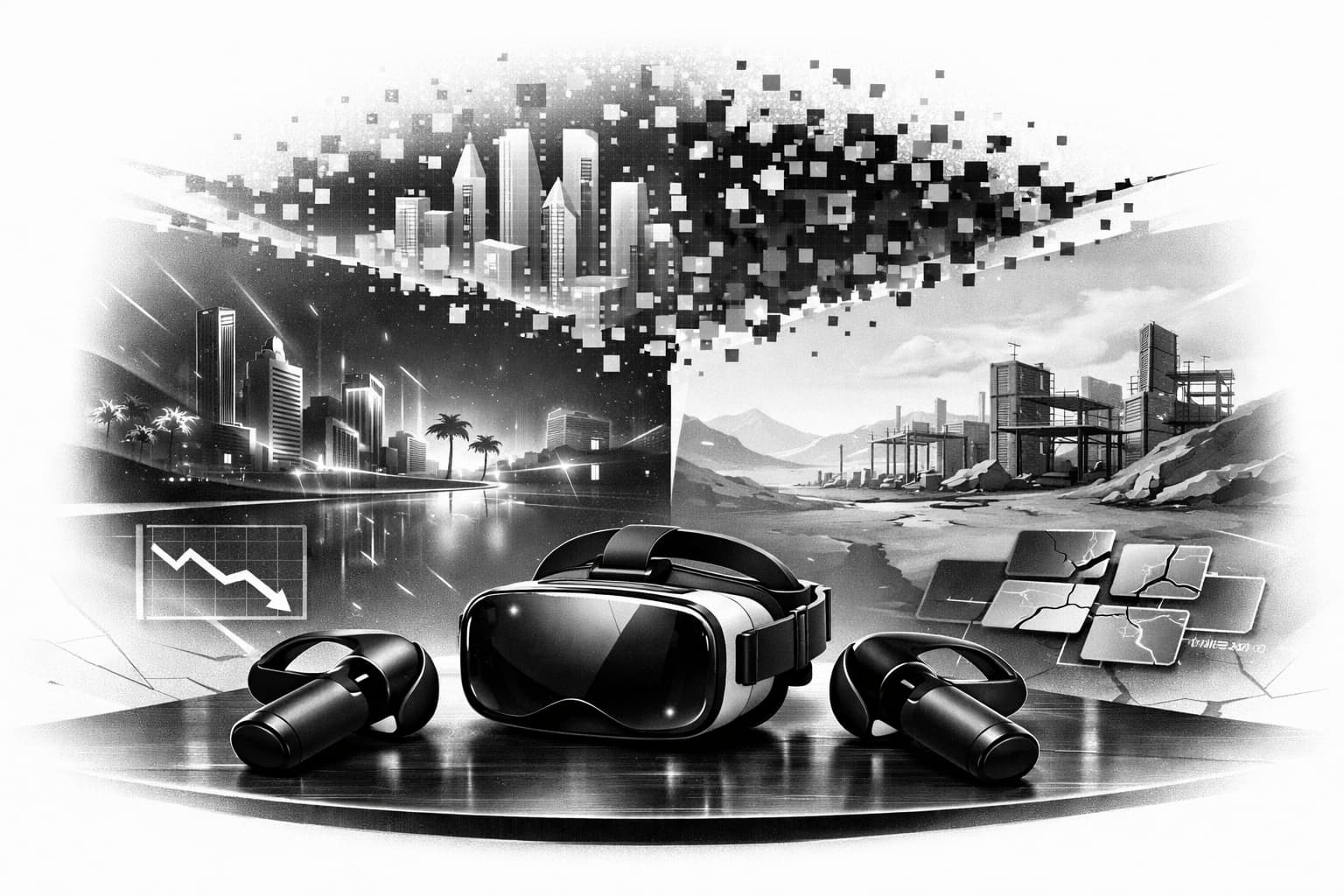
That distinction matters. When people say the metaverse failed, they are rarely talking about one single product or one clean technological collapse. They usually mean that the broad narrative lost credibility. Consumer excitement cooled, investor confidence dropped, and many companies discovered that ambitious virtual-world plans were far ahead of what users actually wanted in 2022, 2023, and beyond.
At the center of the metaverse hype cycle was a bundled promise: persistent virtual spaces, digital identity, creator economies, remote work, gaming, commerce, and social connection would merge into one dominant platform shift. That package was appealing in pitch decks and keynote presentations. Yet each part depended on different business models, hardware assumptions, and user habits. As a result, the category did not fail in one way. The branding weakened, consumer expectations proved inflated, the investment thesis looked too early, and product execution often fell short.
Was it the metaverse itself or the promise around it?
A useful starting point is to separate three things that were often treated as if they were the same. First, there are immersive digital environments such as game worlds, virtual collaboration tools, and 3D social spaces. Second, there is the underlying technology stack: VR headsets, AR glasses, XR software, spatial computing, graphics engines, and networking tools. Third, there is the cultural and economic promise attached to the word metaverse by big tech firms, consultants, and startups.
The first two categories did not disappear. Games still attract large communities. Industrial training in VR still has practical use cases. AR and XR development continues. What weakened was the claim that all of this would quickly converge into a new mainstream internet layer for everyone.
A quick answer for readers: why the metaverse failed
In short, the metaverse failed because product-market fit was weak, hardware remained expensive or uncomfortable, user experiences were often clunky, standards were inconsistent, and timelines were wildly optimistic. People were asked to change how they worked, socialized, and spent money before the tools were good enough to justify the switch.
The metaverse hype cycle explained
To understand why so many people now say the metaverse failed, it helps to place the story inside a familiar pattern: the metaverse hype cycle. The idea did not appear out of nowhere in 2021. It had been building for decades through science fiction, gaming, virtual worlds, and earlier waves of VR enthusiasm. What changed was the speed at which a loose concept became a corporate strategy, a funding theme, and a mainstream media narrative. Once that happened, expectations rose far faster than the products themselves. The framing also mirrors the broader hype-cycle model popularized by Gartner, where emerging technologies often move from excitement to disappointment before practical uses become clearer.[1]
- Innovation trigger: A long-standing idea about shared digital worlds gained fresh momentum as VR hardware improved, game platforms grew, and large tech firms began presenting it as the next phase of the internet.
- Peak of inflated expectations: After Facebook rebranded to Meta, headlines, investor decks, and startup pitches treated the metaverse as a near-term mass-market shift rather than a distant, uncertain buildout.
- Trough of disillusionment: Adoption, retention, technical quality, and consumer demand failed to match the story, leading to skepticism from users, investors, and the press.
- Slope of enlightenment: What remains is a narrower, more practical search for value in gaming, training, design, collaboration, and mixed-reality tools rather than one all-purpose virtual world.
From science-fiction vision to boardroom strategy
The original metaverse vision was broad, even poetic: persistent digital spaces where identity, work, play, and commerce could blend. In business settings, though, that vision became something simpler and easier to sell. Executives framed it as the next computing platform. Investors heard a familiar growth story: own the interface, own the ecosystem, own the future. As a result, the metaverse hype cycle moved quickly from speculative idea to strategic mandate.
At the same time, companies across sectors rushed to attach themselves to the theme. Fashion brands launched virtual items. Consultants published forecasts. Venture capital flowed into tools, avatars, virtual real estate, creator platforms, and 3D collaboration startups. In hindsight, much of this activity reflected fear of missing the next platform shift as much as belief in immediate demand.
Why Meta Platforms accelerated the narrative
Meta Platforms became the defining force in this phase because it did more than endorse the category; it tried to name and shape it. Mark Zuckerberg argued that immersive computing would succeed the mobile internet, and the company put that claim at the center of its identity. The Facebook-to-Meta rebrand gave the story symbolic weight, while Reality Labs spending gave it financial scale. Billions in losses signaled commitment, but they also raised the bar for visible progress. Meta’s annual reports show Reality Labs posting operating losses of more than $10 billion per year across multiple years, making the bet unusually visible for a public company.[2]
Then came Horizon Worlds, headset pushes, developer messaging, and repeated efforts to present Meta as the company building the entry point to this future. That helped turn the metaverse from a niche idea into a household topic. Yet it also narrowed public perception. Many people came to equate the entire category with Meta’s specific products, design choices, and timelines.
The trough: when excitement met reality
Eventually, attention collided with user behavior. Headsets were still expensive or awkward for everyday use. Social VR remained a niche habit rather than a mass one. Retention looked weak, product quality often felt unfinished, and many people simply did not want to spend long periods in cartoonish virtual spaces for work or casual socializing. As media coverage turned from optimism to scrutiny, sentiment shifted fast. Market data also showed that VR hardware growth was uneven, with demand softening after early bursts of interest rather than turning into steady mainstream adoption.[3]
That is the heart of the metaverse hype cycle: not that immersive technology had no future, but that the public was sold a sweeping transformation long before the experience justified it. The broad narrative broke under its own promises. Even so, the next stage is not disappearance. It is selection. The ideas that solve real problems may survive, while the grand, universal metaverse story continues to fade.
What went wrong: the core reasons the metaverse stalled
After the excitement faded, the same question kept coming up: why did the metaverse hype cycle cool so fast? The short answer is that the story moved ahead of the product. Big promises arrived before everyday value did. In practice, many metaverse projects asked people to change how they worked, played, shopped, or socialized without giving them a strong enough reason to do it.
That helps explain why many people now say the metaverse failed. Yet the more accurate diagnosis is narrower. The broad narrative stalled because too many products were incomplete, uncomfortable, hard to access, or unclear in purpose. At the same time, some immersive tools kept improving in gaming, training, design, and collaboration. The market did not reject every 3D or virtual experience. It rejected weak ones.
Problem | Why it mattered |
|---|---|
Hardware friction | Headsets were still expensive, bulky, isolating, and inconvenient for daily use. |
Weak UX | Awkward controls, motion discomfort, and clumsy onboarding pushed users away early. |
No killer app | Most experiences felt like demos, not products people wanted to return to each week. |
Lack of standards | Users could not easily move identity, goods, or contacts across platforms. |
Poor retention | Curiosity drove first visits, but weak habits and limited value hurt long-term engagement. |
Lesson 1: build a metaverse product that people genuinely want
The biggest problem was product-market fit. Many metaverse experiences were impressive for five minutes and forgettable after that. A virtual showroom might look polished. A digital campus tour might feel fresh once. A social world might attract a launch crowd. Still, few of these turned into routines.
Users return to products that save time, create status, reduce friction, or deliver real fun. Many metaverse apps did none of those well enough. Consumer VR often had a novelty spike followed by steep drop-off. Enterprise pilots looked promising in presentations, but some teams found that video calls, shared documents, or standard 3D tools solved the job more simply. In other words, attention was easy to win; habit was not.
Lesson 2: your metaverse project should have a unique purpose
Next, too many companies copied a vague template of “persistent virtual world” without answering a basic question: what is this actually better at? Gaming already had strong virtual spaces. Work already had accepted tools. Education, retail, and social platforms each had very different needs. One generic metaverse pitch could not serve all of them.
When a project lacked a distinct purpose, it drifted. Was it a game, a meeting tool, a shopping environment, a community hub, or a digital real estate bet? Often it tried to be all of them. That confused users and weakened adoption. The same issue appeared in conversations about NFTs and digital ownership and blockchain basics: the technology story was loud, but the user problem being solved was often fuzzy.
Lesson 3: focus on iterating the experience, not the buzzword
Branding was another trap. Teams talked about “the metaverse” as if naming the future would make the experience work. It did not. People noticed the real issues right away: awkward avatars, unnatural eye contact, motion sickness, confusing controls, long setup steps, and environments that felt empty unless an event was happening.
What users needed was patient iteration. Better hand tracking. Faster startup. Cleaner interfaces. More natural social signals. Better moderation. Lighter sessions that fit into real life. Those improvements sound less exciting than a moonshot narrative, but they matter more. The metaverse hype cycle rewarded ambition in messaging; the market rewarded products that became less annoying over time.
Hardware cost, comfort, and access barriers
Even when software improved, hardware remained a gate. Headsets got better, but they were still a commitment. Price mattered. Weight mattered. Battery life mattered. So did hair, glasses, heat, and the social awkwardness of wearing a face-mounted device in shared spaces. Mainstream users were not ready to spend hours a day inside headsets, especially for tasks that could be done with a phone or laptop.
AR glasses faced a similar issue from the other side. Truly lightweight, stylish, all-day wearable devices were not ready at scale. That meant the grand vision depended on hardware that either felt too heavy or did too little.
No shared standards, weak interoperability, and fragmented platforms
Finally, the vision of connected virtual worlds ran into platform reality. Users could not easily carry identity, avatars, friend graphs, or purchased items across services. Developers faced closed ecosystems, shifting rules, and incompatible systems. Without shared standards, the idea of one connected metaverse stayed more marketing line than lived experience.
This mattered because network effects depend on portability and trust. If your digital goods only work in one app, their value is narrow. If your identity resets from platform to platform, social continuity breaks. Until interoperability improves, most virtual spaces will remain separate products, not one smooth world. That does not mean immersive tech has no future. It means the original promise asked the market to believe in a level of coordination that the industry had not yet built.
Meta, Zuckerberg, and the billion-dollar bet
No company became more tightly linked to the metaverse hype cycle than Meta. The 2021 name change turned a broad, fuzzy idea into a high-stakes corporate promise. That mattered because public understanding of the category soon ran through a single company’s spending, product demos, and quarterly results. As a result, when people argued that the metaverse failed, they were often reacting as much to Meta’s execution and messaging as to the wider future of immersive computing.
How much money did Mark Zuckerberg lose on the metaverse?
The cleanest way to answer that question is to avoid the headline shortcut. Mark Zuckerberg did not personally “lose” a simple lump sum on the metaverse. Instead, Meta poured tens of billions of dollars into Reality Labs, the division responsible for VR, AR, and related software, while reporting very large operating losses year after year.[2] Those losses reflected ongoing investment spending on hardware, research, platform development, content support, and ecosystem building.
In other words, this was not a single failed purchase. It was a long-duration capital allocation decision with weak near-term returns. Even so, markets tend to judge public companies on visible progress. When Reality Labs losses kept growing and consumer adoption stayed modest, investors treated those numbers as evidence that the metaverse hype cycle had outrun product reality.
What Zuckerberg said versus what users experienced
Zuckerberg consistently framed the metaverse as a long-term computing transition, not a one-year product launch. On that level, his argument was coherent: new platforms take time, hardware improves in steps, and developer ecosystems do not appear overnight. Yet users were not evaluating a ten-year thesis. They were judging the products in front of them.
That is where Horizon Worlds became such a powerful symbol. Meta presented a future of social presence, work, play, and creation in shared virtual spaces. Users, by contrast, often saw empty environments, awkward avatars, limited reasons to return, and an experience that felt far less compelling than the vision suggested. The gap between strategic narrative and current utility was hard to ignore.
Why “the metaverse is dead; long live AI” became the new narrative
Then the market moved. As generative AI products showed immediate consumer appeal and clearer business uses, capital and attention shifted fast. Compared with the metaverse, AI offered shorter feedback loops, lower hardware friction, and more direct paths to revenue. Investors who had tolerated speculative spending suddenly had a new benchmark for what exciting growth could look like.
That shift changed Meta’s story as well. The company did not abandon immersive technology, but it had to compete for belief against AI’s faster payoff. In that environment, “metaverse is dead” became less a technical verdict than a market one: the old narrative lost momentum, while a more monetizable one took its place.
Why consumers, creators, and businesses did not fully buy in
After the early excitement faded, adoption problems became harder to ignore. The metaverse hype cycle was driven by big promises, but each audience faced a different set of practical questions. In many cases, the answers were weaker than the marketing suggested. That helps explain why the idea spread quickly while sustained usage did not.
Consumer adoption: novelty is not the same as habit
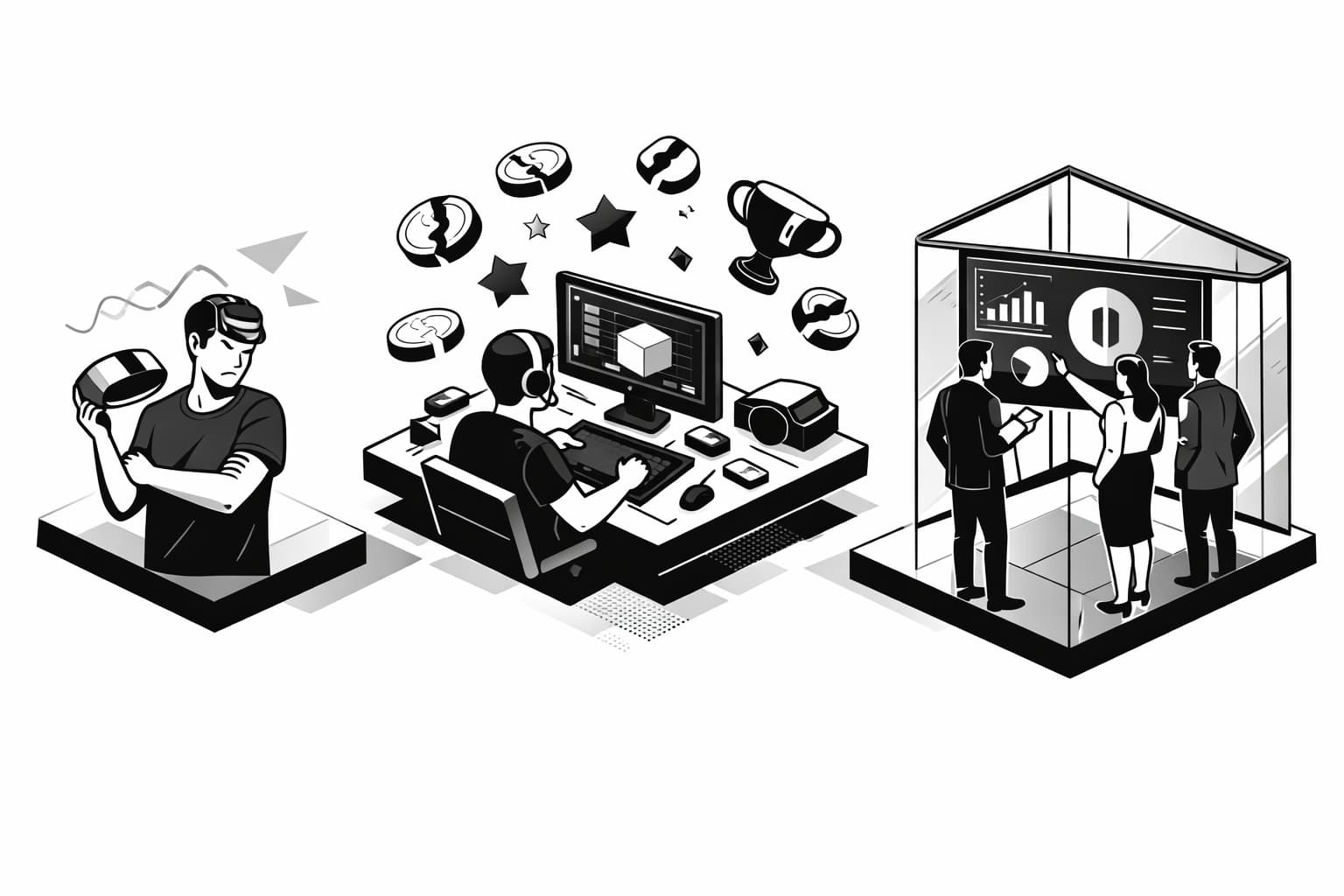
For consumers, the biggest problem was simple: trying something once is not the same as building it into daily life. Many virtual worlds generated curiosity, but retention often dropped after the first few visits. People sampled events, avatars, and immersive spaces, then returned to easier digital habits such as messaging, scrolling, gaming, or video calls.
There was also social friction. Headsets could feel isolating, setup took effort, and shared participation depended on friends showing up on the same platform at the same time. Even when the experience worked well, it rarely replaced simpler behaviors. In that sense, the story that the metaverse failed is partly a story about mismatch. The product asked users to change routines without offering enough everyday value in return.
Creator economics and platform uncertainty
Creators faced a different barrier: unstable incentives. Building immersive experiences takes time, skill, and money, yet monetization was often unclear. Revenue models shifted, audiences were fragmented, and platform rules could change with little warning. As a result, many creators treated metaverse projects as experiments rather than long-term businesses.
That uncertainty mattered. Few wanted to invest deeply in assets, worlds, or virtual goods if discovery tools were weak and ownership depended on a single company’s ecosystem. Even interest in metaverse tools and platforms for creators did not always translate into durable creator economies. Without reliable demand and predictable payouts, enthusiasm stayed limited.
Enterprise use cases that sounded better than they worked
Businesses often found some real value, but less than the hype implied. Training simulations could improve safety and repetition. Collaboration tools sometimes helped with design reviews. Retail pilots offered immersive product demos, and digital twins proved useful in certain industrial settings.
Still, scale remained the issue. Hardware costs, integration work, employee adoption, and unclear ROI kept many projects in pilot mode. In other words, the metaverse failed less because every use case was empty and more because too few of them were strong enough to justify broad rollout. Research from firms such as PwC and Deloitte has repeatedly shown that XR can work in training and industrial settings, but those gains are usually tied to specific workflows rather than a universal metaverse model.[4]
What survived the crash: VR, XR, gaming, and niche use cases
Even if the metaverse hype cycle broke down, immersive technology did not vanish with it. That distinction matters. The big consumer story about persistent virtual worlds never matched real demand, but several narrower categories kept moving because they solved specific problems or delivered clear entertainment value.
In other words, saying the metaverse failed is not the same as saying every related product failed. What survived was the part of the market tied to obvious outcomes: better gameplay, more effective training, faster design review, or more convenient access to digital information in the physical world.
Virtual reality still works when the use case is clear
VR remains strongest where immersion is the product, not a vague promise. Gaming is the clearest example. Players will wear a headset for a compelling title, social play session, or fitness experience because the benefit is immediate. That is very different from asking mainstream users to spend hours inside a general-purpose virtual world.
Beyond entertainment, simulation and training continue to show steady value. In aviation, healthcare, manufacturing, and field operations, VR can reduce training costs, improve repetition, and create safer practice environments. Design and engineering teams also still use immersive review tools to inspect spaces, products, and workflows before physical production begins.
That same pattern helps explain why interest has persisted around gaming-adjacent experiments, including crypto gaming and GameFi use cases, even as the broader metaverse narrative lost credibility. Focused experiences are easier to justify than open-ended digital worlds.
Glasses, retail, and the physical-world bet
The next phase looks less like escape into virtual space and more like software layered onto everyday life. Lighter XR devices, camera-equipped smart glasses, and ambient interfaces have a better chance because they ask less from users. Instead of replacing reality, they support tasks within it.
Retail, wayfinding, remote assistance, translation, and contextual information are more practical bets than all-day avatar living. If hardware keeps improving on comfort, battery life, and visual quality, smart glasses may succeed where the metaverse hype cycle overreached: not by building a new world, but by making the existing one easier to move through.
What comes next after the metaverse hype cycle
After the metaverse hype cycle peaked and broke, the next phase looks less like a single digital universe and more like a set of focused tools. That shift matters. If the old story promised one persistent, interoperable world for work, play, and commerce, the emerging story is narrower and more believable. In 2026, the better question is not whether the metaverse failed in absolute terms, but which immersive products solve real problems well enough to last.
From one grand metaverse to many practical 3D experiences
The most likely future is fragmented by design. Instead of one giant destination, companies are building 3D experiences around clear jobs: remote assistance, training simulations, design reviews, retail visualization, live events, and game-like social spaces. These products do not need to connect into a universal identity and asset system to be useful. They only need to work reliably inside a product, team, or customer journey.
That also means success may be quieter. A warehouse training app, an AR shopping feature, or a collaborative engineering model will not look like the original metaverse pitch, yet each can create measurable value. In that sense, what comes next is smaller, less ideological, and easier to judge on results. Some supporting ideas, including decentralized physical infrastructure networks, may still shape parts of this ecosystem, but they are no longer the center of the story.
How AI may matter more than virtual worlds
At the same time, AI is becoming a stronger driver than virtual-world theory. AI can generate environments, objects, non-player characters, voice interactions, and adaptive interfaces far faster than human teams alone. That lowers production costs and makes immersive software easier to build and update.
More importantly, AI changes the interface itself. Instead of asking users to learn complex worlds, systems can respond conversationally, guide tasks, and personalize what appears in view. Selective immersion, powered by spatial computing and AI agents, may prove far more compelling than an always-on metaverse. So while many now say the metaverse failed, the more accurate conclusion is that the grand narrative failed first. The useful pieces are still moving forward, just under different names and with tighter goals.
How to evaluate future metaverse or XR projects realistically
After the metaverse hype cycle, the smartest question is no longer “Is this the next internet?” It is “Does this solve a real problem for a real group of users?” That shift matters because the reason many people say the metaverse failed is not that immersive tech has no value. It is that the claims ran far ahead of the evidence.

So when a new XR, virtual world, or spatial computing project appears, judge it with a simple filter. Look for proof, not vision slides. If the basics are weak, the story is probably bigger than the product.
A simple checklist for spotting substance over hype
- User need: Is there a clear job to be done, or just a futuristic pitch?
- Retention: Do users come back after the first week or month?
- Hardware friction: How much setup, cost, and discomfort stand in the way?
- Standards: Does it work across platforms, or is it locked into one ecosystem?
- Monetization: Is there a believable business model beyond speculation?
- Measurable outcomes: Are there hard numbers on engagement, savings, learning, or sales?
In short, future winners will look less like a grand metaverse narrative and more like products people keep using because they work.
Frequently Asked Questions
- Why did the metaverse fail?
- The metaverse struggled because it lacked strong product-market fit, relied on expensive and often uncomfortable hardware, and failed to keep users engaged over time. Use cases were vague, platforms were fragmented, and expectations were inflated by big tech promises and nonstop media hype that the products could not match.
- Why is the metaverse shutting down?
- The metaverse is not literally shutting down as a whole. What happened is that many companies scaled back, rebranded, or closed specific projects because user demand, investor funding, and day-to-day engagement were too weak to justify ongoing costs, especially after broader tech market conditions became less forgiving.
- How much money did Mark Zuckerberg lose on The metaverse?
- The number usually cited refers to Meta’s Reality Labs, which has reported tens of billions of dollars in operating losses across multiple years. Those are company accounting losses, not Zuckerberg’s personal losses. People use that figure as a shorthand for how expensive Meta’s long-term metaverse investment has been.
- What did Mark Zuckerberg say about the metaverse?
- Zuckerberg described the metaverse as a long-term shift toward immersive digital spaces where people could work, socialize, play, and shop through avatars and virtual environments. In practice, adoption has been slower, and products like Horizon Worlds have faced limits in usability, appeal, and mainstream traction.
Sources
Author

Crypto analyst and blockchain educator with over 8 years of experience in the digital asset space. Former fintech consultant at a major Wall Street firm turned full-time crypto journalist. Specializes in DeFi, tokenomics, and blockchain technology. His writing breaks down complex cryptocurrency concepts into actionable insights for both beginners and seasoned investors.