Free Airdrop Crypto: Your Guide to Getting Free Tokens in 2026

What Is a Crypto Airdrop (And Why Do Projects Give Away Free Tokens)?
A free crypto airdrop is a marketing method where a blockchain project distributes its native tokens directly into the digital wallets of users, completely free of charge. It’s a promotional giveaway intended to generate awareness and build an initial community around a new coin or platform. You can receive these tokens without a purchase, often just for being an early user or completing simple tasks.
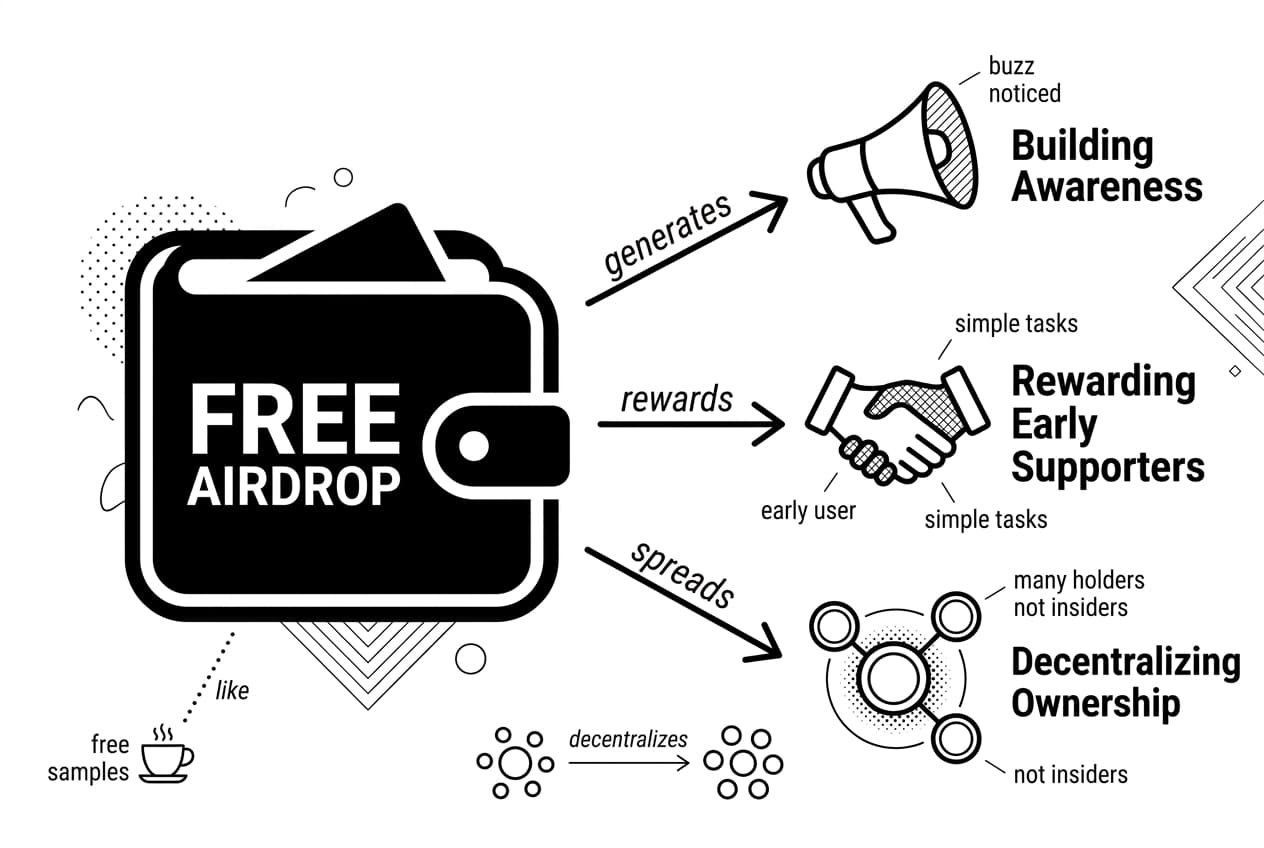
Think of it like a new coffee shop giving out free samples to attract its first customers. The shop wants people to try their coffee, talk about it, and hopefully come back for more. A free airdrop operates on the same principle in the digital world, getting a new token into the hands of as many potential users as possible.
But why would a project give away something of potential value for nothing? There are three main strategic goals behind these giveaways:
- Building Awareness: A well-executed airdrop gets people talking. It’s an effective way to create instant buzz and get a project noticed in a crowded market.
- Rewarding Early Supporters: Projects often use airdrops to thank and reward the first people who used their platform or joined their community. This helps build a loyal and engaged user base from day one.
- Decentralizing Ownership: A healthy crypto network has its tokens distributed among many different holders, not concentrated in the hands of a few insiders. Airdrops help spread the tokens far and wide, promoting true decentralization.
By understanding this, you can see that participating in a free airdrop crypto event is a win-win. You get free tokens, and the project gets the community engagement it needs to grow.
The Different Types of Free Crypto Airdrops Explained
Now that you understand why projects give away free tokens, let's explore how they do it. Not every free crypto airdrop works the same way. Recognizing the different models is your first step toward finding opportunities that fit your strategy and effort level. Some require minimal work, while others reward deep engagement.
Here are the four main types of airdrops you'll encounter:
- Standard Airdrop: Simply requires you to have a wallet address to receive free tokens.
- Bounty Airdrop: Asks you to complete small promotional tasks in exchange for tokens.
- Holder Airdrop: Rewards you for holding a specific cryptocurrency in your wallet.
- Exclusive/Retroactive Airdrop: Distributes tokens to early users of a platform based on their past actions.
Standard Airdrop
This is the most straightforward type. To qualify, you usually just need to provide your public wallet address on a project's website or platform. It's a simple sign-up process designed to quickly distribute tokens and grow the community. These are great for beginners, but the rewards are often smaller compared to other types.
Bounty Airdrop
A bounty airdrop asks for a little more from you. In exchange for tokens, you'll need to complete small marketing tasks. This could mean following the project on social media, joining their Telegram or Discord channel, or sharing a post. You're essentially trading a few minutes of your time and engagement for a free airdrop crypto reward.
Holder Airdrop
This type rewards existing community members. To be eligible, you must hold a certain amount of another cryptocurrency in your wallet. For example, a new project on the Ethereum network might airdrop tokens to everyone holding at least 1 ETH. Projects take a "snapshot" at a specific date and time to determine who qualifies, rewarding those already invested in the ecosystem.
Exclusive or Retroactive Airdrop
These are often the most valuable and sought-after airdrops. Instead of having you sign up, they reward early users of a protocol or application based on their past activity. Think of it as a surprise thank you gift for being a pioneer. Famous examples include Uniswap and Arbitrum, which distributed huge amounts of tokens to people who had used their platforms before a specific date. You earn these not by signing up, but by actively participating in new crypto projects.
What You'll Need: Your Airdrop Hunting Toolkit
Before you dive into hunting for the next big free crypto airdrop, it’s smart to get your gear in order. Having the right tools prepared not only makes the process smoother but also keeps your primary crypto assets safe. Think of this as your pre-flight checklist. Let’s walk through the three essentials you'll need.
A Dedicated Non-Custodial Wallet
This is your most important piece of equipment, and non-negotiable for security. Never, ever use the wallet where you store your main crypto portfolio for airdrop hunting. You'll be interacting with new projects and smart contracts, and it’s best to isolate this activity.
Create a brand new, separate non-custodial wallet just for participating in airdrops. Wallets like MetaMask, Rabby, or Trust Wallet are perfect for this. This "burner" wallet will be where you receive your free airdrop crypto tokens and connect to various apps. If something goes wrong, only the small amount of funds in this wallet is at risk.
Social Media Accounts
Many airdrop campaigns are designed to build a project's community and social presence. To qualify, you’ll often need to complete simple social tasks. Make sure you have active accounts on the platforms where the crypto world lives:
- X (formerly Twitter): For following accounts, retweeting announcements, and liking posts.
- Discord: To join project servers, participate in chats, and get community roles.
- Telegram: For joining announcement channels and community groups.
A Simple Tracker
Once you start participating in several free airdrops, it gets incredibly easy to lose track of what you’ve done. A simple spreadsheet or even a physical notebook can save you a lot of headaches. Create a tracker to log key details for each airdrop, such as the project name, the date you participated, the tasks you completed, and which wallet address you used.
Step-by-Step Guide: How to Find and Qualify for Free Airdrops
Now that you have your toolkit ready, it's time for the exciting part: finding and participating in a free crypto airdrop. Following these steps methodically will help you get through the process safely and increase your chances of successfully claiming new tokens. Think of this as your repeatable playbook for every airdrop you pursue.
Step 1: Find Potential Airdrop Opportunities
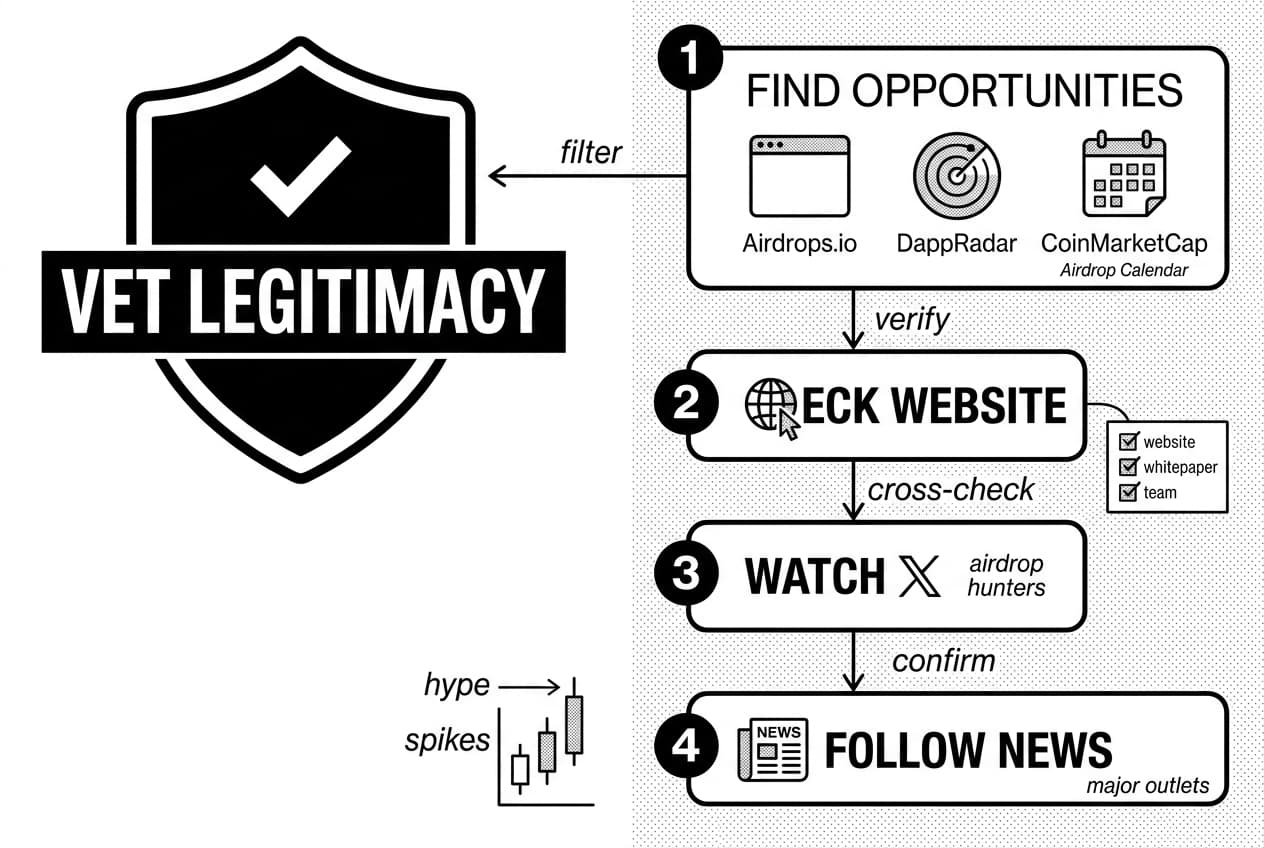
Your first task is to find promising projects that are likely to conduct an airdrop. The crypto world is vast, but a few key resources can help you zero in on real opportunities. Start by bookmarking airdrop aggregator websites like Airdrops.io, DappRadar, and CoinMarketCap's airdrop calendar. These sites compile lists of current and upcoming events.
Another great source is social media, specifically X (formerly Twitter). Follow reputable "airdrop hunters" and crypto influencers who often share alpha on new projects before they become widely known. Finally, keep an eye on major crypto news outlets, as they frequently report on significant projects planning a free airdrop crypto event to bootstrap their community.
Step 2: Vet the Project for Legitimacy
This is the most important step. Not every announced airdrop is legitimate; many are scams designed to steal your assets. Before you connect your wallet or complete any tasks, you must vet the project for legitimacy. Go through this quick checklist:
- The Website and Whitepaper: Does the project have a professional website and a clear, well-written whitepaper explaining its purpose and technology? Typos and vague goals are major red flags.
- The Team: Is the team public and do they have a track record (e.g., LinkedIn profiles, previous projects)? While not always a dealbreaker, anonymous teams carry higher risk.
- Community Engagement: Check their Discord, Telegram, and X accounts. Is there an active, genuine community discussing the project, or is it just filled with bots spamming "wen airdrop?"
If a project seems off, has poor communication, or makes unbelievable promises, it's best to walk away. There will always be other free airdrops.
Step 3: Understand the Airdrop Requirements
Once you've identified a promising and legitimate project, you need to understand exactly what is required to qualify. Read the official announcement from the project team very carefully. Airdrop rules vary widely. Some might require simple social tasks, while others demand more complex actions.
Common requirements include following the project on X, joining their Discord server, retweeting an announcement, or interacting with their testnet or mainnet application. For retroactive airdrops, you may need to have used their protocol before a specific "snapshot" date. Pay close attention to every detail, as missing a single step can make you ineligible.
Step 4: Complete the Required Tasks
With the rules in hand, it's time to take action. Methodically complete each required task. This usually involves connecting your crypto wallet to a platform, performing some on-chain actions, and then providing proof or submitting your details through a form or app.
When you're asked to submit your wallet address, be extremely careful. Copy and paste it directly from your wallet application to avoid any errors.
Pro Tip: Always double-check, and even triple-check, the wallet address you submit. Sending tokens to the wrong address is an irreversible mistake. Compare the first few and last few characters of the address to ensure it's correct before you hit "submit."
How to Claim Your Free Airdrop Crypto Safely
Congratulations! You've found a promising project, completed the required tasks, and the snapshot date has passed. Now comes the most exciting part: claiming your tokens. This process is where many beginners make costly mistakes. Follow these steps carefully to ensure you receive your free crypto airdrop without falling for common scams.
Step 1: Wait for the Official Announcement
Legitimate projects will announce the claim process publicly on their official channels, like Twitter, Discord, or their blog. Do not trust direct messages (DMs) or emails. Go directly to the source you've been following. They will provide the one and only official link to the claim website.Step 2: Verify the Claim Page URL
This is the most important step for your security. Scammers create identical-looking websites with slightly different URLs to trick you into connecting your wallet and signing a malicious transaction. Always double-check the web address. Is it spelled correctly? Does it match the link shared in the official announcement? If you're unsure, ask a moderator in the official Discord server.
Pro Tip: Once you've verified the correct URL, bookmark it. This prevents you from accidentally clicking a phishing link in the future.Step 3: Connect Your Wallet and Initiate the Claim
On the official claim page, you will see a button that says "Connect Wallet." Click it and choose the wallet you used to qualify for the airdrop (like MetaMask or Phantom). The site will then check your address for eligibility. If you're eligible, a "Claim" button will appear. Go ahead and click it.Step 4: Approve the Transaction and Pay Gas Fees
Claiming a free airdrop crypto isn't entirely without cost. To process the transaction on the blockchain, you must pay a network fee, often called a "gas fee." This is typically paid in the network's native currency, such as ETH for Ethereum-based tokens. Your wallet will pop up asking you to confirm the transaction and the associated gas fee. If it looks correct, approve it. The tokens will then be sent to your wallet within a few minutes.
Warning: How to Spot and Avoid Common Airdrop Scams
Now that you know how to find and claim a free crypto airdrop, we need to talk about the most important part of the process: staying safe. The crypto space is full of opportunities, but it also attracts scammers looking for easy targets. Your security is your number one priority. Learning to recognize the red flags will protect your assets and ensure your airdrop hunting journey is a successful one.
Keep this checklist handy and be skeptical of any offer that seems too good to be true. Here are the most prevalent scams to watch out for.
Red Flag: Airdrops That Ask for Your Private Keys
This is the most critical rule in all of crypto: NEVER, under any circumstances, share your private keys or your wallet's seed phrase with anyone. Think of them as the master keys to your entire crypto vault. A legitimate project will never ask for this information. If a website, form, or "support admin" asks for your keys, it is 100% a scam designed to drain your wallet. Close the page and block the user immediately.Red Flag: Unexpected Tokens in Your Wallet
One day you might check your wallet and see a large number of a token you've never heard of. While this feels exciting, it's often a trap. Scammers airdrop worthless tokens to thousands of wallets. Their goal is to get you to visit their website to "claim" or "swap" them. Interacting with the scam token's contract or connecting your wallet to their site can trigger a malicious function that steals your funds. The safest move is to simply ignore and not interact with any tokens you don't recognize.Red Flag: Airdrops Requiring You to Send Crypto First
The whole point of a free airdrop crypto event is that it's free. Scammers will often create fake airdrop promotions that ask you to send a small amount of ETH, BNB, or another crypto to an address to "verify" your wallet or "unlock" a larger airdrop. This is a classic scam. You will send your funds and receive nothing in return. This is different from paying a small network transaction fee (gas fee) on a project's official, verified website to execute the claim contract. Sending funds to an unknown address is a scam; paying a gas fee to claim on a legitimate site is normal. These are just a few of the most common airdrop scams, so always stay vigilant.
What to Do After Receiving an Airdrop
Congratulations! The new tokens have landed in your wallet, and you've successfully claimed your free airdrop crypto. The excitement is real, but what comes next is an important decision. Your strategy for handling these new assets can make a big difference in your outcome.

You have a few primary options, each with its own benefits and risks. Let's break them down so you can make an informed choice.
Option 1: Sell Immediately
Many people choose to sell their airdropped tokens right away. This is the most direct way to lock in profits. If the value is significant, selling can be a smart move to turn digital assets into cash or another, more established cryptocurrency like ETH or BTC. The main drawback is potential seller's remorse if the token's value increases dramatically later on.
Option 2: Hold for the Long Term (HODL)
If you've researched the project and believe in its future, holding your tokens could be the right play. This strategy is based on the idea that the project will grow, and the token's value will grow with it. This requires patience and a higher tolerance for risk, as many new projects fail and their tokens can lose value.
Option 3: Stake or Farm with Your Tokens
Some projects allow you to put your new tokens to work. You might be able to "stake" them to help secure the network and earn rewards, or use them in decentralized finance (DeFi) protocols. This can be a great middle ground, allowing you to hold your asset while generating passive income from it. Developing a plan for what to do post-claim is a key part of more advanced airdrop farming strategies. Many seasoned hunters use a hybrid approach, selling enough to cover their costs and holding or staking the rest.
Frequently Asked Questions
- How to find legit crypto airdrops?
- To find legit airdrops, use reputable tracking sites and always verify information on the project's official website and social media. A strong, engaged community is a positive indicator. Be wary of projects with anonymous teams or those that make unrealistic promises, as these are common red flags for potential scams.
- How can I get free crypto right now?
- While most airdrops require tasks and a waiting period, some methods are faster. Bounty airdrops often provide quick rewards for social media engagement. For an immediate option, consider "learn and earn" programs on exchanges like Coinbase, which grant small amounts of crypto instantly after you complete short educational quizzes.
- Which crypto airdrop is coming soon?
- The airdrop landscape changes constantly, with new opportunities announced daily. The best way to stay informed about upcoming events is to regularly check popular airdrop aggregator websites and follow major crypto news outlets. This ensures you get the most current information directly from reliable sources in the industry.
- How to get free $10 crypto?
- The most reliable way to get a specific amount like $10 in crypto is through exchange sign-up bonuses or "learn and earn" campaigns. While airdrops have the potential for higher value, these platform promotions offer a more certain and often immediate reward for completing simple verification steps or educational modules.
- Which crypto will give 1000x?
- Predicting a 1000x return from an airdrop is impossible. While early participants in massive projects like Uniswap saw huge gains, such events are exceptionally rare. View airdrop hunting as a low-cost way to explore new projects and potentially get a small stake, not as a guaranteed path to wealth.
Sources
Author

Crypto analyst and blockchain educator with over 8 years of experience in the digital asset space. Former fintech consultant at a major Wall Street firm turned full-time crypto journalist. Specializes in DeFi, tokenomics, and blockchain technology. His writing breaks down complex cryptocurrency concepts into actionable insights for both beginners and seasoned investors.