Berachain Airdrop Guide (2026): How to Qualify for BERA

What Is Berachain? A Quick Overview
Before we jump into the specific steps for the airdrop, let's quickly cover what makes Berachain so unique. Think of it as a special kind of Layer 1 blockchain, one that’s compatible with Ethereum applications but built using the flexible Cosmos technology. This combination alone makes it interesting, but its secret sauce is a novel consensus mechanism called "Proof-of-Liquidity."
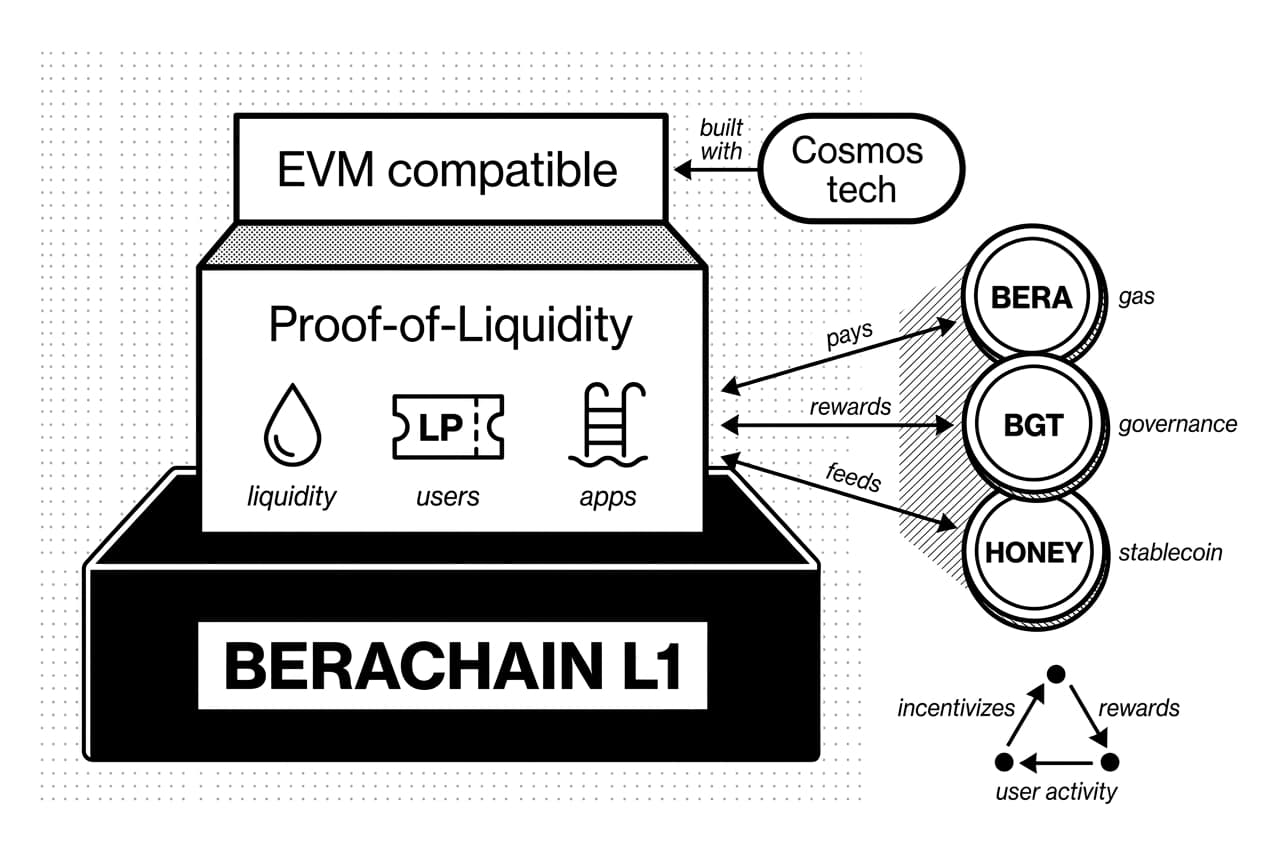
Unlike other chains, Berachain doesn't just reward validators. It’s designed to reward users who actively contribute liquidity to the ecosystem's applications. This is managed through a three-token system. BERA is the gas token used for transaction fees. BGT is the governance token you earn for being an active participant, giving you a say in the network's future. And HONEY is the network's native stablecoin, designed to be the lifeblood of its decentralized finance (DeFi) apps.
This community-first approach, where real user activity is rewarded at the core protocol level, is exactly why the hype around a potential Berachain airdrop has exploded. The entire system is built to incentivize the exact kinds of interactions that historically lead to airdrop qualifications. By following this guide, you’ll be positioning yourself perfectly within that system.
Berachain Airdrop Confirmed: What We Know So Far (April 2026)
Yes, the Berachain airdrop is confirmed by the Berachain Foundation. In several official posts on their X account and Medium blog, the team has set aside a portion of the BERA token supply specifically for early users and active participants. This means your activity on the network is the key to qualifying.
The foundation wants to reward genuine contributors who help test and grow the ecosystem. While they haven't released exact allocation details, they have stated that on-chain activity will be the primary measure for eligibility. This includes actions you'll take on the testnet, like swapping tokens, providing liquidity, minting HONEY stablecoins, and engaging with different applications on the chain.
Now for the question on everyone's mind: when is the claim date? As of April 2026, there is no official snapshot date or claim date announced. It's vital to remember this to avoid the many scams that will promise early access. The team is focused on a stable and secure mainnet launch first. Any real announcements will only come from their official channels. This means you still have a window of opportunity to position yourself for the airdrop.
Getting Started: What You'll Need for the BERA Airdrop
Before you dive into the Berachain ecosystem, let's make sure you have the necessary tools. Think of this as your pre-flight checklist. Getting these items sorted now will ensure a smooth experience as you interact with the testnet and position yourself for a potential berachain airdrop.
A Non-Custodial Crypto Wallet
To interact with applications on Berachain, you need a wallet where you control the private keys. A non-custodial crypto wallet like MetaMask or Rabby is perfect for this. This wallet acts as your passport to the decentralized web, allowing you to sign transactions and manage your assets directly.
Testnet ETH for Gas Fees
Berachain's public testnet, Artio, requires a tiny amount of testnet ETH for transaction fees, known as "gas." You'll need some Sepolia ETH, which you can get for free from online sources called "faucets." Just paste your wallet address into one of these sites to receive the necessary tokens to get started.
Social Media Accounts
Stay in the loop by connecting with the project. Make sure you follow the official Berachain accounts on X (formerly Twitter) and join their Discord server. This is the best way to get official updates, and sometimes, projects reward active community members with special roles or tasks.
Step-by-Step Guide to Farming the Berachain Airdrop
Now that you have your wallet set up and understand the basics, it's time to dive into the most important part: interacting with the ecosystem. Generating a history of meaningful on-chain activity is your ticket to a potential berachain airdrop. Here is a step-by-step guide to qualify for the Berachain airdrop by using the Artio testnet applications.
Remember, these are testnet tokens with no real-world value. The goal is to test the network, generate transactions, and show the Berachain team that you are an active and engaged user. Consistency is key, so try to perform these actions every few days.
Step 1: Get Testnet BERA from the Faucet
Your journey begins with acquiring testnet BERA tokens. First, you need to add the Berachain Artio testnet to your MetaMask wallet. The easiest way to do this is by visiting a site like Chainlist, searching for "Berachain Artio," and clicking "Add to MetaMask."
Once the network is added, head to the official Artio Faucet website. You'll be prompted to enter your wallet address. Paste your address into the field, complete the captcha, and click the "Drip Tokens" button. The faucet will send you a small amount of BERA to get started. You can typically claim from the faucet once every eight hours, so make this a daily habit to keep your testnet wallet funded.
Step 2: Swap Tokens on the BEX (Berachain DEX)
With BERA in your wallet, your next stop is the native Berachain Exchange, or BEX. This is where you'll perform swaps to create transaction history. Go to the BEX platform and connect your wallet, ensuring you are on the Artio testnet.
Your goal here is simple: swap your testnet BERA for other tokens within the ecosystem. A great starting point is to swap some BERA for STGUSDC, which you'll need for the next step. You can also swap for other assets to diversify your wallet. Don't just do one large swap; perform several smaller swaps over multiple days. This shows consistent engagement, which is often a key criterion for airdrops.
Step 3: Mint HONEY Stablecoin
HONEY is Berachain's native stablecoin, and interacting with it is a critical step. After acquiring STGUSDC from your swaps on the BEX, go to the official HONEY DApp. Here, you can mint HONEY by depositing your STGUSDC.
Connect your wallet and select the "Mint" tab. You will see your STGUSDC balance. Enter the amount you wish to convert into HONEY and approve the transaction. After a moment, you'll have freshly minted HONEY in your wallet. This action demonstrates that you're engaging with Berachain's core DeFi primitives beyond simple swaps.
Step 4: Provide Liquidity and Delegate BGT
This is arguably the most important step, as it involves Berachain's unique Proof-of-Liquidity consensus mechanism. First, return to the BEX and go to the "Pools" section. Here, you will provide liquidity by pairing two tokens. A common and useful pair is BERA and HONEY.
Select the pool, enter the amount of each token you want to supply, and confirm the transaction. By becoming a liquidity provider (LP), you earn rewards in the form of BGT, Berachain's governance token. After you've accrued some BGT, you must delegate it. Go to the BGT Station platform, choose a validator from the list, and delegate your BGT to them. This action is central to securing the network and signals you are a high-value user.
Step 5: Lend and Borrow on the Native Lending Platform
Next, let's explore Berachain's native money market, Bend. Here, you can lend your assets to earn yield or borrow against them. Go to the Bend application and connect your wallet. A good strategy is to supply the HONEY you minted earlier.
Under the "Supply" tab, choose HONEY, enter an amount, and approve it as collateral. Once your HONEY is supplied, you can borrow other assets against it. For example, you might borrow some WBTC or WETH. To complete the interaction cycle, let the loan sit for a day or two and then repay it in full. This shows you can responsibly use the entire suite of DeFi products available.
Step 6: Engage with the Berachain NFT Ecosystem
Don't forget about NFTs! A well-rounded on-chain profile includes interaction with all parts of the ecosystem. Berachain has a vibrant NFT scene, with popular collections like the Bong Bears. While you don't need to buy an expensive NFT, you should show that you're active on the platform.
Visit the main Berachain NFT marketplace. Browse the collections and consider making a few low offers on different NFTs. Even if the offers are not accepted, they are still on-chain transactions that mark your engagement. This is a simple but effective way to add more unique contract interactions to your wallet history. If you're new to this space, you can learn more about the basics of minting an NFT to better understand the process.
Advanced Airdrop Strategies: Maximizing Your BERA Allocation
You've followed the basic steps, swapping tokens and providing liquidity. That's a fantastic start! But if you want to stand out from the crowd and potentially increase your final berachain airdrop allocation, it’s time to think like a power user. These advanced strategies signal to the project that you're a dedicated, long-term participant, not just a one-time farmer.
Consistency is Key
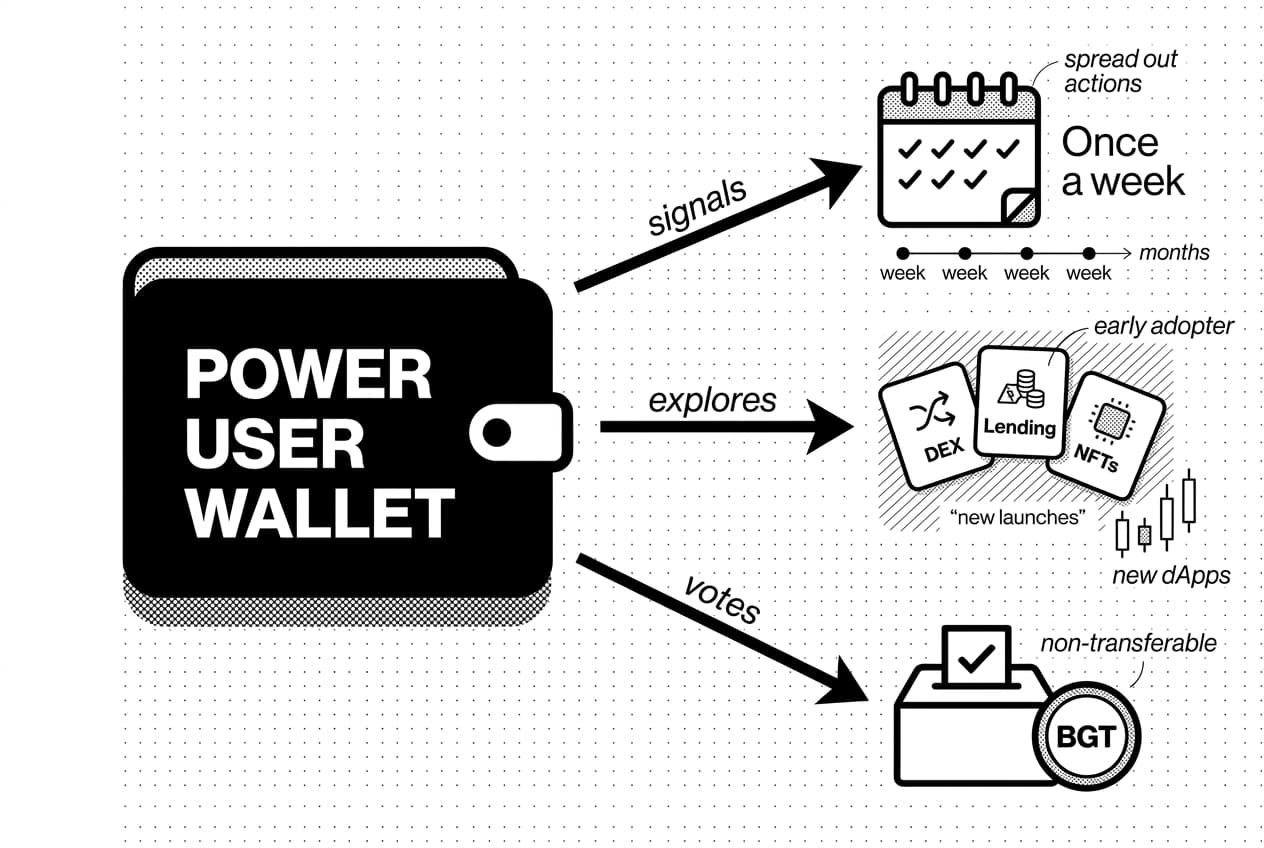
Instead of performing all your actions in a single day, spread them out. A wallet that swaps, lends, or mints something small once a week over several months looks much more organic and valuable than a wallet that creates thousands of dollars in volume once and then goes silent. Set a weekly reminder to interact with the Berachain mainnet. This consistent history of activity is a powerful indicator of a genuine user.
Explore New Ecosystem Protocols
Berachain's ecosystem is growing every day. Don't just stick to the main DEX. Actively seek out and test new protocols as they launch. Are there new lending markets, NFT projects, or even games being built on Berachain? Be one of the first to use them. This behavior marks you as a true early adopter and explorer, qualities that projects love to reward. Being early to new dApps can sometimes qualify you for their own airdrops, too!
Participate in Governance
As you interact with the ecosystem, you will earn BGT, the non-transferable governance token. Do not let it sit idle. Using your BGT to vote on governance proposals is one of the highest-value actions you can take. It shows you are invested in the long-term health and direction of the protocol. This principle applies across many general L2 airdrop farming strategies and is often a multiplier for airdrop rewards. Find active proposals on the governance forum and cast your vote; it signals you're more than a farmer—you're a citizen of the ecosystem.
How to Track Your Berachain Airdrop Progress
After spending time interacting with the ecosystem, you'll naturally want to see how you're doing. While there's no official "airdrop score" from the team yet, you can use a couple of key tools to monitor your on-chain activity. This helps you get a general idea of your engagement and ensure your transactions are being recorded properly.
Step 1: Use the Official Beratrail Explorer
Your primary tool should be the official Artio testnet block explorer, Beratrail. Think of it as the public ledger for all activity on Berachain. Go to the site and paste your public wallet address into the main search bar. You'll see a detailed history of all your transactions, the dApps you've used, and your total transaction count. This is the raw data that will likely be used to determine eligibility for the berachain airdrop.
Step 2: Carefully Check Community-Built Dashboards
Several third-party dashboards have popped up to help users track their stats. These can be useful for a quick summary of your activity. However, you must approach them with extreme caution.
An important warning: NEVER connect your wallet or sign any transaction on an unofficial airdrop checker website. Many are scams designed to drain your funds. To use these dashboards safely, only copy and paste your public wallet address for a read-only view of your stats. If a site asks for anything more, close the tab immediately.
Warning: How to Avoid Berachain Airdrop Scams
After all your hard work farming points and interacting with the ecosystem, the last thing you want is to lose your assets to a scammer. The excitement surrounding a major event like the berachain airdrop creates a perfect storm for bad actors. Staying vigilant is just as important as staying active on the network.
Scammers are creative, but their methods often follow predictable patterns. By learning to recognize these red flags, you can protect your wallet and ensure you are the one who claims your hard-earned BERA. Let’s walk through the most common threats you’ll encounter.
Common Airdrop Scams to Watch For
- Fake Claim Websites: Scammers will create websites that look nearly identical to the official Berachain portal. They often promote these through fake Twitter accounts or Discord DMs. Always double-check the URL and only use links from the official Berachain Twitter or Discord announcement channels.
- Phishing DMs and Emails: You may receive direct messages pretending to be from the Berachain team, offering "early access" or "help with your claim." The official team will never DM you first to ask for personal information or have you click a link. Ignore all unsolicited messages.
- Malicious Smart Contracts: A popular tactic involves tricking you into signing a transaction on a fake site that gives a contract permission to drain your wallet. These are often disguised as a "claim" or "verify" button. Be wary of any transaction that requests broad permissions. This is one of the most dangerous types of wallet drainer scams.
The single most important rule to remember is this: NEVER, under any circumstances, share your wallet's seed phrase or private key with anyone. No legitimate project or team member will ever ask for it. Your seed phrase is the master key to your funds. Keep it secret, keep it safe.
Conclusion: Are You Ready for the BERA Token Launch?
You've now explored the key areas of the Berachain ecosystem, from swapping on BEX and providing liquidity to minting HONEY and engaging with the community. By following the steps in this guide, you have systematically built a transaction history that shows you're an active and valuable participant on the testnet.
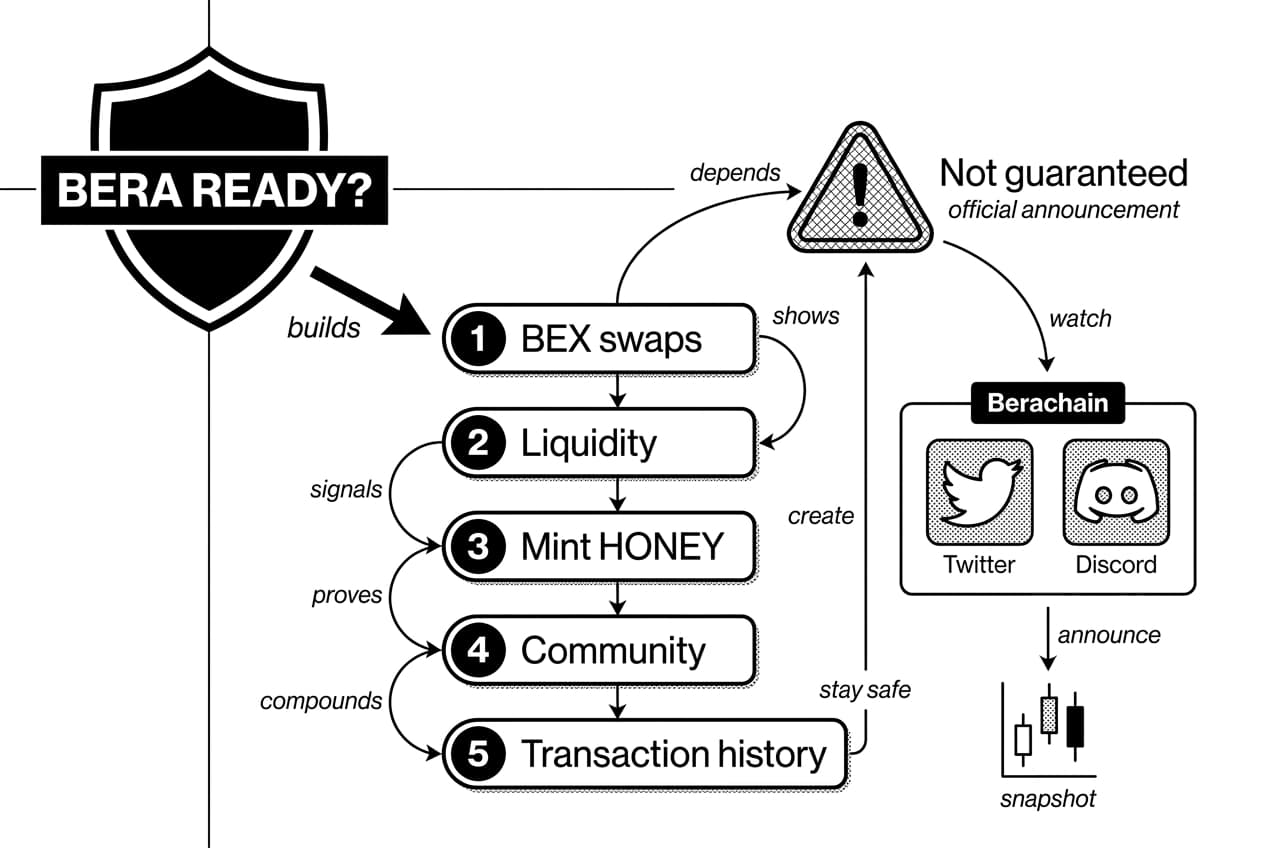
It's important to remember that while these actions significantly increase your chances for the Berachain airdrop, no airdrop is ever 100% guaranteed until the team makes its official announcement. The final eligibility criteria are always at the project's discretion.
Your main task now is to stay informed. Keep a close watch on the official Berachain channels on Twitter and Discord for the snapshot announcement and eventual claim process. Stay safe, and good luck!
Frequently Asked Questions
- Is the Berachain airdrop confirmed?
- Yes, the Berachain Foundation has confirmed an airdrop. A portion of the BERA token supply has been allocated to reward early users and active community members. However, the specific eligibility criteria, snapshot date, and claim details have not yet been officially announced by the team.
- How do I get the Berachain airdrop?
- To qualify, you should actively use the Berachain Artio testnet. Key tasks include getting tokens from the faucet, swapping on the BEX exchange, minting HONEY stablecoin, and providing liquidity. Consistent interaction with various ecosystem dApps is the best strategy to increase your chances of eligibility.
- How can I claim my airdrop?
- The official claim process has not been released. Typically, you will visit an official website announced by the team, connect your eligible wallet, and sign a transaction to claim your tokens. Always verify links from official sources like their Twitter or Discord to avoid falling for scams.
- Which crypto airdrops are coming soon?
- Berachain is one of the most anticipated airdrops. Other potential opportunities often involve new Layer 2 solutions, well-funded DeFi protocols, and other projects that have not yet launched a token. Keeping an eye on projects with active testnets and strong communities is a good strategy, but always do your own research.
Sources
Author

Crypto analyst and blockchain educator with over 8 years of experience in the digital asset space. Former fintech consultant at a major Wall Street firm turned full-time crypto journalist. Specializes in DeFi, tokenomics, and blockchain technology. His writing breaks down complex cryptocurrency concepts into actionable insights for both beginners and seasoned investors.