Crypto Winter: What It Is & How Long It Lasts (2026 Guide)

What Is a Crypto Winter? (And Why It Matters)
A crypto winter is a prolonged period of falling prices and negative sentiment in the digital asset market. It typically follows a major market peak and is characterized by a significant drop in trading volume, reduced media interest, and a general feeling of fear or apathy among investors.
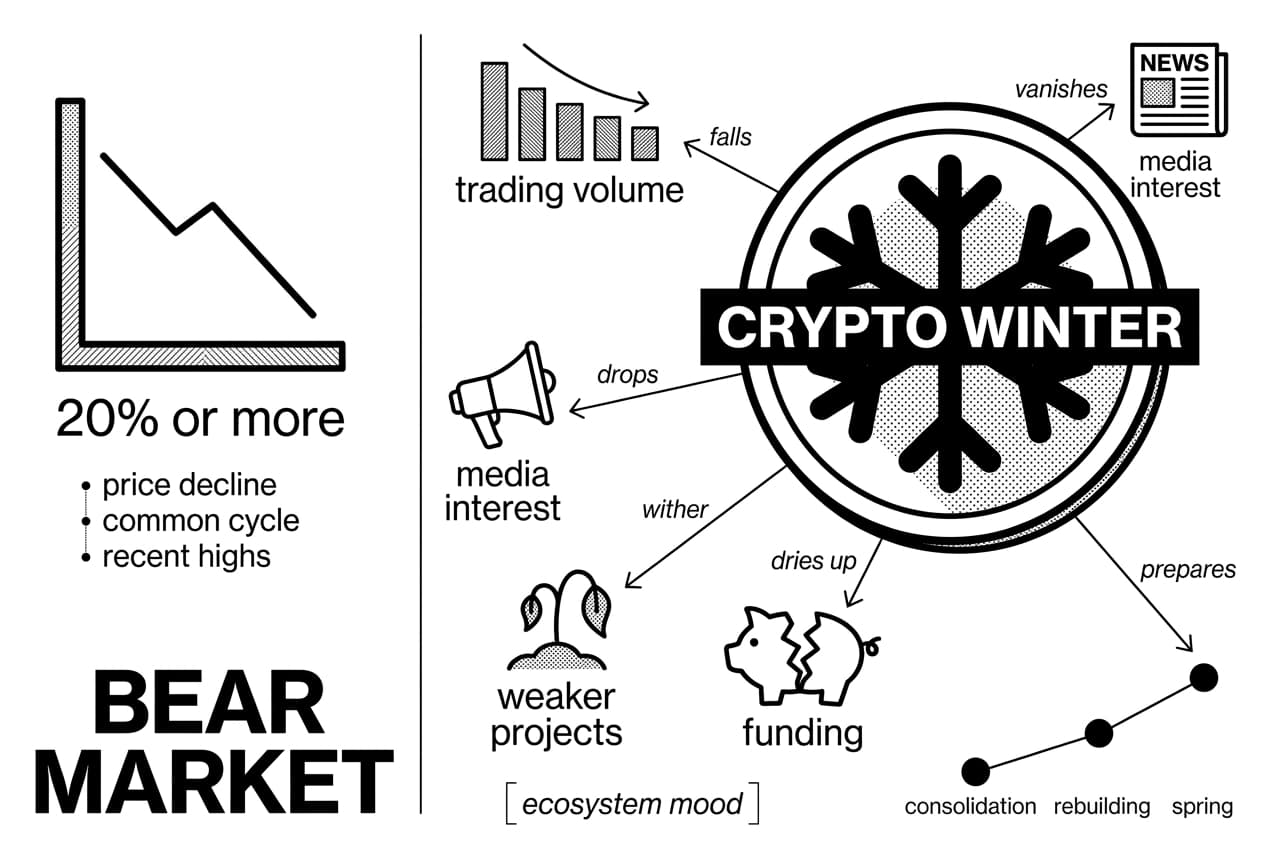
Understanding this concept is essential for anyone involved in digital assets. Think of it like a harsh winter for a farmer. During a bull market, or "summer," everything seems to grow effortlessly. But when the crypto winter arrives, the speculative, weaker projects—like delicate crops—often wither away. This period, while painful, is also a time of consolidation and rebuilding. The most resilient projects with real utility often use this quiet time to improve their technology, preparing the fertile ground for the next "spring" of innovation and growth.
Crypto Winter vs. Bear Market: What's the Difference?
While the terms are sometimes used interchangeably, they describe different levels of severity. A bear market is generally defined as a sustained price decline of 20% or more from recent highs. It's a common, if unpleasant, part of any financial market cycle. A crypto winter, on the other hand, is a much more severe and extended bear market. It's not just about the price decline; it’s about a fundamental shift in the entire ecosystem's mood. The excitement vanishes, funding for new projects dries up, and many participants leave the space altogether. A winter is a deep freeze that tests the conviction of even the most dedicated builders and investors.
What Causes a Crypto Winter?
A crypto winter doesn't just appear overnight. Think of it less like a sudden blizzard and more like a perfect storm, where several powerful forces combine to drag the market into a deep freeze. Understanding these triggers is the first step to preparing for the cold. Typically, the chill sets in due to a combination of economic pressures, internal market failures, and government actions.
Macroeconomic Factors
The cryptocurrency market doesn't exist in a vacuum; it's deeply connected to the global economy. When central banks raise interest rates to combat inflation, safer investments like government bonds suddenly look much more attractive. This causes money to flow out of what are considered "risk-on" assets, a category that includes tech stocks and, yes, crypto. Investors become more cautious during periods of economic uncertainty or recession, selling off their more speculative holdings first. You can track these key Macroeconomic factors to get a better sense of the overall financial climate.
Major Project or Exchange Collapses
Nothing spooks a market like a catastrophic internal failure. The history of crypto is marked by events that shattered investor confidence and triggered widespread panic. The early hack of the Mt. Gox exchange was a formative example. More recently, the 2022 collapse of the Terra/Luna ecosystem and the subsequent bankruptcy of the FTX exchange vaporized tens of billions of dollars. These events create a domino effect, known as contagion, where the failure of one major player causes others to fail, spreading fear and leading investors to pull their capital out of the system entirely.
Regulatory Crackdowns
Uncertainty is a major deterrent for investors, especially large institutions. When governments in major economies like the United States or China announce aggressive new regulations, ban certain crypto activities, or signal a generally hostile stance, it creates fear. This regulatory pressure can stifle innovation and make it difficult for businesses to operate. The threat of unclear or punitive rules often causes both individual and institutional investors to pause their plans and wait on the sidelines, draining liquidity and enthusiasm from the market.
A History of Past Crypto Winters
As chilly as the current market might feel, it's important to remember that we've been here before. A look back at history shows that the crypto market moves in cycles, with periods of incredible growth followed by sharp corrections. These downturns, or crypto winters, are a recurring phenomenon. By understanding the past, we can gain valuable perspective on the present and better prepare for the future. Each winter has had its own unique causes and characteristics, but they all share a common thread of testing the market's resilience.
To see these patterns clearly, let's compare the major crypto winters side-by-side.
Winter Period | Approximate Duration | Peak-to-Trough Price Drop (BTC) | Key Catalysts |
|---|---|---|---|
2014-2015 | ~415 days | ~86% | Collapse of Mt. Gox exchange |
2018-2020 | ~365 days | ~84% | Bursting of the Initial Coin Offering (ICO) bubble |
2022-2023 | ~550 days | ~77% | Terra/Luna collapse, FTX fraud, industry-wide deleveraging |
The 2014-2015 Winter (Post-Mt. Gox)
The first significant crypto winter followed the spectacular bull run of 2013. Bitcoin had captured the imagination of early adopters, but the industry was still fragile. The tipping point was the collapse of Mt. Gox, a Japan-based exchange that handled over 70% of all Bitcoin transactions at the time. In early 2014, the exchange abruptly halted withdrawals and filed for bankruptcy after revealing it had lost hundreds of thousands of bitcoins in a hack. This event shattered public trust and sent prices plummeting for over a year. The recovery was slow and painful, teaching the young industry a harsh lesson about the importance of security and decentralization.
The 2018-2020 Winter (Post-ICO Boom)
The winter of 2018 was born from the speculative mania of the 2017 Initial Coin Offering (ICO) boom. During this period, thousands of new crypto projects raised billions of dollars, often with little more than a whitepaper and a promise. When it became clear that most of these projects lacked substance and regulatory scrutiny intensified, the bubble burst. The ensuing crash was deep and prolonged. For nearly two years, the market was defined by widespread pessimism. Many believed crypto was a failed experiment. Yet, during this freeze, foundational technologies like Ethereum continued to develop, paving the way for the DeFi and NFT explosions that would fuel the next cycle.
The 2022-2023 Winter (The Great Deleveraging)
The most recent major crypto winter was triggered by a chain reaction of corporate failures. It began with the algorithmic collapse of the Terra/Luna ecosystem in May 2022. This event exposed massive amounts of risky borrowing across the industry, leading to a domino effect. Centralized lending platforms like Celsius and Voyager froze withdrawals and declared bankruptcy. The final blow came in late 2022 with the shocking discovery of fraud and the collapse of the FTX exchange. This was a winter of contagion, where the failure of one major player cascaded through the interconnected financial plumbing of the crypto world, erasing billions in value and causing a profound crisis of confidence.
How Long Does a Crypto Winter Last?
After reviewing the history of these deep market downturns, the big question on everyone's mind is always the same: exactly how long does a crypto winter last? The honest answer is that there's no set schedule. Think of it less like a season with a fixed end date on the calendar and more like a long, unpredictable storm system. However, by looking at past cycles, we can spot a general pattern.
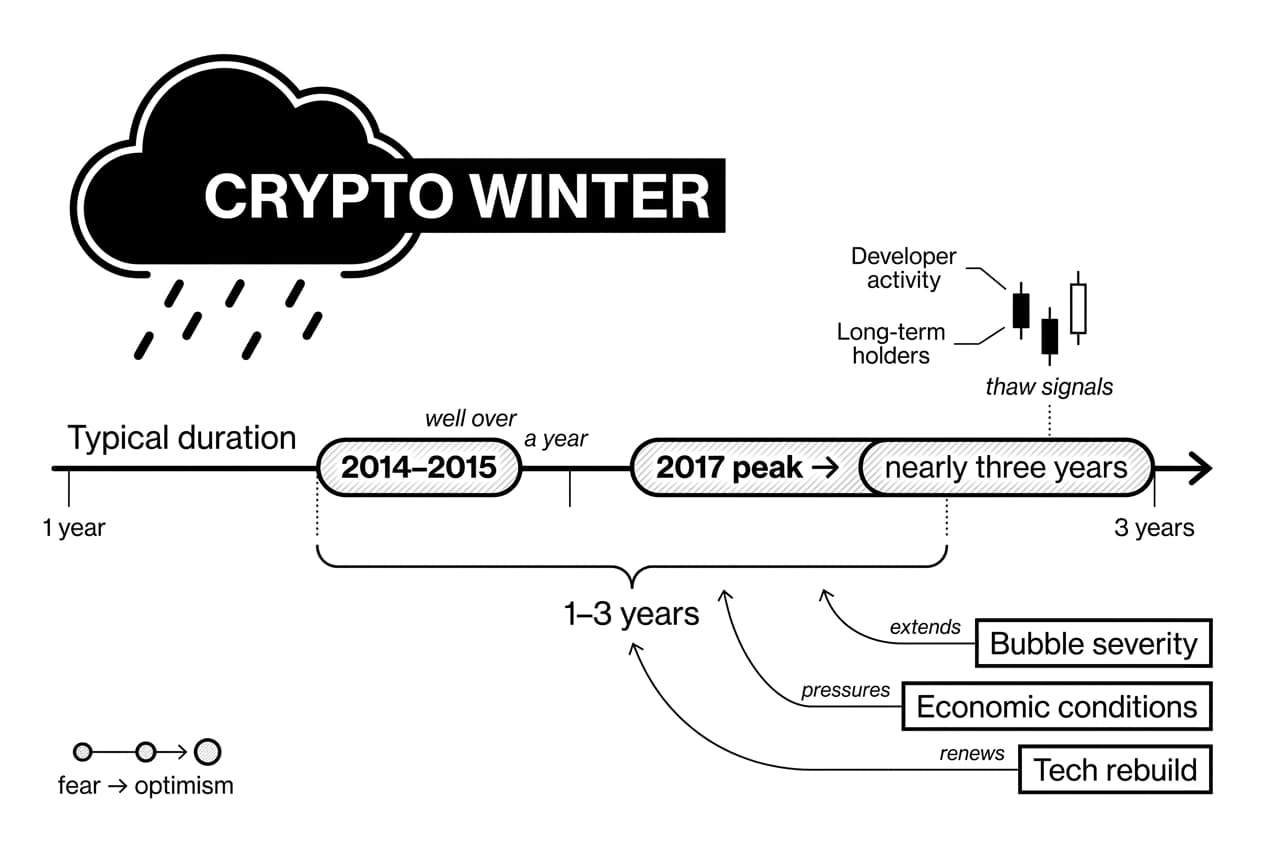
Historically, a typical crypto winter has persisted for anywhere from one to three years. The 2014-2015 winter lasted well over a year, while the one following the 2017 peak extended for nearly three years before a new bull market truly took hold. The duration often depends on a mix of factors, including the severity of the preceding bubble, broader economic conditions, and the time it takes for new technology and investor confidence to rebuild from the ground up.
While no one has a crystal ball, seasoned investors and analysts watch for specific signals that might indicate a thaw is approaching. These can range from changes in developer activity to shifts in long-term holder behavior. By studying these various market cycle indicators, people attempt to gauge market sentiment and spot the early signs of recovery. These signs don't offer guarantees, but they provide a framework for understanding when the market might be shifting from fear back toward optimism.
How to Survive (and Thrive in) a Crypto Winter in 2026
Knowing that a crypto winter could last for a year or more is one thing, but knowing how to handle it is another. Instead of hibernating, savvy investors see this period as an opportunity. The key is shifting your mindset from short-term trading to long-term strategy. Here are four practical ways to not just survive, but potentially thrive during the current market cooldown.
Dollar-Cost Average into Blue Chips
Trying to "time the bottom" is a difficult and stressful game. A much simpler strategy is Dollar-Cost Averaging (DCA). This just means investing a fixed amount of money at regular intervals—say, $100 every Friday—regardless of an asset's price. When prices are low, your fixed amount buys more, and when they rise, it buys less. Over time, this approach averages out your purchase price and reduces the risk of making a single large investment at a peak. During a crypto winter, focus your DCA strategy on established, "blue-chip" projects like Bitcoin (BTC) and Ethereum (ETH), which have a proven track record of weathering market cycles.Manage Your Risk Through Diversification
The old saying "don't put all your eggs in one basket" is especially true in crypto. While it can be tempting to go all-in on a project you believe in, this exposes you to significant risk if that single project fails. A well-managed portfolio is diversified. This means spreading your investments across different types of crypto assets (e.g., Layer 1 blockchains, DeFi, AI-related tokens) and, just as importantly, holding assets outside of the crypto market entirely. Having exposure to stocks or bonds can provide a cushion during deep crypto downturns. Learning how to survive and invest in a downturn is about smart risk management.Use the Quiet Time for Education
Bull markets are noisy and filled with hype, making it difficult to do clear-headed research. A crypto winter offers a valuable gift: time. With the market frenzy dialed down, you can properly investigate the technology that will power the next cycle. Use this period to learn about promising sectors like Decentralized Physical Infrastructure Networks (DePIN), the integration of AI with blockchain, or privacy-enhancing tech like Zero-Knowledge (ZK) proofs. Identify projects with strong development activity and clear use cases that are building for the long term, not just for momentary excitement.Explore Sustainable Yield Opportunities
Even in a bear market, your assets can work for you. Staking, the process of locking up your crypto to help secure a network in exchange for rewards, offers a way to earn passive income. For example, you can stake your ETH to help validate transactions and earn more ETH in return. However, be cautious. The 2022 collapse was partly fueled by projects offering unsustainably high yields. In 2026, the lesson is clear: stick to modest, reliable yields from reputable, blue-chip assets. Slow and steady growth is the name of the game in a crypto winter.
Are We in a Crypto Winter Now in 2026?
As we manage the middle of 2026, the question on every investor's mind is a pressing one. With Bitcoin trading significantly below its late 2024 all-time high, the market certainly feels frosty. The public mood, often captured by the Crypto Fear & Greed Index, has been lingering in "Fear" for months, reflecting widespread uncertainty among retail participants. Daily news headlines often focus on cooled-off prices and reduced trading volumes, painting a picture that looks very familiar to veterans of past downturns.
However, looking only at price and sentiment tells just one part of the story. Unlike the deep freezes of the past, the current market shows signs of foundational strength. Venture capital funding, while not at its peak, remains remarkably steady, with firms continuing to invest in promising infrastructure projects, particularly those integrating AI and decentralized identity. This suggests that long-term investors still see immense value being built.
Perhaps the most telling indicator is developer activity. On platforms like GitHub, the digital construction sites for crypto, the pace of innovation hasn't slowed. Thousands of developers continue to build and improve protocols, a sign of a healthy, growing ecosystem. So, are we in a full-blown crypto winter? It's more complicated than a simple yes or no. It may be more accurate to call this a "crypto chill"—a significant market correction and consolidation period where speculative excess has been cleared out, but serious building continues unabated.
Key Takeaways
Dealing with the chilly environment of a crypto winter can feel complex, but the core lessons are quite straightforward. As you apply what you've learned to the current market in 2026, keep these essential points in mind to maintain a clear perspective.
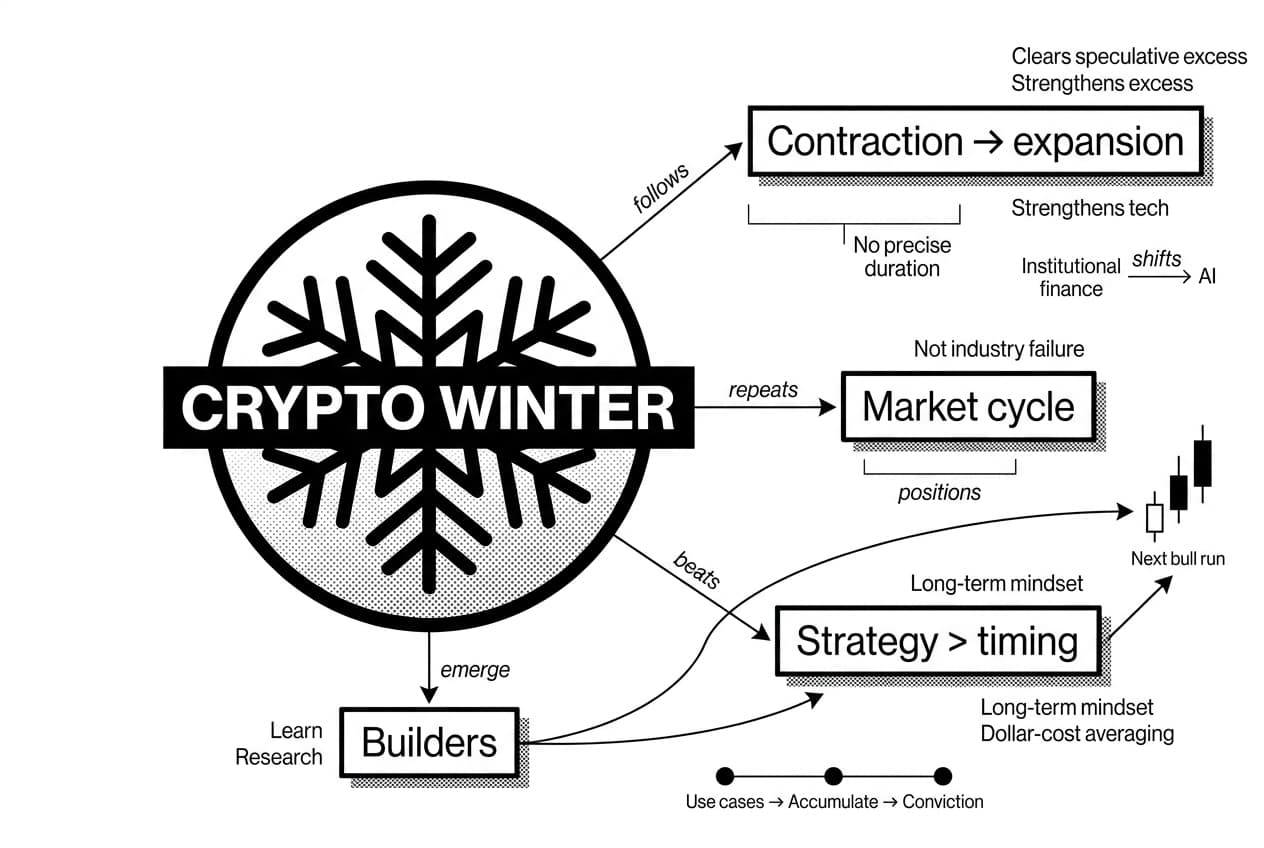
- A crypto winter is a natural part of the market cycle, not a sign that the industry is failing. History shows these periods of contraction are followed by expansion, serving to clear out speculative excess and strengthen the underlying technology.
- There is no precise answer to how long a crypto winter lasts. While past downturns have ranged from one to three years, the growing influence of institutional finance and new technologies like AI could change the duration and character of the current cycle.
- Your strategy matters more than timing the bottom. Successful navigation involves a long-term mindset, focusing on projects with real-world use cases, and steadily accumulating assets through methods like dollar-cost averaging rather than making reactive, emotional decisions.
- Bear markets are for builders. The most significant innovations and strongest companies often emerge during these quieter periods, making it an ideal time to learn, research, and identify the projects poised to lead the next bull run.
Frequently Asked Questions
- How long will crypto winter last?
- Historically, crypto winters have lasted anywhere from one to three years. While it's impossible to predict an exact end date, the conclusion is often signaled by a return of positive market sentiment and a sustained price uptrend. Investors watch for these key indicators rather than focusing on a specific timeline.
- Will 2026 be a bad year for Bitcoin?
- Predicting Bitcoin's performance for 2026 is complex. Potential headwinds like macroeconomic uncertainty and increased regulation could apply pressure. However, tailwinds such as post-halving cycle effects and growing institutional adoption could provide support. Ultimately, long-term trends are more telling than single-year forecasts, as many factors are at play.
- Does crypto go down in the winter?
- The term "crypto winter" refers to a prolonged bear market, not the actual season. There is no statistical evidence showing that cryptocurrency prices consistently go down during the winter months of December through February. A crypto winter is a market condition that can begin and end at any time of year.
- What is the 30 day rule in crypto?
- The "30 day rule" refers to the wash sale rule, which prevents investors from claiming a tax loss on a security sold and repurchased within 30 days. Historically, this didn't apply to crypto, allowing for tax-loss harvesting. However, recent tax legislation has changed this, so consult a professional for current guidance.
Sources
Author

Crypto analyst and blockchain educator with over 8 years of experience in the digital asset space. Former fintech consultant at a major Wall Street firm turned full-time crypto journalist. Specializes in DeFi, tokenomics, and blockchain technology. His writing breaks down complex cryptocurrency concepts into actionable insights for both beginners and seasoned investors.