Crypto Crash 2026: How to Survive and Invest in a Downturn

What Is a Crypto Crash (And Are We in One)?
A crypto crash is a sudden and rapid price drop, typically 20% or more, across the entire digital asset market, affecting not just one coin but the majority of them. It’s a market-wide event driven by fear, panic selling, and major negative news. This is different from a smaller dip or a market correction, which might see a 10-15% drop and is often considered a healthy part of a long-term uptrend. A crash is steeper, faster, and feels far more alarming.
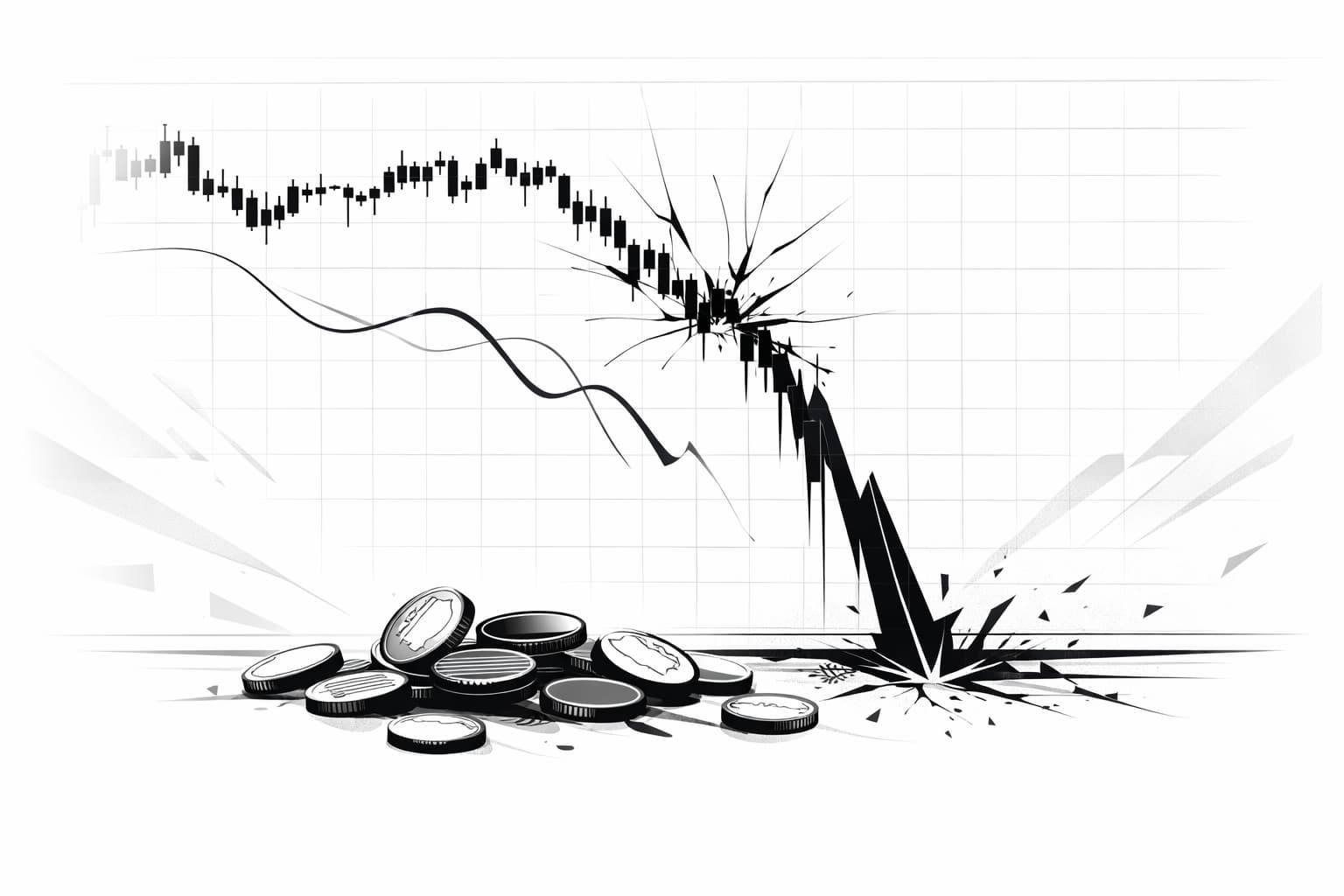
So, the big question on everyone's mind in April 2026: are we in the middle of one? After a sustained period of growth, the recent sharp declines in Bitcoin, Ethereum, and major altcoins have understandably shaken investor confidence. While it’s tempting to label every significant drop a full-blown crash, it's important to look at the broader context. Whether this is a temporary shakeout or the beginning of a longer bear market, the strategies for protecting your portfolio and finding opportunities remain the same. This guide will walk you through exactly how to handle the turbulence.
A Brief History of Major Crypto Crashes
If you're feeling the pressure of a market downturn, it can feel isolating and unprecedented. But looking back at crypto's short but dramatic history shows a clear pattern: major corrections and crashes are a normal part of the market cycle. Understanding these past events can give you the perspective needed to handle the present without panic. Each major crypto crash has taught the market valuable, if painful, lessons.
The 2018 ICO Bubble Burst
The bull run of 2017 was fueled by the Initial Coin Offering (ICO) craze. Thousands of projects raised billions of dollars, often with little more than a whitepaper and a promise. The hype was immense, with prices soaring to what seemed like impossible heights. However, when the excitement faded in early 2018, reality set in. Many of these projects had no viable product, and investors realized they were holding tokens with little to no underlying value. The resulting crash was severe, leading to a prolonged bear market, often called the "crypto winter," where Bitcoin lost over 80% of its value.
The 2022 Contagion Event (FTX, Terra/Luna)
The crash of 2022 was different. Instead of being driven by speculative retail fervor, it was caused by the collapse of massive, centralized institutions. It began with the spectacular failure of the Terra/Luna algorithmic stablecoin, which wiped out tens of billions of dollars in a matter of days. The shockwaves from this event exposed deep-seated issues at major lenders and exchanges like Celsius and FTX. The subsequent collapse of FTX, a company once seen as an industry leader, revealed fraud and mismanagement, shattering trust across the entire ecosystem. This event drove home the importance of self-custody and the inherent risks of trusting centralized players with your assets.
As you can see, while the causes differ, the outcome is often similar: a painful wash-out followed by a period of rebuilding. The market has recovered from every past crash, emerging with more resilient technology and smarter investors.
Why Do Crypto Markets Crash?
Understanding that markets move in cycles is one thing; knowing the triggers that can turn a simple correction into a full-blown crypto crash is another. These downturns are rarely caused by a single event. Instead, they are often a perfect storm of pressures from both the traditional financial world and the crypto industry itself. Let's break down the most common catalysts.
Macroeconomic Pressures
Crypto doesn't exist in a vacuum. It's deeply connected to the wider global economy. When central banks like the Federal Reserve raise interest rates, safer investments like bonds become more attractive. This often causes investors to pull money out of higher-risk assets, including cryptocurrencies. Similarly, fears of a global recession can lead to a "risk-off" sentiment across all markets. Investors sell their more speculative holdings to preserve capital, and crypto is often one of the first to be sold. You can learn more about how crypto performs during a recession to see these patterns in action.
Regulatory Crackdowns and News
Fear, uncertainty, and doubt (FUD) are powerful forces in any market, but especially in crypto. Negative headlines or the threat of government intervention can cause widespread panic selling. A surprise announcement from a major regulatory body, for instance, can send prices tumbling. We've seen markets react strongly to SEC crypto news in the United States or rumors of trading bans in other large economies. The mere possibility of stricter rules can be enough to trigger a sharp downturn as investors worry about the future of their assets.
Industry Contagion and Take advantage of
Sometimes, the biggest threats come from within the crypto world. The industry is highly interconnected, and the failure of one major exchange, lender, or fund can create a domino effect. This is often amplified by excessive build on—traders borrowing money to make larger bets. When prices fall, these borrowed positions are automatically sold off (liquidated) to cover the debt. This flood of forced selling pushes prices down even further, triggering more liquidations in a rapid, downward spiral that defines a classic crypto crash.
Your Survival Guide: 5 Steps to Take Immediately During a Crash
When prices are plummeting and your portfolio is deep in the red, it is easy to feel overwhelmed. The instinct is to either sell everything or stare at the charts in horror. Neither is productive. To survive a crypto crash, investors should follow these five steps:

Assess, Don't Panic Sell
Take a deep breath. Before making any sudden moves, revisit your original investment plan. For each asset you hold, ask yourself: has the fundamental reason I invested changed? If you bought an asset as a long-term store of value, a market downturn doesn't alter that thesis. Emotional decisions made in the heat of a crash are almost always the wrong ones.Re-evaluate Your Risk Tolerance
A market downturn is the ultimate test of your true risk tolerance. It is one thing to say you are comfortable with volatility when prices are going up; it is another to live through it. If you are losing sleep or constantly stressed, it is a clear sign your portfolio might be too aggressive for you. This is the time to honestly assess if you need to adjust your approach to proper portfolio allocation for the long run.Secure Your Assets (Self-Custody)
During a severe crypto crash, the risk is not just about price. Centralized exchanges can, and do, fail. They can halt withdrawals or even go bankrupt, taking customer funds with them. Remember the saying: "not your keys, not your coins." If you have assets you plan to hold for the long term, consider moving them off exchanges and into a personal hardware wallet where you control the private keys. This involves assessing platform risk on crypto exchanges and deciding what you are comfortable leaving there.Cut Out All Build on
This is non-negotiable. If you are using any form of build on—like margin trading or futures contracts—you should seriously consider closing those positions. Take advantage of magnifies both gains and losses. In a crashing market, it is a direct path to getting liquidated, where your entire position is automatically sold at a loss. Protecting your capital is priority number one, and using build on during a crash is incredibly risky.Unplug and Gain Perspective
After you have taken these defensive steps, the single best thing you can do is walk away. Constantly watching the charts will only feed your anxiety and tempt you into making emotional mistakes. The market will be there tomorrow. Go for a walk, spend time with family, or focus on your work. Gaining perspective is essential for your mental health and for making sound decisions when the dust settles.
How to Invest During a Crypto Crash: A 4-Step Strategy
Once you’ve taken steps to manage risk and protect your existing holdings, it’s time to shift your mindset from defense to offense. A market panic can be a rare opportunity for disciplined, long-term investors to build their positions at a significant discount. This four-step framework will guide you on how to strategically invest during a downturn without letting emotion take the wheel.
Step 1: Stick to Your Dollar-Cost Averaging (DCA) Plan
If you already have a Dollar-Cost Averaging plan in place, now is not the time to stop. DCA is the practice of investing a fixed amount of money at regular intervals, regardless of the asset's price. For example, buying $100 worth of Bitcoin on the first of every month.
This strategy is particularly effective during a crypto crash because your fixed investment amount now buys more of the asset. This process lowers your average purchase price over time, potentially leading to greater returns when the market eventually recovers. Resisting the urge to pause your contributions is key to making this strategy work for you.Step 2: Identify and Accumulate Blue-Chip Assets
During a market-wide fire sale, not all assets are created equal. Historically, market leaders like Bitcoin (BTC) and Ethereum (ETH) have shown the most resilience and have been the first to recover from major drawdowns. They have the longest track records, the largest networks, and the most institutional adoption.
While beaten-down altcoins might seem tempting with their dramatic price drops, they carry a much higher risk of never recovering. Focus the majority of your new capital on these "blue-chip" cryptos to build a solid foundation for the next market cycle.Step 3: Research Undervalued Projects with Strong Fundamentals
For the portion of your portfolio dedicated to higher-risk assets, a crash is the time for deep research, not speculation. Look past the panicked selling to find fundamentally strong projects that have been unfairly punished. Your research checklist should include:- Active Development: Are developers still consistently shipping code and improving the protocol? Check their public code repositories.
- Clear Use Case: Does the project solve a real problem that will still be relevant after the crash?
- Strong Community: Is the community still engaged and supportive, or has it disappeared?
- Healthy Treasury: Does the project have enough funding to survive a prolonged bear market without selling off its native token?
Step 4: Set Limit Orders to Capitalize on Dips
Instead of trying to time the absolute bottom—an impossible task—use limit orders to automate your buying strategy. A limit order is an instruction you give an exchange to buy an asset at a specific price or better. For example, if Bitcoin is trading at $50,000, you can set a limit order to buy a certain amount if the price drops to $45,500.
This approach allows you to capitalize on sudden, sharp dips (often called "wicks") that can happen overnight, all without having to stare at charts 24/7. Set your orders at price levels you've identified as strong long-term value and let the market come to you.
The Bullish vs. Bearish Case for Crypto in 2026
After navigating the sharp drops of a crypto crash, it’s wise to question the long-term viability of the asset class. To invest intelligently from here, you must assess both the powerful tailwinds and the serious headwinds facing the market. Looking at the logical arguments for both sides helps remove emotion from your decision-making and prepares you for what may come next.
The Bullish Outlook: Adoption and Innovation
The case for a strong recovery is compelling. Institutional adoption is here, with established ETFs providing a regulated gateway for immense capital. This brings a stabilizing force to the ecosystem. Beyond finance, innovation continues at a rapid pace. Layer 2 scaling solutions are making transactions faster and more affordable, enabling decentralized applications for everything from supply chain management to creator economies to finally become practical for everyday use.
The Bearish Outlook: Regulation and Macro Headwinds
On the other hand, it's critical to acknowledge the risks. The regulatory environment remains a major wildcard, and unfavorable rulings in key jurisdictions could stifle innovation. The persistent macroeconomic uncertainty continues to suppress appetite for assets perceived as risky. Finally, the rise of Central Bank Digital Currencies (CBDCs) presents a formidable challenge. These government-backed digital currencies could offer many of the same benefits but with the stability and authority of the state, potentially crowding out decentralized alternatives.
Your job as an investor is not to predict the future perfectly, but to build a portfolio that can withstand the pressures of the bearish case while being positioned to benefit from the progress of the bullish one.
Conclusion: Building a Resilient Portfolio for the Next Cycle
Handling a market downturn is one of the most challenging tests for any investor. Throughout this guide, we've explored how to maintain a steady hand, manage risk effectively, and identify strategic entry points when others are panicking. A crypto crash is not an end, but a natural part of the market cycle that presents incredible opportunities for those who are prepared.

These periods of intense fear are precisely when disciplined investors can build a strong foundation for future growth. By focusing on projects with solid fundamentals and dollar-cost averaging, you can turn market volatility into your greatest advantage. The key is to have a clear strategy before the storm hits.
Your work begins now. Define your goals, set your buy targets, and commit to your plan. When the next cycle turns, you won't just survive the downturn—you’ll be positioned to thrive because of it.
Frequently Asked Questions
- Why do crypto markets crash so often?
- The crypto market is still young and highly speculative, making it sensitive to news, regulatory changes, and economic shifts. High leverage is also a key factor, as it amplifies price movements both up and down. This combination of speculation and leverage contributes to the frequent and severe price crashes we often see.
- What does a past Bitcoin investment show about crashes?
- If you invested $1,000 in Bitcoin five years ago, you would have endured several major crashes, like the one in 2022. However, your investment would still be worth significantly more today. This illustrates the "zoom out" principle, showing that long-term holding can often overcome short-term volatility and lead to substantial gains.
- Can large holders (whales) cause a crypto crash?
- Yes, large holders, or "whales," can initiate a crash. When a whale sells a huge amount of an asset, the price drop can trigger panic selling from retail investors and automated liquidations on exchanges. This chain reaction amplifies the initial sell-off, creating a crash, particularly in smaller, less liquid altcoin markets.
Sources
Author

Crypto analyst and blockchain educator with over 8 years of experience in the digital asset space. Former fintech consultant at a major Wall Street firm turned full-time crypto journalist. Specializes in DeFi, tokenomics, and blockchain technology. His writing breaks down complex cryptocurrency concepts into actionable insights for both beginners and seasoned investors.