CBDC Stimulus Expiry: How Expiring Digital Money Works

What is CBDC stimulus expiry?
CBDC stimulus expiry is a policy idea where a central bank issues digital relief money that must be spent within a set time or under specific rules. In plain terms, it is stimulus delivered as central bank digital currency with an expiration date, spending limits, or both.
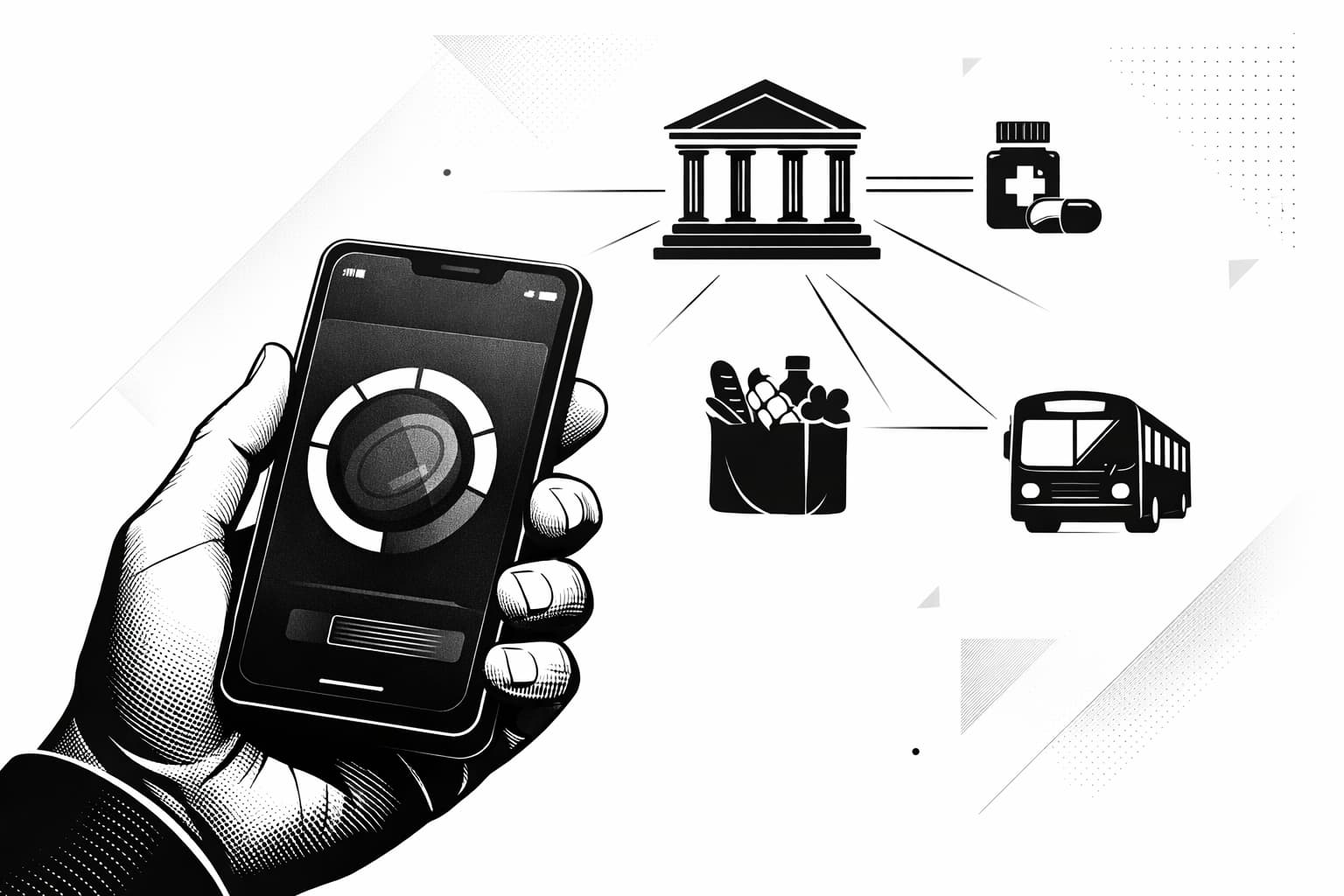
A simple definition of expiring digital stimulus
A CBDC, or central bank digital currency, is a digital form of public money issued by a central bank. Stimulus is money sent into the economy to support households, businesses, or demand during a downturn. Expiry means that some of that digital money may lose value, become unusable after a deadline, or work only for approved purposes.
Put together, cbdc expiring money means digital public money designed with rules attached. Those rules could include a spending window, limits on where the funds can be used, or restrictions that steer support toward items such as food, rent, transport, or energy bills. That is different from ordinary bank deposits or card payments, which are digital but are not central bank money and usually do not carry policy-driven expiration features.
At the same time, the term does not mean every CBDC would work this way. A retail CBDC could be designed to behave much like cash in digital form, while only certain emergency payments use programmable features. That distinction matters because debates often blur the line between a general-purpose CBDC and a special relief program built on top of it.
Why the idea matters in monetary policy
Policymakers pay attention to programmable stimulus cbdc proposals because they aim to make support arrive faster and get spent sooner. During recessions, one problem with cash transfers is that people may save part of the payment rather than spend it quickly. If a portion expires after a few months, the policy hopes to increase near-term spending and speed up the economic effect.
There is also a targeting argument. Instead of broad, untimed transfers, a government or central bank could direct aid toward affected regions, lower-income households, or specific essentials. Even so, the appeal comes with trade-offs: less user freedom, harder technical design, and real concerns about privacy, fairness, and state control. Those tensions are why cbdc stimulus expiry gets serious attention in policy circles, not just online debate.
What is a CBDC and how is it different from today’s digital money?
A central bank digital currency, or CBDC, is digital money issued by a country’s central bank. In plain terms, it is a digital form of sovereign money, similar in status to physical cash, but designed for electronic use. That point matters because most of the “digital money” people use now is not a CBDC at all. Your bank balance, card payments, and app transfers usually move claims on commercial banks, not direct claims on the central bank. The Federal Reserve and the Bank for International Settlements both describe CBDCs in these terms in their public research papers and reports (Federal Reserve; BIS).
That distinction is important when people talk about cbdc expiring money or programmable stimulus cbdc. Before asking whether a CBDC could carry rules such as time limits, it helps to know what kind of money a CBDC actually is and how it differs from the systems already in use. If you want a quick primer on payment rails versus digital currency, see FedNow vs CBDC.
CBDC vs bank deposits and payment apps
Bank deposits are issued by commercial banks. Legally, your balance is the bank’s liability to you. Payment apps sit on top of that structure: they move money instructions between banks or store balances backed by bank accounts. Final settlement often happens later through central bank reserve systems between financial institutions, even if the app feels instant to the user.
A retail CBDC would be different. The public would hold digital money that is a direct claim on the central bank itself, not on a private bank or wallet provider. In other words, the issuer changes, the liability changes, and the settlement design may change as well.
CBDC vs stablecoins and crypto assets
Stablecoins are private tokens, typically issued by companies and backed by reserves of varying quality. They aim to track a national currency, but they are not sovereign money. Crypto assets such as bitcoin are different again: they are decentralized digital assets with no state issuer and usually no promise of redemption at face value. For more, see how stablecoins differ from CBDCs, how cryptocurrencies differ from sovereign digital money, and these blockchain basics.
Wholesale vs retail CBDCs
Finally, not every CBDC is meant for everyday shoppers. Wholesale CBDCs are for banks and large financial institutions, mainly to improve interbank settlement. Retail CBDCs are designed for households and businesses. When people debate cbdc stimulus expiry, they are usually talking about retail CBDCs, since those would reach the public directly.
How programmable stimulus CBDC could work in practice
Once the basic idea is clear, the next question is practical: what would people actually see if a government issued programmable stimulus cbdc? In most designs, the experience would look familiar on the surface. Eligible users would receive funds in an app, bank interface, or approved payment account, then spend them at checkout much like other digital payments. The difference sits behind the scenes, where policy rules can be attached to the balance itself.
To picture it, think of a temporary stimulus credit created for a specific purpose: boost household spending within 90 days, support local businesses, or help with essentials after a shock. That is where cbdc stimulus expiry becomes a policy setting rather than just a payment feature.
Distribution through wallets or intermediaries
A central bank would not necessarily open an account for every citizen. In many proposals, distribution would happen through commercial banks, public payment platforms, or licensed providers. People might access funds through existing banking apps or dedicated CBDC wallets. For readers new to the idea, it helps to compare this with digital wallets and how they work, though a CBDC system would usually involve stronger identity checks and tighter public rules.
Eligibility could be based on income, location, employment status, or household composition. Once verified, the intermediary would credit the wallet with a designated stimulus balance separate from ordinary deposits.
Possible rules: expiry, category limits, and geography
The most discussed feature of cbdc expiring money is the deadline. A payment token or wallet balance might be valid for 30, 60, or 180 days. After that, it stops working. Policy makers could also limit spending by merchant category, such as groceries, childcare, utilities, or transit, using merchant codes already common in payment systems.
Geographic rules are also possible. Funds might be spendable only within a city, disaster zone, or national border. In a recession, that could push demand toward local businesses. In practice, the system would approve or reject each purchase based on these preset conditions.
- A public authority creates a stimulus allocation with eligibility rules and an expiry date.
- Approved banks or payment providers distribute it to verified user wallets.
- The recipient spends the balance at eligible merchants before the deadline.
- The system records use, checks category or geography limits, and declines blocked transactions.
- After expiry, any unspent balance is automatically removed under the policy rules.
What happens when the money expires?
That depends on the design. Under one model, unused funds return to the issuer. Under another, they are canceled outright, which makes cbdc stimulus expiry act more like a temporary voucher. A third option would reallocate expired balances into a new program, perhaps targeted at another group or region. Each choice affects budget accounting, public trust, and how strong the spending incentive really is.
Why governments and central banks might want money that expires
From a policy standpoint, the appeal of cbdc stimulus expiry is fairly direct: it aims to change when money is spent, not just how much money is distributed. In a downturn, officials often want support to reach the economy quickly. If households save the transfer, pay down debt, or simply wait, the short-term effect is weaker. An expiry date is one way to push spending into the period when policymakers believe it will matter most.
That does not make cbdc expiring money automatically wise or fair. It does, however, explain why the idea keeps appearing in policy discussions. In simple terms, expiring stimulus is designed as a monetary-policy tool for timing, targeting, and measurement.
Faster stimulus transmission
Traditional cash transfers can sit in bank accounts for months. By contrast, a programmable stimulus cbdc could be set to lose validity after a defined window, such as 30 or 90 days. The economic logic is that people are more likely to buy groceries, pay rent, or make delayed purchases before the deadline rather than hold the funds.
Supporters argue this could raise spending velocity during recessions or emergencies. In other words, the same budget outlay might produce a faster boost in demand. Critics, of course, would ask whether households under stress should be pressured to spend on a government timetable.
Targeted support for households, sectors, or regions
Policymakers may also want aid to reach specific groups instead of the whole population. Expiring digital transfers could be directed to lower-income households, disaster-hit regions, or sectors facing sudden collapse, such as tourism or local retail. That could help keep money circulating in places where job losses are concentrated.
There is also a financial inclusion argument: if a public digital wallet were easy to access, support might reach people who are underserved by banks more quickly than some existing programs do. Still, access gaps, identification rules, and tech barriers could limit that promise.
Potential benefits for data and policy feedback
Another attraction is feedback. If spending occurs through a digital system, officials may be able to see whether the program increased purchases, where funds were used, and how quickly activity responded. That could make future interventions more precise and easier to evaluate.
Even so, better data comes with obvious trade-offs. The same visibility that helps assess results can raise concerns about surveillance, errors, and mission creep. So while cbdc stimulus expiry may look efficient on paper, its real-world case depends on whether those gains outweigh the social and institutional risks.
The biggest risks: surveillance, control, and mission creep
Those potential benefits do not erase the strongest objections. In fact, the debate around cbdc stimulus expiry becomes most serious when it moves past economics and into power: who can see transactions, who can set rules, and whether a limited emergency tool stays limited. For many people, that is the real issue.

Privacy and transaction monitoring concerns
Privacy sits at the center of the argument. A CBDC could be designed on a spectrum. At one end are cash-like models with small-value privacy, where everyday transactions are hard for the state or intermediaries to inspect. At the other end are fully traceable systems, where each payment can be linked to an identity, time, place, and merchant. The ECB has repeatedly said privacy is a central design issue in its digital euro work, while also noting that anti-money-laundering rules still apply (ECB digital euro).
That difference matters. A system built for cbdc expiring money does not automatically require total visibility, but expiry rules do create pressure for more data collection. Officials may want to confirm who received funds, whether they were spent in time, and whether merchants followed the rules. Even if that data is gathered for a narrow policy purpose, people may worry that it can later be shared across tax, welfare, policing, or immigration systems.
Programmability as a tool of control
The next concern is control. In theory, programmable features could be limited to a simple expiration date on temporary stimulus. Still, critics fear the logic will not stop there. If money can expire, it may also be coded to work only at certain stores, only for approved goods, or only within certain dates or locations.
Supporters argue that these are policy choices, not technical destiny. That is true. Yet the existence of the technical option changes the public conversation. A programmable stimulus cbdc aimed at boosting spending in a recession may look very different from a system that can quietly restrict behavior.
Mission creep and political risk
Then comes the biggest long-term fear: mission creep. Emergency tools often arrive with narrow promises. Later, they can expand. A temporary rule for crisis payments could, critics worry, become a model for broader financial controls during inflation, unrest, sanctions enforcement, or culture-war politics.
There are also practical risks. People without reliable phones, digital IDs, or banking access could be excluded. Technical outages or cyberattacks could interrupt spending at the worst possible moment. So while expiring stimulus may be defensible as a monetary-policy design, public trust depends on hard limits: clear laws, independent oversight, data minimization, offline options, and sunset clauses that actually expire.
Will CBDCs expire? Real-world examples and global progress
The short answer is no: most central bank digital currency projects do not currently make everyday balances expire. That said, some pilots and policy proposals have explored time limits for specific distributions. This is where debates about cbdc stimulus expiry often become muddled. In practice, there is a big difference between a research paper, a limited trial, and a live national system used by the public.
So far, the global picture is mixed. A few countries have tested time-limited incentives or vouchers tied to digital currency experiments, while many others are focused on faster payments, offline functionality, privacy settings, and how a retail CBDC would fit alongside banks and cash. In other words, cbdc expiring money remains more of a design option than a standard feature. For broad tracking of project status, see the Atlantic Council CBDC tracker and BIS surveys (Atlantic Council; BIS survey).
Country/region | Project status | Expiry tested or proposed? | Key takeaway |
|---|---|---|---|
China | Large-scale pilot of e-CNY | Tested in some targeted distributions | Expiry was used in limited campaigns, not as a blanket rule for all balances |
Euro area | Preparation phase for digital euro | Not a core feature | Debate centers on privacy, holding limits, and payment resilience |
United States | Research only, no retail CBDC launched | No live expiry policy | Discussion is active, but political resistance remains strong |
Other countries | Pilots vary widely | Mostly no | Many projects prioritize payments efficiency over programmable expiry |
China and targeted digital yuan experiments
China is often cited first because local authorities have run digital yuan giveaways that had to be spent within a set period. These experiments were designed to encourage quick spending, which is why they appear in discussions of cbdc expiring money. Still, it is important to be precise: those time limits applied to certain promotional distributions, not to every digital yuan balance in general circulation. Reporting from Reuters and central-bank commentary have described these local e-CNY trials and giveaways (Reuters).
Europe and the digital euro debate
By contrast, the European Central Bank has framed the digital euro around public access to central bank money in digital form, with strong attention to privacy, usability, and limits on holdings. The debate is less about forcing people to spend and more about design safeguards. As a result, programmable stimulus cbdc ideas may be discussed academically, but expiry is not the defining feature of Europe’s current work (ECB).
What the US is and is not doing
In the United States, the Federal Reserve has studied CBDCs but has not launched a retail version. At the same time, lawmakers have introduced bills aimed at blocking or restricting a US CBDC, often citing surveillance and state control concerns. For now, that means there is no live American system where stimulus money expires. The US debate is real, but it remains a debate rather than an implemented policy (Federal Reserve discussion paper).
CBDC vs programmable money: what’s the difference?
A common point of confusion is treating a CBDC and programmability as the same thing. They are related, but they are not identical. A CBDC is the digital form of central bank money. Programmable money refers to rules attached to how funds can be used, when they can be spent, or where they can go. In other words, cbdc expiring money is one possible design choice, not the definition of a CBDC itself.
That distinction matters for debates about cbdc stimulus expiry. A retail CBDC could be built with few or no spending conditions. On the other hand, time limits, merchant restrictions, or automatic transfers can also be added through wallets, payment platforms, benefit cards, or other intermediated systems. For a closer look at programmable rules in digital money systems, it helps to separate the money from the rules wrapped around it.
Why not all programmable money is a CBDC
Governments already have ways to deliver targeted digital benefits without launching a universal CBDC. They can issue vouchers, prepaid cards, tax credits, or app-based payments that work only for approved purchases or within a set time window. That means programmable stimulus cbdc is only one policy route among several. The real policy question is not just whether the money is digital, but who issues it, who sets the rules, and how much oversight the public is willing to accept.
What happens next for CBDCs, cash, and consumer choice?
Looking ahead, CBDCs are more likely to sit alongside cash, cards, and bank deposits than replace them outright. In most democracies, consumer choice will matter politically, and that makes a mandatory shift less likely. Even so, cbdc stimulus expiry could move from a niche policy idea to a limited emergency tool if future recessions, disasters, or supply shocks push governments to seek faster, more targeted support.

At the same time, public acceptance will depend on guardrails. If policymakers present cbdc expiring money as temporary, transparent, and legally constrained, it may gain support in narrow cases. If it appears open-ended or tied to broader spending controls, political resistance could be strong. That is where the debate over programmable stimulus cbdc will likely be decided: not by the technology alone, but by trust, law, and opt-in design.
Key takeaways for readers and investors
Watch for three signals: whether central banks promise cash will remain available, whether lawmakers limit programmability by statute, and whether pilot programs focus on emergency payments rather than everyday retail use. For readers, the practical question is choice. For investors, the bigger issue is which payment rails, banks, and wallet providers may gain if CBDCs stay optional instead of becoming the default.
Frequently Asked Questions
- Is CBDC coming to America?
- The United States has studied central bank digital currency, but it has not launched a retail CBDC. The Federal Reserve has published research and explored technical questions, while political opposition remains strong. Research and limited pilots are very different from approving, building, and rolling out a nationwide public system.
- Did the CBDC bill pass?
- There is no single CBDC bill with a simple yes-or-no answer. Different federal and state proposals have tried to restrict, authorize, or shape CBDC policy, and their status changes over time. To avoid outdated claims, it is best to check the latest congressional record and bill tracker.
- Is CBDC really happening?
- Yes, CBDC development is real, but it is moving at very different speeds around the world. Some countries are still researching, others are running pilots, and some focus only on wholesale systems for banks. A live retail CBDC in one country does not mean every country is close behind.
- Will CBDC be mandatory?
- Most public CBDC proposals describe it as an optional payment method, not something people would be forced to use. Still, critics worry that if cash access shrinks and digital payments dominate, real choice could weaken over time even without a formal legal requirement.
- Will CBDCs expire?
- A CBDC does not automatically need an expiration date. What can expire are specific payments distributed through it, such as targeted stimulus designed to be spent within a set period. That means the core digital currency and the policy rules attached to certain transfers are separate issues.
- Will CBDCs replace cash?
- Many central banks say a CBDC would complement cash rather than replace it, especially in the early stages. Even so, critics note that cash use could decline if digital systems become more convenient, more widely accepted, or more strongly encouraged by governments and businesses.
- What is the CBDC controversy?
- The debate centers on tradeoffs. Supporters point to faster payments, financial inclusion, and more efficient public transfers. Opponents worry about privacy, surveillance, cybersecurity, state control over spending, and the risk that future governments could misuse the system for political or social pressure.
- Is the US going to use CBDC?
- The US has not committed to a public retail CBDC and is still debating whether it should exist at all. Some goals often tied to CBDCs, like faster payments, are already being addressed through instant-payment rails and private digital payment services, which reduces the urgency for some policymakers.
- What is a programmable CBDC?
- A programmable CBDC is a digital central bank currency with rules built into the system or layered on top of it. Those rules can affect when, where, or by whom funds are used, such as expiring stimulus payments, merchant-category limits, or automatic compliance and identity checks.
- What is the CBDC ban in the US?
- The phrase usually refers to state or federal proposals aimed at blocking, limiting, or preempting a retail CBDC rollout. These measures vary widely in scope, definitions, and legal effect. Because the policy landscape keeps changing, the exact meaning depends on the jurisdiction and current bill language.
- What is the difference between programmable money and CBDC?
- Programmable money is the broader idea of digital funds that carry rules about use, timing, or eligibility. A CBDC is one possible government-issued version of that idea. Prepaid benefits, tokenized bank deposits, and smart-contract payment systems can also be programmable without being a CBDC.
Sources
- U.S. Senate Passes Bill Banning Fed CBDC Issuance Until 2030 | MEXC News
- Could digital currencies end banking as we know it? The future of money
- What is a CBDC? Guide to Central Bank Digital Currencies | MONEI
- Cash with an Expiration Date? How CBDCs Could Borrow a (Radical) Idea
- Central bank digital currency - Wikipedia
Author

Crypto analyst and blockchain educator with over 8 years of experience in the digital asset space. Former fintech consultant at a major Wall Street firm turned full-time crypto journalist. Specializes in DeFi, tokenomics, and blockchain technology. His writing breaks down complex cryptocurrency concepts into actionable insights for both beginners and seasoned investors.