Blockchair Review (2026): A Deep Dive Into The Block Explorer
Blockchair: 2026 Quick Verdict
For those short on time, here's the bottom line: Blockchair is the Swiss Army knife of blockchain explorers, and in 2026, it remains an indispensable tool. If you regularly interact with more than one cryptocurrency or need deep, cross-chain data analysis, its universal search engine is second to none. It's built for power users, developers needing a flexible API, and anyone who values privacy features that are often overlooked by competitors. While newcomers might find single-chain explorers like Etherscan simpler at first glance, anyone serious about crypto will quickly appreciate the sheer utility Blockchair offers.

What Is Blockchair? An Overview
Blockchair is a multi-blockchain explorer, often called a search engine for blockchains. It allows users to search and view data like transactions, addresses, and blocks across more than 18 different cryptocurrencies, including Bitcoin and Ethereum, from a single interface.
Most crypto users are familiar with explorers like Etherscan for Ethereum or BscScan for BNB Smart Chain. These tools are fantastic, but they are walled gardens, dedicated to only one network. If you need to track a Bitcoin transaction and then check an XRP address, you'd typically need two separate websites. This platform solves this by creating a unified dashboard for a growing list of major blockchains, simplifying the process for anyone interacting with multiple crypto ecosystems.
The 'Google for Blockchains' Concept
The platform's tagline as a "search engine for blockchains" is more than just marketing; it accurately describes its core function. Just as you'd use Google to find a specific piece of information on the vast internet, you use Blockchair to pinpoint a specific transaction, explore the contents of a block, or analyze the history of a wallet address. It takes the raw, often intimidating data stored on a distributed ledger and presents it in a human-readable format, making on-chain activity transparent and accessible to everyone.
Blockchair Key Features (A Deep Dive)
While many explorers do one thing well, Blockchair distinguishes itself with a suite of powerful, interconnected features that cater to a wide range of users. After spending significant time with the platform, it's clear these aren't just tacked-on extras; they form a cohesive data environment that single-chain explorers can't match. Let's break down the tools that make it stand out.
Multi-Blockchain Support
The most immediate advantage is its role as a universal translator for blockchains. Instead of keeping bookmarks for Etherscan, a separate TRON explorer, and another for XRP, I can do almost all of my cross-chain tracking in one place. Blockchair supports over 24 major blockchains, including heavy hitters like Bitcoin (BTC), Ethereum (ETH), Cardano (ADA), Ripple (XRP), and Litecoin (LTC). This aggregation saves time and simplifies the workflow for anyone managing a diverse portfolio or tracking transactions across different ecosystems. It’s a simple concept executed exceptionally well.
Advanced Search & Filtering
The search bar is far more than a simple address lookup. You can search for transaction hashes, block numbers, and even text embedded within a transaction. For instance, I was able to find a specific Bitcoin transaction from years ago by searching for a unique word I knew was included in its OP_RETURN data. This deep search capability is invaluable for on-chain forensics or simply locating a lost transaction. The filtering options are also impressive, allowing you to narrow down an address's history by date, value, or transaction type, cutting through the noise with precision.
Data Exports (CSV & PDF)
For anyone who needs to do serious analysis or record-keeping, the data export feature is a game-changer. With a few clicks, you can download the complete transaction history for an address as a CSV or TSV file. This is incredibly useful for accountants preparing tax reports, researchers analyzing on-chain activity, or just for personal financial tracking. While other services often place this feature behind a paywall, Blockchair makes it readily accessible, further cementing its value for professional use.
Powerful API for Developers
Beyond the user-facing explorer, the platform offers an API that allows developers to pull blockchain data into their own applications. This is the engine that powers many crypto wallets, analytics dashboards, and research tools. By providing a unified API for dozens of blockchains, Blockchair saves developers the immense cost and complexity of running and maintaining their own nodes for each chain. It's a foundational tool that enables others to build the next generation of crypto products on a reliable data backbone.
How to Use Blockchair to Track a Transaction
While the advanced features are impressive, most people will use Blockchair for one primary reason: to see what's happening with their crypto. Let's walk through the simple process of tracking a transaction, which is where this tool truly shines.
Step 1: Find Your Transaction ID (TxID) or Address
First, you need the unique identifier for your transaction. After you send funds, your crypto wallet or exchange will provide a transaction ID, often called a TxID or transaction hash. This long string of letters and numbers is your digital receipt. Alternatively, you can search for any public wallet address to see its balance and history.
Step 2: Use the Blockchair Search Bar
Work through to the Blockchair homepage. You'll see a prominent search bar at the top that says something like "Search for transactions, addresses, blocks...". Simply copy your TxID or wallet address and paste it directly into this bar. Blockchair automatically detects the blockchain you're interested in, whether it's Bitcoin, Ethereum, or one of the dozens of others it supports.
Step 3: Interpret the Results
After hitting enter, you'll be taken to a detailed results page. Here you can see everything about the transaction. You'll find the sender and receiver addresses, the exact amount sent, and the network fees paid. Most importantly, you can check the confirmation status. This tells you how many blocks have been added to the chain since your transaction, confirming its finality and security.
Blockchair Pricing: Is It Free?
This is a common question, and the answer is refreshingly simple: for the vast majority of users, Blockchair is completely free. All the core functionality you'd expect from a top-tier block explorer is available without any cost. You can look up transactions, explore blocks, check address balances, and use the privacy-focused features across its supported chains without ever hitting a paywall or even needing to sign up for an account.
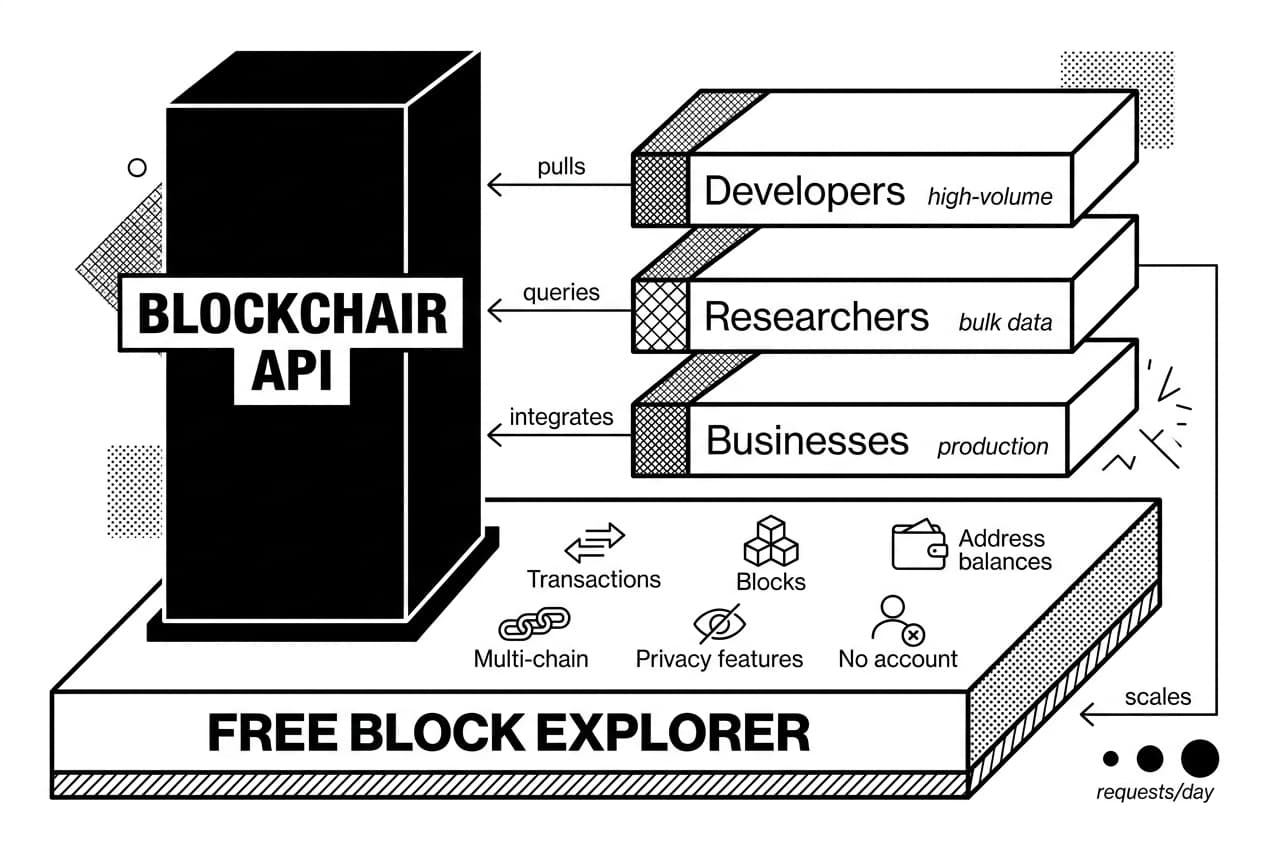
The paid aspect of the platform is aimed squarely at developers, researchers, and businesses. Blockchair offers a powerful API for those who need to programmatically pull large volumes of blockchain data. Pricing for the API is structured in tiers based on the number of requests you need to make per day. For the average crypto user or hobbyist, the free version provides everything you need for detailed blockchain exploration.
Pros and Cons of Blockchair
After a thorough hands-on test, it's clear that Blockchair offers a unique and powerful service. However, no platform is without its trade-offs. To give you a balanced perspective, we’ve broken down the most significant advantages and disadvantages of using this multi-chain explorer in 2026.
Pros
- Extensive Multi-Chain Support: Its ability to search across dozens of blockchains from a single search bar is a game-changer, saving immense time and effort.
- Privacy-Focused Approach: With a no-log policy and Tor support, it stands out for users who prioritize anonymity in their on-chain research.
- Powerful for Developers: The powerful API and ability to download full node data dumps provide unparalleled resources for builders and analysts.
Cons
- Complex for Beginners: The sheer volume of data and tools can be overwhelming for newcomers accustomed to simpler, single-chain explorers.
- Lacks Deep DeFi Analytics: While great for transaction tracking, it doesn't offer the deep, protocol-specific DeFi analytics available on specialized platforms.
Blockchair vs. Etherscan: Head-to-Head Comparison
Comparing Blockchair to a platform like Etherscan highlights their different philosophies. It’s not about which is better, but which is right for the job. Blockchair is the versatile multi-tool of blockchain explorers. Its power lies in its breadth, allowing you to search for an address, hash, or transaction across more than two dozen different blockchains from a single search bar. This is incredibly efficient if you’re active across different ecosystems like Bitcoin, Ethereum, and Cardano.
Etherscan, on the other hand, offers unparalleled depth for a single chain: Ethereum. While it won't help with your Bitcoin activity, it provides specialized tools for developers and power users that Blockchair can't match, such as advanced smart contract verification and direct contract interaction. The choice is simple: use Blockchair for broad, cross-chain convenience and Etherscan for a deep, technical dive into the Ethereum network.
Privacy and Security: How Safe is Blockchair?
When dealing with public ledgers, the concept of privacy can seem counterintuitive. After all, every transaction is out in the open. However, how you access that data matters. This is where Blockchair takes a commendable stance on user privacy and security. Unlike some platforms that push for account creation, Blockchair allows you to perform almost all searches without logging in or providing any personal information. This significantly reduces your digital footprint.
I've reviewed their privacy policy, and it's refreshingly straightforward. They state they don't track individual user searches to build profiles. While they do collect standard server logs for operational purposes, the core experience is designed to be as anonymous as possible for a web service. For users who simply want to look up a transaction or check an address balance without tying that activity to an identity, Blockchair offers a much safer and more private window into the blockchain than many of its competitors.
Final Verdict: Is Blockchair a Good Block Explorer in 2026?
After extensive testing, the answer is a clear yes. In 2026, Blockchair stands out as a powerful, multi-chain analytics engine, not just a simple explorer. Its strength lies in its incredible breadth, allowing users to track assets and transactions across a vast array of blockchains from a single search bar—a feat single-chain explorers can't replicate.
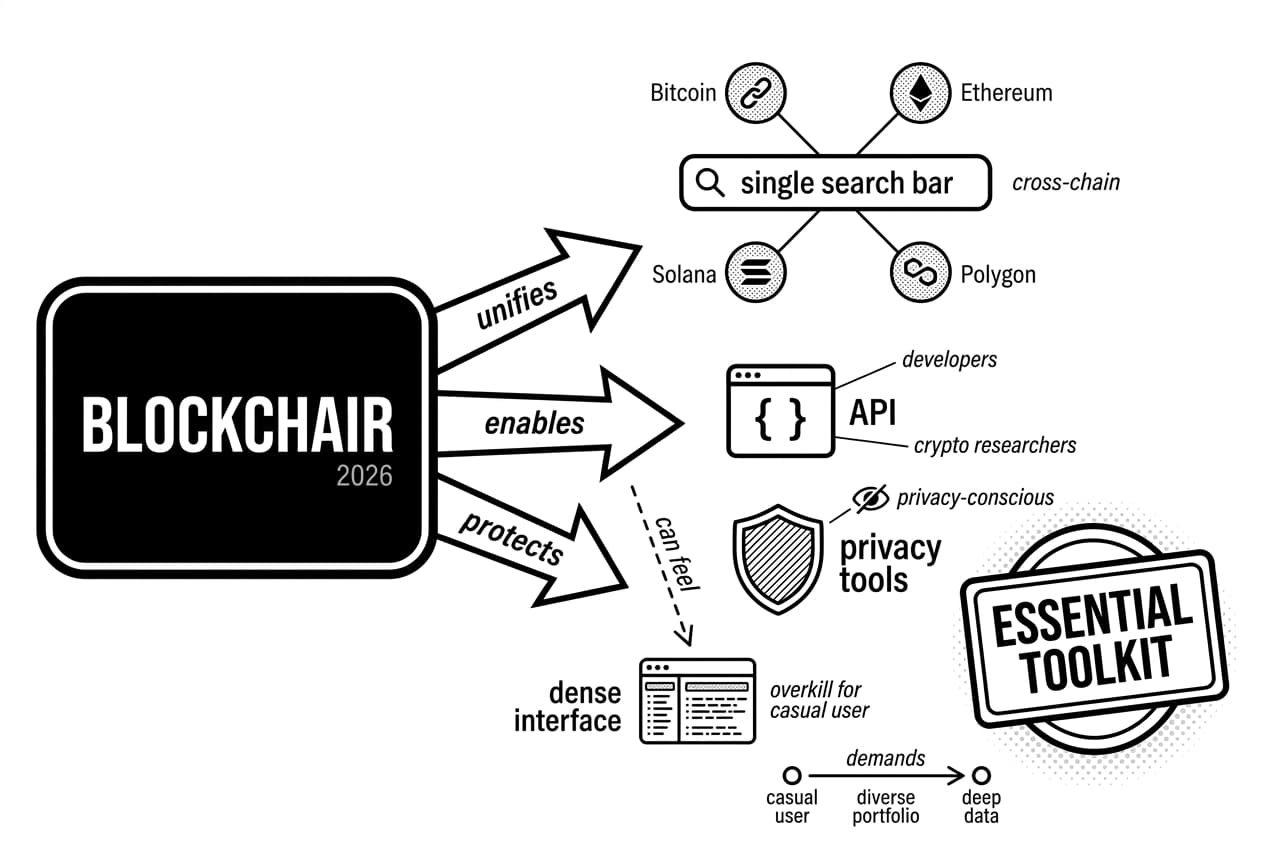
While its dense interface may be overkill for a casual user checking a single transaction, it's an indispensable tool for developers, crypto researchers, and anyone managing a diverse portfolio. For those who demand deep data, privacy-conscious tools, and cross-chain functionality, Blockchair is more than good; it's an essential part of the modern crypto toolkit.
Frequently Asked Questions
- Is Blockchair free to use?
- Yes, Blockchair is completely free for everyday use, such as looking up transactions, addresses, or blocks. They offer paid API plans for developers and businesses that need large volumes of blockchain data, but the main explorer features are available to everyone at no cost to use.
- How do I track a blockchain transaction?
- To track a transaction, find its unique transaction ID (TxID) in your crypto wallet or on the exchange where you made the trade. Simply copy this ID, paste it into the main search bar on Blockchair, and hit enter. You'll see all the details, including the amount, confirmations, and addresses involved.
- What can I find by searching a crypto address on Blockchair?
- When you search a crypto address, Blockchair reveals its complete history. You can view every transaction ever sent or received, check the current balance for multiple cryptocurrencies held by that address, and see other key data points like the date of its first and last activity on the blockchain.
Sources
Author

Crypto analyst and blockchain educator with over 8 years of experience in the digital asset space. Former fintech consultant at a major Wall Street firm turned full-time crypto journalist. Specializes in DeFi, tokenomics, and blockchain technology. His writing breaks down complex cryptocurrency concepts into actionable insights for both beginners and seasoned investors.