Kalshi Review 2026: Is This Prediction Market Legit?

Quick Verdict: Is Kalshi Worth It in 2026?
Kalshi is worth it for a specific type of trader: someone who wants regulated, exchange-traded exposure to real-world events — think Federal Reserve rate decisions, election outcomes, and economic data releases — through a legitimate CFTC-designated contract market. Its single biggest strength is legal clarity; this is not a gray-market prediction site but a federally regulated financial exchange. The biggest weakness is liquidity — many contracts still carry wide spreads and thin order books, which makes it frustrating for anyone expecting the execution quality of a traditional equity market.

What Is Kalshi? Platform Overview
Kalshi is a federally regulated financial exchange where traders buy and sell event contracts — binary-style instruments that pay out based on whether a specific real-world outcome occurs. Founded in 2018 by Tarek Mansour and Luana Lopes Lara, the company spent years working through regulatory approval before launching publicly. That patience paid off: Kalshi became the first CFTC-designated prediction market exchange in the United States, a status that separates it structurally and legally from nearly every competitor in this space.
At its core, the platform functions like a financial exchange, not a gambling site. You're not placing bets with a bookmaker — you're trading contracts on a two-sided market. Prices reflect collective probability estimates, and positions can be entered and exited before an event resolves. Think of it less like a sportsbook and more like a futures exchange with binary outcomes.
Kalshi's CFTC Regulation and DCM Status
Holding a Designated Contract Market license from the Commodity Futures Trading Commission isn't a minor distinction. It means Kalshi operates under the same regulatory framework that governs major futures exchanges like CME Group. In practice, this translates to real protections for users: segregated customer funds, mandatory compliance standards, and federal oversight. Your money isn't sitting on an offshore server outside US jurisdiction. This matters, especially as how US financial regulators are shaping new market infrastructure continues to evolve rapidly.
Offshore platforms have no equivalent obligation to protect your capital or follow anti-manipulation rules. Kalshi does. That's not marketing — it's a legal requirement baked into their operating license.
How Kalshi Differs from Sports Betting and Polymarket
Polymarket operates on blockchain infrastructure and is technically unavailable to US users — though enforcement remains inconsistent. Traditional sportsbooks focus almost exclusively on athletic events and operate under state gaming licenses, not federal financial regulation. Kalshi occupies an entirely different category: a federally sanctioned exchange covering economic indicators, political outcomes, weather events, and yes, some sports markets.
The event types also differ meaningfully. Where sportsbooks offer point spreads and parlays, Kalshi trades contracts on questions like whether the Fed will cut rates, whether unemployment will hit a specific threshold, or which party will control the Senate. These are financial and macroeconomic questions — the kind that actually affect portfolios.
How Kalshi Works: Event Contracts Explained
Kalshi is a CFTC-regulated financial exchange where traders buy and sell YES/NO contracts tied to real-world events. Each contract is worth exactly $1 at resolution — if you're right, the contract pays out $1; if you're wrong, it expires worthless. The price you pay, say $0.63, reflects the market's implied probability (63%) that the event occurs.
That single-dollar payout structure is what keeps the math clean. If you buy 100 YES contracts at $0.63 each, you're risking $63 to potentially collect $100 — a $37 profit if the event resolves in your favor. Losses are capped at whatever you paid. There's no margin, no take advantage of, and no counterparty risk beyond the exchange itself. For traders coming from traditional financial markets, it behaves a lot like a binary option, but one that's actually legal and exchange-regulated in the United States.
Positions don't have to be held to resolution, either. Because contracts trade continuously on an order book, you can exit early if the market moves in your direction. Buy YES on a Fed rate cut at $0.40, watch the probability shift to $0.70 as economic data softens, and sell before the decision is announced. That dynamic is what separates Kalshi from a simple bet — it's closer to trading short-dated options on macro events.
Kalshi Bet Types and Market Categories
The range of markets available on Kalshi in 2026 has expanded considerably from its early days. The core categories break down as follows:
- Economics: These are the most actively traded markets and include contracts on CPI inflation readings, GDP growth figures, Fed funds rate decisions, and unemployment reports. A typical contract might ask: "Will the Fed cut rates at the May 2026 FOMC meeting?" — trading at around $0.55 ahead of a key policy announcement.
- Politics and Elections: Congressional approval ratings, bill passage probabilities, and executive action markets. Election cycles drive enormous volume here, though these markets have also attracted the most regulatory scrutiny historically.
- Weather and Climate: Seasonal temperature contracts, hurricane landfall probabilities, and drought index markets — niche but surprisingly liquid during active weather seasons.
- Entertainment and Culture: Award show outcomes, box office performance thresholds, and streaming milestone contracts. Lower liquidity than macro markets, but popular with retail traders looking for smaller-stakes action.
- Tech and Business: Earnings surprise contracts, product launch timing, and company-specific milestones. Think: "Will Apple report Q2 revenue above $95 billion?"
Economics and politics markets consistently carry the tightest spreads and deepest order books. Entertainment contracts, by contrast, can have wide bid-ask spreads that eat into returns — worth watching before entering a position.
How to Place a Trade on Kalshi Step by Step
The trading flow is straightforward once you understand what you're looking at. Here's how a typical trade actually works:
- Browse or search for a market. Go to the Economics section and select, for example, "Will US GDP growth exceed 2.0% in Q1 2026?" The market page shows the current YES price, the NO price, volume, and the resolution date.
- Choose your position. Click YES if you think GDP will exceed 2.0%, or NO if you think it won't. The NO contract price is simply $1 minus the YES price — if YES trades at $0.58, NO costs $0.42.
- Set your order type and quantity. Kalshi supports both market orders (fills immediately at best available price) and limit orders (you specify the maximum price you'll pay). Limit orders are almost always the better choice — market orders on thin contracts can result in poor fills.
- Review and confirm. The platform shows your maximum loss (what you paid), your maximum gain ($1 per contract minus what you paid), and the implied probability your price represents. Confirm and the position appears in your portfolio.
- Monitor or exit early. You can sell your position at any point before the market resolves. If the implied probability on your GDP contract shifts from 58% to 74%, your YES contracts have appreciated and you can lock in a profit without waiting for the actual data release.
One practical note: always check the spread before placing a market order. On high-volume contracts like Fed rate decisions, the spread might be just a cent or two. On lower-traffic markets, it can be $0.05 or wider — that friction adds up quickly if you're trading in and out frequently.
How to Sign Up on Kalshi
Getting started on Kalshi is straightforward, but there are a few eligibility hurdles worth knowing before you begin. The platform is open to US residents only — international traders cannot currently create accounts. Certain states may face additional restrictions depending on evolving state-level financial regulations, so it's worth confirming your state is supported during registration.
Here's exactly how the account creation process works:
- Visit kalshi.com and click "Sign Up."
- Enter your email address and create a password.
- Provide personal details including your full legal name, date of birth, and residential address.
- Submit your Social Security Number (SSN) for identity verification.
- Upload a government-issued ID — a driver's license or passport works fine.
- Wait for verification, which typically completes within a few minutes, though some accounts take up to 24 hours for manual review.
Why Does Kalshi Need Your SSN?
This is the question that makes some prospective users hesitant — and it's a fair concern. Kalshi collects your SSN for the same reasons any regulated brokerage does: Know Your Customer (KYC) and Anti-Money Laundering (AML) compliance. As a CFTC-designated contract market, Kalshi operates under federal financial regulations that mandate identity verification for all account holders.
There's also a tax reporting dimension. Profits from event contracts are taxable income, and Kalshi is required to issue 1099 forms to eligible traders — something that simply isn't possible without your SSN on file. If you've ever opened a Fidelity or Charles Schwab account, you've gone through this exact same process. Kalshi's SSN requirement isn't unusual; it's the standard for any legitimate US financial exchange.
Kalshi Fees, Deposits, and Payouts
Once you're set up and ready to trade, the natural next question is: what does it actually cost? Kalshi's fee structure is straightforward compared to traditional brokerages, but there are a few specifics worth knowing before you commit real money.
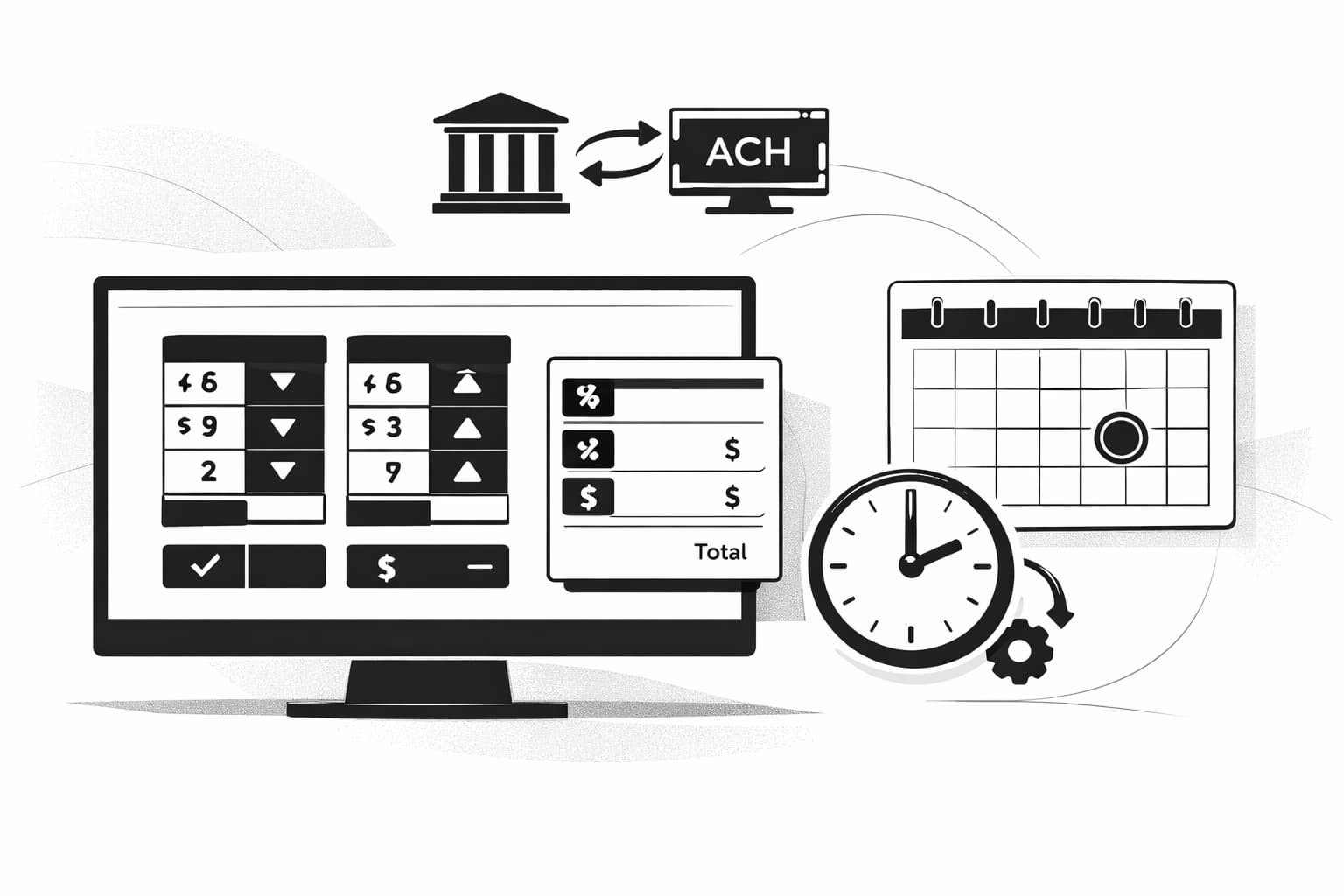
Kalshi charges a trading fee based on a percentage of your winnings, not a flat commission per trade. According to Kalshi's published fee schedule, the fee typically ranges from 7% to 10% of net winnings depending on the market and contract type. You don't pay a fee on losing trades — only when you profit. There are no deposit fees, no withdrawal fees, and no inactivity fees to worry about if you take a break from the platform.
Fee Type | Amount / Detail |
|---|---|
Trading Fee | 7%–10% of net winnings (varies by market) |
Deposit Fee | None |
Withdrawal Fee | None |
Minimum Deposit | $5 |
Inactivity Fee | None |
Deposit and Withdrawal Methods
Kalshi currently supports ACH bank transfers as the primary funding method, with ACH deposits typically clearing within 1–3 business days. Debit card funding has been available on a limited basis, offering faster access to funds, though availability can vary by account. Wire transfers are supported for larger deposits. The $5 minimum deposit makes the platform genuinely accessible for smaller-scale traders who want to test the waters without significant capital exposure.
On the withdrawal side, ACH transfers back to your linked bank account generally process within 3–5 business days based on Kalshi's stated processing times. A common question from new users is whether Kalshi actually pays out — the short answer is yes. As a CFTC-regulated exchange, Kalshi is legally required to maintain customer funds separately from operating capital, which provides a meaningful layer of protection. Reported withdrawal issues in user forums are typically tied to identity verification holds, not platform insolvency concerns.
The fee structure won't win any awards for generosity — 10% of winnings is real money at scale — but it's transparent and predictable, which is more than can be said for some alternatives.
Pros and Cons of Kalshi
After working through the account setup, fee structure, and actual trading experience, here's where Kalshi genuinely stands out — and where it still has room to improve. No platform is perfect, and Kalshi is no exception.
Pros
- CFTC-regulated — one of the only federally licensed event contract exchanges available to US traders
- Available in all 50 states — not subject to state-by-state gambling laws that restrict prediction market competitors
- Unique market categories — economics, politics, weather, and Fed rate decisions aren't available on any mainstream brokerage
- Clear, capped contract structure — every contract pays $1 at resolution, making risk easy to calculate
- Fee only on winning trades — no charge on losing positions, keeping downside costs predictable
Cons
- Thin liquidity on niche markets — spreads widen significantly on lower-volume contracts
- SSN required at signup — a friction point that surprises users expecting a casual sign-up flow
- BBB complaint history — withdrawal delays and account verification issues appear in documented user complaints
- Mobile app lags behind desktop — charting tools and order management are notably weaker on mobile
- No margin or take advantage of — purely cash-funded, which limits position sizing for serious traders
Is Kalshi Legit? Trust, Safety, and Complaints
The short answer is yes — Kalshi is a legitimate, regulated financial exchange. It is registered with the Commodity Futures Trading Commission (CFTC) as a Designated Contract Market, which puts it in the same regulatory category as major derivatives exchanges. Customer funds are held in segregated accounts, separate from Kalshi's operating capital, which is a meaningful structural protection. That said, "legitimate" and "perfect" are not the same thing, and there are real complaints worth examining before you deposit.
Kalshi BBB Complaints and User Reviews Summary
Kalshi is not BBB-accredited, and its Better Business Bureau profile reflects a modest but telling pattern of complaints. The most common themes involve account verification delays, difficulties withdrawing funds, and — critically — complaints that went unanswered by the company. Account closures without clear explanation also appear with some regularity.
In context, the complaint volume is relatively low for a financial platform of this size, and some issues appear to stem from standard KYC compliance friction rather than bad faith. Still, unanswered BBB complaints are a yellow flag. For a platform handling real money in regulated markets, responsiveness to customer grievances should be a baseline standard, not optional.
The Kalshi Controversy: Election Markets Legal Battle
Kalshi's highest-profile controversy involved a protracted legal fight with the CFTC over its right to offer event contracts tied to US congressional elections. The CFTC initially blocked these markets, arguing they involved gaming and were contrary to the public interest. Kalshi sued, and after a significant court battle, won — paving the way for election contracts to launch legally. By 2026, this ruling has become a defining moment for the entire event contract industry, and you can track latest regulatory developments in US financial markets to understand the broader implications.
Paradoxically, the legal fight actually strengthens Kalshi's credibility in one sense — it fought for regulatory clarity through legitimate legal channels rather than operating in a gray zone. The outcome signals that Kalshi is building for the long term, not running from oversight.
Overall trust assessment: Kalshi clears the legitimacy bar with meaningful room to spare. CFTC registration and fund segregation are real protections. The BBB complaint pattern is worth monitoring, but not alarming at current volumes. The election markets battle, now resolved, removed what had been the most serious cloud over the platform's future.
Who Is Kalshi For? Ideal User Profile
Having covered the platform's mechanics, fees, and legitimacy, the real question becomes simple: does Kalshi fit your trading style? The answer depends heavily on what you're trying to accomplish.
Kalshi works best for a specific type of trader. If you're a US-based market participant who wants to express views on macroeconomic outcomes — Fed rate decisions, inflation prints, GDP releases — Kalshi gives you a legal, regulated venue to do exactly that. Political speculators who previously relied on offshore sites like Polymarket will also find Kalshi a credible domestic alternative. It also suits traders already applying speculative trading strategies and risk management in volatile markets, since the binary contract structure rewards disciplined position sizing.
Kalshi Is NOT Ideal For
- Sports bettors — Kalshi is a financial exchange, not a sportsbook
- Non-US residents — regulatory access remains largely US-restricted
- High-frequency or day traders — liquidity on many contracts is too thin for rapid in-and-out execution
- Passive investors — event contracts require active monitoring and have fixed expiration dates
Verdict: Should You Use Kalshi in 2026?
Kalshi is a legitimate, CFTC-regulated exchange offering something genuinely different from traditional brokerages and sports betting apps alike. If you want direct exposure to macroeconomic and political outcomes — Fed rate decisions, inflation prints, election results — there is simply no regulated US alternative that does it better.

That said, this platform is not for everyone. Thin liquidity on niche contracts, a limited order book depth compared to equity markets, and documented withdrawal delay complaints mean you should go in with realistic expectations. Position sizing matters here more than on most platforms.
The concrete recommendation: Kalshi is worth using if you are an informed trader who follows macro events closely and wants a regulated vehicle to act on those views. Casual users looking for quick entertainment or deep liquidity will likely be frustrated. Start small, focus on the highest-volume contracts, and treat it as a specialized tool — not a primary trading account.
Frequently Asked Questions
- Does Kalshi actually pay out?
- Yes, Kalshi pays out winning contracts. As a CFTC-regulated exchange, it holds user funds in segregated accounts, adding a layer of protection. ACH withdrawals typically take 3–5 business days, though some BBB complaints mention occasional delays. Check the app directly for current processing times before trading.
- What is the Kalshi controversy?
- Kalshi fought a high-profile legal battle against the CFTC over its election prediction markets. The core dispute was whether those contracts were legitimate financial instruments or illegal gambling. Courts sided with Kalshi, allowing election markets to operate. This ruling reinforced the platform's legitimacy and opened the door to broader market expansion in 2026.
- How much does it cost to join Kalshi?
- Joining Kalshi is completely free — there's no membership fee or subscription. Trading costs come through fees charged as a percentage of your winnings on each contract, typically around 7%. A small minimum deposit may be required to start trading. Always check the platform for the most current fee structure before funding your account.
- Why does Kalshi need my SSN?
- Kalshi is a CFTC-designated contract market, which legally requires collecting Social Security Numbers for KYC and anti-money laundering compliance. SSNs are also needed for IRS tax reporting — Kalshi issues 1099 forms for taxable winnings. This is standard practice across regulated US financial platforms and brokerages, not something specific to Kalshi.
Sources
Author

Crypto analyst and blockchain educator with over 8 years of experience in the digital asset space. Former fintech consultant at a major Wall Street firm turned full-time crypto journalist. Specializes in DeFi, tokenomics, and blockchain technology. His writing breaks down complex cryptocurrency concepts into actionable insights for both beginners and seasoned investors.