How to Trade Meme Coins: Strategies, Risks & Tips Guide
What Are Meme Coins and How Does Meme Coin Trading Work?
If you want to learn how to trade meme coins, start with a simple idea: meme coins are cryptocurrencies whose popularity often comes from internet culture, jokes, branding, and online communities more than from deep technical use. Coins like DOGE, SHIB, PEPE, and BONK became well known because people shared them, talked about them, and speculated on fast price moves. If you need a wider intro, this guide explains what meme coins are. Crypto markets also trade around the clock, which can amplify fast sentiment-driven moves compared with traditional markets [1].
That matters because meme coin trading works differently from trading BTC, ETH, or utility-focused tokens. Prices can jump or crash on a viral post, a celebrity mention, a new exchange listing, or a sudden wave of buying from a very active community. In other words, momentum, attention, and liquidity often drive the market as much as, or more than, long-term fundamentals. Regulators have repeatedly warned that crypto assets can be highly volatile and speculative [2].
What is a memecoin?
A memecoin is a crypto asset built around a meme, theme, or social identity. Some start as jokes and later attract real trading volume. Others launch with little substance beyond branding and community hype. That does not mean they cannot rise sharply. It does mean traders should expect fast swings, thinner liquidity, and higher rug-pull risk than in larger, more established assets. Scam and fraud risks in crypto are well documented by consumer protection agencies [3].
Memecoins vs other cryptocurrencies
Compared with utility tokens, meme coins often have weaker product demand. Compared with stablecoins, they are far more volatile. Compared with major layer-1 assets like Bitcoin or Ethereum, they usually have less liquidity, less history, and fewer reasons for long-term valuation. So when learning how to trade meme coins, think like a risk manager first: price action and crowd behavior matter, but capital protection matters more.
How to Start Trading Meme Coins in 2024
- Choose a platform: decide whether you want to trade on a centralized exchange or a decentralized exchange.
- Set up a wallet: create a wallet that supports the chain where your target meme coin trades.
- Fund it: add fiat, stablecoins, or the native gas token you will need to complete trades.
- Research the token: confirm the contract address, liquidity, volume, and chain before you buy.
- Place the trade: start small, check fees and slippage, and plan your exit before you enter.
If you are learning how to trade meme coins, the setup matters as much as the trade itself. A clean start helps you avoid common beginner mistakes such as using the wrong network, funding the wrong wallet, or buying a copycat token with a fake contract address.
Choose where to trade: CEX vs DEX
For many beginners, a centralized exchange is the easier starting point. It usually offers a familiar interface, simple deposits, and better customer support. If you need a refresher, read centralized exchange basics. The trade-off is that many new meme coins appear there late, if they appear at all.
A decentralized exchange gives you earlier access to smaller tokens and faster-moving opportunities. That said, it also comes with more responsibility. You must connect your own wallet, confirm the right contract, and manage slippage and gas. If that is new to you, this guide on how decentralized exchanges work can help. In practice, beginners often start on a CEX for larger meme coins, then move to a DEX once they understand the risks.
Set up your wallet and fund it
Before trading on-chain, choose a wallet that supports the right network. Solana and Ethereum remain two of the main hubs for meme coin activity, though their trading experience differs. Solana is often faster and cheaper, while Ethereum can have higher gas costs during busy periods. This Solana beginner guide is useful if you plan to trade there.
Next, review crypto wallet basics, back up your seed phrase offline, and learn how to protect your seed phrase. Then fund the wallet with enough SOL or ETH for gas fees, plus the amount you want to trade. Always send a small test transaction first if you are unsure.
What are meme coin trading hours?
Crypto markets trade 24/7, so there is no opening bell or closing session. Even so, activity is not equal around the clock. Liquidity can rise during US and European market hours, while volatility often spikes around exchange listings, influencer posts, token unlocks, or sudden community hype [1].
As a result, timing still matters. Thin liquidity can mean wider spreads and faster price swings, especially in smaller meme coins. Before you place your first order, check volume, recent price action, and whether the market is reacting to news or just chasing momentum.
How to Find Meme Coins Worth Trading
Once you know the mechanics, the next step in learning how to trade meme coins is filtering for setups that are tradable instead of just noisy. The goal is not to catch every new launch. It is to find coins with enough activity, access, and staying power to support a real entry and exit plan.
Signals to Look for Before You Buy
Start with liquidity depth. If a token has thin liquidity, even a small order can push the price hard, and getting out can be painful. That is why it helps to understand how liquidity pools work before risking capital. Next, check trading volume. A meme coin with steady volume over several hours or days is usually safer to trade than one with a single spike followed by silence.
Then look at market cap in context. Tiny market caps can move fast, but they also break fast. Holder distribution matters too. If a few wallets control a large share, one sell-off can crush the chart. A healthier setup has broader ownership and fewer oversized wallets. It also helps if the token is not brand new. A bit of age can mean the first wave of launch chaos has passed.
Social traction matters, but be selective. Organic attention tends to look like steady mentions, real replies, and growing interest across channels, not just spammy posts and influencer shills. Also check launch platform context and read the project’s tokenomics basics. If the story, supply structure, and activity do not line up, step back.
Common Terms in Meme Coins
- FOMO: Fear of missing out. Buying because price is running, not because the setup is sound.
- Liquidity: How easily you can buy or sell without moving the price too much.
- Market cap: Token price multiplied by circulating supply. A rough size estimate, not a guarantee of safety.
- Slippage: The gap between the expected price and the price your trade actually gets.
- Rug pull: A scam where insiders drain liquidity or abandon the project after attracting buyers.
- Whale: A wallet holding a large amount of the token and able to move the market.
- Cabal: A coordinated group that promotes and trades a coin together, often to influence price.
Meme Coin Trading Strategies for Entries and Exits
Once you have a watchlist, the next step in learning how to trade meme coins is building rules for getting in and getting out. This matters because meme coins can move fast in both directions. A good trade plan helps you avoid chasing hype, freezing during pullbacks, or holding a winner until it turns into a loser.
Timing your buys
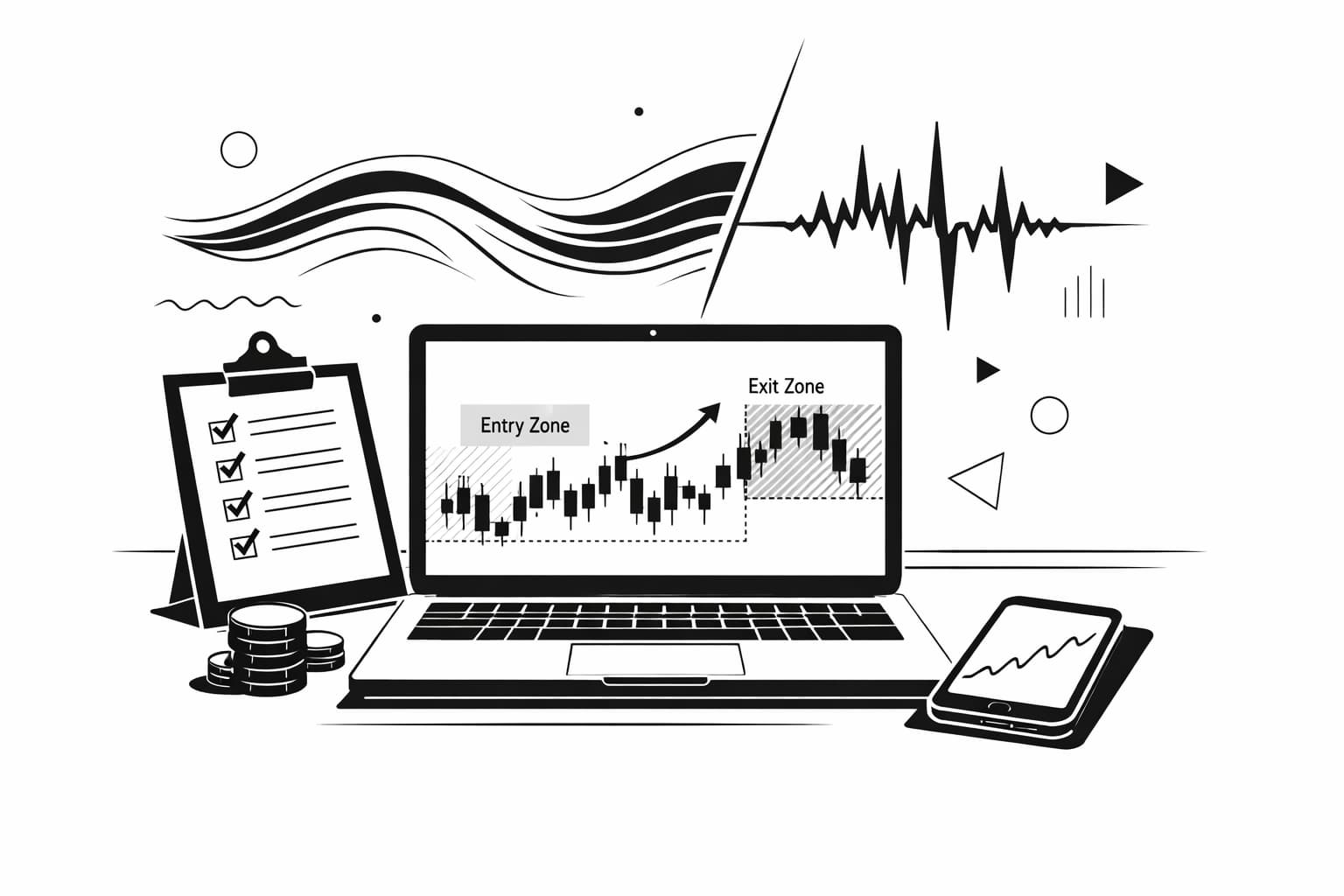
Buying right after a vertical pump is one of the easiest ways to get trapped. When a chart has already gone nearly straight up, late buyers often become exit liquidity for earlier traders. Instead, many traders wait for a pullback into a recent support zone, then look for signs that buyers are stepping back in.
Two simple checks can help. First, watch whether price holds above a prior breakout level or local support area. Second, look for volume confirmation. If the coin starts bouncing with healthy volume, that can suggest the move still has interest behind it. If volume dries up, patience is usually the better choice.
Selling your memecoins
Exits deserve just as much planning as entries. A common beginner mistake is waiting for the “perfect top,” then riding gains all the way back down. A more disciplined approach is to scale out. For example, you might sell part of your position after a 20% to 30% move, then another part at a higher target, while leaving a small remainder in case momentum continues.
This also helps with emotions. Taking partial profits locks in something real and reduces the pressure to make one all-or-nothing decision. Just as important, set a clear loss level before entering. If the trade breaks your setup, exit. Small losses are easier to recover from than large ones.
Simple strategies beginners can use
Beginners do best with simple, repeatable setups. One option is a small-position momentum trade: enter only after a pullback and bounce, risk a small amount, and take profits quickly. Another is breakout confirmation: wait for price to break resistance and hold above it before buying. You can also use a predefined risk-reward setup, such as risking 5% to target 10% or 15%.
In practice, momentum trading aims to ride a move that is already building, while quick speculative flips are shorter and faster, often based on brief spikes in attention. Both can work, but only if you keep position sizes small and follow your exit plan without hesitation.
Managing Risk and Avoiding Rug Pulls
Once you have a setup and an entry plan, risk control becomes the part that keeps you in the game. If you want to learn how to trade meme coins with a trader’s mindset, start by deciding what you can afford to lose before you buy. Meme coins can move fast in both directions, and even strong momentum can disappear in minutes.
In practice, that means keeping meme coins as a small speculative slice of your portfolio, not the foundation of it. Many beginners make the mistake of sizing too large, then panic-selling on a dip or doubling down after a loss. A better approach is to risk only a small amount per trade, set a maximum exposure across all meme coin positions, and avoid revenge trading after a bad outcome. If one trade fails, the goal is to stay clear-headed for the next one.
It also helps to watch trading conditions closely. Thin liquidity, high slippage, and wide spreads can turn a decent idea into a poor trade. Before entering, check pool depth, recent volume, and wallet activity with blockchain scanners. If you cannot exit cleanly, the trade is riskier than it looks.
How to avoid meme coin rug pulls
- Check whether the contract has dangerous functions, such as blocking sells or changing fees suddenly.
- See if liquidity is locked and for how long; unlocked liquidity raises the chance of a fast exit scam.
- Look for concentrated ownership, especially if a few wallets control a large share of supply.
- Be careful with anonymous teams that offer no history, no accountability, and no verifiable activity.
- Avoid tokens built on unrealistic promises, guaranteed returns, or “can’t lose” marketing.
- Treat bot-heavy engagement, spam comments, and copied social posts as warning signs, not proof of demand.
Rug avoidance checklist
A suspicious token structure often shows up before the collapse. If holder distribution is top-heavy, liquidity is shallow, and social buzz looks manufactured, step back. Healthy interest and fake hype can look similar at first, so slow down and verify. In the end, knowing how to trade meme coins is as much about avoiding bad trades as finding good ones. Consumer and regulator alerts on crypto scams support taking these checks seriously [3].
Managing your investments
Set firm limits in advance: how much of your total capital goes to meme coins, how much goes into one token, and where you will cut the trade if momentum breaks. Write those rules down. That simple habit can stop emotional decisions, especially after a sudden loss or a near-miss rally.
Best Platforms and Tools for Trading Meme Coins
Once you know how to spot setups and manage risk, the next step in learning how to trade meme coins is building a simple tool stack. The goal is not to chase every new app. It is to use a few reliable tools that help you research faster, place trades cleanly, and check token activity before you commit capital.
Tool category | What it helps with | Best for |
|---|---|---|
Wallets | Holding funds, connecting to apps, approving trades | Self-custody and fast on-chain trading |
CEXs | Easy buying, selling, and fiat on-ramps | Beginners who want simpler order flow |
DEXs | Trading newer tokens directly on-chain | Accessing early meme coin listings |
Scanners | Checking liquidity, holders, contract activity, and swaps | Filtering risky tokens quickly |
Charting tools | Watching price action, volume, and momentum | Planning entries and exits |
Tools that help you trade smarter
For most beginners, a reputable centralized exchange is the easiest starting point. After that, a self-custody wallet and a clean DEX interface open access to smaller tokens. Pair those with charting platforms to track trend strength and support or resistance, then use blockchain scanners to confirm whether volume and wallet activity look healthy.
It also helps to watch trend-discovery tools and meme coin launchpads to spot where attention is moving. That said, speed should never replace checking basics. If a tool helps you see liquidity, transaction history, holder concentration, and price structure in one workflow, it will make your process safer and more consistent.
Common Mistakes New Meme Coin Traders Make
Even with good tools, beginners often lose money because of poor decisions. The biggest mistakes are emotional buying after a sudden pump, overtrading every small move, and ignoring trading, gas, or transfer fees that eat into profits. Another common error is following influencers or viral posts without checking volume, liquidity, and price action for yourself. And while many people focus on entries, they forget to plan exits, which turns quick trades into stressful guesses.
If you want to learn how to trade meme coins with more consistency, treat every trade like a setup, not a bet. That mindset alone can cut many avoidable losses.
General Advice for Staying Disciplined
Write your entry, target, stop, and position size before you buy. Use alerts instead of staring at charts all day. Limit the number of trades you take, and keep a simple journal to spot repeated mistakes. Just as important, step away after a win streak or a bad loss. A clear routine helps you stay calm when meme coin volatility tries to pull you off plan.
Frequently Asked Questions
- Is trading meme coin profitable?
- Trading meme coins can be profitable, but returns are extremely unpredictable and losses are common. Prices often move fast on hype, social sentiment, liquidity, and timing. Instead of expecting guaranteed gains, traders should focus on risk management, position sizing, stop-loss plans, and avoiding overexposure to highly volatile tokens.
- What is the best platform to trade memecoins?
- The best platform depends on your goals. Centralized exchanges usually offer easier onboarding, better user experience, and stronger support, while decentralized exchanges often list newer meme coins earlier and give you direct custody. Compare fees, token availability, security features, and convenience before choosing the platform that fits your strategy.
- Are trading meme coins illegal?
- Trading meme coins is generally legal in many jurisdictions, but rules vary by country, exchange, and token type. Some platforms require identity verification, and profits may be subject to taxes. Before trading, check your local regulations, understand any KYC requirements, and make sure the platform operates legally where you live.
- How much is a 1000 meme coin?
- The value of 1,000 meme coins depends entirely on the token’s current market price. The calculation is simple: number of coins multiplied by price per coin. For example, if one coin costs $0.02, then 1,000 coins are worth $20. Always check live pricing since meme coin values can change quickly.
Sources
Author

Crypto analyst and blockchain educator with over 8 years of experience in the digital asset space. Former fintech consultant at a major Wall Street firm turned full-time crypto journalist. Specializes in DeFi, tokenomics, and blockchain technology. His writing breaks down complex cryptocurrency concepts into actionable insights for both beginners and seasoned investors.