How to Sell Pi Coin: A Complete Step-by-Step Guide (2026)
What is Pi Coin and Can You Actually Sell It? (2026 Status)
So, you've been diligently tapping that button on your phone and have accumulated a nice balance of Pi. Now you're asking the most important question: how can you sell your Pi Coin? Let's get right to the reality of the situation in 2026. The Pi Network is still in its "Enclosed Mainnet" phase. This means your actual Pi coins, the ones in your wallet, cannot be officially traded or sold on any public cryptocurrency exchange.
Then how are people trading it? What you see on some exchanges are not the real coins, but rather "Pi IOUs." This guide focuses exclusively on how to sell these IOUs, but it is absolutely essential that you first understand what they are and the significant risks that come with trading them. This is not a path to instantly cashing out your mined coins.
The Difference Between Pi IOUs and Mainnet Pi
Think of a Pi IOU as a placeholder or a promise from an exchange. An "IOU" literally stands for "I Owe You." When you trade a Pi IOU on a platform, you are not handling the official cryptocurrency. Instead, you are trading a derivative product created by that exchange. They are promising to give you the real Pi coin later, if and when the Pi Network launches its Open Mainnet and allows for external connections.
The price of these IOUs is completely speculative and is not connected to any official value set by the Pi Network Core Team. The value can swing dramatically based on rumors and exchange-specific activity. Trading IOUs is a high-risk activity, very different from selling an established coin like Bitcoin or Ethereum.
Prerequisites: What You Need Before You Can Sell Pi
Before you can even think about how to sell Pi Coin, there are a few essential steps you must complete within the Pi Network ecosystem. Think of this as your pre-flight checklist. Attempting to sell without meeting these requirements is impossible and can expose you to scams. Let's walk through exactly what you need to have in place.
Complete Your Pi KYC Verification
First and foremost, you must pass the Know Your Customer (KYC) verification. This is a mandatory identity check within the Pi app to prevent fake accounts and ensure compliance with regulations. Without a verified KYC status, your mined Pi is stuck in a pending state. It cannot be moved, and therefore, it cannot be sold. If you haven't done this yet, open your Pi app and find the KYC application to get started.
Migrate Your Pi to the Mainnet Wallet
Once you’re KYC-approved, the next step is moving your coins to the mainnet. This involves completing the Mainnet Checklist in the Pi app. After you finish all the tasks on the list, you’ll trigger the migration of your transferable balance to your Pi Wallet. This is the only Pi that is truly yours and under your control. You'll interact with this wallet and your wallet address for any future transactions. Any Pi not migrated is not yet available to you.
Set Up an Account on a Supporting Crypto Exchange
Finally, since Pi is not officially listed for open trading, you will need an account on a third-party exchange that deals in Pi IOUs. Platforms like HTX, OKX, or BitMart currently list these. Remember, you are trading an IOU—a promise for a future coin—not the actual mainnet Pi. Go through the full sign-up and verification process on one of these exchanges so your account is ready for deposits and trading when you decide to proceed.
How to Sell Pi Coin: A Step-by-Step Guide (IOU Method)
Alright, you've completed the mainnet checklist and are ready to explore your options. This guide will walk you through the process of how to sell Pi Coin by using the IOU method on a cryptocurrency exchange. It's a multi-step process, but if you follow along carefully, you'll understand exactly how it works.
Important Warning: The method described below is for trading Pi IOUs ("I Owe You" tokens) on exchanges, not the official mainnet coin. These IOUs are promises from the exchange to deliver real Pi later. This process carries significant risk, including the possibility that the exchange may not be able to honor the IOU. Proceed with extreme caution and only risk what you are willing to lose.
With that important understanding in place, let's walk through the steps.
Choose a Crypto Exchange Listing Pi IOUs
Your first task is to select a reputable exchange that currently supports Pi IOU trading. Not all platforms do, and the ones that do can vary in terms of security, fees, and user experience. We discuss specific platforms in the next section, but for now, focus on finding one you are comfortable with. Create an account and complete any required identity verification (KYC) procedures.Find the Pi Deposit Address on the Exchange
Once your account is set up, you need to find where to send your Pi. Manage to your exchange's wallet or deposit section. Search for "Pi" and select the deposit option. The exchange will generate a unique deposit address and, in some cases, a memo or tag. It is absolutely vital that you copy both the address and the memo perfectly. An error here could result in the permanent loss of your funds.Initiate the Transfer from Your Pi Wallet
Open your official Pi Wallet app. Select the option to send Pi and carefully paste the exchange's deposit address into the recipient field. If there was a memo or tag, paste that into the corresponding field in your wallet. Double-check everything, enter the amount of Pi you wish to sell, review the transaction fee, and confirm the transfer. The transfer time can vary, so be patient while you wait for it to appear in your exchange account.Sell Your Pi for a Stablecoin (like USDT)
After the exchange confirms your deposit, your Pi IOU balance will be updated. Now you can trade it. Go to the exchange's trading or spot market section and find the PI/USDT trading pair. You can place a 'market order' to sell immediately at the current best price, or a 'limit order' to set a specific price you want to sell at. For simplicity, most beginners use a market order. Executing this trade will convert your Pi into stablecoins like USDT.Convert the Stablecoin to Fiat Currency (Cash)
You're almost there! The final step is to turn your USDT into your local currency, such as USD or EUR. On the exchange, find the option to sell your USDT for your desired currency. Once sold, the cash will be in your exchange account, ready to be withdrawn. Manage to the withdrawal section, select your currency, link your bank account if you haven't already, and initiate the transfer. The funds should arrive in your bank in a few business days.
Where to Sell Pi Coin: Top Exchanges for Pi IOUs
Now that you understand the process, the next question is where to actually perform the trade. Several cryptocurrency exchanges have listed Pi IOUs, giving pioneers an early option to cash out. It is absolutely vital to remember you are trading an IOU—a promise for a future coin—not the official mainnet Pi coin itself. This comes with significant risks.
Different platforms offer varied experiences. Some have higher trading volumes, which means it's easier to find a buyer, while others might have lower fees. Here’s a quick comparison of popular exchanges currently listing Pi IOUs in 2026:
Exchange | IOU Trading Volume | Key Feature |
|---|---|---|
HTX (formerly Huobi) | High | One of the first to list Pi IOUs, offering good liquidity. |
BitMart | Medium | Known for listing a wide array of new and speculative assets. |
XT.com | Medium-Low | Offers another trading venue, but volume can be less consistent. |
Factors to Consider When Choosing an Exchange
Choosing the right platform is an important part of figuring out how to sell pi coin without running into trouble. Don't just pick the first one you see. Instead, consider these points carefully:
- Security Measures: Does the exchange offer two-factor authentication (2FA)? What is its track record regarding hacks? Your assets' safety is the top priority.
- Withdrawal Fees & Limits: After you sell your Pi IOUs for another crypto like USDT, how much will it cost to withdraw? Some exchanges have high fees or restrictive daily limits.
- User Reviews: Check sources like Trustpilot or Reddit to see what other users are saying. Are there frequent complaints about frozen accounts or withdrawal problems?
- Customer Support: If something goes wrong, you'll want responsive and helpful customer support. Look for exchanges with a good reputation for helping their users.
Understanding the Major Risks of Selling Pi Coin Now
While you now know the technical steps for how to sell Pi Coin IOUs on certain exchanges, moving forward without understanding the significant risks would be like walking through a minefield blindfolded. The current market for Pi is purely speculative, and you must protect yourself. Let's walk through the three biggest dangers you need to be aware of before you proceed.
Extreme Price Volatility
The price of a Pi IOU is not based on any real-world utility or a functioning network economy. It's driven entirely by speculation and hype. This means the price can swing dramatically based on rumors or news about the open mainnet. A single announcement could cause the value to plummet to zero in an instant, leaving you with a significant loss. Never trade more than you are willing to lose entirely.
Risk of Exchange Delisting
Exchanges list Pi IOUs at their own discretion and can remove them just as quickly. There is no guarantee that a platform offering Pi IOU trading today will still be doing so tomorrow. If an exchange delists Pi, your funds could be trapped with no way to sell or withdraw them. This is a key factor when it comes to assessing platform risk before you deposit any assets.
Scams and Fraudulent Third Parties
You will likely see tempting offers to buy your Pi coins directly through social media or unverified peer-to-peer (P2P) platforms. Avoid these at all costs. The crypto space is filled with scammers who promise great rates to lure you into sending them your coins, only to disappear without paying. Stick to the exchanges discussed earlier, as trading with unknown individuals is one of the fastest ways to lose your assets for good.
The Future of Pi: When Will the Open Mainnet Launch?
After exploring the complex process of selling Pi IOUs, you're likely wondering about the main event: when can you trade real Pi Coin? The answer depends entirely on the launch of the Pi Network's Open Mainnet, which is the ultimate goal for the entire project.
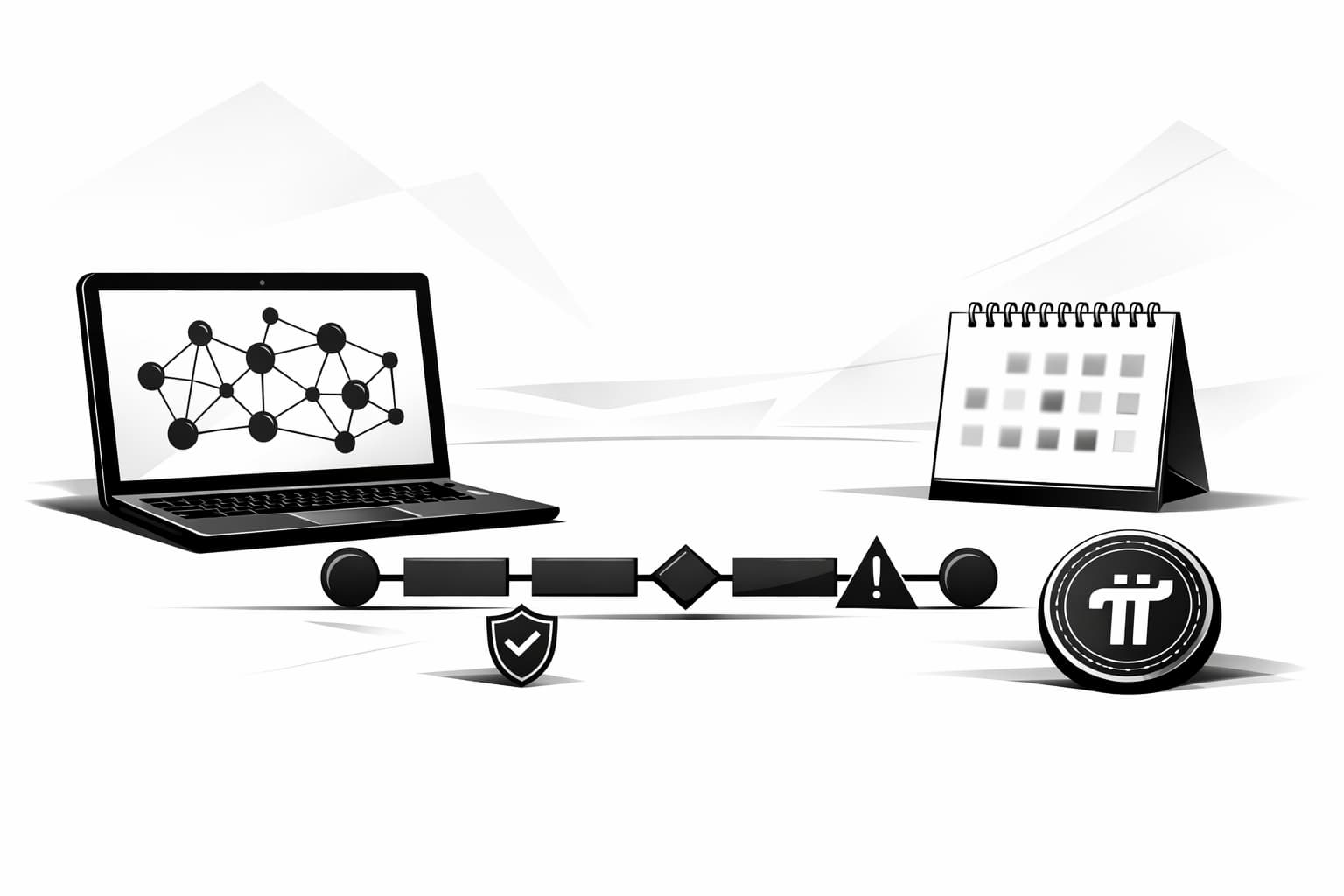
The Pi Core Team has outlined that this transition isn't tied to a specific calendar date. Instead, the move to an Open Mainnet depends on the community achieving specific milestones. These include completing mass Know Your Customer (KYC) verification for millions of users, fostering a mature ecosystem with useful Pi apps, and ensuring the overall technical and legal readiness of the network.
Until these conditions are met, the network remains in its "Enclosed Mainnet" phase. This is the main reason why every current method showing you how to sell pi coin involves IOUs—not the actual currency. The official, transferable Pi you've mined will only be tradable on external exchanges after the Open Mainnet is live. For now, the best approach is to follow official announcements and continue participating in the ecosystem.
Frequently Asked Questions
- Can I sell my Pi coins now?
- As of April 2026, you cannot sell official Pi coins from the mainnet. However, some exchanges list Pi IOUs, which are speculative placeholders. Be aware that trading these is risky and not officially endorsed by the Pi Core Team, as they are not the actual mainnet coin.
- How much is 1000 pi in dollars?
- The price of 1000 Pi is speculative and based on unofficial IOU trading. You can check the current IOU price on crypto aggregators like CoinMarketCap, but remember this value is volatile. It does not guarantee the official price once the mainnet opens for trading on major exchanges.
- Can pi coin be converted to cash?
- Yes, Pi Coin IOUs can be converted to cash on certain exchanges. The process involves sending your Pi to a supporting exchange, trading it for a stablecoin like USDT, and then selling the stablecoin for your local currency. You can then withdraw these funds to your personal bank account.
- How to cash out pi coin?
- To cash out, you must first complete the mandatory KYC verification and mainnet migration in the Pi app. After that, transfer your Pi to a crypto exchange that supports it. On the exchange, sell your Pi for a stablecoin (USDT), and then sell the stablecoin for cash to withdraw.
Sources
Author

Crypto analyst and blockchain educator with over 8 years of experience in the digital asset space. Former fintech consultant at a major Wall Street firm turned full-time crypto journalist. Specializes in DeFi, tokenomics, and blockchain technology. His writing breaks down complex cryptocurrency concepts into actionable insights for both beginners and seasoned investors.